


More news on this day
Iraqi carrier Fly Baghdad is edging back toward the skies after the lifting of United States terrorism-related sanctions, preparing a cautious restart that will test both regulatory confidence and passenger demand across a still-fragile Middle East aviation market.
Get the latest news straight to your inbox!
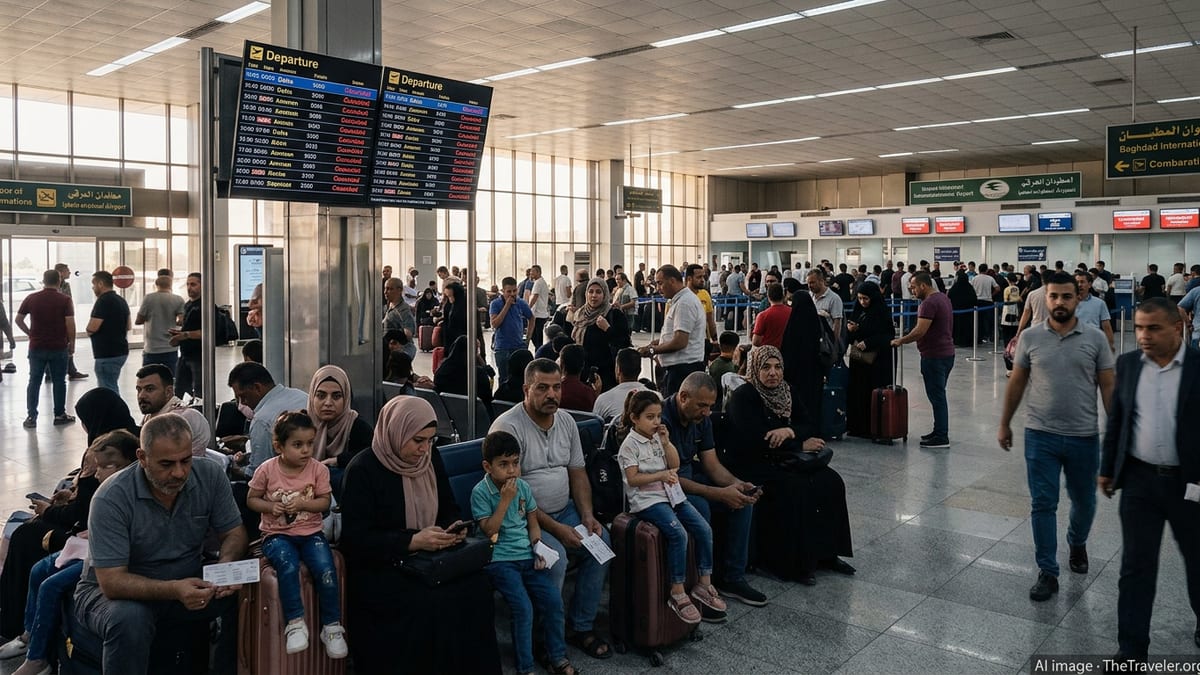
From Sanctioned Carrier To Potential Comeback Story
Fly Baghdad, a privately owned Iraqi airline founded in 2014, was hit with sweeping United States sanctions in January 2024 under counterterrorism authorities. Public records show that the US Treasury’s Office of Foreign Assets Control designated the company and several of its aircraft over allegations of support activities tied to Iran’s Islamic Revolutionary Guard Corps Quds Force and allied groups in Iraq, Syria, and Lebanon. The measures effectively cut the airline off from much of the global financial and aviation ecosystem.
Those restrictions triggered a rapid halt in Fly Baghdad’s growth plans. Industry databases indicate that the carrier, which had been operating Boeing 737 aircraft on routes linking Baghdad with cities such as Damascus, Beirut and regional Gulf hubs, suspended services as access to insurance, maintenance support and settlement systems came under pressure. The move left Iraq’s still-recovering aviation market more dependent on state-backed Iraqi Airways and foreign competitors.
In early August 2026, the picture changed. According to recent coverage in regional and international media summarizing updated US sanctions lists, Washington removed Fly Baghdad and at least two of its 737s from the counterterrorism designation roster. The change leaves sanctions in place on the airline’s principal shareholder but clears the corporate entity itself to re-engage with banks, suppliers and aviation partners, opening a path to a phased return to commercial flying.
Analysts note that delisting does not immediately restore an airline’s pre-crisis position. However, it is widely seen as a prerequisite for any restart of international services and for negotiations with lessors, airports and air navigation providers that may have treated the carrier as off limits while restrictions were in force.
Regulatory Hurdles At Home And Abroad
Even with sanctions lifted, Fly Baghdad faces a dense web of regulatory issues. European Union documents show that the carrier’s application for third-country operator approval was previously rejected on safety grounds, citing shortcomings identified by the European Union Aviation Safety Agency and coordination with the Iraq Civil Aviation Authority. The airline has never held permission to fly to EU destinations, and observers expect European regulators to insist on extensive oversight before reconsidering any application.
Fly Baghdad’s immediate focus is likely to remain regional. Baghdad International Airport has undergone expansion efforts and, despite periodic security incidents and a brief war-linked closure earlier in 2026, is again handling regular civilian traffic. Published airport and industry data suggest that Iraqi authorities are seeking to position Baghdad as a competitive hub between the Levant, Gulf and Turkey, a strategy that benefits from the presence of multiple home carriers rather than a single flag airline.
A key requirement for Fly Baghdad’s return will be restoring confidence among aviation insurers and technical service providers. Sanctions had signaled elevated legal and reputational risk, which in turn can affect aircraft maintenance contracts, pilot training arrangements and even fuel supply at foreign airports. Industry specialists say that once a carrier has been associated with sanctions, regulators and counterparties tend to scrutinize governance structures, beneficial ownership and compliance systems more closely than before.
For now, there is no published evidence of European or North American regulators granting new operating permissions to Fly Baghdad since the delisting, and the airline is expected to prioritize markets where bilateral air services agreements and political ties are less strained. That still leaves significant opportunity across the Middle East, Central Asia and, potentially, parts of North Africa.
Network Planning In A Volatile Security Environment
Any restart plan for Fly Baghdad must contend with a security landscape that remains fluid across the region. Advisories from aviation safety bodies and national regulators continue to warn airlines about risks in parts of Iraqi, Syrian and Gulf airspace following recent flare ups in US Iran tensions and localized drone attacks near key airports. Some carriers have suspended or rerouted flights, particularly over conflict-adjacent corridors and around the Strait of Hormuz.
For a mid-sized Iraqi carrier, that environment complicates route economics. Detours to avoid high-risk areas can add flight time and fuel costs, undermining thin margins on short-haul routes that link Baghdad to neighboring capitals. Additionally, not all destination airports may welcome the return of a carrier that until recently appeared on a US sanctions list, especially where national aviation authorities defer to Western security assessments.
Despite these headwinds, regional travel demand has been resilient. Traffic statistics from Gulf and Levant hubs show that airlines serving Iraq have been restoring capacity following recent conflicts, and several have reported load factors strong enough to justify incremental additions of seats. Fly Baghdad’s previous network, which included underserved city pairs and niche charter operations, could again find a customer base among price-sensitive travelers and religious pilgrims if schedules prove reliable.
Industry commentary suggests that the airline is likely to rebuild domestic and near-neighbor services first, including connections between Baghdad and other Iraqi cities as well as selective regional routes. Such a strategy would allow crews and operations teams to revalidate procedures, rebuild on-time performance metrics and demonstrate compliance before attempting more ambitious international expansion.
Competition With Iraqi Airways And Regional Rivals
Fly Baghdad’s re-emergence will unfold in a market where competition has intensified. Iraqi Airways has spent recent years modernizing its fleet and upgrading services, supported by government backing and closer partnerships with foreign lessors and airports. At the same time, Gulf carriers and Turkish operators have established dense networks into Iraq, offering one-stop connections to Europe, Asia and North America from their respective hubs.
Before the sanctions, Fly Baghdad positioned itself as a nimble competitor focused on point to point routes, lower fares and charter traffic, including links to destinations such as Damascus that were not always covered by larger network carriers. Recreating that niche will require careful balance between commercial opportunity and regulatory acceptability, especially where routes intersect with politically sensitive destinations.
Pricing will be crucial. With regional airlines facing higher insurance and fuel costs, many have raised fares or trimmed capacity on marginal routes. A leaner, privately run operator could attract travelers with lower base fares and simplified service offerings, provided it can secure competitive airport charges and ground handling rates. However, aggressive discounting carries risk if cash reserves are thin after nearly two years under sanctions.
Observers of the Iraqi aviation sector also point out that Fly Baghdad’s relationship with the national regulator will be closely watched. Clear separation between the airline’s governance and any individuals still subject to foreign sanctions could prove essential to reassuring international partners that compliance standards are robust and that previous concerns are being addressed in a transparent manner.
What Travelers Can Expect As Flights Resume
For passengers, the most immediate questions center on when Fly Baghdad will publish schedules, begin ticket sales and restore its digital channels after a prolonged lull. Publicly accessible booking systems have yet to show a full network rebuild, suggesting that any restart is still in its preparatory phase, focused on regulatory filings, crew currency and aircraft readiness.
When flights do reappear, industry practice indicates that they are likely to start with short regional sectors operating a limited number of weekly frequencies. Travelers may see initial services marketed toward visiting friends and relatives traffic, religious tourism and labor flows between Iraq and neighboring economies, segments that can rebound quickly when a competitively priced option appears.
Travel experts are advising passengers considering Fly Baghdad to monitor schedule stability and operational performance during the first months of any restart. Factors such as on-time departure rates, handling of disruptions and transparency around refunds or rebooking policies typically shape consumer perceptions of reliability more than legacy brand recognition, particularly after a high profile interruption tied to sanctions.
If Fly Baghdad manages a disciplined, safety-focused return while navigating ongoing geopolitical tensions, its comeback could mark an important chapter in the gradual normalization of Iraq’s commercial aviation sector. The airline’s ability to convert regulatory relief into sustainable operations will be watched closely by competitors, partners and travelers across the wider region.