


Australia has a way of getting under travelers’ skin long before they land. Images of the Sydney Opera House at dusk, surfers at Bondi Beach and the rust-red silhouette of Uluru at sunrise make the country feel like a dream destination. Yet when people start pricing flights, reading about long distances and hearing that a cafe breakfast in Melbourne can cost more than a hotel meal in Southeast Asia, a fair question pops up: is Australia really worth visiting right now, and what should travelers know before they commit to a trip? This guide looks at the appeal, the trade-offs and the practical details so you can decide with clear eyes.
Get the latest updates straight to your inbox!
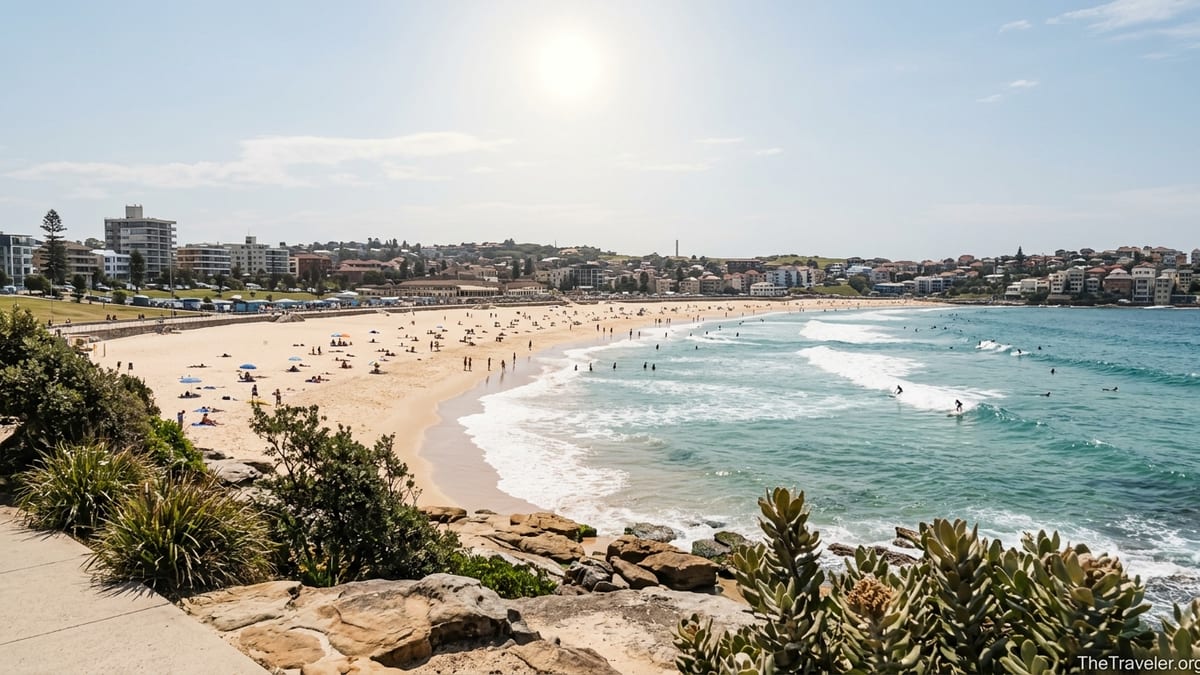
Why Australia Still Belongs on Serious Travelers’ Shortlists
Australia remains one of the world’s most distinctive destinations, combining modern cities with vast wilderness and Indigenous cultures that are among the oldest living cultures on earth. Tourism Research Australia continues to report strong post-pandemic demand, with millions of international visitors arriving each year for holidays, education, and visiting friends and relatives. The draw is not just iconic sights like the Great Barrier Reef and Sydney Harbour, but the relative ease of travel for English speakers, strong safety record and generally high service standards.
The country’s diversity in such a compact trip is a major reason seasoned travelers rate it highly. In a two-week itinerary you might split time between a few days in Sydney’s urban waterfront neighborhoods, a road trip along Victoria’s Great Ocean Road, and a snorkeling or diving excursion from Cairns to the outer reef. Add a domestic flight to the Red Centre and you can watch the sun set over Uluru, then join a ranger-guided walk the next morning to learn about Anangu stories connected to the rock. Few destinations let you combine city, rainforest, reef and desert in a single itinerary as seamlessly.
For many visitors, Australia is also a “confidence builder” destination. Solo travelers often describe feeling comfortable arriving in Sydney or Melbourne late at night, taking airport trains into the city, and navigating big-city streets without language barriers. Tap-and-go payments are ubiquitous, public transport in the main cities is straightforward once you understand local cards like Opal in Sydney or Myki in Melbourne, and basic infrastructure such as drinking water, signage and healthcare is robust by global standards.
There are caveats. Australia is not a budget version of Southeast Asia, and the distances between key regions can surprise first-time visitors. But if you understand these realities and plan accordingly, the country rewards the effort with experiences that are difficult to replicate elsewhere, from spotting wild kangaroos at dusk in the Grampians to tasting Tasmanian pinot noir in a small cellar door outside Hobart.
Entry Rules, Visas and Practical Formalities
For most travelers, getting permission to enter Australia is relatively straightforward but not automatic. Visitors from the United States and several other countries typically use the Electronic Travel Authority, often referred to simply as an ETA, which is requested through an official app and currently carries a small processing charge in Australian dollars. Many European travelers instead qualify for an eVisitor authorization, requested online and usually free of government fees, based on reciprocal arrangements. Processing can be fast, but delays do happen, so seasoned visitors generally recommend applying at least a few weeks before your intended departure rather than leaving it to the last days.
Regardless of the exact category, a tourist authorization usually allows stays of up to three months at a time for leisure or business visits, but it does not permit local employment. Travelers planning longer trips who want to supplement their budget with casual work often investigate a Working Holiday visa, which is available to certain nationalities and age groups and typically allows up to a year in the country, with conditions on the type and duration of work. Backpackers on this visa are a common sight working in regional hospitality, fruit picking, or city cafes to fund further travel.
On arrival, Australian border officers often ask basic questions about your plans, return or onward ticket, and financial means. It is sensible to have a rough itinerary, proof of accommodation for at least the first few nights, and evidence of funds such as recent bank statements accessible on your phone. Australia requires declaration of certain food items, plant material and outdoor equipment like hiking boots that may carry soil; if you are bringing packaged snacks, hiking gear or a tent, make sure they are clean and follow the declaration form honestly to avoid fines.
One other quirk: if you are carrying the equivalent of more than 10,000 Australian dollars in cash when entering or leaving, you must declare it at the border. Most visitors rely instead on a combination of credit cards, debit cards and occasionally travel-friendly fintech cards that let you withdraw Australian dollars from ATMs in cities and major towns.
Costs: How Expensive Is Australia Really?
Australia has a reputation for being pricey, and compared with many parts of Asia or parts of Latin America, overall trip costs are higher. Travel cost breakdowns published in 2024 and 2025 consistently put a realistic backpacker budget starting around 80 to 100 Australian dollars per day in cities if you stay in hostel dorms, cook many of your meals and use public transport. Budget-focused guides aimed at working holidaymakers often set a broader range of about 50 to 110 Australian dollars per day in cheaper regional areas where you can camp or house-share, and where free outdoor activities dominate.
For a mid-range traveler staying in private rooms in simple hotels or guesthouses, eating out once or twice a day and booking some paid experiences, various 2024 and 2025 estimates cluster between roughly 200 and 350 Australian dollars per person per day, excluding long-haul international flights. A typical cost breakdown might look like this in a city such as Sydney: 150 to 250 Australian dollars for a centrally located hotel room, 50 to 80 dollars for food and coffee if you split between casual cafes and supermarket snacks, 10 to 20 for public transport or rideshares, and 40 to 100 for activities such as a harbour cruise, museum tickets or a guided walking tour.
Specific examples make the price picture clearer. A simple flat white coffee in Melbourne commonly runs around 4.50 to 6 Australian dollars, while a cafe breakfast of smashed avocado on toast with eggs can easily reach 20 to 25 dollars before adding a drink. A pint of beer at a pub in inner Sydney may cost 10 to 14 dollars. On the other hand, a takeaway sushi roll in a food court might only be 4 dollars, and large supermarket chains sell roast chickens, pre-made salads and fresh bread that make it possible to assemble a picnic dinner for under 15 dollars per person.
Transportation between regions is one of the big line items. One-way domestic flights on popular routes such as Sydney to Cairns, gateway to the tropical north and the Great Barrier Reef, can range from under 200 Australian dollars in sale periods on low-cost airlines to 300 or more at peak times and on full-service carriers. Long-distance buses and trains exist but are slower and, in some cases, not dramatically cheaper than discounted flights. Many visitors rent cars or campervans instead. A small hire car might start around 60 to 90 dollars per day before fuel and insurance, while a campervan suitable for two people can cost 120 dollars per day or more in the high season along the east coast.
Distances, Seasons and Itinerary Planning
One of the biggest surprises for first-time visitors is just how large Australia is. The distance from Sydney to Perth is comparable to the distance from London to Istanbul, and domestic flight times reflect that. Trying to squeeze Sydney, Melbourne, the Great Barrier Reef, Uluru, Tasmania and Western Australia into a two-week trip leads to rushed itineraries and significant transport costs. Many experienced travelers recommend focusing on one or two regions instead of trying to “do” the entire country in a single visit.
Seasonality also matters, and it flips expectations for visitors from the northern hemisphere. December to February are peak summer months in Australia, with beach crowds in Sydney and the Gold Coast, higher prices and steamy humidity in tropical areas such as Cairns and Darwin. In contrast, June to August are cooler and quieter in southern cities but bring the best conditions for the tropical north, with drier weather along the reef and in the Top End. If you plan to hike the iconic Overland Track in Tasmania or ski at resorts in New South Wales or Victoria, the southern winter and early spring months are ideal.
Real-world itineraries illustrate how this works. A traveler visiting in January might sensibly spend four days in Melbourne exploring laneway cafes, St Kilda Beach and a day trip to the Great Ocean Road, then fly north for several days in Cairns to snorkel or dive the reef and take a day tour to the Daintree Rainforest. Attempting to add Uluru at that time of year means coping with extreme heat in the Red Centre, with daytime temperatures often surpassing 35 degrees Celsius, and outdoor walks needing to be completed very early in the morning.
By contrast, someone visiting in late August could combine Sydney, Uluru and the tropical north more comfortably. Daytime temperatures at Uluru usually sit in a more manageable range, allowing a base walk around the rock without dangerous heat, and Cairns enjoys its dry season, with relatively low rainfall and comfortable sea temperatures. Aligning your destinations with the right seasons is a major factor in whether the trip feels rewarding or exhausting.
Highlights and Experiences That Justify the Journey
Many travelers who describe Australia as “worth it” point to specific experiences that felt uniquely tied to the country. Snorkeling above a coral bommie on the Great Barrier Reef and watching a sea turtle glide past is one; small-group operators running full-day trips from ports like Port Douglas or Cairns typically charge in the range of 250 to 350 Australian dollars per person for a reef day with equipment, lunch and environmental levies included. Scuba divers pay more but get access to deeper sites and often do two or three dives in a day.
In the Red Centre, entry to Uluru-Kata Tjuta National Park is managed via a paid park pass that, at the time of writing, covers several days’ access and contributes to conservation and the joint management of the park with its Traditional Owners. Travelers might base themselves in the nearby resort town of Yulara, where accommodation ranges from a well-equipped campground and cabin-style lodge to upscale hotels that command several hundred dollars per night. Common activities include a guided base walk around Uluru at sunrise, an evening “Field of Light” installation in the desert and a more strenuous hike in the Valley of the Winds at Kata Tjuta.
City experiences can be just as compelling when approached thoughtfully. In Sydney, visitors regularly combine a ferry ride across the harbour to Manly, an afternoon walking track around the headlands and a sunset drink in a neighborhood bar. Many choose to walk at least a portion of the coastal path from Bondi to Coogee, a roughly six-kilometre stretch that threads past beaches and sandstone cliffs. In Melbourne, spending an evening in Fitzroy or Collingwood sampling natural wine bars and live music venues gives a different sense of the city than a quick photo in front of Flinders Street Station.
Beyond the headline sights, smaller regional experiences often stand out in retrospect. Driving through South Australia’s Clare Valley or Western Australia’s Margaret River wine regions and stopping for tastings at family-owned cellar doors, spotting quokkas on car-free Rottnest Island, or taking a boat trip from Hobart to the sea cliffs of Tasman National Park show facets of Australia that feel more local and less overtly packaged. These typically require more planning and sometimes a rental car, but can significantly deepen the sense that the long-haul flight was worthwhile.
Safety, Culture and On-the-Ground Realities
From a safety perspective, Australia rates well for most travelers. Major cities have crime, as any global metropolis does, but violent incidents involving visitors are relatively uncommon in tourist areas when basic precautions are taken. More pressing risks often come from the natural environment: intense sun, rip currents at unpatrolled beaches, long driving distances through sparsely populated areas, and wildlife such as jellyfish or crocodiles in certain northern waters.
Beach safety is a good example. At famous spots like Bondi, Surfers Paradise and Noosa, lifeguards mark safe swimming zones with red and yellow flags. Locals strongly advise swimming between these flags, as rips can be deceptively strong a short distance away. In parts of northern Queensland and the Northern Territory, marine stinger season brings dangerous jellyfish close to shore at particular times of year, and many beaches have stinger nets or recommend full-body protective suits for swimmers.
Culturally, visitors tend to find Australians informal and direct, with a tendency to understate rather than oversell. Tipping is not as entrenched as in North America; service staff are typically paid higher base wages, and while rounding up a bill or leaving 10 percent in restaurants for excellent service is appreciated, it is not mandatory in the same way. Queuing etiquette is taken seriously, as is respecting no-alcohol zones in public parks and beaches where local regulations apply.
Awareness of Indigenous Australia is increasing among visitors, and many tours now place greater emphasis on Aboriginal cultural interpretation. In Sydney, for example, you can join Indigenous-led walking tours around the harbour foreshore to learn about traditional uses of local plants. At Uluru, cultural centers and guided walks explain Tjukurpa, the Anangu law and creation stories connected to rock formations. Travelers are typically asked not to photograph certain sacred sites and to avoid climbing on features where Traditional Owners have requested that visitors keep off, out of respect for cultural significance and safety.
Who Is Australia Best Suited For?
Given the long travel time from North America and Europe and the relatively high costs, Australia tends to suit travelers who value outdoor experiences, modern comforts and a mix of independent exploration and structured tours. Adventure-focused visitors can build trips around multi-day hikes in national parks, surfing lessons on the east coast, or sailing between islands in the Whitsundays. Families appreciate the combination of child-friendly city attractions, such as Sydney’s Taronga Zoo or Melbourne’s aquarium, and simple pleasures like safe beaches, playgrounds and public barbecues where you can cook dinner in parks.
For budget-conscious backpackers, Australia offers both challenges and opportunities. Daily costs are higher than in typical backpacker circuits, but the Working Holiday visa option, combined with a legal minimum wage that is high by global standards, allows many young travelers to work for a few months in places like Brisbane, Perth or regional farm towns, then hit the road again with replenished funds. It is common to meet travelers in hostel kitchens comparing hourly pay rates in vineyards, packing sheds or city cafes and swapping tips on which regional areas have the most seasonal work.
Short-break travelers with only one or two weeks of vacation can still find Australia worthwhile but should be realistic. If you have seven days, focusing on one city and its surroundings, such as Sydney with the Blue Mountains and a day on the harbour, or Melbourne combined with the Great Ocean Road and Yarra Valley, will deliver a better experience than racing through multiple states. Those with three weeks or more can add a second major region, such as the tropical north or the Red Centre, and include slower days that prevent burnout.
Ultimately, Australia is less suited to travelers looking for the lowest possible daily costs or all-inclusive resort packages in which everything is contained on one beachfront property. It shines for people who enjoy planning, are comfortable navigating logistics like domestic flights and car rentals, and want a blend of natural beauty, wildlife, food culture and contemporary cities.
The Takeaway
So is Australia worth visiting in the current travel landscape? For many travelers, the answer is yes, provided you align your expectations with reality. It is a destination where a simple fish-and-chips meal overlooking the ocean may cost more than you expect, but where the memory of watching the sky change colors over Uluru, tasting world-class coffee in a Melbourne laneway, or hearing kookaburras at dawn outside a bush cabin tends to linger long after the credit card bill has been paid.
The key is informed planning. Factor in realistic daily budgets that match your travel style, build an itinerary that respects the country’s size and seasonal differences, and choose a small number of regions to explore deeply rather than skimming across the map. Pay attention to safety advice around beaches, wildlife and outback driving, and seek out Indigenous-led experiences where possible to gain a fuller understanding of the place you are visiting.
If you are prepared for higher costs, long flights and some logistical complexity, Australia rewards you with experiences that are difficult to duplicate elsewhere: coral reefs within day-trip range of rainforest, cosmopolitan cities flanked by surf beaches, and some of the world’s oldest cultural stories embedded in dramatic desert landscapes. For many visitors, that combination more than justifies the effort of getting there.
FAQ
Q1. Is Australia too expensive for budget travelers?
Australia is more expensive than many backpacker destinations, but careful planning can keep costs manageable through hostel stays, self-catering, public transport and free outdoor activities like beaches and hiking.
Q2. How long should I plan for a first trip to Australia?
Ten to fourteen days is a practical minimum for visitors coming from North America or Europe, allowing time for one major city and one additional region without rushing.
Q3. Do I need a visa to visit Australia as a tourist?
Most visitors need either an Electronic Travel Authority or an eVisitor authorization obtained in advance, even for short tourist stays, so you should apply before booking nonrefundable flights.
Q4. What is the best month to visit Australia?
There is no single best month; November and March often offer a good balance of pleasant weather and fewer crowds in many regions, but ideal timing depends on whether you want beaches, reef, desert or skiing.
Q5. Is it safe to swim at Australian beaches?
Swimming between the red and yellow flags at patrolled beaches is generally safe, as lifeguards monitor conditions and mark the safest areas, but you should always follow local warnings about rips and marine stingers.
Q6. Do I need to worry about dangerous wildlife?
Australia has potentially dangerous animals, but most visitors never have a serious encounter if they heed local advice about where to swim, stay on marked trails and avoid feeding or approaching wildlife.
Q7. Can I travel Australia without renting a car?
Yes, you can rely on domestic flights, trains, buses and organized tours between major hubs, but renting a car or campervan offers much more flexibility for regional areas and scenic drives.
Q8. Is tipping expected in Australia?
Tipping is appreciated for good service in restaurants and bars but is not compulsory; rounding up the bill or leaving around 10 percent is common but not required.
Q9. Are there vegetarian and vegan options in Australia?
Major cities like Sydney, Melbourne and Brisbane have extensive vegetarian and vegan offerings, from dedicated plant-based restaurants to clearly labeled options in mainstream cafes and supermarkets.
Q10. Is Australia worth visiting if I am not a beach person?
Yes, beyond beaches Australia offers vibrant cities, wine regions, mountain hikes, desert landscapes and rich Indigenous cultural experiences that appeal even if you never swim in the ocean.