


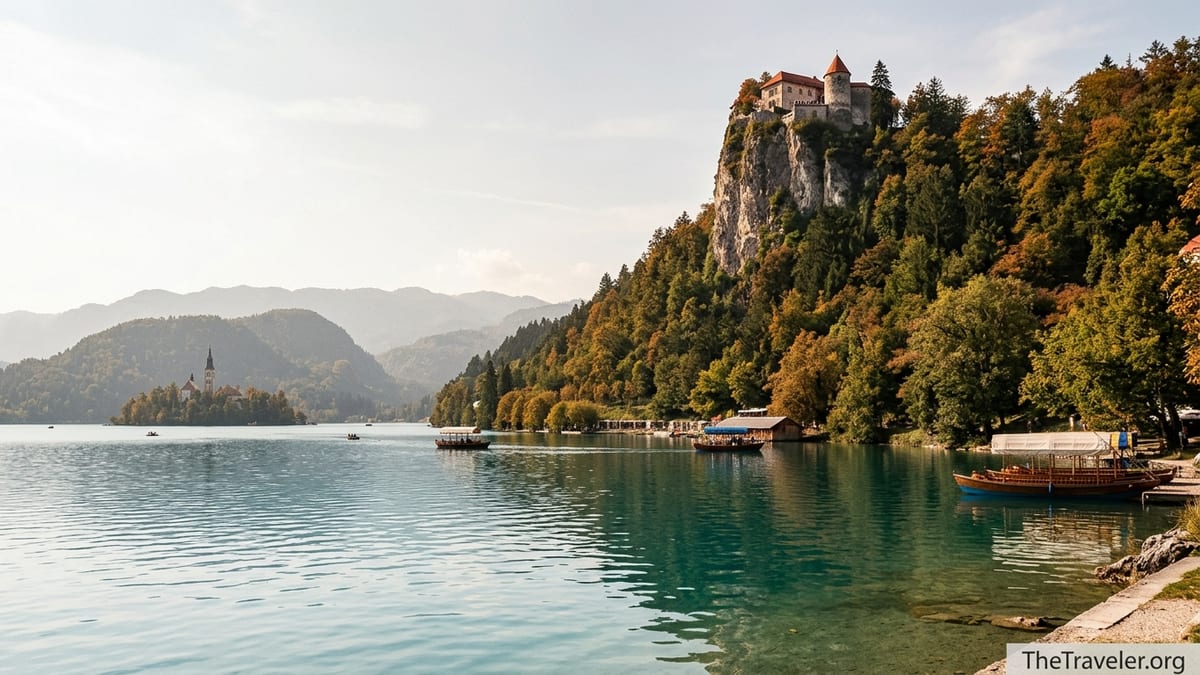
Perched on a sheer cliff above the turquoise waters of Lake Bled, Bled Castle is one of Slovenia’s most photographed sights. Yet many travelers still ask a practical question: is it actually worth stepping inside, or are the iconic views just as good from the shore? Recent visitor reviews, new 2026 pricing, and evolving experiences at the castle paint a more nuanced picture. For some, it is a highlight of their Slovenia trip; for others, it feels like a beautiful but expensive viewpoint. The truth lies somewhere in the middle, and it depends a lot on what you value when you travel.
Get the latest updates straight to your inbox!
The Case for Visiting: Views You Cannot Get Anywhere Else
Even the most skeptical reviewers tend to agree on one thing: the views from Bled Castle are exceptional. From the upper terraces and the restaurant balcony, you look directly down onto the lake, the little island with its church, and the ring of Julian Alps beyond. On clear days, peaks in Triglav National Park frame the scene, while in winter you might see fog hugging the lake with the castle sitting above a sea of cloud. Photographers repeatedly single out sunrise and late afternoon as the most rewarding times, when the light hits the island and the church bell tower turns golden.
The advantage the castle has over lakeside viewpoints is elevation. From the western shore, you can stroll to the popular Mala Osojnica and Ojstrica viewpoints, but both involve steeper forest hikes and rough steps that can be challenging in poor weather. By contrast, once you have climbed or driven up to Bled Castle’s gate, the rest of the complex is relatively compact and paved. Visitors who are not keen hikers, are traveling with young children, or have limited mobility often find the castle terraces the easiest way to enjoy a dramatic panorama without tackling muddy trails or exposed roots.
Recent visitor reports from 2025 and early 2026 show that many guests still rate the castle highly despite the increased entry fee. Some describe allocating just one or two hours of a Lake Bled day trip to wander the ramparts, sip a coffee with a view, and take their signature trip photo from the top terrace. Others recommend timing your visit to coincide with special events or exhibitions, such as seasonal art installations on the upper terrace, which can add an extra layer of atmosphere beyond sightseeing alone.
Tickets, Opening Hours, and What You Actually Get for the Price
For 2026, Bled Castle’s official price list sets the standard adult entrance fee in the low 20 euro range, with reduced prices for students, children, and families. The exact amount can change slightly by season, and children under a certain age often enter free. It is more expensive than many smaller Slovenian castles, and that is one of the main reasons some travelers question its value. Importantly, the ticket covers entry to the full castle complex: its courtyards, terraces, small museum, printing workshop, chapel, wine cellar area, and the upper viewpoints. There is no separate fee for the museum itself once you are inside.
Opening hours are generous, particularly in peak season. In summer months, the castle typically opens in the morning and remains accessible into the evening, with hours shortening in winter. This flexibility matters if you are trying to coordinate a visit around a bus from Ljubljana or a lake walk. Many visitors choose late afternoon to capture softer light and then stay on for an early dinner at the on-site restaurant, effectively combining sightseeing with a meal and stretching the value of the ticket over several hours.
What you receive for the price is not just scenery. Inside the museum, displays trace the story of Bled from its early medieval roots. While the collection is compact compared with blockbuster European palaces, there are artifacts, models of the castle at different periods, and multilingual panels explaining how the fortress evolved from an early 11th-century donation of land by the German King Henry II to a bishopric residence and later a more representational seat. Some travelers enjoy that it is digestible and can be covered in 30 to 40 minutes, while others feel it is underwhelming given the cost of admission.
A practical example: a couple visiting in shoulder season might spend around 40 to 45 euros on two adult tickets. If they allocate two hours, they might visit the museum, stroll the terraces, enjoy a drink at the cafe looking over the lake, and watch the sun drop behind the mountains. Many who follow this pattern report that the overall experience feels fair value, even if the museum alone would not justify the price.
What Surprises Many Visitors: Beyond the Postcard Photo
First-time visitors often arrive expecting “just a viewpoint” and are surprised by the number of small, hands-on experiences tucked into the castle’s courtyards. One of the most memorable is the traditional printing workshop, where staff demonstrate an old-style manual press. On certain days you can watch certificates or souvenir prints being pressed with wooden letters and sometimes try pulling the lever yourself. It is a simple activity, but families with school-age children often highlight it as a favorite detail that made the castle feel more alive.
Another recurring surprise is the wine cellar experience. Bled Castle hosts a wine cellar associated with Vina Dornberg, where staff demonstrate old-fashioned bottling. Visitors can, by prior arrangement or as part of scheduled sessions, fill a bottle from the cask, cork it, seal it with beeswax, and add a string-tied label. They then receive a certificate noting they bottled the wine themselves. Wine-focused travelers report that while this is not a full sommelier-led tasting like you might find at Hotel Triglav’s historic cellar across the lake, it is a charming, very Slovenian souvenir experience that goes beyond buying a standard bottle in a shop.
Seasonal programming also surprises many people who expect a static historic site. In winter, the upper terrace and interior rooms often host temporary art or craft exhibitions and festive events. Recent seasons have included contemporary ceramic installations that transform parts of the terrace into an outdoor gallery during the Advent period, and family events such as Easter egg hunts within the castle grounds. Travelers visiting at these times sometimes mention that they felt like they were stepping into a living cultural space, not just an old fortress.
Finally, the castle’s role as an event venue can come as a surprise. Weddings, concerts, and corporate receptions are common. This can be delightful if you stumble upon a string quartet playing in the courtyard during a summer evening, but it can also mean certain rooms or terraces are temporarily closed. It is wise to keep your expectations flexible if you are visiting during peak wedding season or major holidays.
The Downsides: Crowds, Climb, and Cost
For all its strengths, Bled Castle does have drawbacks, and it is helpful to consider them before deciding whether it fits your travel style. The first is cost sensitivity. Compared with wandering the lakeshore or hiking to a free viewpoint, a twenty-odd euro entrance fee per person feels steep if you are on a tight budget or traveling as a family of five. A number of recent reviewers describe the castle as “an expensive viewpoint,” particularly if they moved quickly through the museum and did not take part in extras such as the wine cellar or printing workshop.
Crowds are the second major complaint. Lake Bled is one of Slovenia’s most popular destinations and a staple of one-day tours from Ljubljana. Late mornings and midday in high season can see coach groups and small-group tours arriving at similar times, which leads to congested terraces and queues at the ticket office. Some visitors report that it took them longer to find a parking spot and wait at the entrance than to walk through the museum. If you are sensitive to crowds, you may find that the best strategy is to visit early in the morning, right after opening, or later in the afternoon after the bulk of tour buses have departed.
The climb itself also catches some people off guard. There is no public road directly to the gate from the lake for most private vehicles, and parking is limited in the upper area. Many guests walk up from the lakeside via a steep but paved path or staircases that can feel strenuous in summer heat. Those with knee issues or pushing strollers may find this ascent challenging. Some reviewers suggest that if you struggle with hills, you might prefer to see the castle from a distance and invest your energy in a leisurely lakeshore walk or hiring a pletna boat to the island instead.
Lastly, the interior of the castle is not lavish in the way that, for example, a large Habsburg palace is. Rooms are relatively sparsely furnished, and some are repurposed as exhibition spaces or venues, which can make the castle feel more like a museum compound than a fully preserved medieval residence. If your benchmark is places like Neuschwanstein or Versailles, you may find Bled Castle visually modest inside, though its location and views still carry the experience.
How Bled Castle Compares to Other Lake Bled Experiences
To decide if Bled Castle is worth it for you, it helps to compare it with other classic Lake Bled activities. A typical visitor might choose between spending an afternoon at the castle, taking a traditional pletna boat ride to the island, hiking to a viewpoint such as Mala Osojnica, or dedicating time to a wine tasting or a lakeside spa. Each option costs money or effort in different ways and offers a different angle on the same landscape.
A pletna boat ride to Bled Island usually costs a bit less than an adult ticket to the castle, but you will also pay a small additional entry to the island church. The payoff is being on the water and climbing the 99 stone steps to ring the church bell. Many travelers pair the boat ride with photos taken from the lakeside near the Vila Bled area, where you can frame both the island and the castle above. If your priority is being on the lake and exploring the church interior, the island may feel like a better use of your budget than the castle.
Hiking to free viewpoints provides some of the most iconic photographs of the island, but it requires time and physical effort. The trail to Mala Osojnica, for example, can take around 45 minutes from the lake and includes steep sections and wooden ladders. It is unforgettable at sunrise or sunset for reasonably fit hikers with good shoes. However, if you are visiting on a short day trip from Ljubljana in winter, when it gets dark early and trails may be muddy or icy, a safer option may be to walk or drive up to the castle instead.
Then there are off-castle cultural experiences. Wine enthusiasts, for instance, might choose a structured Slovenian wine tasting in a hotel cellar in Bled or nearby instead of, or in addition to, the castle cellar. These tastings focus on indigenous grape varieties and guided education and are typically priced in the 50 to 60 euro range per person, often including multiple boutique wines and snacks. If you are already planning a dedicated evening of wine, you may decide the castle’s bottling experience is a charming extra rather than a core reason to visit.
Planning Your Visit: When to Go and How to Get There
Most travelers reach Bled from Ljubljana in about an hour by car or bus. If you are self-driving, you can follow signs up to parking areas above the lake and then walk the final segment to the castle gate. Parking near the castle itself is limited and usually paid, with different zones and time limits, so many visitors prefer to park lower down and combine the uphill walk with views of the lake. If you rely on public transport, local buses stop in the town of Bled; from there, it is a moderately steep 15 to 20 minute walk to the entrance, depending on your pace.
Timing matters. In July and August, mid-morning to mid-afternoon is peak congestion, with day-trip buses arriving from Ljubljana and other Slovenian hubs. To avoid this, consider arriving early, right after opening, and then heading down to the lake before the heat and crowds build. Alternatively, visit in late afternoon, when many tour groups have departed. This is also when the light over the lake is often at its best. In the shoulder seasons of April, May, September, and October, crowds thin out somewhat, and cooler temperatures make the uphill approach more comfortable.
Weather can transform the experience. On clear summer days, the blue-green water and mountain backdrop are spectacular, but you should bring water and sun protection for the walk. In autumn, the surrounding forest turns shades of orange and red, and the castle terraces become excellent vantage points for foliage photography. In winter, snow on the surrounding peaks and occasional fog over the lake give the castle a moody, almost fairy-tale quality. Some recent visitors in January and February mention that even in cold weather, the terraces were worth stepping outside briefly for photographs, then retreating indoors to warm up with coffee or mulled wine.
Finally, keep an eye on special events. The castle frequently hosts exhibitions, concerts, and seasonal programs that might influence your ideal visit time. For example, an evening concert in the courtyard can make a late visit particularly magical, while an afternoon children’s program or holiday fair might appeal to families. Admission to these events usually still requires a standard ticket, but the programming can significantly enhance the sense of value for the entrance price.
Who Will Love Bled Castle, and Who Might Skip It
Certain types of travelers consistently describe Bled Castle as a highlight. Photographers and drone-free content creators appreciate the variety of vantage points for framing the island and mountains without needing special equipment or long hikes. Couples on honeymoon or anniversary trips often enjoy lingering at the castle restaurant with a glass of Slovenian wine and a slice of Bled cream cake, using the scenery as a backdrop for a special meal. Families with school-age children like the mix of short, manageable walks, interactive stations such as the printing press, and safe, enclosed courtyards where kids can roam a little.
History-minded travelers with an interest in medieval fortifications usually find enough to engage them for an hour or two. The museum, chapel, and remnants of fortifications, combined with interpretive panels, give insight into how a defensive site evolved into a symbol of the wider region. The castle’s status as one of the oldest in Slovenia, with documented roots around the year 1004, adds depth for those who enjoy placing sites on a broader European historical timeline.
On the other hand, budget-conscious backpackers passing quickly through Slovenia or those prioritizing wilderness over built attractions sometimes choose to admire Bled Castle from below and invest their limited funds in activities deeper in the Julian Alps. Travelers who strongly dislike crowds or are comparing Bled Castle against much larger, more ornate European palaces may also feel underwhelmed. For them, a lakeside picnic, a quiet morning rowboat rental, or a hike to a less frequented viewpoint might deliver greater satisfaction at lower cost.
If you are still on the fence, a useful exercise is to think about how much you usually spend on a memorable view elsewhere. If you would happily pay a similar amount for an observation deck in a major city or a cable car ride in the mountains, then Bled Castle, with its combination of views, small exhibits, and the charm of exploring a genuine medieval fortress, will likely feel worthwhile.
The Takeaway
So, is Bled Castle worth visiting? For many travelers, yes, but not for every traveler and not at every time of day. Its greatest strengths are the unmatched views over Lake Bled, the ease of accessing those views without technical hiking, and the set of small but characterful experiences within the walls, from an old-style printing workshop to a wine cellar where you can bottle your own souvenir. Its main drawbacks are the relatively high ticket price for Slovenia, the potential for heavy crowds in peak season, and an interior that some find modest compared with grand European palaces.
If you value scenery, atmosphere, and a sense of place more than extensive museum collections, and if you plan your visit carefully to avoid the busiest hours, Bled Castle is likely to earn its place on your itinerary. Think of it as a premium vantage point combined with a concise history lesson and a dash of Slovenian culture, rather than as a palace packed with treasures. With that mindset, you can step through its gates with realistic expectations and walk back down to the lake feeling that you have seen Lake Bled from its most iconic angle.
FAQ
Q1. Is Bled Castle worth the entrance fee?
The entrance fee feels worthwhile if you plan to spend at least one to two hours exploring the terraces, museum, and small experiences like the printing workshop or wine cellar. If you rush through in under 45 minutes, it can feel like an expensive viewpoint.
Q2. How long do I need to visit Bled Castle?
Most visitors are satisfied with about one and a half to two hours. That allows enough time for the walk up, exploring the museum and courtyards, taking photos from different terraces, and enjoying a drink or snack.
Q3. What is the best time of day to visit Bled Castle?
Early morning and late afternoon are usually best. You avoid the largest tour groups, the light is softer for photos, and in summer the temperatures are more comfortable for the uphill walk.
Q4. Is the walk up to Bled Castle difficult?
The walk is short but steep, on paved paths and steps. Most reasonably fit visitors manage it in 15 to 20 minutes, but it can feel demanding in hot weather or for those with knee or mobility issues.
Q5. Are there any guided experiences inside Bled Castle?
Yes. Depending on the day and season, you may find demonstrations in the printing workshop, wine bottling sessions in the cellar, and occasional guided tours or themed events, especially in summer and around holidays.
Q6. Can I visit Bled Castle in bad weather?
You can, and the museum and interior spaces provide shelter. However, the main attraction is the view, so heavy fog or rain may limit what you see from the terraces. On overcast days with high cloud, the mood can be atmospheric and still rewarding.
Q7. Is Bled Castle suitable for children?
Yes, many families enjoy it. Children tend to like the climb, the courtyards, cannons, and interactive elements such as the printing press. Parents should supervise near walls and railings, but overall the site is manageable with kids.
Q8. Do I need to book Bled Castle tickets in advance?
For most individual travelers, advance booking is not essential. Tickets are sold on-site, and while queues can form in high season, they usually move steadily. Groups and event visitors should confirm arrangements ahead of time.
Q9. Can I eat or drink at Bled Castle?
Yes. There is a restaurant and cafe with lake views where you can order full meals, desserts such as Bled cream cake, or simply a coffee or glass of wine, which helps turn the visit into a longer, more relaxed experience.
Q10. If I only have half a day at Lake Bled, should I prioritize the castle or the island?
If you are drawn to big panoramas and photography, the castle is usually the better choice. If you prefer being on the water and exploring a small church up close, the island and a pletna boat ride may suit you more. Many travelers feel that with a full day, doing both gives the most complete experience of Lake Bled.