


Lake Bled is one of those places that looks unreal in photos and, remarkably, just as magical in person. But if you only have a short time in Bled, you quickly run into a classic dilemma: should you spend your precious hours exploring Bled Castle high on its cliff, or hiking to the famous viewpoints like Ojstrica and Mala Osojnica that deliver the postcard-perfect lake panorama? This guide breaks down what each experience really feels like on the ground, with time, effort and budget in mind, so you can choose the one that best matches your trip.
Get the latest updates straight to your inbox!
Understanding the Two Experiences
Although they share the same lake, Bled Castle and the western viewpoints offer very different kinds of visits. Bled Castle sits on a 130‑meter cliff on the northern shore, looking down over the town, the island church and the karst mountains beyond. It is the oldest castle mentioned in written sources in Slovenia and functions today as a museum complex with courtyards, small exhibitions, a wine cellar and a restaurant. Many travelers experience it as a mix of history lesson and scenic balcony over the lake.
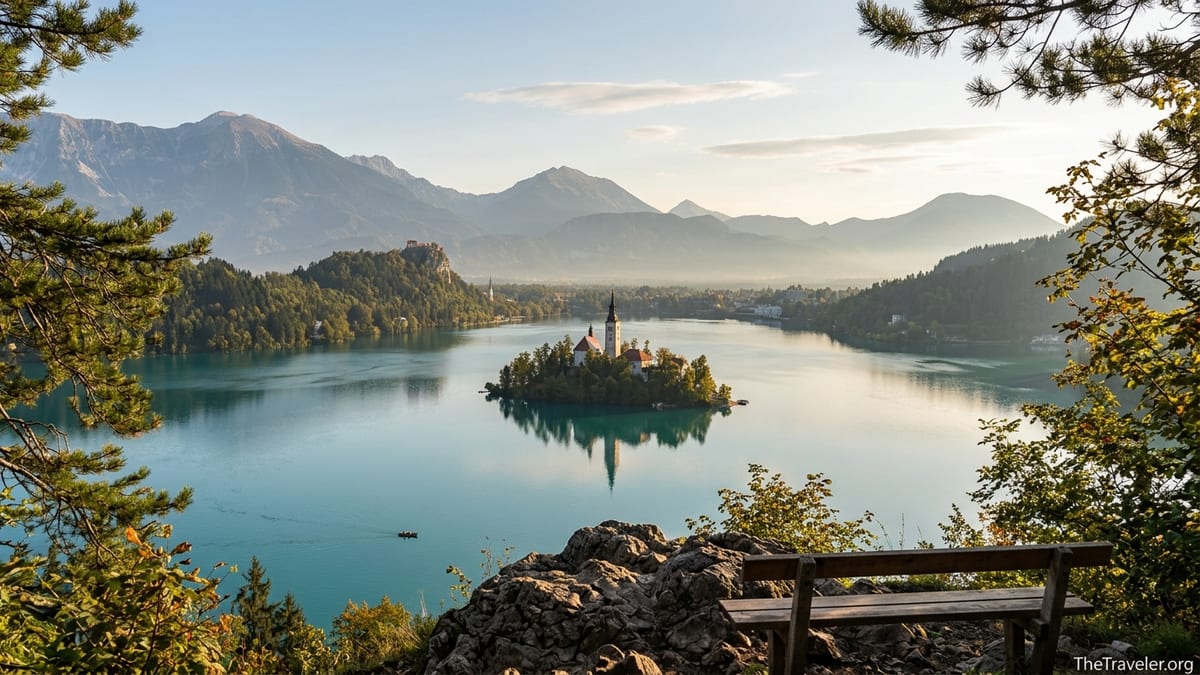
Across the water on the opposite side, the Ojstrica and Osojnica viewpoints are low forested hills rising from the western shore. Short but steep trails lead to natural rocky perches and fenced viewpoints that look back across the entire lake, with Bled Castle on its cliff and the small island floating in the middle. These spots, especially Mala Osojnica and Ojstrica, are where most of the iconic Instagram images of Lake Bled are taken. A visit here feels less like sightseeing and more like a small mountain walk with a big payoff.
In practical terms, choosing between them is often a question of how much you are willing to walk uphill, how comfortable you are on dirt paths, and whether you value museums and cafés or wild viewpoints and quiet forest. Some travelers happily do both in a single long day, but if you have to choose, understanding the experience at ground level is crucial.
Before you decide, it also helps to consider the time of day. Bled Castle is easy to visit throughout the day and stays lively even in late afternoon. The viewpoints, by contrast, are at their best around sunrise or sunset, when the light is soft and the lake often calm. If you are not keen on hiking in semi‑darkness or on potentially slippery paths, that might tilt the decision toward the castle.
What It’s Really Like at Bled Castle
Reaching Bled Castle usually starts with a short uphill journey from town. Many visitors walk up from the lakeside promenade near the town center, following a signed path through the trees that takes roughly 15 to 25 minutes depending on your pace. The path is paved or gravel and includes steps, so you are climbing, but you are not scrambling over roots or rocks. Those arriving by car can drive up the castle road and park near the entrance, though parking can fill up quickly in peak summer and is paid separately.
Entry tickets for Bled Castle are not inexpensive by local standards. As of the current 2026 price list, adult tickets are around the mid‑teens of euros, with discounted rates for students and children, and family tickets that can soften the cost for two adults with kids. There is no extra fee to step onto the terraces or visit the small museum rooms once you are inside, so most visitors try to spend at least an hour or two to make the most of the cost. It is worth planning your timing so you are not rushing through in 30 minutes.
Inside, the experience is part museum visit and part open‑air viewpoint crawl. You will find displays on the development of the lake and the town, a small chapel, a printing workshop where staff sometimes demonstrate old techniques, and a wine cellar that offers tastings or bottle‑filling experiences for an extra charge. The upper courtyard terraces give multiple angles on the lake and surrounding Julian Alps. On a clear day the views stretch far down the Sava valley, and even travelers who have hiked the western viewpoints often comment that the perspective from the castle is unique and worth seeing.
Planning a simple real‑world visit might look like this: you catch a late morning bus from Ljubljana to Bled, walk 10 minutes from the station to the lakeside, follow the signposted trail up to the castle, and arrive just before midday. After exploring the museum rooms and viewpoints, you sit down at the castle restaurant terrace for a coffee and a slice of the famous Bled cream cake, taking in the view from a shaded table. By mid‑afternoon you stroll back down to the lake to catch a pletna boat to the island or simply walk some of the lakeside path. For someone who values comfort, a structured site, and services nearby, this is an easy and satisfying way to experience Bled.
What It’s Really Like on the Lake Bled Viewpoint Trails
The classic western viewpoints are Ojstrica, Mala Osojnica and Velika Osojnica. They all sit above the lake’s western shore near the Velika Zaka area, and most visitors reach them from trailheads close to the camping area or lakeside parking. Distances are short. From the lake to Ojstrica is commonly reported as around 20 minutes of ascent for reasonably fit hikers, while Mala Osojnica is closer to 30 to 40 minutes from the same side, with Velika Osojnica a little higher again. The total loop connecting several viewpoints usually takes around 1.5 to 2 hours of walking time.
The paths, however, can be surprisingly steep given the modest distances. Expect narrow dirt or rocky tracks with steps made from roots or wooden risers, short switchbacks and sections that are slippery after rain or in autumn leaf fall. Hikers reviewing the trails in 2024 and 2025 commonly describe them as short but demanding, and many recommend decent footwear rather than sandals. People in good health, including families with outdoorsy children, routinely complete the hike, but it is not ideal for those with mobility issues or anyone uncomfortable with steep, uneven ground.
At the top, the reward is the famous view: the small island and church almost centered on the lake, Bled Castle on its cliff to the left, the Karawanks and Julian Alps layered in the distance. At Mala Osojnica you will find a fenced platform and a bench, which helps with both safety and photos. Ojstrica has a more rugged feel, with rocky outcrops and a few small benches but a bit less formal infrastructure. On a clear summer sunset you might be sharing the spot with photographers, couples with tripods, and groups of friends drinking in the view, but even in peak season the atmosphere usually feels more intimate than the roads and car parks around the lake below.
A real‑world example: you might stay in a guesthouse in Bled town, set an early alarm, and walk 30 to 40 minutes along the lakeside boardwalk toward Velika Zaka while the sky is still pale blue. Reaching the trailhead, you climb steadily through the trees for 25 minutes, emerging at Ojstrica just as the first light hits the mountains above. After a quiet 15 minutes watching the lake shift from grey to turquoise, you continue to Mala Osojnica for a slightly different angle, then descend back to the lakeside in time for breakfast at a café in town. You can easily be back at your hotel by mid‑morning, having already captured the classic Lake Bled photos without the midday crowds.
Time, Effort and Accessibility: Who Should Choose What
If you have limited time, the choice between Bled Castle and the viewpoints often comes down to how much walking you want to do for your view. Bled Castle requires a 15 to 25 minute uphill walk or a short drive, followed by wandering around paved courtyards and staircases inside the complex. For most people with average mobility, it is manageable, and for those who struggle with steep climbs, taking a taxi or transfer up to the castle car park reduces effort significantly.
The viewpoints demand more physical commitment. Even though the hike from the lake might only be 2 to 3 kilometers total, the paths climb sharply, and the elevation gain feels concentrated. If you are used to city walking but not mountain trails, you might find yourself breathing hard and occasionally using your hands on steeper steps. In wet or icy conditions, the risk of slips increases and local tourism information often advises caution. Elderly travelers or those with knee issues frequently report that the descent is tougher than the climb. For some, this reality shifts the decision firmly toward the castle.
Accessibility also plays a major role. Wheelchair users and travelers pushing strollers will find the lakeside promenade very pleasant but both Bled Castle and the western viewpoints challenging. The castle does have some accessible areas and viewpoints, particularly when arriving by car, but not all museum spaces are step‑free due to its historic structure. The forest paths to Ojstrica and Osojnica are not suitable for wheelchairs or strollers at all. In that sense, Bled Castle is the more inclusive option, while the viewpoints remain essentially a hikers’ reward.
If your schedule is extremely tight, such as a four‑hour stop on a guided tour, the castle usually offers the simpler logistics. Tour buses frequently drop groups at or near the castle, guides coordinate tickets, and you have a defined time window to explore. Fitting in a viewpoint hike in the same short stop would be rushed and risk missing your onward bus. Independent travelers with a full day or overnight stay have more flexibility and can more easily combine both experiences.
Costs, Crowds and the Overall Atmosphere
From a budget perspective, the viewpoints look like the clear winner at first glance. Hiking to Ojstrica or Mala Osojnica is free, and many people simply walk from their accommodation in town, adding no extra expense beyond perhaps a coffee afterward. The main cost kicks in if you drive and choose to park near the Velika Zaka area, where lakeside parking can reach several euros per hour during peak season. Those fees can add up quickly if you linger at the viewpoints and then spend additional time enjoying the lakefront.
Bled Castle has an entry fee that most visitors consider significant compared with other regional attractions, especially for families. However, it is worth factoring in that this price includes access to the courtyards, exhibitions, and panoramic terraces, as well as the maintained infrastructure that keeps the site functioning smoothly. A couple visiting in high season might pay the equivalent of a simple restaurant meal for their two tickets, while a family of four might see the cost approach what they would spend on a boat trip to the island. For some, that is a justifiable trade for the ease and structure of the visit; for strict budget travelers, it can be a deciding factor against the castle.
Crowds feel different in each place. At Bled Castle, visiting mid‑day in July or August often means sharing the courtyards with tour groups, school excursions and independent travelers. You might occasionally need to wait a few minutes for a spot along the wall for your photo. Early morning or late afternoon visits are quieter, especially outside of weekends. At the viewpoints, the main pinch points are sunrise and sunset in peak season, when photographers and social media‑minded visitors arrive early to secure front‑row spots. Even then, the overall number of people remains smaller than at the castle, and away from the main rocks and benches the surrounding forest feels peaceful.
Atmospherically, the difference is striking. Bled Castle has a curated, almost storybook feel, with neatly maintained walls, interpretive signs and a sense of stepping into a defined tourist attraction. The viewpoints feel more like a slice of wild hillside, with tree roots under your boots and birds calling from the canopy. If you are traveling with young children, the castle’s structured environment and on‑site facilities might feel easier. If you are longing for a quick hit of Alpine nature and do not mind breaking a sweat, the viewpoints will likely be more satisfying.
Photography and Scenery: Where the Classic Shots Come From
Most of the photos that first tempt travelers to plan a trip to Lake Bled are taken from the western viewpoints, particularly Mala Osojnica and Ojstrica. This is where you get the textbook composition: the island and its church slightly off center, Bled Castle perched on the cliff, and layers of mountains in the background. At certain times of year, morning mist hangs low over the water while the first sun touches the church spire, creating a soft, dreamlike scene without any need for filters or heavy editing.
From a photographic standpoint, sunrise and early morning generally work best for the viewpoints. The sun comes up behind the mountains, slowly lighting the lake and separating the layers of ridge and cloud. In summer, this can mean starting your hike before 5:30 or 6:00 a.m., depending on the exact month, and coming prepared with a headlamp or phone light for the initial section of trail. Sunset can also be beautiful, but you will often have the sun setting behind or slightly to the side of the mountains, which can lead to stronger contrasts and more challenging exposure.
Bled Castle offers very photogenic angles too, but with a different feel. From the upper terraces you can frame the island far below, with the lake curving around to the distant Karawanks. Telephoto lenses can isolate the church tower or pick out details of the rowing boats crossing the water. In late afternoon, the light can be particularly flattering, sliding in from the west and warming the cliffs and rooftops. Many visitors who are not up for pre‑dawn hikes still manage to come home with impressive images from the castle alone.
One practical point for photographers is tripod use and space. On the viewpoints, there is limited flat ground and you will often be sharing the rocks with others trying to take pictures. A compact travel tripod and a cooperative attitude go a long way. At the castle, there is more room to spread out and brace against walls or railings, but it is still wise to be considerate of foot traffic. In both locations, the weather in the Alps can change fast. A morning that began clear can turn hazy or cloudy, so flexibility and patience are just as important as gear.
Combining Both in One Itinerary
Travelers who can spend at least one night in Bled do not necessarily have to choose between the castle and the viewpoints. With a bit of planning, it is perfectly realistic to fit both into an overnight stay without feeling rushed. A common strategy is to hike to the viewpoints for sunrise or early morning and then visit the castle later that same day, or the next afternoon, when you are ready for a slower, more museum‑oriented experience.
An example itinerary might look like this: arrive in Bled from Ljubljana around midday and spend your first afternoon walking part of the lakeside promenade, perhaps renting a traditional pletna boat or a rowboat for an hour to reach the island. In the early evening, scout the trailhead for Ojstrica so you know where to find it in the dark. The next morning, get up before dawn, hike to Ojstrica and Mala Osojnica for sunrise, and return to town for breakfast. After a rest, walk up to Bled Castle in mid‑afternoon, exploring the museum and enjoying a relaxed coffee on the terrace before descending to town for dinner.
For travelers on a day trip from Ljubljana or elsewhere, combining both is more challenging but not impossible. If your bus arrives mid‑morning and departs in the early evening, you might need to prioritize one as your main experience and treat the other as a quick taste. For instance, you could take a taxi directly from the bus station to the Velika Zaka area, hike quickly to Ojstrica and back, then spend your remaining hours strolling the lakeside and enjoying views up to the castle without necessarily entering it. Alternatively, you could walk straight up to the castle on arrival, then devote the later part of your day to circling the lake at water level.
The main trade‑off is energy. Doing a steep hike and a full castle visit in high‑season heat on a single day can leave you very tired, especially if you are also walking back and forth from the bus station. If you are traveling with children or older relatives, building in a midday rest at a lakeside café or your accommodation is sensible. It may be better to do one experience really well than to rush through both and remember only crowds and fatigue.
The Takeaway
If your primary goal is that famous, elevated photo of Lake Bled with the island, castle and mountains all in one frame, and you are comfortable with a short but steep hike on dirt trails, the western viewpoints like Ojstrica and Mala Osojnica deserve your time first. They are free to access, deliver the most iconic angles and offer a sense of being in the landscape rather than simply looking at it from a distance. Sunrise or early morning hikes in particular can feel like a private encounter with one of Europe’s most photogenic lakes.
If you prefer a structured visit with historical context, easier footing underfoot and the possibility of sitting down with a coffee or meal overlooking the lake, Bled Castle is likely the better choice. The entry ticket buys you a blend of museum, architecture and scenery, and it works especially well for travelers with limited mobility, families with younger children, or anyone on a tightly scheduled day trip. From the terraces, the view is still magnificent, even if it is not the exact angle you have seen most often on postcards.
Many visitors will find that the perfect answer is not “castle or viewpoints” but “castle and viewpoints, at different times of day.” With an overnight stay you can enjoy the viewpoints in the cool quiet of early morning and the castle in the gentler light of late afternoon, experiencing Lake Bled from multiple perspectives without having to rush. Regardless of which you choose, planning around your fitness level, time window and tolerance for crowds will ensure that the experience you invest in genuinely feels worth the journey.
FAQ
Q1. If I only have half a day in Bled, should I choose Bled Castle or the viewpoints?
If you have just half a day and prefer an easier, more structured visit, Bled Castle is the safer choice. If you are fit, love hiking and mainly want that classic postcard photo, the viewpoints will likely be more rewarding.
Q2. How difficult is the hike to Ojstrica or Mala Osojnica?
The hikes are short but fairly steep, with dirt, roots and rocky sections. Most reasonably fit people can do them in 20 to 40 minutes of uphill walking, but they are not suitable for those with serious mobility issues.
Q3. Is Bled Castle worth the entry fee?
For many visitors, yes. The ticket price is relatively high for Slovenia, but you get access to panoramic terraces, small museum exhibits, historic courtyards and on‑site facilities, which can make it feel worthwhile, especially if you stay at least an hour or two.
Q4. Can I visit both Bled Castle and the viewpoints in one day trip from Ljubljana?
It is possible but can feel rushed. With about eight hours in Bled, a fit traveler can do a viewpoint hike and a castle visit, but you will need to manage time carefully and accept a fairly full day of walking.
Q5. What is the best time of day to visit the Lake Bled viewpoints?
Sunrise and early morning are generally best for soft light, calmer water and fewer people. Sunset can also be beautiful, but trails and descents may be trickier in fading light.
Q6. Are there places to eat at Bled Castle or near the viewpoints?
Bled Castle has a restaurant and café with lake views, plus small kiosks at busy times. Near the viewpoints, you will not find food on the trails themselves, but there are cafés, a campsite restaurant and lakeside stands around Velika Zaka.
Q7. Is it safe to hike to the viewpoints in bad weather?
In rain, snow or ice, the trails become slippery and more hazardous, especially on steep or rooty sections. In such conditions, many travelers choose to skip the viewpoints and focus on the lakeside walk or the castle instead.
Q8. Can children manage the hike to Ojstrica or Mala Osojnica?
Outdoorsy children who are used to walking up hills often manage well, especially with frequent breaks. Very young children, or those not used to hiking, may struggle with the steep parts and uneven footing, so close supervision is essential.
Q9. Is Bled Castle accessible for people with limited mobility?
The castle sits on a hill and has uneven surfaces and steps, but arriving by car or taxi reduces the climb significantly. Some terrace areas and viewpoints are reachable with care, though not every museum room is fully accessible.
Q10. Do I need special equipment to hike to the viewpoints?
No technical gear is needed, but sturdy closed shoes with good grip are strongly recommended. A small backpack, water, and a light or headlamp for early or late hikes will make the experience safer and more comfortable.