


Two turquoise lakes in Slovenia’s Julian Alps dominate social media feeds and guidebook covers: romantic, fairy‑tale Lake Bled and wild, quietly spectacular Lake Bohinj. They are only about 30 minutes apart by road, yet they deliver very different travel experiences. If you are planning a Slovenian escape and do not have time to linger at both, choosing the right lake for your style matters far more than you might expect.
Get the latest updates straight to your inbox!
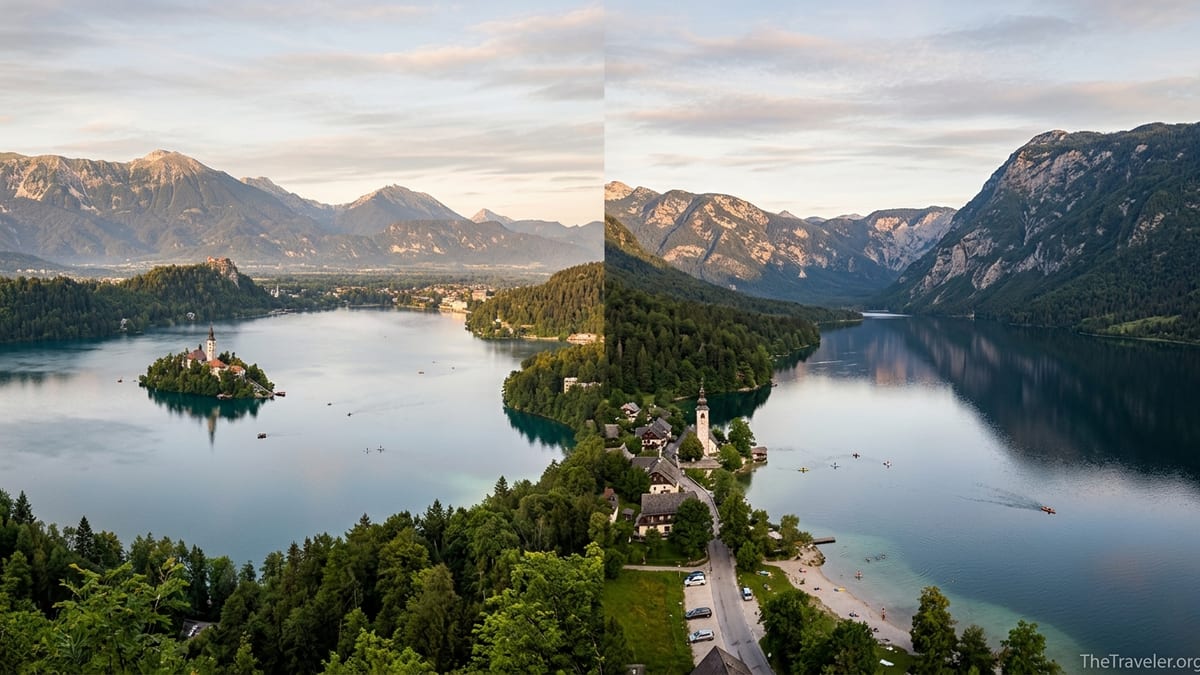
First Impressions: Postcard Icon Versus Alpine Quiet
Lake Bled is the image most people have in mind when they think of Slovenia: a mirror‑smooth lake, a tiny wooded island topped by a church, and a clifftop castle hovering above the water. The town of Bled wraps around one side with a promenade, lakeside hotels, and cafe terraces serving the famous Bled cream cake. In peak summer, the 6‑kilometre path around the lake feels lively from early morning runners to sunset strollers.
Lake Bohinj, about 30 minutes farther into the mountains, feels instantly wilder. The village of Ribčev Laz is small, with a church, a few guesthouses, and a simple lakeside pier. The rest of the shoreline is mostly forest and pebble beaches. Instead of a castle, the skyline is dominated by the steep slopes of the Julian Alps and the cable car to Vogel ski area. Even in July and August, you can still find quiet stretches of shore with just a few families and hikers.
That first impression often decides travelers’ loyalties. If you like an easy mix of nature and a holiday‑town buzz, Bled delivers it at a glance. If your perfect lake retreat means hearing cowbells and wind in the spruce trees rather than traffic, Bohinj is more likely to feel like the right place to exhale.
Because they are so close, many visitors rush both lakes in a single day. In practice, that usually means a crowded midday lap of Bled and only a quick photo stop at Bohinj. If you can, base yourself at one and treat the other as a side trip. The question is which base suits you better.
Getting There and Getting Around
From Ljubljana, Lake Bled is the simpler first step into the mountains. Direct buses from the capital’s main station typically take around one hour, depending on traffic, and run roughly every 30 to 60 minutes in season. One‑way tickets cost in the region of 8 euros, and services can be very busy in July and August, with some travelers reporting standing‑room‑only buses at peak times. Trains from Ljubljana stop at Lesce‑Bled station about 4 kilometres from the lake, from where you connect by local bus or taxi.
To reach Lake Bohinj by public transport, you usually pass through Bled. Buses from Ljubljana to the village of Ribčev Laz or on to Ukanc at the far end of the lake typically take about 1 hour 45 minutes. Fares are slightly higher than to Bled but still in the low double‑digits for a return. In summer, extra services run along the valley, making it realistic to stay in Bohinj and day‑trip to Bled without a car, using the frequent Bled–Bohinj bus link.
Driving gives you more flexibility, especially if you plan to combine the lakes with visits to Vintgar Gorge, the Pokljuka Plateau, or mountain trailheads. From central Ljubljana, the motorway and regional roads bring you to Bled in around 45 minutes in light traffic; continuing to Bohinj takes another 30 minutes or so. In high season, however, traffic around Bled can slow to a crawl, and municipal reports list summer congestion and limited parking as ongoing problems, so you may still prefer buses for day trips once you have arrived.
Around both lakes, the best way to move is on foot, by bike, or in summer by local shuttle. Bled’s lakeside path is fully circumnavigable and mostly flat, ideal for a leisurely 90‑minute walk. Bohinj has a good shoreline trail on the northern side, while the south side is wilder and sometimes rougher underfoot. In high season, Bohinj introduces shuttle buses up the valley and to trailheads to reduce car use, and visitors can purchase regional parking cards that combine parking with activity discounts, which can be good value if you are staying several days.
Atmosphere and Crowds: Lively Versus Laid‑Back
On a sunny August afternoon, Lake Bled can feel like a small resort town anywhere in the Alps. Coaches line up near the main bus station, souvenir kiosks sell fridge magnets and pletna‑boat models, and you will likely hear a mix of English, German, Italian, and Korean along the promenade. Restaurant terraces fill quickly in the evening, and it is wise to reserve lakeside spots at popular places in peak season, especially those overlooking the island and castle.
By contrast, Lake Bohinj usually trades that energy for elbow room. Even in summer, the largest crowds tend to cluster near Ribčev Laz, where day‑trippers step off buses for a quick swim or a loop on the small tourist boat. Walk 20 minutes along the northern shore toward Ukanc and the numbers thin out. Many visitors recount having entire stretches of beach almost to themselves by late afternoon, especially outside school holidays.
This difference in atmosphere also shows up in nightlife. Bled has a compact but real evening scene: hotel bars, a handful of cocktail spots, and casual riverside bars in nearby villages. While you should not expect late‑night clubbing, you can easily finish a day with a glass of local wine and live music. Bohinj’s evenings are much quieter, largely focused on guesthouse dining rooms and one or two low‑key bars. For some travelers this is bliss; for others it feels too sleepy after a couple of nights.
Season makes a big difference. Bled has a noticeable tourist presence from spring to autumn, with Christmas lights and winter events centered around the castle and lake. Bohinj feels almost like a different destination in winter, when it becomes a base for cross‑country skiing, snowshoeing, and quiet walks under snow‑draped peaks. If your priority is to escape crowds, late May, early June, and late September are good bets for both lakes, with Bohinj usually staying calmer even at those times.
Activities and Experiences: What You Actually Do All Day
Lake Bled excels at classic sightseeing and gentle outdoor activity. The most iconic experience is a ride on a traditional pletna boat to Bled Island, rowed by a standing oarsman. A return trip plus a short visit to the island church and bell typically costs several tens of euros per person, which adds up for families but is a uniquely Bled experience. Climbing up to Bled Castle, where entrance tickets are also in the mid‑teens per adult, gives you panoramic views over the lake and island, plus small exhibits on local history.
Beyond these headline sights, Bled is a good base for soft adventures. You can rent stand‑up paddleboards and kayaks at several points around the lake, cycle quiet roads to nearby villages, or take a bus or taxi to Vintgar Gorge for a half‑day walk along wooden walkways above the Radovna River. Families appreciate the easy, stroller‑friendly lake circuit and options like a small summer toboggan run on the hill above town.
Lake Bohinj leans harder into nature and hiking. The clear water is slightly colder than Bled’s but usually warm enough for comfortable swimming in July and August, especially near the pebble beaches at Ukanc. Kayak rentals and a small sightseeing boat operate on the lake, but motorized traffic is more restricted than at Bled, which keeps the atmosphere calmer. The big draw is the surrounding Triglav National Park: the Vogel cable car, with adult return tickets around the high‑20‑euro mark, lifts you to over 1,500 metres for alpine views and a network of hiking trails.
Serious hikers often choose Bohinj as a gateway to longer routes into the Julian Alps, including multi‑day hut‑to‑hut treks toward Mount Triglav and the high plateaus above the valley. Even casual walkers can find rewarding half‑day outings, such as the well‑marked path to the Savica Waterfall, where a modest entrance fee helps maintain the trail and viewing platforms. Compared with Bled, the emphasis at Bohinj is less on attractions with tickets and more on time spent on the trail or by the water.
Costs, Accommodation, and Food
Lake Bled has the full spectrum of accommodation, from four‑star spa hotels with direct lake views and room rates that can climb to several hundred euros per night in high season to simple hostels and guesthouses in the town’s backstreets. Because demand is so strong, especially for lakefront rooms with balconies, prices in July and August are significantly higher than in Ljubljana. Even mid‑range hotels can easily top 150 to 200 euros per night for a double room with breakfast in peak weeks.
Restaurant prices around Bled generally reflect its popularity. A main course at a lakeside restaurant might run 18 to 25 euros, with desserts like the famous kremna rezina cream cake around 6 to 8 euros. You can keep costs down by eating at bakeries, picking up picnic supplies at supermarkets on the edge of town, or venturing a few kilometres into nearby villages, where portions are often larger and prices a little softer.
In Bohinj, the price level tends to be slightly gentler, especially once you look beyond the immediate lakeshore. Traditional guesthouses in villages such as Stara Fužina and Bohinjska Bistrica offer comfortable rooms or small apartments, with summer prices that can undercut Bled by a noticeable margin for similar quality. Self‑catering apartments are common and pair well with the region’s simple cuisine: grilled trout, hearty stews, and cheese plates made with local dairy products.
There are still splurge options in Bohinj, including design‑forward hotels and lakeside properties with wellness facilities, but the overall feel is less overtly upscale. Budget travelers who are willing to walk or drive a few minutes to the lake can often find family‑run rooms that deliver good value, especially outside the absolute peak of school holidays. In both lakes, booking early for summer is important, but Bohinj tends to retain last‑minute availability for longer.
Who Will Love Lake Bled Most?
Lake Bled makes the most sense if this is your first time in Slovenia and you want the country’s classic postcard views wrapped into an easy, compact package. If you have only one night to spare from Ljubljana, it is by far the easiest destination to reach and understand quickly. The island church, castle, and lake circuit form a tidy checklist that fits neatly into a day and a half, with enough cafes and shops to keep less outdoorsy members of your group happy.
It is also the better choice if you are traveling with extended family or friends who have different energy levels and expectations. Grandparents can sit in a cafe with castle views while younger travelers rent paddleboards or hike up to a viewpoint. Children usually enjoy the boat rides, lakeside playgrounds, and simple swims at designated bathing areas. Couples looking for a romantic setting will appreciate sunset walks, balcony views, and the option to dress up for a nicer dinner without leaving the lakeside.
However, you should be comfortable with crowds, particularly in July, August, and on sunny weekends from late spring to early autumn. If you are sensitive to commercialisation, the souvenir stalls and steady stream of coaches may feel at odds with the alpine setting. Many repeat visitors report enjoying Bled most in shoulder season, when the paths are quieter but cafes and services still operate.
If seeing the iconic Bled Island view in person feels essential, the trade‑off in popularity is usually worth it. You can mitigate some of the crowding by planning key experiences for early morning or late afternoon and spending the busiest midday hours at nearby sights like Vintgar Gorge or on short walks above town.
Who Will Love Lake Bohinj Most?
Lake Bohinj is better suited to travelers whose priority is time in nature rather than ticking off landmarks. If you happily trade a castle tour for an extra half‑day on a hiking trail or a quiet swim, Bohinj’s slower rhythm will probably appeal. Solo travelers and couples who enjoy active days and quiet evenings often speak of Bohinj as the place in Slovenia where they finally felt able to switch off.
It is also an excellent base for serious hiking in Triglav National Park. From the valley, trailheads lead to high mountain pastures, waterfalls, and multi‑day hut routes. Staying in Bohinj means you can catch the first morning cable car or bus to trailheads, beat the day‑trip crowds, and be back at the lake in time for an evening swim. If you are visiting in late spring or early autumn for hiking, Bohinj’s focus on the outdoors rather than resort‑style amenities works in its favour.
Families who prefer simple pleasures over structured attractions also do well here. Children can spend hours paddling in the shallows, skimming stones, or exploring forest paths without the distraction of souvenir stalls and amusement rides. Self‑catering apartments and campsites around the valley help keep costs manageable for longer stays, and local tourism offices provide information on kid‑friendly walks and activities like easy cycling trails.
Where Bohinj is less ideal is for travelers who crave a busy evening scene, multiple dining options within a short walk, or frequent nightlife. Outside of peak season, some restaurants operate on shorter hours, and by 10 p.m. the villages are largely quiet. If you know you need energy and variety in the evenings, consider splitting time between Bohinj and either Bled or Ljubljana.
The Takeaway
Choosing between Lake Bled and Lake Bohinj is less about which lake is objectively “better” and more about what you want your Slovenian days to feel like. Bled is compact, convenient, and photogenic at every turn, with an unmistakable holiday‑town atmosphere. Bohinj is wilder and more spacious, a place where the focus shifts from iconic viewpoints to the rhythm of mountains, water, and weather.
If you have three or more days in the Julian Alps, the ideal solution is not to choose at all. Base yourself in one lake according to your style and spend at least a day at the other. A traveler who loves cosy guesthouses, long hikes, and quiet starry nights might stay in Bohinj and visit Bled for a castle‑and‑cream‑cake afternoon. Someone who prefers a wider choice of restaurants and amenities might stay in Bled and ride the bus into Bohinj for hiking and swimming.
With good planning, both lakes can fit into a wider Slovenian itinerary without rushing. Use Bled as your gentle introduction to alpine Slovenia, and Bohinj as your deep breath. Between the two, you are unlikely to leave the Julian Alps feeling you chose wrong, only that you did not have quite enough time.
FAQ
Q1. Can I visit both Lake Bled and Lake Bohinj in one day from Ljubljana?
It is physically possible, but it makes for a rushed day with a lot of time on buses. If you try, leave Ljubljana on an early bus to Bled, spend the morning walking the lake and visiting either the castle or the island, then continue by mid‑afternoon bus to Bohinj for a quick swim and early evening bus back to the capital. Most travelers find each lake deserves at least a full day, ideally with an overnight stay.
Q2. Which lake is better for swimming?
Both lakes are swimmable in summer, with designated bathing areas and generally clean, clear water. Lake Bled tends to feel slightly warmer and has more managed swimming spots with changing cabins and sunbathing lawns. Lake Bohinj’s water can be a little cooler but often feels wilder and less crowded, especially near Ukanc and along the northern shore. Strong swimmers who enjoy natural settings usually prefer Bohinj, while families may appreciate the more structured facilities at Bled.
Q3. Is Lake Bled really as crowded as people say?
In July and August on sunny weekends, Bled can indeed feel very busy. Buses and car parks fill up, the lakeside path has a constant flow of people, and there can be queues for popular viewpoints and boat rides. At other times of year, especially in May, June, September, and on weekdays, the atmosphere is noticeably calmer. Early mornings and evenings are almost always quieter, so planning your walks and photo stops for those times helps even in peak season.
Q4. Do I need a car to enjoy Lake Bohinj?
You do not strictly need a car, but having one gives you more flexibility for trailheads and side trips. Regular buses connect Ljubljana, Bled, and Bohinj, and in summer additional local shuttles serve popular spots like Savica Waterfall and the Vogel cable car. If you are happy to plan around bus timetables and concentrate your activities in the valley, public transport works well. If you want pre‑dawn starts for long hikes or to explore smaller villages on your own schedule, a car is more convenient.
Q5. Which lake is better for hiking?
Lake Bohinj has the stronger claim as a hiking base, with easier access to Triglav National Park trails, the Vogel cable car, and routes leading directly from the valley into the high mountains. Lake Bled also offers good walking, including hilltop viewpoints and nearby gorges, but the variety and seriousness of hikes are greater around Bohinj. If hiking is your top priority, choose Bohinj and visit Bled as a side trip.
Q6. How do prices compare between Lake Bled and Lake Bohinj?
Overall, Lake Bled is more expensive, especially for lakefront accommodation and dining. Hotel rates, restaurant prices, and some activity fees reflect its popularity and year‑round tourism focus. Lake Bohinj, while not a budget destination, generally offers slightly lower room rates away from the immediate shore and more self‑catering options, which help keep costs down. Everyday expenses like supermarket shopping are similar at both lakes.
Q7. Is Lake Bled or Lake Bohinj better for families with young children?
For families who want easy infrastructure, short walks, and varied activities, Bled is usually more convenient. The flat lakeside path, playgrounds, and options like boat rides and castle visits keep days varied without long transfers. Bohinj works very well for families who enjoy simple, outdoors‑focused days and do not mind quieter evenings or longer walks to facilities. If your children are happiest with space to run, paddle, and explore nature, Bohinj can be a great fit.
Q8. Can I visit either lake as a day trip from Ljubljana without staying overnight?
Yes, both lakes work as day trips from Ljubljana using public transport or an organised tour. Lake Bled is the more straightforward day trip, with shorter travel times and more frequent buses. A day trip to Bohinj is still realistic if you start early, but you will have to be more careful with bus schedules. If you have time, adding at least one overnight stay at either lake makes the experience far more relaxed.
Q9. Which lake is better for winter travel?
In winter, Bled feels like a small alpine resort, with Christmas lights, occasional festive markets, and the castle open for visits. Snow on the surrounding hills adds to the fairy‑tale effect, though the lake itself does not always freeze fully. Bohinj is quieter but becomes a strong base for snowshoeing, cross‑country skiing, and winter walks, with the Vogel area offering ski runs and mountain views. For atmosphere and ease, Bled suits first‑time winter visitors; for a more rugged snowy escape, Bohinj has the edge.
Q10. If I only have time for one lake, which should I choose?
If you want Slovenia’s classic postcard view, easy logistics, and a mix of gentle activities and cafe time, choose Lake Bled. If you prefer a quieter, more nature‑focused stay with better access to hiking and fewer crowds, choose Lake Bohinj. Think about whether you are more excited by boat rides and castles or by long walks and quiet swims. Matching that instinct to the right lake will almost always lead you to the better choice for your own trip.