


More news on this day
Plans for tropical escapes are facing new scrutiny as updated US government travel advisories and health notices flag heightened security, weather and disease risks in some of the Western Hemisphere’s most popular beach destinations.
Get the latest news straight to your inbox!
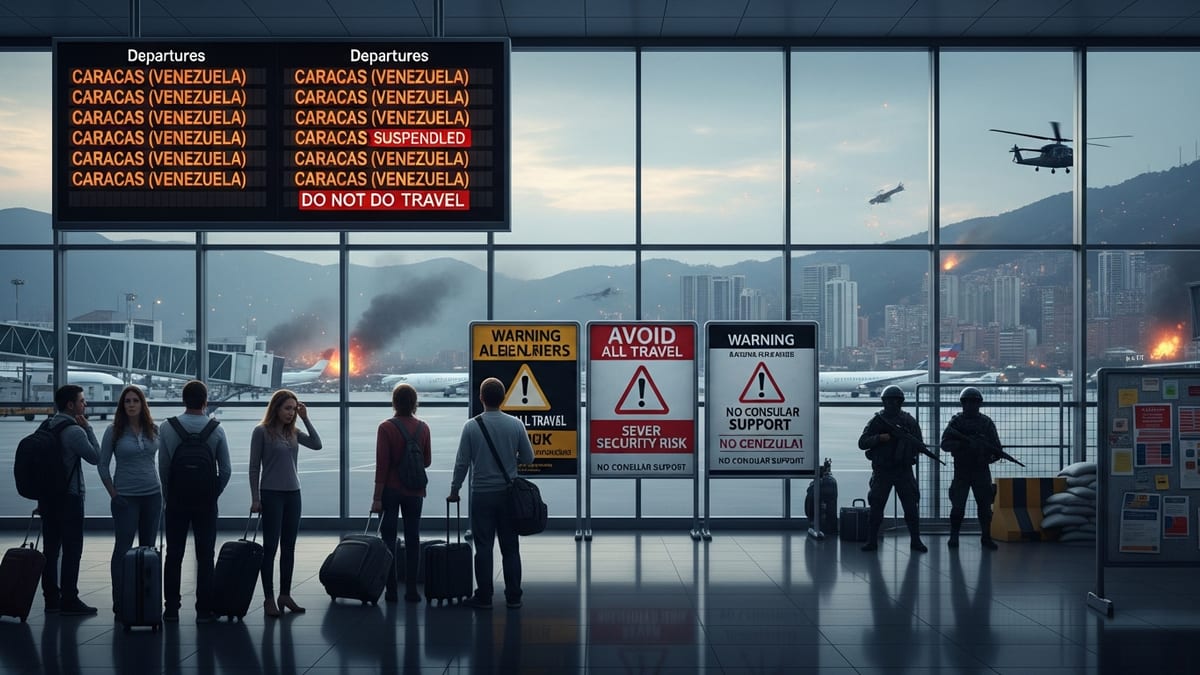
Advisory system tightens on key sun-and-sand destinations
Publicly available information from the US State Department shows that several warm-weather favorites in the Caribbean and Latin America are currently subject to heightened security guidance, even as international travel demand continues to rebound. The global advisory system ranges from Level 1, where travelers are urged to exercise normal precautions, to Level 4, which recommends that US citizens avoid travel.
The advisory list includes a mix of classic resort destinations and emerging beach spots, reflecting concerns that go beyond isolated incidents. The latest summaries call out issues such as violent crime, limited local emergency response capacity and the potential for rapid deterioration of security conditions in some areas frequented by tourists.
For travelers planning winter escapes or shoulder-season trips into late 2026, the changing landscape means that destination research increasingly involves not only comparing flight prices and hotel reviews, but also examining risk profiles and how they may shift over the coming months.
Mexico’s resort corridors under closer security lens
Mexico remains one of the most popular international destinations for US travelers, but its detailed country advisory, updated in late May 2026, underscores significant variation between regions. The guidance differentiates among states, with some areas under “do not travel” recommendations and others, including key resort zones, classified at lower levels that still urge increased caution.
The advisory notes that Quintana Roo, home to Cancun, Playa del Carmen, Cozumel and Tulum, continues to draw large numbers of visitors while experiencing episodes of cartel-related violence and opportunistic crime in and around tourist areas. Reports point to risks such as armed robberies, assaults, and incidents linked to nightlife venues, as well as safety concerns related to strong currents and changing beach conditions.
Messages issued by the US diplomatic mission in Mexico over recent seasons have also highlighted sporadic security operations affecting cities such as Cancun and Puerto Vallarta, at times advising government personnel to limit movement while local authorities responded to criminal activity. Although these disruptions typically resolve within days, they illustrate how quickly conditions can change in destinations that otherwise market themselves as carefree tropical playgrounds.
Jamaica and parts of the Caribbean weighed down by crime and storms
Jamaica, long known for all-inclusive resorts and cruise stopovers, is currently subject to an advisory that urges US citizens to reconsider travel due to crime. Recent updates in June 2026 reiterate that the country continues to experience one of the highest homicide rates in the Western Hemisphere, according to national statistics cited in public summaries.
The advisory highlights concerns about armed robberies, sexual assaults and other violent incidents in both urban areas and locations close to tourist infrastructure. It also notes that emergency services, including police response and medical care, may be limited in some regions. Local and regional media coverage indicates ongoing debate about the potential impact of this guidance on visitor numbers and on the wider Caribbean tourism economy.
Weather risks are also shaping the risk profile of tropical getaways. The 2024 and 2025 Atlantic hurricane seasons brought destructive storms to parts of the Caribbean, including a severe hit to Jamaica from Hurricane Melissa in October 2025 and widespread damage in the eastern Caribbean from Hurricane Beryl in mid-2024. In affected islands, reconstruction has often proceeded alongside efforts to reassure prospective visitors, but travelers are being reminded to factor in storm season when booking late-summer and fall trips.
Disease risks add health dimension to tropical trip planning
Health-related notices are adding another layer of complexity for travelers eyeing warm-weather destinations. The US Centers for Disease Control and Prevention reports that dengue, a mosquito-borne viral illness, remains a year-round risk in many tropical and subtropical areas, with cyclical surges in cases across the Caribbean and Latin America.
Recent CDC analyses describe increases in both travel-associated and locally acquired dengue cases among US residents in 2024, driven in part by outbreaks in Puerto Rico and the US Virgin Islands. A global dengue travel notice, updated in May 2026, lists multiple destinations with elevated activity and encourages travelers to consult destination-specific health pages, use insect repellent and take steps to avoid mosquito bites, especially during dawn and dusk.
In practical terms, this means that a beach holiday on a tropical island may carry not only the usual sun-exposure and foodborne-illness concerns, but also a meaningful risk of mosquito-borne disease during outbreak periods. Public health guidance stresses that underlying medical conditions, pregnancy and age can influence how seriously travelers should take these notices when deciding where and when to go.
What travelers are advised to do before booking tropical escapes
While advisories and notices can sound stark, they do not automatically rule out travel to entire countries or regions. State Department explanations emphasize that overall country levels may mask significant variation within destinations, with some resort enclaves and cruise ports considered lower risk than interior areas or specific urban neighborhoods.
Travel experts and consumer publications reviewing the latest advisories commonly recommend that would-be vacationers read beyond the headline level, paying particular attention to state or provincial breakdowns in Mexico and to neighborhood-specific cautions in larger cities. They also suggest monitoring how frequently advisories are updated, especially during hurricane season or periods of political or gang-related unrest.
On the health side, CDC resources encourage travelers to check for any disease-related travel notices applicable to their chosen destination and to verify routine and recommended vaccinations well before departure. In regions where dengue and other mosquito-borne illnesses are active, packing effective repellent, long-sleeved clothing for evenings and bed netting for rustic stays is increasingly being framed as basic trip preparation rather than an optional extra.
For many travelers, the bottom line is not necessarily to avoid tropical getaways altogether, but to pair dream itineraries with a more structured approach to risk awareness. That shift includes checking government advisories alongside hotel ratings, purchasing travel insurance that covers medical evacuation where appropriate, and keeping contingency plans in mind in case conditions change rapidly after arrival.