


First-time visitors to Banff National Park tend to focus on the big three: the town of Banff, Lake Louise, and Moraine Lake. They are famous for a reason, but they are also crowded, tightly managed, and increasingly expensive to access. Just beyond those hotspots lies the wider Bow Valley, a chain of river-side communities, scenic byways, and provincial parks that offer a different, often quieter Rocky Mountain experience. Deciding whether to stay with Banff’s headline attractions or venture deeper into the Bow Valley comes down to what kind of trip you want, how much time you have, and how comfortable you are trading convenience for breathing room.
Get the latest updates straight to your inbox!
Understanding the Bow Valley vs Banff’s Core
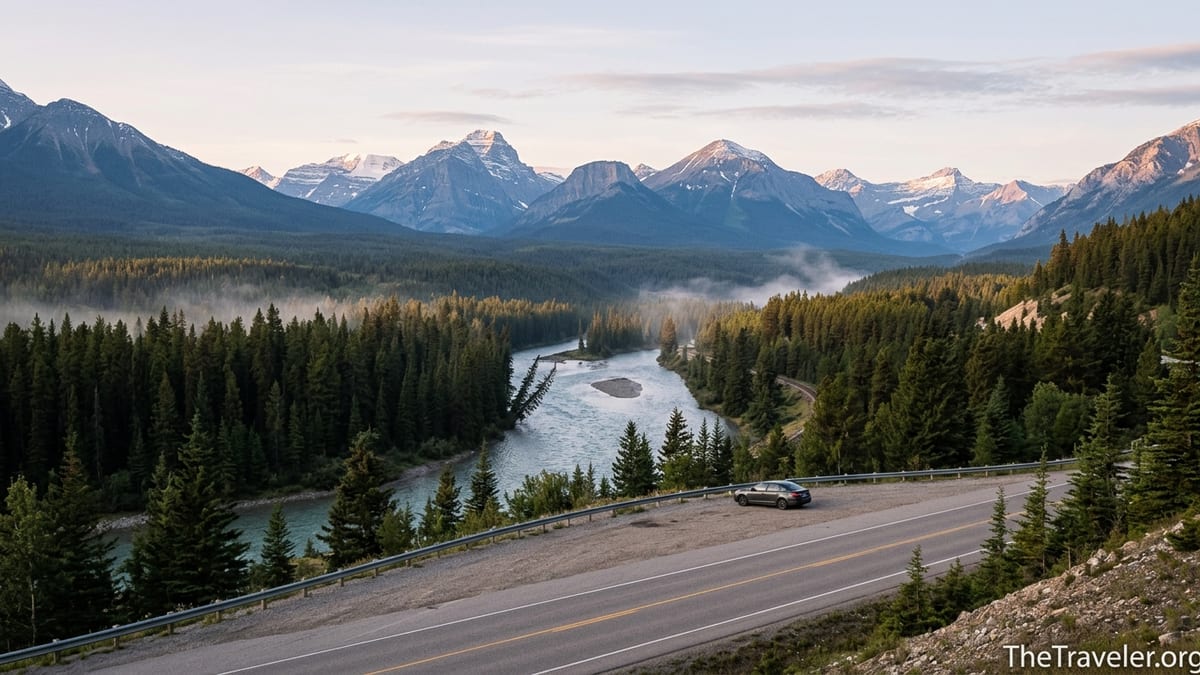
When people say “Banff,” they often mean the compact town site, the cluster of lakes directly off the Trans-Canada Highway, and marquee sights like Lake Louise, Moraine Lake, the Banff Gondola, and Johnston Canyon. In reality, all of these sit within the broader Bow Valley, a long glacial valley that follows the Bow River from the icefields of Banff National Park past the communities of Lake Louise, Banff, Canmore, and several smaller hamlets like Harvie Heights and Exshaw. This wider valley includes both national park and provincial park land, plus residential towns that function as bases for hiking, biking, climbing, and skiing.
For a first visit, Banff’s core is simple to understand and heavily serviced. Roam Transit buses and Parks Canada shuttles connect the town of Banff to Lake Louise, Moraine Lake, Lake Minnewanka, and major trailheads in high season. A traveler staying three nights in downtown Banff can realistically rely on buses and shuttles for most outings, walk to restaurants and shops along Banff Avenue, and never once need to navigate gravel backroads or study detailed trail maps. This convenience is a major reason many visitors, especially on short trips, choose to “stick to Banff.”
The rest of Bow Valley, however, rewards those willing to go beyond that core. East of Banff, Bow Valley Provincial Park sits less than an hour from Calgary and offers river-side campgrounds, easy interpretive trails, and broad views of peaks like Yamnuska without the density of Banff town. South and east of the park boundary, Canmore provides a lived-in mountain town feel, with trailheads like the Grassi Lakes hike just a few minutes from coffee shops and bakeries. Viewed this way, the question is not whether Bow Valley is “better” than Banff, but how much of your time you should allocate to each.
What “Sticking to Banff” Really Looks Like
For many travelers, especially those visiting between June and September, sticking to Banff means building an itinerary around a few high-demand spots and accepting crowds as part of the experience. A typical three-day plan might include a day in Banff town riding the Banff Gondola at Sulphur Mountain, soaking at Banff Upper Hot Springs, and walking the Bow River Trail; a full day shuttling between Lake Louise and Moraine Lake using the Parks Canada system; and another day for a signature hike such as Johnston Canyon’s Lower and Upper Falls or a lake cruise on Lake Minnewanka.
That plan has clear advantages. Shuttles to Lake Louise and Moraine Lake are well established, with Parks Canada running services from the Lake Louise Park and Ride to both lakes during the main season, and additional private operators selling seats directly from Banff and Canmore. In practical terms, that means a visitor can book a round-trip shuttle day pass for a defined time window, catch a morning bus from the Park and Ride to Lake Louise, transfer via the connector shuttle to Moraine Lake, then return in the afternoon without worrying about parking restrictions or the personal-vehicle closure on the Moraine Lake Road. Private companies also operate sunrise runs from Banff and Canmore so photographers can reach Moraine Lake before first light.
Banff town itself supports this shuttle-based model. Hotels such as the Banff Park Lodge, Moose Hotel & Suites, and numerous mid-range motels line the main avenues, and Roam Transit buses stop frequently near Banff High School and the downtown bridge, making it straightforward to move between your accommodation, shuttle hubs, and trailheads. Food options run from quick counter-service spots on Banff Avenue to splurge dinners at places like the Fairmont Banff Springs’ restaurants. If you value simple logistics and do not mind sharing viewpoints and boardwalks with tour buses, staying centered on Banff and its main attractions is the most straightforward option.
What Exploring the Wider Bow Valley Offers
Stepping beyond Banff’s immediate orbit opens up a more varied, often less orchestrated experience. West of Banff, the Bow Valley Parkway offers a slower, scenic alternative to the Trans-Canada Highway between Banff and Lake Louise. Instead of driving straight to Lake Louise, you can access the parkway near the Fireside Picnic Area and meander past viewpoints like Morant’s Curve, where freight trains snake along the Bow River beneath snow-capped peaks, and Johnston Canyon, whose catwalks hug turquoise waterfalls. A full traversal of the parkway with photo stops and a short hike can easily fill half a day.
Farther east, Bow Valley Provincial Park near the town of Exshaw provides a gentler side of the Rockies. Here, trails like Many Springs and Middle Lake loop through open meadows and aspen forest rather than steep alpine terrain, making them ideal for families or travelers looking to acclimatize. Campgrounds such as Bow Valley and Bow River sit right along the riverbanks, and evening walks often feature views of elk grazing across the water or the last light catching Mount Yamnuska’s broad limestone face. For Calgary-based visitors, these sites are popular weekend getaways that avoid the denser congestion around Banff.
Canmore, technically just outside the national park, anchors the southeastern end of the Bow Valley. What it lacks in “within the park” status it makes up for with trail access and a local vibe. You can have breakfast at a downtown bakery, drive ten minutes to hike Grassi Lakes or the Quarry Lake area, then return for craft beer and live music. While you still share the trails with other visitors in high season, the overall feel is less like a resort town and more like a lived-in mountain community. Many travelers now choose to stay in Canmore and commute into Banff and Lake Louise, trading a slightly longer drive for more accommodation choices and, often, slightly better value.
Crowds, Closures, and Access: Practical Differences
Crowd management and seasonal closures are some of the most tangible differences between Banff’s main attractions and the wider valley. Popular spots like Lake Louise, Moraine Lake, and Johnston Canyon operate under tight traffic controls in peak months. Moraine Lake, in particular, no longer allows private vehicles on its access road during the main season, with all general visitors required to use shuttles, public transit, or guided tours. That means sunrise photographers who once simply drove up now must book an early-morning shuttle operated either by Parks Canada or private companies departing from Banff, Canmore, or Lake Louise.
The Bow Valley Parkway itself has evolved into a partly car-light corridor. In recent years, Parks Canada has introduced seasonal vehicle restrictions on a stretch of the parkway to prioritize wildlife and cyclists, especially in late spring and early summer. For visitors, this can be both a challenge and an opportunity. On days when motor vehicles are limited, you might rent an e-bike in Banff and ride from town toward Johnston Canyon on quiet pavement, hearing the river instead of engine noise. However, it does require advance planning: parking at the Banff Train Station or townsite and checking current closure windows so you do not assume you can simply drive end to end at any time.
By contrast, areas like Bow Valley Provincial Park and many Canmore trailheads operate with fewer formal restrictions, although parking lots can still fill on busy weekends. Many Springs, Bow River, and Flowing Water trails, for example, typically remain accessible by car without shuttle systems, and visiting outside of mid-day on summer weekends often yields relatively quiet paths. The trade-off is that you must manage your own bear safety, navigation, and timing without interpretive staff or shuttle drivers to guide you. For some travelers, that independence is a major part of the appeal; for others, the structure and support around Banff’s marquee sites feels more comfortable.
Costs and Value: Banff vs the Wider Valley
Costs in and around Banff have climbed with its global popularity, and the contrast with other Bow Valley communities is one of the most practical factors in deciding where to focus. Within Banff town and at Lake Louise, nightly hotel rates in high season frequently run into the upper-midrange or luxury category, especially at landmark properties like the Fairmont Banff Springs or Fairmont Chateau Lake Louise. Even a standard double room in a well-located three-star hotel in Banff can price noticeably higher in July and August than a comparable room in Canmore or near Exshaw.
Transportation similarly reflects the crowd pressure. A Parks Canada shuttle day pass to Lake Louise and Moraine Lake is designed to be reasonably priced relative to private tours, but demand is intense, with reservations opening months in advance and many time slots booking quickly. Private shuttle companies from Banff and Canmore charge more per person than the public system, though in return you get guaranteed departure times, hotel pick-up options, and sometimes bundled sightseeing. In practice, that can mean a couple might spend a modest amount per person on a Parks Canada day pass if they book early, or significantly more for last-minute seats on a private sunrise shuttle from Canmore when the public system is sold out.
Beyond Banff’s core, you will still pay a national park entry fee if you are within the park boundary, but some of your daily costs can drop. In Canmore, for example, self-catering condos and vacation rentals often offer full kitchens, allowing travelers to reduce meal expenses by shopping at local supermarkets rather than eating out for every meal on Banff Avenue. Camping in Bow Valley Provincial Park is another concrete example: while not “cheap” in absolute terms, it typically costs much less per night than a hotel room in Banff, especially for families or groups willing to share a site and bring their own gear. These savings can free up budget for guided experiences like rafting on the Kananaskis River or a half-day rock climbing lesson on a Bow Valley crag.
Trip Styles: Who Should Stay Centered on Banff, Who Should Roam
Choosing between sticking to Banff’s main attractions and exploring the broader Bow Valley is really about aligning destination with travel style. If this is your first time in the Canadian Rockies and you have only two or three nights, centering on Banff and Lake Louise is usually the best call. You can book one or two key shuttles, stay in a walkable area, and tick off globally iconic sights like Moraine Lake, Lake Louise, Bow Falls, and the Banff Gondola without needing to learn the nuances of every side road and provincial park. This approach also suits travelers who are less comfortable with route-finding, or those with mobility considerations who appreciate paved paths, frequent benches, and well-marked viewpoints.
On the other hand, repeat visitors, hikers, and photographers often find the wider Bow Valley more rewarding. If you have four to seven nights, consider splitting your stay: a few nights in Banff or Lake Louise to access the major lakes and alpine viewpoints, followed by a few nights in Canmore or near Bow Valley Provincial Park. That gives you time to hike lesser-known routes such as the Montane or Moraine trails in Bow Valley Provincial Park, ride a section of the Legacy Trail between Canmore and Banff, or search for larch trees turning golden on shoulder-season hikes that do not appear on every tour-bus itinerary.
Families with school-age children might also appreciate the mix. Start with a “big wow” day at Lake Louise using the shuttle, which creates vacation memories and postcard photos, then shift to Bow Valley Provincial Park where kids can throw stones in the river, follow beaver tracks in the mud, and bike quiet campground loops without heavy traffic. For adventurous couples, a few nights in Canmore with dawn starts to climb routes like Ha Ling Peak or the East End of Rundle, followed by evenings exploring local breweries, can feel very different from the more polished resort atmosphere in Banff.
The Takeaway
So is Bow Valley worth exploring, or should you simply stick with Banff’s main attractions? If your time is short and your priority is to see the most famous sights with minimal logistical complexity, building your trip around Banff town, Lake Louise, and Moraine Lake makes sense. The shuttle networks, dense accommodation, and concentration of services are designed to support exactly that kind of visit, and for many travelers the iconic views are the whole point of coming.
If, however, you can spare even an extra day or two, the wider Bow Valley repays the effort. Driving the Bow Valley Parkway instead of the Trans-Canada, walking quiet loops in Bow Valley Provincial Park, or basing yourself in Canmore for part of your stay introduces you to a more spacious, lived-in side of the Rockies that many tour groups never see. You trade some convenience and name recognition for flexibility, calmer viewpoints, and the chance to connect with the valley on its own terms rather than just its postcard highlights.
In practice, you do not need to choose one or the other. The most satisfying itineraries usually weave the two together: hit Banff’s classics early in your trip, when excitement is high and alarms for shuttle departures feel like part of the adventure, then slow down elsewhere in the Bow Valley, where the river noise replaces engine noise and the mountains feel just a little bit more like they are yours.
FAQ
Q1. Is the Bow Valley Parkway worth driving if I am already visiting Lake Louise and Moraine Lake?
The Bow Valley Parkway is worth including if you have at least half a day. It offers viewpoints, trailheads like Johnston Canyon, and a slower, more scenic alternative between Banff and Lake Louise.
Q2. Can I stay in Canmore and still visit Banff’s main attractions easily?
Yes. Many visitors base in Canmore and drive or take tour shuttles into Banff and Lake Louise. Travel times are typically under 30 minutes to Banff town and about an hour to Lake Louise in light traffic.
Q3. Do I need a car to explore the wider Bow Valley outside Banff?
A car makes exploring Bow Valley Provincial Park and smaller trailheads much easier, but within Banff National Park you can rely on Roam Transit, Parks Canada shuttles, and private tours for the main attractions.
Q4. Are there quieter hikes in Bow Valley suitable for beginners?
Yes. Trails in Bow Valley Provincial Park, such as Many Springs and Middle Lake, offer gentle terrain, interpretive signs, and big views without the steep climbs or heavy crowds found on some Banff-area hikes.
Q5. Is accommodation cheaper in Bow Valley outside Banff and Lake Louise?
Often yes. Canmore and the communities near Bow Valley Provincial Park typically offer a broader range of mid-range hotels, condos, and campgrounds that can price lower than comparable options in Banff and Lake Louise at peak times.
Q6. How far is Bow Valley Provincial Park from Banff?
Bow Valley Provincial Park sits to the east, roughly a 30 to 40 minute drive from Banff town along the Trans-Canada Highway, depending on traffic and exact trailhead or campground.
Q7. Is wildlife viewing better along the Bow Valley Parkway or near Banff town?
Wildlife can appear anywhere, but the Bow Valley Parkway is known for higher chances of sightings due to lower speeds and a more natural corridor. Always observe animals from a safe distance and follow park guidelines.
Q8. Can I combine cycling with scenic driving in Bow Valley?
Yes. Many visitors park in Banff, then cycle sections of the Bow Valley Parkway or the Legacy Trail toward Canmore. Seasonal vehicle restrictions on parts of the parkway can make cycling particularly pleasant.
Q9. Is Bow Valley a good option in shoulder seasons like May and October?
Bow Valley can be rewarding in shoulder seasons, though some higher alpine areas and shuttles may not be operating. Lower-elevation trails and town-based activities in Canmore and Bow Valley Provincial Park often remain accessible.
Q10. If I only have two days, should I prioritize Banff or the wider Bow Valley?
With just two days, prioritize Banff’s main attractions and one marquee lake. If you return for a longer trip, plan to explore more of the Bow Valley, including Canmore and Bow Valley Provincial Park.