


When travelers sketch out an Azerbaijan itinerary, the same names tend to appear first: Baku’s futuristic skyline, the Silk Road charm of Sheki, maybe the mud volcanoes of Gobustan. Ganja, the country’s second-largest city in the west, is often an afterthought or a question mark. Is it really worth detouring several hours from the capital for a place most guidebooks cover in just a few pages? The answer depends on what you want from your trip, how much time you have, and how much effort you are willing to invest in getting beyond surface impressions.
Get the latest updates straight to your inbox!
Why Ganja Is on the Map in the First Place
Ganja is not some obscure provincial town. It is Azerbaijan’s second-largest city, an old Silk Road hub with roots stretching back more than a millennium. Today it sits in the Ganja-Dashkasan region in western Azerbaijan, framed by the foothills of the Lesser Caucasus. That geography matters: while Baku is all Caspian Sea winds and modern glass, Ganja feels more like a gateway to green mountains, alpine lakes and small wine-growing villages.
Historically, Ganja cycled through empires and khanates, leaving a mix of Persian, Turkic and Russian influences in its architecture and urban layout. You will see this in one afternoon walk, moving from red-brick mosques to Soviet apartment blocks to 19th-century mansions. It is not as polished as Baku’s Old City, but that lived-in texture is part of the city’s appeal for travelers who like places that feel real and a little rough around the edges.
Tourism here is still a work in progress. Official data and recent reports show visitor numbers rising in the last decade, but on the ground that translates mainly into a handful of modern hotels, more cafes around central squares and better road access into nearby national parks. Do not expect a fully packaged tourist experience; expect instead a mid-sized Azerbaijani city where locals still outnumber visitors by a wide margin and English is less commonly spoken than in the capital.
This context is important when deciding whether to come. If you are drawn to second cities like Plovdiv in Bulgaria or Kutaisi in Georgia for their slower pace, lower prices and proximity to nature, Ganja fits that pattern. If you are looking for headline-grabbing sights and nightlife, you may find it underwhelming.
Key Sights in Ganja Itself: Enough for a Full Day?
Most itineraries that do include Ganja tend to allocate one full day in the city and another day for the surrounding nature. That is a realistic expectation. The historic core is compact enough to explore on foot, and the main sights cluster around a few central streets and parks.
In the center, travelers usually start around the large statue and park dedicated to Nizami Ganjavi, the 12th-century poet who was born here and whose name you will see all over Azerbaijan. Nearby, the Javad Khan Street area and the main square around the city hall give a sense of modern civic life: fountains, families strolling in the evening, and a line of cafes serving Turkish-style coffee and pastries at prices noticeably lower than Baku’s trendy spots.
Architecturally, the most striking religious site is Imamzadeh, a blue-domed complex a short taxi ride from the center. Its tilework and shrine draw Azerbaijani pilgrims, but independent travelers increasingly stop by as well. In the old quarter you will also find Juma Mosque and remnants of caravanserais that recall the city’s role on historic trade routes. A practical example: a taxi from central Ganja to Imamzadeh typically costs roughly the equivalent of a few US dollars, making it an easy add-on even for budget travelers.
One uniquely quirky stop that often divides opinion is the Bottle House, a family home with a facade made of thousands of glass bottles. Some visitors consider it a quick photo stop, others call it skippable kitsch. It is emblematic of Ganja overall: small-scale, personal and more interesting if you enjoy talking to locals and noticing odd details rather than ticking off big-ticket landmarks.
Goygol & The Lakes: Ganja’s Real Showstopper
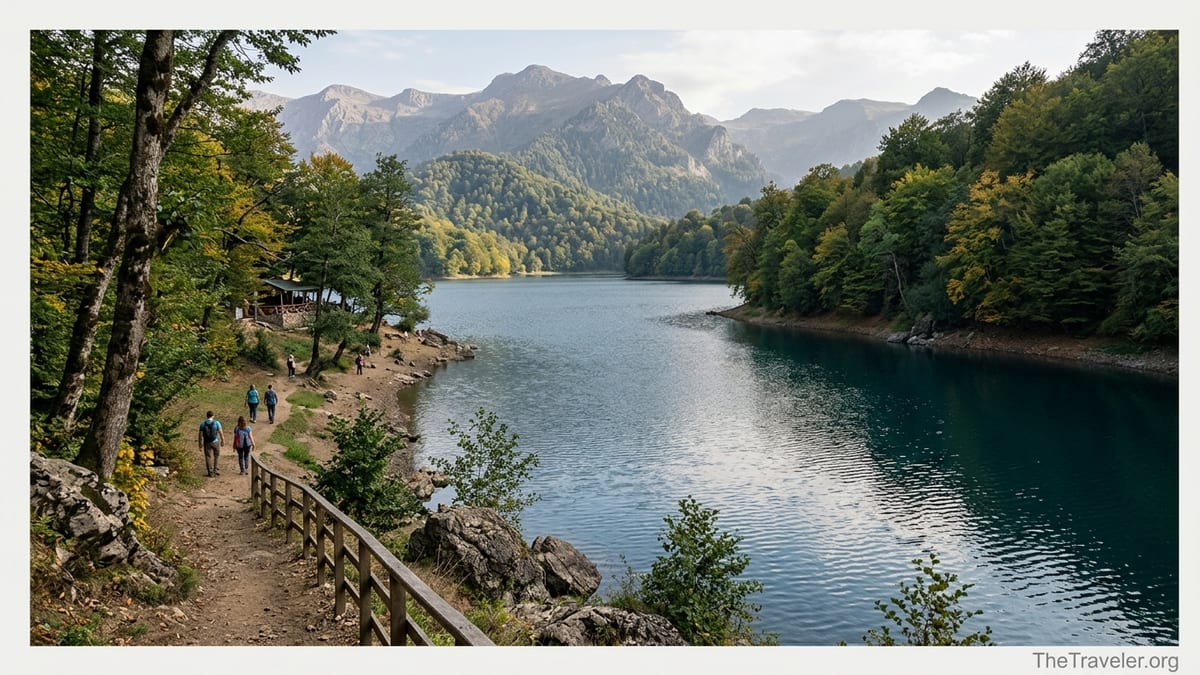
For many travelers, the real reason to come to Ganja is not the city proper but the lakes and forests to its south. Goygol National Park is centered on Lake Goygol, often described by regional tourism boards and travel writers as one of the most beautiful natural sights in Azerbaijan. The deep-blue water sits at around 1,500 meters above sea level, in a bowl of forested mountains in the Lesser Caucasus, about 30 to 45 kilometers from Ganja depending on which route you take.
In practice, most visitors base themselves in Ganja and make a day trip. A taxi there and back plus waiting time commonly runs at a moderate cost by Western standards, especially if you share the car with other travelers. There is often a small entrance fee at the national park gate, roughly the price of a simple cafe meal in the city. Once inside, you can walk easy lakeside trails, take photos from viewpoints and sit at outdoor cafes that open in the warmer months, serving tea, basic grilled meats and local sweets.
If you want a bit more activity, local guides and recent trip reports mention short hikes up towards Maralgol, another lake higher in the mountains. Paths are usually clear in late spring to early autumn, although waymarking can be basic and weather changeable. Sturdy shoes and a light jacket are wise even on warm days. Facilities are limited compared to heavily developed European alpine resorts: think dirt paths, simple shelters, and patchy phone signal rather than chairlifts and visitor centers.
This setting makes Goygol a very different kind of side trip than, for example, the mud volcanoes near Baku. Here the focus is on greenery, fresh air and relatively quiet scenic viewpoints. If your ideal Azerbaijan itinerary balances city time with at least one mountain or lake day, Ganja plus Goygol is one of the easiest combinations to arrange within the country’s current infrastructure.
Getting to Ganja and Getting Around
From Baku, you have three mainstream options to reach Ganja: train, bus or domestic flight. Trains operated by Azerbaijan Railways cover the roughly 360-kilometer journey in around 4 to 5 hours depending on the service, with typically at least one daytime intercity train. Recent schedules and booking platforms show typical ticket prices starting in the range of the equivalent of under 15 US dollars for standard class if booked in advance. For many travelers this offers the best balance of comfort and cost.
Long-distance buses and minibuses also run from Baku’s main bus terminal, often taking a bit longer due to traffic and intermediate stops but sometimes leaving earlier or later than the train. Fares are usually competitive with the train’s cheapest seats. For travelers already in neighboring Georgia, the international train and bus routes between Tbilisi and Baku now list Ganja as a stop or transfer point, which makes it possible to include Ganja on an overland Caucasus route without having to double back to the capital.
Ganja’s airport periodically handles domestic flights from Baku, which can cut travel time to under an hour. However, schedules can be seasonal or subject to change, and most independent travelers still default to rail or road for reliability and cost. Within Ganja itself, you will rely on a mix of walking, taxis and local buses. Rides within the center are short and inexpensive, especially if you use common regional ride-hailing apps where available, or agree a fare before getting into a street taxi.
To reach Lake Goygol and other nearby mountain areas, taxis and informal shared cars from Ganja or the smaller town of Goygol are the realistic options. There may be local minibuses (marshrutkas) at certain times of day, but schedules are rarely posted in English and can change without notice. If you are tight on time or visiting in the shoulder seasons, it is sensible to budget for a private car or taxi for a half or full day rather than depending entirely on public transport.
What It Costs: Ganja vs Baku in Real Terms
From a budget perspective, Ganja is generally more affordable than Baku, particularly for food, local transport and mid-range accommodation. A coffee and pastry in a central cafe in Ganja might cost you approximately what a takeaway coffee alone would cost on Baku’s fashionable Nizami Street. Casual restaurants serving plov, grilled kebabs and salads are widespread, with meals often coming to less than the price of a cinema ticket in a Western European city.
Accommodation spans a range of simple guesthouses and locally run three-star hotels, plus a couple of larger chain or near-chain properties aiming at business travelers and regional tour groups. Nightly rates for a private room often undercut similar standards in Baku by a noticeable margin. For example, it is realistic to find comfortable mid-range rooms priced at levels a budget traveler might consider for a hostel bed in Western Europe, especially outside peak domestic holiday periods.
Day trips to Goygol National Park, once you factor in taxi hire and the park entrance fee, typically cost less than many guided day tours you might book from Baku to places like Gabala or Qobustan. The trade-off is that in Ganja, you are more likely to be organizing things independently or through your guesthouse, with fewer polished English-language tour companies on every corner. That suits some travelers perfectly and frustrates others.
Where you might spend more is in time and flexibility. Trains and buses do not depart every hour. Restaurant menus often list dishes by availability rather than offering endless choice. You will need to allow a margin for delays and small miscommunications. For travelers who measure value not just in money saved but in authentic everyday experiences, Ganja represents good return on investment. For those who prioritize efficiency and a smooth, curated experience, the savings may not justify the extra logistics.
Who Will Love Ganja, and Who Might Skip It
Ganja tends to appeal most to travelers who enjoy second-tier cities, prefer a slower travel rhythm and are comfortable dealing with a bit of ambiguity. If you have already seen Baku and are deciding between adding Ganja or, say, extending your stay in Sheki, it is useful to think in terms of your travel style rather than abstract must-see lists.
If you are a nature-focused traveler who wants at least one or two days of forests and mountains without attempting multi-day treks, Ganja plus Goygol is an obvious fit. You can spend a morning exploring Ganja’s mosques and markets, then a full day at the lakes, and still have time in the evening to sample local sweets in a cafe that caters mostly to residents rather than tourists. That balance of light urban culture and straightforward access to green spaces is one of the city’s biggest strengths.
Culture-focused travelers may appreciate that Ganja is associated with Nizami Ganjavi and features shrines and museums connected to Azerbaijani literature and history. However, exhibits and interpretation are mostly in Azerbaijani or Russian, and guided tours in English are not always available on demand. If reading detailed labels and context in your own language is essential to your enjoyment, you may get more out of Baku’s better-funded museums.
On the other hand, if your time in Azerbaijan is limited to 5 or 6 days and this is your first visit, you might reasonably choose to focus on Baku, the Absheron Peninsula and Sheki, skipping Ganja in favor of a tighter loop. Some recent independent trip reports describe Ganja as “skippable” if you are not planning to visit the nearby lakes, reflecting the fact that while the city is pleasant, its main urban attractions are modest compared to the capital.
Practical Considerations: Safety, Language and Season
From a safety perspective, Ganja generally feels similar to other mid-sized cities in the region. Petty issues such as pickpocketing can occur around crowded markets or bus stations, but violent crime against tourists is rare and most visits pass without incident. Normal urban common sense applies: keep an eye on your belongings, especially when using cash-based taxis or busy public transport hubs, and avoid overly intoxicated crowds late at night.
English is less widespread than in central Baku, particularly among older residents and outside hotels. Russian is more commonly understood, and Azerbaijani is the everyday language. In practice, you can usually manage with a translation app, written addresses for taxi drivers, and a bit of patience. Hotel reception staff and younger cafe workers are the most likely to speak some English and can often help you book onward tickets or translate for taxi arrangements to Goygol.
Seasonality matters. Ganja’s summers can be hot, though slightly less intense than Baku’s coastal heat, while winters bring chill and occasional snow. For lake visits and easy hiking, late spring and early autumn are the most comfortable times, when trails are drier, forests are green or turning autumnal, and cafes around the lakes are more reliably open. In the depths of winter, roads to higher elevations may be icy, and access to some viewpoints can be limited.
As with any travel near sensitive border regions in the South Caucasus, it is wise to check current advisories before planning side trips far beyond established tourist routes. Ganja itself and the lakes to its immediate south are established domestic tourism areas, with infrastructure that continues to develop as Azerbaijan positions the city to host more events and visitors in coming years.
The Takeaway
So, is Ganja worth including in your Azerbaijan travel itinerary? The honest answer is that it depends less on the city itself and more on what you want your trip to feel like. If your priorities are big-ticket landmarks, easily bookable day tours and a strong English-speaking hospitality scene, focusing your limited days on Baku, Gobustan, Absheron and Sheki may leave you more satisfied.
If, however, you are curious about Azerbaijan beyond the capital, enjoy slower cityscapes where you share parks and cafes mainly with locals, and want an accessible taste of the Lesser Caucasus without committing to multi-day trekking, Ganja makes sense. The pairing of a lived-in regional city with the mountain lakes of Goygol National Park offers a combination you will not find on the Absheron Peninsula.
In practical terms, Ganja fits neatly into an itinerary of 8 to 12 days in Azerbaijan. A pattern many independent travelers follow is to spend 3 or 4 days in Baku and its surroundings, then take the train to Ganja for 2 or 3 nights, using one day for the city and one for the lakes, before continuing on by road towards Sheki or back to the capital. Framed that way, Ganja is less a detour and more a western anchor on a wider loop through the country.
Ultimately, Ganja is worth visiting if you value places that are still in the process of becoming established on the international tourism map. It rewards patience, a willingness to navigate in a different language, and an interest in seeing how Azerbaijan’s past and present coexist outside the polished showcase of the capital.
FAQ
Q1. How many days should I spend in Ganja, including Goygol National Park?
Most travelers find that two full days is enough: one day to explore Ganja’s main sights such as the central squares, mosques and Imamzadeh, and one day for a trip to Lake Goygol and nearby viewpoints. If you enjoy slow travel or want extra time for hiking, adding a third night allows you to factor in weather and transport delays.
Q2. Is Ganja safe for solo travelers, including solo women?
Ganja generally feels safe for solo travelers, and incidents involving visitors are uncommon. Solo women are likely to attract some curiosity, particularly outside the most central areas, but respectful behavior is the norm. As in any city, sticking to well-lit streets at night, using reputable taxis and keeping valuables discreet reduces routine risks.
Q3. Can I visit Ganja on a day trip from Baku?
In theory, fast trains and good roads make a long day trip possible, but in practice it is rushed. With travel times of roughly 4 to 5 hours each way by train or bus, you would spend most of the day in transit and have little time left for the city or lakes. Staying at least one night in Ganja makes the journey far more worthwhile.
Q4. Do I need to book tours in advance to visit Lake Goygol?
Many visitors arrange a taxi or private car on arrival in Ganja, often with help from their hotel or guesthouse, and do not use formal tours. In peak summer weekends and public holidays, it can be busier, so asking your accommodation to set something up a day in advance is sensible. Fully guided English-language tours exist but are less common than in Baku.
Q5. What is the best time of year to visit Ganja and Goygol?
Late spring and early autumn are generally the most pleasant, offering comfortable temperatures and good visibility at the lakes. Summer is warmer and busier, with more local families visiting for picnics, while winter can bring snow and reduced access to higher trails. For photography and light hiking, May to June and September to early October work especially well.
Q6. How expensive is Ganja compared with Baku?
On average, food, local transport and mid-range accommodation in Ganja cost less than in Baku. A sit-down meal or cafe stop will usually be noticeably cheaper than in the capital’s central districts. Long-distance transport from Baku to Ganja is also reasonably priced, particularly by train, making Ganja a good option for travelers watching their budget.
Q7. Will I find vegetarian food easily in Ganja?
While Azerbaijan’s traditional cuisine is meat-heavy, vegetarians can usually manage with salads, vegetable stews, rice dishes, breads, cheeses and pastries that are staples of local menus. Choice is more limited than in Baku’s international restaurants, so strict vegetarians may want to learn a few key phrases, check ingredients, and be prepared to rely on simple but filling options.
Q8. Is English widely spoken in Ganja?
English is less widespread than in central Baku. You are most likely to find English speakers among hotel staff, some younger cafe workers and occasionally taxi drivers. Many residents speak Azerbaijani and Russian but not much English, so translation apps, offline maps and written addresses become useful tools for independent travelers.
Q9. Can I continue from Ganja to Sheki or Georgia without going back to Baku?
Yes. Ganja works well as a stop on a westward or northward route. From Ganja you can travel by road to Sheki or other towns in the Caucasus foothills, or connect to services heading toward the Georgian border and on to Tbilisi. Schedules and routes change from time to time, so it is best to confirm options locally close to your travel dates.
Q10. Is Ganja worth it if I am only interested in major “must-see” sights?
If your main goal is to see Azerbaijan’s most famous landmarks on a short trip, you may be better focusing on Baku, Gobustan, the Absheron Peninsula and Sheki. Ganja’s appeal lies more in its everyday atmosphere and nearby nature than in headline monuments. Travelers who enjoy second cities, local life and quieter mountain lakes are the ones most likely to feel the detour was worthwhile.