


More news on this day
Travel to Riyadh and Dubai is still possible, but the safety picture has shifted again after a fresh wave of strikes and interceptions around the Gulf and Red Sea region, prompting renewed warnings about airspace disruption and the risk of further attacks.
Get the latest news straight to your inbox!
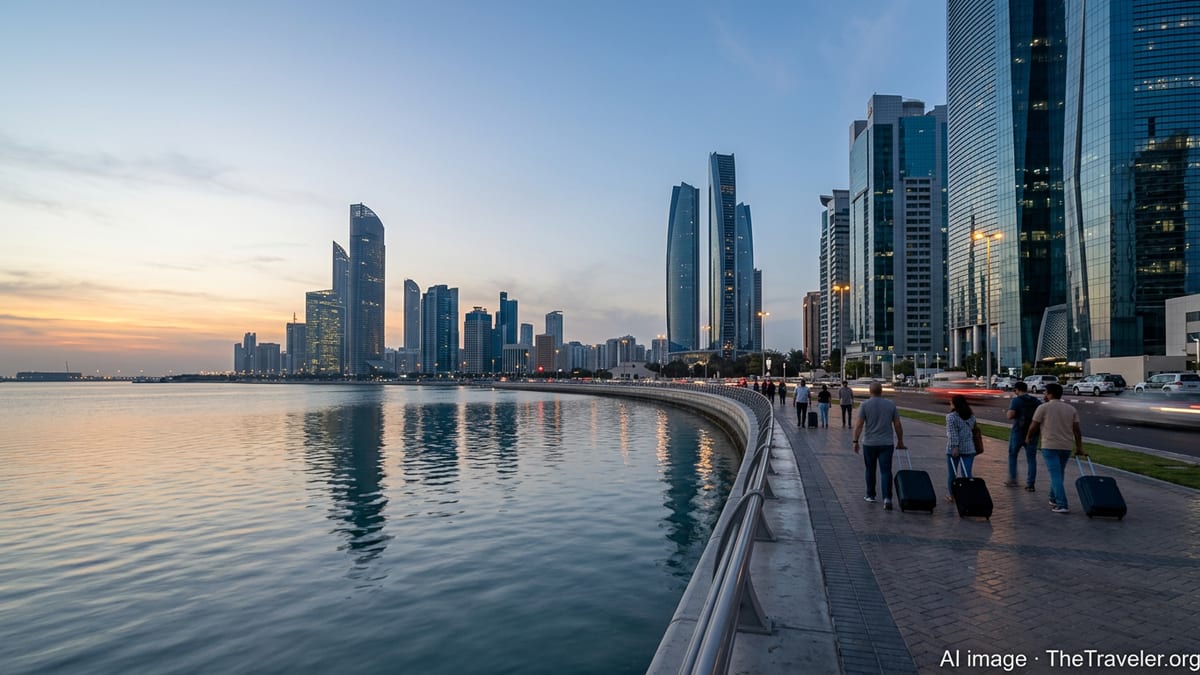
What the latest travel advisories say right now
As of late September 2026, the U.S. State Department lists both Saudi Arabia and the United Arab Emirates at Level 3, meaning travelers are advised to reconsider travel. For Saudi Arabia, the advisory references risks that include terrorism and other factors, and it notes the U.S. government’s own movement restrictions and security posture. For the UAE, the advisory cites terrorism and armed conflict, highlighting an ongoing threat of drone and missile attacks since hostilities that began on February 28, 2026, as well as the possibility of significant commercial flight disruptions.
For UK travelers, the Foreign, Commonwealth and Development Office maintains detailed country pages for both Saudi Arabia and the UAE, including ongoing warnings for specific areas in Saudi Arabia that are considered higher-risk, particularly near the Yemeni border. The UK advice also emphasizes that conditions can change quickly, with different risk levels in different regions rather than a single uniform risk across each country.
Separately from formal advisory “levels,” travelers should also watch for time-sensitive security alerts. Published coverage dated September 20, 2026 indicates the U.S. Mission to the UAE circulated a message urging Americans to seriously reconsider travel to and through parts of the region, citing the possibility of rapid escalation and sudden airspace closures or flight cancellations. Such alerts do not automatically change a country’s advisory level, but they can affect what travelers experience on the ground and in transit.
Why Riyadh and Dubai are in the spotlight after recent strikes
Reports published on September 19, 2026 described an attempted Houthi ballistic-missile attack toward Riyadh, described as the first targeting of the Saudi capital since the latest escalation in the broader regional conflict. Even when intercepts are reported, the operational reality for travelers can include sudden security measures, rerouted flights, and heightened sensitivity around critical sites.
In and around the UAE, recent coverage has focused on the broader pattern of drone and missile threats in the Gulf. Earlier reporting in late August and early September described interceptions over waters near the UAE and a wider episode of Iranian retaliation in the region. While these incidents do not mean tourists in Dubai will necessarily face direct danger in popular areas, they reinforce why official guidance continues to flag the potential for attacks and disruptions.
For travelers, the practical takeaway is that risk is not only about where you sleep, but also about the routes you take, the airports you transit, and the likelihood that schedules change with little notice. This matters for both cities because Riyadh is a major political and business hub, and Dubai is a global aviation crossroads that can be affected by regional airspace decisions.
Air travel reality check: delays, reroutes, and sudden cancellations
In the past few weeks, published travel coverage has repeatedly pointed to disruptions at UAE hubs, including Dubai International (DXB) and Abu Dhabi’s Zayed International Airport. Reports dated September 3, September 9, and September 13, 2026 described periods of widespread delays and cancellations, tied in part to renewed regional tension, as well as other unrelated operational issues. Even when disruptions are short-lived, the knock-on effects can cascade across airline networks.
For passengers, the biggest risk is not necessarily being unable to reach Dubai or Riyadh at all, but being rerouted around restricted airspace, facing last-minute schedule changes, or being stuck in transit during a fast-moving security situation. Travelers with tight connections, separate tickets, or nonrefundable hotel bookings are often the most exposed to these disruptions.
If you are traveling soon, it is worth building in time buffers and checking your airline’s operational updates frequently. Some carriers publish rolling “travel updates” pages and will email affected passengers, but the most time-sensitive changes often show first in live flight-status tools and airport departure boards.
How to decide if your trip is “safe enough” for you
Safety is not a single yes-or-no for either city. Many visitors in Riyadh and Dubai still move through modern, heavily monitored urban environments, and major tourist and business districts can feel normal even amid regional tension. At the same time, the current advisory levels reflect that the consequences of a rare incident could be serious, and that warning time can be limited.
Consider postponing if your trip is discretionary and you would struggle with sudden changes, such as a canceled flight, a temporary airspace closure, or a shift in local security posture. Also reassess if your itinerary includes high-profile gatherings or locations that could be sensitive in the current environment.
If you decide to go, risk-reduction steps matter. Travelers commonly prioritize staying in well-established neighborhoods, using reputable transportation, avoiding demonstrations, and maintaining situational awareness in crowded public places. It is also prudent to keep your phone charged, store digital copies of travel documents, and set up alerts from your airline and your government’s travel-advice services.
On-the-ground practical tips for Riyadh and Dubai right now
In Riyadh, many trips are centered on business districts, major hotels, and large-scale events. The current risk discussion is less about routine street crime and more about the small-but-real possibility of attacks tied to regional conflict, along with heightened security measures that can affect movement. Travelers should be prepared for changes in access around government areas and other sensitive sites.
In Dubai, travelers should factor in that the city’s biggest vulnerability during regional flare-ups is its role as an air-travel hub. If you are transiting through Dubai, have a backup plan for onward travel, and consider travel insurance terms carefully so you understand what is covered if flights are disrupted for security or airspace reasons.
For both destinations, keep an eye on official advisory pages for the most current guidance, including any city- or area-specific notes and any short-notice alerts. The central question for most travelers is not whether either city is “closed,” but whether you are comfortable traveling with the current level of uncertainty, and whether your itinerary can absorb disruption without turning into a costly scramble.