


La Croisette in Cannes is one of those names that appears on almost every Côte d’Azur itinerary, often accompanied by glossy photos of palm trees, superyachts and red carpets. But if you are planning a trip to the south of France in 2026, is this seafront boulevard really worth your time, or is it just a glamorous backdrop for social media? The answer depends a lot on when you visit, what you enjoy, and how you like to spend your travel budget.
Get the latest updates straight to your inbox!
What Exactly Is La Croisette Today?
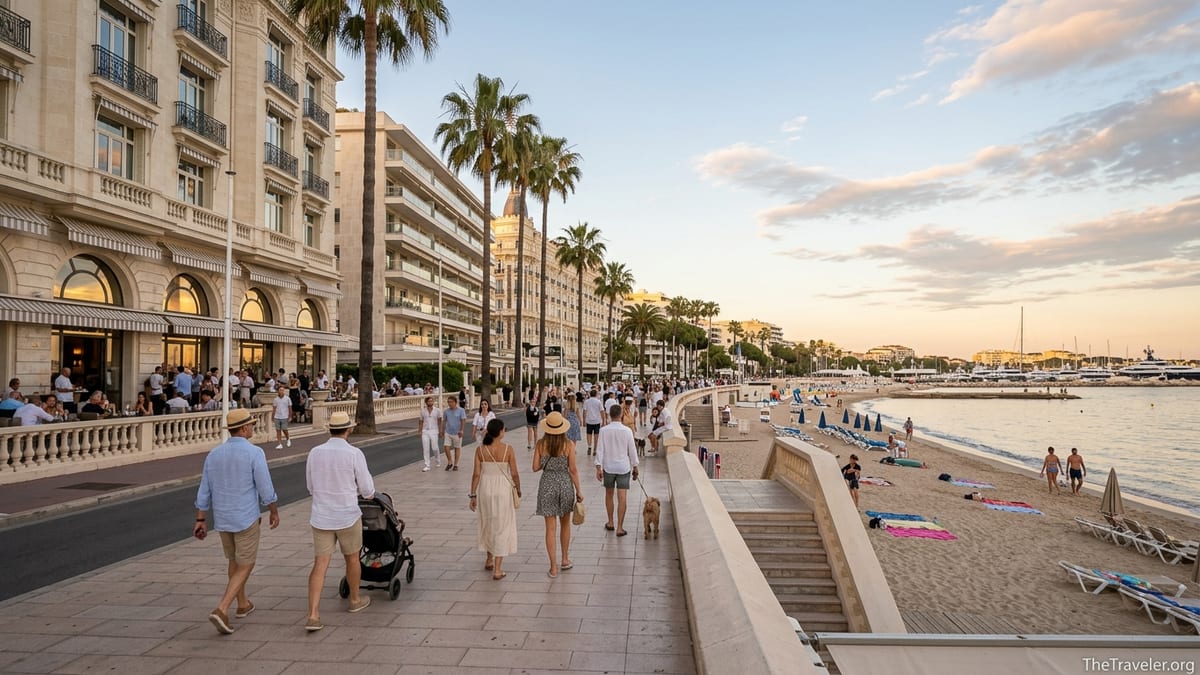
La Croisette is the three‑kilometre waterfront boulevard that curves around Cannes Bay, lined with palm trees on one side and a string of beaches, piers and luxury hotels on the other. It runs from the Palais des Festivals, home of the Cannes Film Festival, towards the Port Canto marina and the more residential Pointe Croisette. The promenade includes a wide pedestrian walkway, a bike lane in some sections, benches facing the sea and easy access down to both public sand and private beach clubs. It is essentially the stage on which Cannes presents its most polished version of itself.
On a typical summer day you will see joggers at sunrise, hotel guests crossing in white bathrobes to the beach clubs, cruise‑ship visitors strolling with gelato in hand, and locals cutting through on e‑bikes. The feeling is very different depending on the season. In July and August the promenade can be thick with people, especially around the Palais des Festivals and the big hotels like the Carlton Cannes and Hôtel Martinez. In late September or early October, the same walk feels far more relaxed, with softer light, space to breathe and more locals than festival‑goers.
La Croisette is also a practical connector. The parallel Rue d’Antibes behind it is packed with mid‑range shops and services, while side streets link the promenade to the SNCF train station in under 15 minutes on foot. If you are staying elsewhere along the Riviera, you can step off the regional TER train in Cannes, walk straight down to the water and be on La Croisette in roughly 10 minutes without needing taxis or buses.
Over the last few years, the city has invested in improving the promenade, with better paving, landscaping and lighting. That means today’s La Croisette feels more like a polished seafront park than a simple road, which matters if you are deciding whether it is worth coming just to walk and soak up the atmosphere.
The Atmosphere: Glamour, People‑Watching and Everyday Life
If you have ever watched coverage of the Cannes Film Festival, you have already seen the most iconic stretch of La Croisette: the red‑carpeted steps of the Palais des Festivals and the luxury hotels facing the bay. During the festival, which usually takes place in May, the boulevard turns into a moving backdrop of black‑tie outfits, camera crews, promotional billboards and black SUVs. Even if you do not have accreditation, simply standing on the pavement across from the Palais in the early evening, when premieres begin, can feel like being on the edge of a global media event.
Outside festival dates, the atmosphere tones down but does not lose its sheen. You are more likely to see business‑casual outfits from delegates attending conferences like Cannes Lions or MIPIM than ball gowns, yet terrace bars at the Carlton and Martinez still buzz at aperitif hour. A simple espresso at a café terrace facing the sea can easily cost more than in nearby inland towns, but what you are really paying for is the slow spectacle of the passing crowd: designer shopping bags, impeccably groomed dogs, families posing for photos against the bay, and occasional supercars inching along the road.
There is also a more everyday side if you drift away from the Palais. Further towards Port Canto you will find more joggers, local families pushing strollers and residents walking down to the sand with folding chairs rather than beach‑club reservations. Between major events, food trucks occasionally set up near the gardens with casual options like sandwiches and crêpes. The presence of supervised public beaches along the promenade in summer gives La Croisette a surprisingly accessible face, even while the shop windows show haute couture price tags.
In the evenings, especially from June to early September, the promenade feels safe, well lit and lively until late. You might pass an outdoor concert in the gardens near the waterfront, see children playing by the carousel or hear live music filtering from hotel bars. For many visitors, this simple ritual of an evening passeggiata along La Croisette, ice cream in hand, is what they remember most, more than any specific attraction.
Beaches on La Croisette: Public Sand vs Private Clubs
One of the biggest questions visitors ask is whether they can actually enjoy the beach along La Croisette without spending a fortune. The answer is yes, but you need to know how the shore is divided. Much of the immediate waterfront in front of the big hotels is occupied by private beach clubs, each attached to a property like the Carlton Cannes or Hôtel Martinez. These operate as full‑service spaces with sun loungers, parasols, changing cabins and restaurants. In peak season, a front‑row lounger at a high‑end club on La Croisette can run well into double digits in euros per day, sometimes approaching or exceeding three figures for the most exclusive settings that include towel service and waiter‑delivered cocktails.
Between these private concessions, the city maintains sections of public beach where anyone can spread a towel free of charge. One notable example is Zamenhof beach near the eastern end of La Croisette, beside the Hotel Martinez. Here, the municipality offers supervised swimming during the main summer months with lifeguards on duty during the day. A separate area of this beach allows you to rent a sun lounger or parasol at controlled rates that are significantly lower than most private clubs, giving a more budget‑friendly way to have a comfortable day by the water without buying into a luxury package.
The public stretches of sand can be busy in July and August, and the atmosphere is more relaxed and family‑oriented than at the chic clubs. You will see children building sandcastles, groups of friends picnicking with supermarket salads and rosé, and travellers who have come for the day from Nice or Antibes simply laying out towels near the waterline. The sand here is fine and gently sloping into the sea, which makes it manageable even if you are not a confident swimmer.
If you do choose to splurge on a beach club, La Croisette offers a spectrum. Some clubs attached to the grand hotels lean heavily into a refined, almost cinematic Riviera atmosphere with white cushions, table service and DJ sets at sunset. Others are slightly more casual, with simpler sunbeds and more approachable menus of salads, grilled fish and pasta. Many clubs allow you to reserve online or via your hotel concierge, but walk‑in spots can still be found in the afternoons, especially outside peak weekends. For travellers, deciding whether La Croisette is worth it may come down to whether this style of curated beach day appeals, or whether you are just as happy on a public stretch of sand.
Luxury Hotels, Shopping and Dining Along the Boulevard
La Croisette is flanked by some of the most famous hotels on the French Riviera. Names like the Carlton Cannes and Hôtel Martinez are not simply places to sleep; they are part of the city’s identity. Even if you are not staying in one of these properties, walking past their façades gives a sense of the area’s enduring glamour. Their ground‑floor terraces often spill onto the promenade with shaded seating under awnings, where non‑guests can sit for a drink or a light meal, albeit at premium prices compared with more modest cafés a few blocks inland.
Shopping along La Croisette skews heavily toward luxury. You will find flagship boutiques from haute couture fashion houses, jewellers and watch brands concentrated around the central section near the Palais des Festivals. For many visitors, window shopping here is part of the experience, even if the actual purchases happen on the more accessible Rue d’Antibes behind the boulevard, where mid‑range high‑street brands and independent shops cluster. This split allows mixed‑budget groups to enjoy the area together: some might browse La Croisette’s luxury windows while others peel off for more attainable finds one street back.
When it comes to dining, you have several layers of options. Seafront restaurants attached to beach clubs serve dishes that match the setting: platters of seafood, tartares, grilled fish, risotto and elaborate desserts, often with a wine list rich in local rosé from Provence. Expect to pay a noticeable premium for the location, particularly at dinner when views of the bay and the illuminated Lérins Islands come into play. A few streets inland, bistros and brasseries frequented by locals offer daily specials at more moderate prices, from niçoise salads and socca to steak‑frites and pasta.
For travellers on a tighter budget, a practical strategy is to treat La Croisette as your setting rather than your dining room. You might pick up baguette sandwiches, fruit and cold drinks from a bakery or supermarket near Rue d’Antibes, then find a bench or a spot on the public beach for an informal picnic. This way you still reap the benefit of the sea views and atmosphere without accruing a succession of high‑priced terrace bills.
Events, Festivals and When La Croisette Shines Most
La Croisette’s personality changes dramatically with the events calendar. During the Cannes Film Festival each May, the boulevard becomes a global hub of cinema. Giant posters announcing competing films line the façades, festival staff control access to certain areas near the Palais, and evening traffic can slow to a crawl as limousines arrive for premieres. Nearby hotels host rooftop parties and industry gatherings, and temporary pop‑up venues appear along the beach. For film enthusiasts, even a short visit during this time can feel electrifying, with chances to spot actors and directors or simply absorb the charged atmosphere.
Several other major events use the Palais des Festivals and the Croisette as their stage across the year. Advertising professionals pack the city for Cannes Lions in June, property specialists fill hotels for MIPIM in March, and television and music events bring their own waves of attendees. In summer, temporary installations such as designer markets, open‑air performances or seasonal beach events may appear along or just off the boulevard. If your idea of a worthwhile visit involves buzz, crowds and feeling in the middle of something bigger than yourself, timing your trip around one of these periods can make La Croisette an unforgettable highlight.
On the other hand, travellers who dislike large crowds or who are mainly looking for a quiet seaside escape might find La Croisette overwhelming when a major festival is underway. Hotel prices climb steeply during big events, restaurant reservations become more competitive and simple activities like crossing the road near the Palais can take longer than usual. In that case, late spring before the festival or early autumn after the peak summer holidays may hit a better balance, with pleasant weather, long evening light and fewer conference badges in sight.
Even outside headline events, La Croisette often hosts smaller cultural happenings: photography exhibitions in the open air, children’s activities in the gardens, fireworks over the bay on certain summer evenings and charity runs that use the promenade as their route. Checking the city’s official listings shortly before you travel can help you decide whether to devote more time to the boulevard or treat it as a brief scenic detour.
Costs, Crowds and Who La Croisette Is Best For
Whether La Croisette is “worth it” strongly depends on your expectations and your travel style. If you are drawn to classic Riviera glamour, enjoy people‑watching and do not mind higher prices for a front‑row seat on the action, the boulevard delivers exactly what you would hope. Spending a day wandering between the palace hotels, lingering over a drink on a terrace, and watching the sun set behind the Esterel hills across the bay can feel like inhabiting a film still, especially for first‑time visitors to the Côte d’Azur.
For travellers on a strict budget, the area can be more challenging. While walking the promenade is free and the public beaches are accessible, many temptations along the way carry premium price tags: branded beach bags in hotel boutiques, cocktails with sea views, or multi‑course dinners in beach restaurants. That does not mean you should skip La Croisette altogether. Instead, consider limiting paid experiences to one or two key moments, such as a single half‑day at a mid‑range beach club or one sunset drink at a historic hotel bar, and otherwise lean on picnics, self‑guided walks and public beach time.
Crowding is another factor. In July and August afternoons, you may find yourself weaving through clusters of visitors, especially around the central Croisette near the Palais. If you are sensitive to noise or prefer more tranquil landscapes, plan your La Croisette time for early morning or later in the evening, or visit outside the school‑holiday peak. Families with children often find the supervised public beaches and playgrounds along the promenade reassuring, but strollers can be harder to maneuver when the pavement is very busy.
Ultimately, La Croisette tends to suit travellers who appreciate atmosphere as much as attractions. If your ideal day revolves around museums and historic sites, you might find more satisfaction in Cannes’ old quarter Le Suquet or nearby towns like Antibes. If, however, you are curious about the Riviera myth that has persisted since the 19th century, La Croisette serves as a living open‑air museum of that lifestyle, from its Belle Époque hotels to the latest designer window displays.
How to Make the Most of a Visit to La Croisette
If you decide La Croisette deserves a place on your itinerary, a bit of planning can turn a simple stroll into a memorable experience. One classic approach is to arrive in Cannes by mid‑morning, walk from the train station down to the Palais des Festivals to see the famous steps, then follow the promenade eastwards with the sea on your right. Pause at the viewing points over the old port and the bay, then continue past the major hotels towards the quieter eastern section near Port Canto, where moored yachts line the marina.
Pack swimwear in a small bag so you can spontaneously turn the walk into a beach stop. Public changing facilities are limited, but some visitors simply use a large towel on the sand to switch into swimsuits discreetly. If you prefer more comfort, you can reserve a lounger at a beach club or at the municipally managed section of Zamenhof beach for a half‑day. Bring reef‑safe sunscreen, a hat and water, as shade along the promenade itself can be patchy around midday, despite the palm trees.
Food planning makes a difference too. Breakfast at a bakery in town followed by a mid‑morning coffee on La Croisette is often better value than sitting down for every meal on the front line. Consider timing your main restaurant meal a few streets inland, then returning to the boulevard in the late afternoon for a final swim and an aperitif as the light softens. For photographers, the hour before sunset is ideal, with the façades of the hotels catching warm light and the sea turning deep blue.
Finally, leave space to simply sit and watch. One of the greatest pleasures of La Croisette costs nothing: claiming a spot on a bench or low wall and observing as locals walk dogs, teenagers glide past on scooters and the silhouettes of the Lérins Islands shift with the changing sky. Whether you stay an hour or an entire day, this lived‑in rhythm can tell you more about Cannes than any single paid attraction.
The Takeaway
La Croisette is not a hidden gem, nor is it a budget secret. It is a carefully curated stage for the version of Cannes that has captivated filmmakers, designers and sun‑seekers for decades. For some travellers, that alone makes it worth visiting: a chance to walk a seafront that has hosted generations of film premieres, to swim off a beach framed by iconic hotels and to people‑watch in a setting that feels instantly like cinema.
For others, the combination of luxury branding, privatized stretches of sand and higher prices may feel less appealing, especially if they are looking for quieter or more rustic corners of the Mediterranean. The good news is that you do not need to choose blindly. With realistic expectations about costs, crowds and atmosphere, you can decide whether La Croisette is best as a half‑day detour, a full‑day beach outing or simply a quick stroll between trains.
If your journey along the French Riviera already includes stops in Nice, Antibes or smaller coastal villages, adding a few hours in Cannes to walk La Croisette can provide an interesting contrast, highlighting the polished, high‑gloss side of the coast. In the end, the boulevard’s real value lies not only in its famous name, but in how it helps you understand the many faces of the Côte d’Azur.
FAQ
Q1. Is La Croisette worth visiting if I am not interested in the Cannes Film Festival?
Yes. Even outside festival dates, La Croisette offers sea views, sandy beaches, luxury architecture and lively evening promenades that appeal to many visitors who have no particular interest in cinema.
Q2. Can I enjoy the beach on La Croisette without paying for an expensive beach club?
Yes. There are several public sections of sand along La Croisette where you can lay a towel for free, and one municipally managed area near the eastern end that rents sun loungers and parasols at more controlled, lower rates than most private clubs.
Q3. When is the best time of year to visit La Croisette?
Late spring and early autumn often offer the best balance of pleasant weather and manageable crowds. July and August bring hotter temperatures and more visitors, while May during the Cannes Film Festival is exciting but very busy and expensive.
Q4. How long should I plan to spend on La Croisette?
A half‑day is enough for a relaxed walk, a coffee and a quick swim. If you book a beach club or want to alternate between shopping, dining and sunbathing, you can easily fill a full day on or near the promenade.
Q5. Is La Croisette suitable for families with children?
Generally yes. The promenade is wide and mostly flat, public beaches have gentle sand slopes and some areas are supervised in summer. It can be crowded with strollers during peak season, so early mornings and late afternoons are often more comfortable for families.
Q6. How expensive is it to eat and drink along La Croisette?
Seafront terraces and beach‑club restaurants tend to be significantly more expensive than eateries a few streets inland. Many visitors save money by picking up food from bakeries or supermarkets in town and enjoying it on benches or on the public beach while reserving one special drink or meal with sea views.
Q7. Do I need to book beach clubs or restaurants in advance?
During peak summer weeks and major events like the Cannes Film Festival or Cannes Lions, reservations for popular beach clubs and seafront restaurants are strongly recommended. Outside those periods, you can often find walk‑in availability, especially at lunchtime or later in the afternoon.
Q8. Is La Croisette walkable from the train station in Cannes?
Yes. It typically takes about 10 to 15 minutes on foot to walk from Cannes train station to the central section of La Croisette near the Palais des Festivals, making it a convenient stop even on a day trip from nearby Riviera towns.
Q9. What should I wear when visiting La Croisette?
Daytime dress is generally casual but neat, with comfortable walking shoes, lightweight clothing and a hat in summer. In the evening, visitors tend to dress a little smarter for drinks or dinner, especially near the grand hotels, but there is no strict dress code for simply walking the promenade.
Q10. Is it worth staying overnight on La Croisette, or is a day trip enough?
It depends on your budget and interests. Staying in a hotel on or near La Croisette gives you immediate access to the beach and an atmospheric evening setting, but comes at a higher price. Many travellers find that a well‑planned day trip from another Riviera base provides enough time to experience the promenade without the cost of a seafront room.