


La Croisette in Cannes is one of Europe’s most glamorous waterfront promenades, a sweep of palm trees, Belle Époque hotels and private beaches where film stars, financiers and holidaymakers all share the same strip of sand. To really enjoy it, though, you need more than a pretty outfit and a camera. Understanding how the promenade works, when it changes character and what things cost on the ground will make the difference between an expensive disappointment and a Riviera highlight.
Get the latest updates straight to your inbox!
Getting Your Bearings on La Croisette
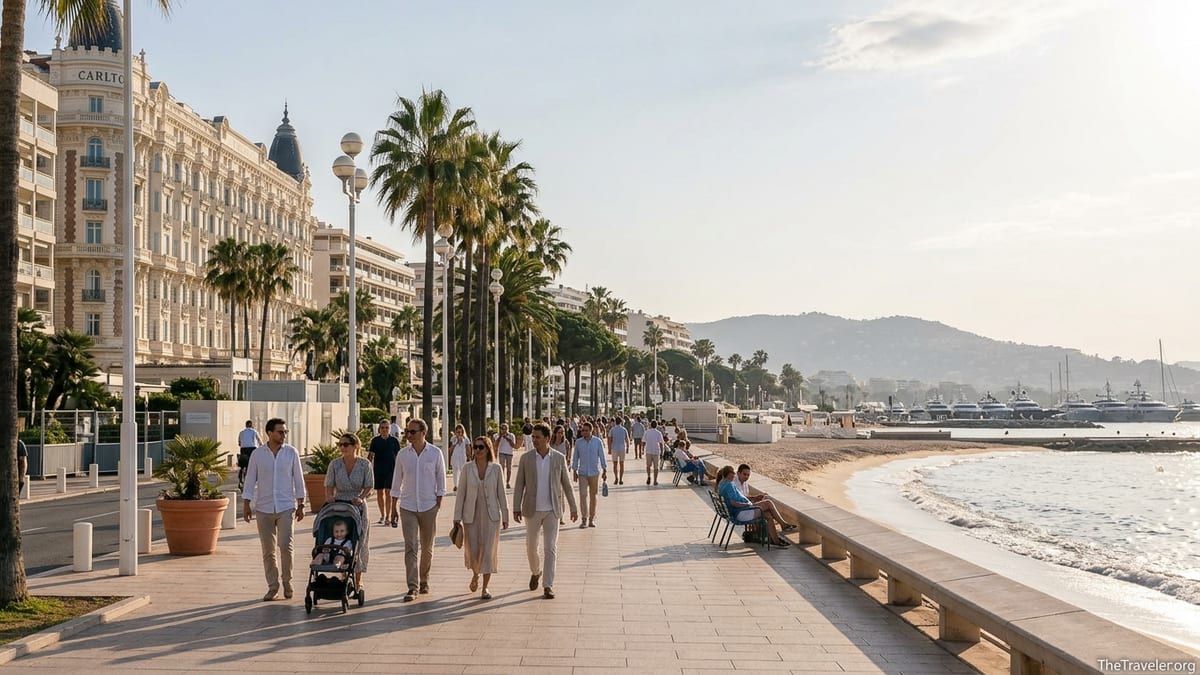
La Croisette runs for roughly two kilometers along the Bay of Cannes, from the Palais des Festivals et des Congrès near the old port to the more residential Pointe Croisette and Palm Beach area. On one side you have the curve of sandy beach and a string of beach clubs; on the other, a row of luxury hotels such as the Carlton Cannes, Hôtel Martinez and Hotel Barrière Le Majestic, along with designer boutiques and cafes. For a first walk, most visitors start near the Palais, where the famous red carpet sits, then follow the seafront east towards the Carlton and Martinez.
The promenade itself is wide and flat, with separate areas for cars, pedestrians and cyclists. It is easy to stroll, even in sandals, and accessible for wheelchairs and strollers. Benches line the sea side, so you can stop to watch superyachts, regattas or just the general theatre of Riviera life. The pavements are busiest from late afternoon into the evening, when locals come out for a pre-dinner walk and visitors dress up to people watch in front of the major hotels.
Distances are deceptively short, so you can stay in a backstreet hotel near Rue d’Antibes and still reach La Croisette on foot in under 10 minutes. If you are arriving by train, the Cannes SNCF station is only about a 7 to 10 minute walk to the central section of La Croisette by the Majestic and the Palais, which makes it practical to come in for a half-day visit from nearby towns like Nice or Antibes.
Behind La Croisette, a grid of streets offers more ordinary services: supermarkets, bakeries and casual bistros with menus much cheaper than the seafront terraces. Many travelers make a habit of buying drinks and snacks inland, then returning to the promenade to enjoy the views without paying seafront prices every time.
When to Go and How Crowds Change the Experience
La Croisette is technically a year-round destination, but its personality changes dramatically with the calendar. From late May to early June, the Cannes Film Festival and Cannes Lions advertising festival transform the promenade into a high-security corridor of black cars, TV crews and branded pop-up spaces. At these times the sidewalks can be packed shoulder to shoulder in the evenings, and some beach clubs or hotel terraces are reserved for private events.
Outside those peak events, June and September are often considered ideal months: the weather is reliably warm enough to swim, but the promenade is still walkable and sunbeds can sometimes be booked on the day. July and August are busier with holidaymakers, including families and cruise-ship passengers shuttled in to spend a few hours along La Croisette. Expect more noise, longer waits at seafront cafes and fully booked beach clubs on weekends, especially during French school holidays.
Winter brings a different charm. From November to March, the promenade is much calmer, with more locals than tourists. You might find cooler but often sunny days, with people walking dogs and jogging between the palm trees. Many beach clubs partially close or reduce hours off-season, but you gain in atmosphere: watching a January sunset behind the Esterel hills from a nearly empty La Croisette can feel more special than jostling for space in August.
If your priority is taking photographs of the architecture without crowds, try early mornings around 8 to 9 a.m. outside peak season. At that hour, the Carlton’s white façade and the Art Deco curves of the Martinez often catch soft light, traffic is light, and you can walk in the bike lane to frame wider shots without constantly dodging pedestrians.
Beaches, Sunbeds and What Things Really Cost
One of the biggest surprises for first-time visitors is how much it can cost to sit down on the sand in front of La Croisette. Most of the beachfront directly across from the major hotels is occupied by private beach clubs that rent sun loungers and umbrellas by the day. In high season, a front-row sunbed at a luxury club associated with the big five-star hotels can reach prices in the region of 80 to 120 euros per person, with second and third rows somewhat cheaper. Some clubs also require a minimum spend on food and drink on top of the lounger fee, so a simple day at a top-end club can easily reach more than 150 euros per person.
There are, however, more accessible options. A good example is Zamenhof beach, a municipally managed stretch on La Croisette near the Hôtel Martinez. Recent published tariffs show that a basic sun lounger here can cost under 10 euros for a half-day and under 15 euros for a full day, with umbrellas at only a few euros more. These public concessions tend to be popular with residents and budget-conscious visitors, and they still offer amenities like supervised swimming zones and basic changing facilities.
If you want a private beach feel without top-tier prices, look for independent beach clubs further towards the eastern end of La Croisette or slightly away from the most famous hotels. Mid-range clubs might charge around 35 to 60 euros for a sunbed in June or September, usually including towel service and access to showers. Ordering lunch on-site often satisfies any minimum spend requirement, so a couple could share a salad, a main dish and a bottle of rosé and meet the threshold while enjoying table service at their loungers.
Remember that the sea itself is public. You always have the right to swim, even in front of private concessions, as long as you enter from public areas and respect buoy lines and safety instructions. A smart strategy for many travelers is to combine at least one splurge day at a chic club, perhaps during a special occasion, with several days on public sand or municipal beaches, bringing their own towels and buying snacks from supermarkets or boulangeries a few streets inland.
Dress Codes, Etiquette and Staying Comfortable
On La Croisette itself, dress codes are informal but stylish. During the day, people wear resort clothing: sundresses, tailored shorts, linen shirts and sandals. Beachwear like bikinis and swim shorts are fine on the sand, but it is considered good manners to cover up with a shirt, dress or sarong when walking on the promenade or sitting in a cafe away from the beach. In the evening, many visitors change into smarter outfits, especially if they have reservations at hotel restaurants or plan to enjoy cocktails on terraces like those at the Carlton or the Majestic.
Inside some venues, especially those associated with the film festival or luxury hotels, dress codes can be stricter. For example, a bar or fine dining restaurant along La Croisette may politely refuse entry to guests in athletic shorts, flip-flops or very beachy outfits after a certain time of day. If in doubt, opt for closed shoes for men and a simple dress or smart-casual outfit for women. It does not need to be red-carpet glamorous, but looking neat will make service interactions smoother.
Sun protection and footwear are also part of comfort etiquette. The Riviera sun can be intense from late morning onwards, and the reflection from pale sand and water magnifies the effect. A packable hat, high-SPF sunscreen and sunglasses are essentials, even if you are only planning a one-hour stroll. Footpaths are smooth, but you will likely cover several kilometers without realizing it, so comfortable flat sandals or sneakers are wiser than high heels for daytime exploring. You can always carry dressier shoes in a small bag if you have a dinner booking later.
Noise and crowd etiquette matter too. Street musicians and selfie-takers are part of La Croisette’s scenery, but locals appreciate when people do not block the entire pavement for long photo sessions, especially near pedestrian crossings. During the evening passeggiata, try to keep to the right-hand side of the walkway and step to the side if you stop to take pictures of supercars or yachts.
Getting Around, Traffic and Safety on the Promenade
Under normal conditions, La Croisette is a straightforward road to navigate, with one lane of traffic in each direction, parallel parking bays and several pedestrian crossings. However, during major events such as the Cannes Film Festival, Cannes Lions, or the yachting festival in September, the city routinely introduces temporary road closures, diversions and parking restrictions along the boulevard. It is not unusual to see parking bays cordoned off and certain sections turned into controlled zones for official vehicles and shuttles.
For most visitors, this means it is rarely worth driving along La Croisette itself when the city is busy. A more practical approach is to park in underground car parks near the station or just behind Rue d’Antibes and walk the remaining distance. Buses also serve La Croisette, but schedules and stops can shift slightly during festivals; check posted notices at stops for any diversions. Taxis and private drivers can drop you close to hotel entrances, but at peak hours they may be held at police checkpoints or forced onto alternative routes, which can add time and cost.
Security presence on La Croisette, especially around the Palais des Festivals, is significant yet designed to be discreet. During the festival season, you will see both local police and national forces patrolling, together with bag checks and metal detectors at access points to the Palais and certain event zones. Around 2026, local authorities have publicly emphasized a multilayered security approach that includes visible patrols and more subtle surveillance operations, so do not be surprised by drones in the sky or officers checking vehicles near hotel entrances.
For ordinary tourists, this usually translates to a feeling of safety rather than inconvenience, as long as you travel with a bit of patience. Build extra time into any plan that involves crossing near the Palais in the evening, as crowds of photographers, autograph hunters and curious visitors often slow movement to a shuffle. Always keep your belongings close to your body in these crowds; serious crime is rare, but opportunistic pickpocketing can happen wherever people are distracted by celebrities or fireworks.
Where to Eat, Drink and People Watch
Dining on La Croisette ranges from quick snacks to formal multi-course meals. Seafront hotel restaurants such as those at the Carlton, Majestic or Martinez specialize in Mediterranean dishes featuring seafood, grilled fish and Provençal vegetables, often served on terraces that overlook their private beaches. A simple main course at one of these venues can easily run between 35 and 50 euros, with starters and desserts extra, and cocktails often priced around 20 euros or more. Many travelers choose these spots once during their stay for the view, ambiance and chance of spotting a familiar face from the screen.
For more budget-friendly options, a short walk inland makes a big difference. Parallel streets like Rue d’Antibes and the lanes around Rue Hoche offer brasseries and cafes where you can find set menus at lunchtime for around 20 to 25 euros, including a main course and dessert or coffee. Grabbing a takeaway slice of socca or a pan bagnat from a local bakery, then eating it on a bench overlooking the bay, can be as satisfying as a more formal meal and much kinder on your wallet.
Cafes along La Croisette itself are ideal for people watching. Ordering a coffee, a glass of chilled rosé or a Perrier with lemon and settling in for an hour is one of the best-value uses of a seafront seat. Expect to pay a few euros more for the same drink than you would pay a block inland. If you are on a tight budget, order a single drink and make it last; staff are accustomed to both quick and slow customers, and terrace service is part of the Riviera rhythm.
At night, the energy along La Croisette shifts toward bars, hotel lounges and occasional pop-up venues during festivals. Some beach clubs morph into evening spots with DJs and outdoor bars. Unlike in some cities, it is normal and accepted to dress up a little for a late drink along the promenade. Even if you are only sipping a spritz in a lobby bar, the setting of grand staircases and marble floors underlines why La Croisette remains such an enduring symbol of Riviera glamour.
How Renovations and Urban Projects Might Affect Your Visit
In recent years, Cannes has embarked on a long-term plan to renovate both the infrastructure and public spaces of La Croisette. Works on underground networks for water and energy, along with redesign of pavements, landscaping and lighting, began around early 2024 and are being phased so the promenade can continue operating. For travelers, this means that depending on when you visit, you may encounter fenced-off sections, temporary walkways or construction vehicles along certain stretches.
Key historic hotels on La Croisette, such as the Carlton and the Martinez, have also gone through major refurbishments, reopening with updated rooms, expanded gardens and refreshed beach clubs. The upside for visitors is a more polished experience, with newly landscaped terraces and improved beach facilities. The downside is that during active construction periods, parts of the promenade may look less photogenic, and access to some pontoons or beach areas can be limited.
Before your trip, it is wise to quickly check recent photos and local news about La Croisette rather than relying solely on older guidebooks. For instance, a viewpoint that used to be open might temporarily be behind hoardings, while a new fountain, playground or bike lane could have appeared since your last visit. Even if there are works in progress, Cannes typically tries to finish the most disruptive elements before the busiest summer weeks, so you can still expect a functional and pleasant promenade in high season.
If you are sensitive to noise or visual clutter, consider staying in a hotel one or two streets back, so any construction on the seafront affects you less directly. You can then dip into La Croisette for walks, meals and beach time while retreating to a quieter base at night.
The Takeaway
La Croisette can be many things at once: a world stage for glittering premieres, a simple city beach for local families, a high-end shopping street and a scenic jogging path by the sea. Your experience will depend less on luck and more on how well you match your expectations to the reality on the ground. Understanding how seasons, events and prices shape daily life along the promenade helps you see beyond the postcard images and find your own version of Cannes.
If you arrive knowing that a sunbed across from a palace hotel may cost as much as a mid-range hotel night elsewhere, that crowds will surge when the red carpet lights up, and that an excellent espresso is often just one backstreet away, you can choose when to lean into the glamour and when to step aside from it. With a bit of planning, La Croisette becomes less an intimidating catwalk and more a beautiful public stage where you can walk, swim, eat and people watch on your own terms.
FAQ
Q1. Is La Croisette in Cannes worth visiting if I am not interested in the film festival?
Yes. Outside the festival weeks, La Croisette is a relaxed seafront promenade with sandy beaches, scenic views of the bay and islands, and plenty of cafes and shops. You can enjoy swimming, walking and people watching without any need to engage with the film industry.
Q2. How expensive is it to spend a day on the beach along La Croisette?
Costs vary widely. At luxury hotel beach clubs, a sunbed can cost close to 100 euros or more in peak season, plus food and drinks. Municipal and mid-range options may charge closer to 15 to 60 euros for a lounger, and using the public sand with your own towel is free.
Q3. Can I access the beach in front of the big hotels without paying for a sunbed?
You cannot use the private rows of sunbeds without paying, but the sea and shoreline remain public. You can swim in front of these areas as long as you enter from public sections of the beach and respect any safety zones and lifeguard instructions.
Q4. What is the best time of day to walk along La Croisette?
Early mornings offer quiet, soft light and fewer crowds, ideal for photos. Late afternoons and early evenings are livelier, with more people strolling and the terraces filling up, which is perfect if you want atmosphere and people watching.
Q5. Do I need to dress up to visit La Croisette?
No formal dress code applies to the promenade itself. Casual but tidy resort wear is fine during the day. For evening drinks or dinner at hotel restaurants and upscale bars, smart-casual clothing is recommended, such as a dress or shirt and trousers, and closed shoes.
Q6. How safe is La Croisette, especially during big events?
La Croisette is generally considered safe, with a visible police presence, especially during major festivals. The main risks are crowded areas where pickpockets might operate and slower movement because of security checks. Keeping valuables secure and allowing extra time to get around is usually sufficient.
Q7. Is it practical to visit La Croisette as a day trip from nearby towns?
Yes. The Cannes train station is roughly a 7 to 10 minute walk from the central section of La Croisette, so it is easy to come in from places like Nice, Antibes or even Monaco for a few hours to walk the promenade, have lunch and enjoy the beach.
Q8. Are there affordable food options near La Croisette?
Yes. While seafront terraces can be pricey, streets just behind La Croisette, like Rue d’Antibes and the surrounding side streets, have bakeries, cafes and brasseries with more moderate prices. Many travelers buy takeaway food there and eat it on benches overlooking the bay.
Q9. Will construction or renovation works affect my visit?
Cannes has ongoing projects to improve La Croisette’s infrastructure and public spaces, so you may see some fenced-off sections or works in progress. These are usually phased to minimize disruption, but checking recent photos or local updates before your trip will help you set expectations.
Q10. Is La Croisette family friendly?
Yes. The promenade is flat and stroller friendly, the beaches have gentle slopes into the sea, and there are supervised swimming areas in season. Families often combine time on the sand with ice creams, playground stops and short evening walks to see the lights and boats in the bay.