


More news on this day
MedCruise has been represented in TUI Cruises’ latest Business Development Programme held onboard the newly introduced Mein Schiff Flow, underscoring the growing alignment between Mediterranean ports and cruise operators as the ship enters service in Europe.
Get the latest news straight to your inbox!
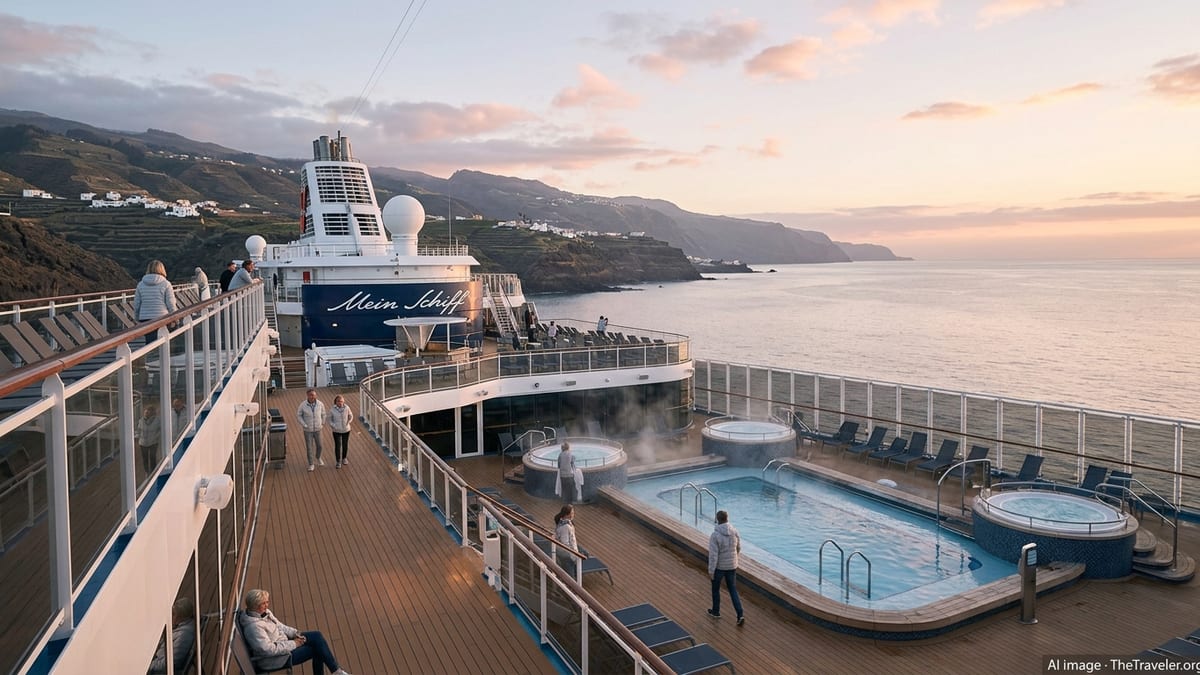
Collaboration spotlight on a new-generation ship
The participation of MedCruise in TUI Cruises’ Business Development Programme coincides with the introduction of Mein Schiff Flow, the company’s newest InTUItion-class vessel entering the European market in June 2026. The timing places the industry association’s work with ports and destinations directly alongside the launch of one of the line’s most significant newbuilds in recent years.
Publicly available information shows that Mein Schiff Flow has been positioned as a modern, family-focused ship designed for German-speaking guests, with new entertainment concepts and expanded facilities for children and teenagers. As the vessel commences its first season in the Mediterranean, coordination with port partners is regarded as central to ensuring smooth operations, efficient turnaround times and attractive itineraries.
Reports on the ship’s debut indicate that TUI Cruises is using the InTUItion class to advance its commercial strategy, adding capacity while emphasizing service quality and onboard experience. Against this backdrop, MedCruise’s presence within the Business Development Programme reflects a shared interest in enhancing port services, excursion design and destination marketing throughout the region.
The setting onboard Mein Schiff Flow allows cruise line planners and Mediterranean port representatives to review operational requirements in real time, from berth allocation and passenger flows to shore-excursion logistics. Such meetings are increasingly held at sea as operators seek to align ship design, itineraries and port infrastructure more closely.
Focus on Mediterranean port and destination development
MedCruise, the association representing cruise ports and related stakeholders across the Mediterranean and adjoining seas, uses business development initiatives to promote closer dialogue with cruise brands about deployment plans and destination readiness. Its presence within TUI Cruises’ programme onboard Mein Schiff Flow highlights the importance attached to this market by both sides.
According to published coverage of recent European deployment trends, the Mediterranean continues to be one of the most competitive cruise regions, with capacity growth across multiple brands and ship classes. Ports are investing in terminal upgrades, alternative-fuel bunkering points and passenger transport links, while destinations are adjusting visitor-management strategies in response to increased volumes.
Within this context, sessions hosted aboard Mein Schiff Flow are understood to address topics such as scheduling flexibility, seasonality and the balance between marquee ports and emerging destinations. For ports, participation offers direct insight into a major operator’s expectations on operational reliability, sustainability measures and guest satisfaction indicators.
For TUI Cruises, collaboration with MedCruise members supports long-term planning for itineraries that combine established hubs with smaller ports seeking to attract more calls. The Business Development Programme framework provides a platform for discussing pilot projects, testing new shore products and sharing data on passenger preferences.
Commercial and operational priorities for TUI Cruises
Mein Schiff Flow forms part of an expansion phase for TUI Cruises, which has been steadily increasing capacity with newbuilds tailored to its core source markets. Industry reports indicate that the InTUItion class is central to this strategy, bringing larger ships with a wide choice of dining, wellness and entertainment options, while also integrating more advanced technology.
Recent coverage highlights that the ship’s design incorporates extensive family and youth facilities, aligning with TUI Group’s broader focus on family travel and package-cruise offerings. This approach relies on well-coordinated port operations, as family segments tend to prioritize convenient shore access, clear information and a broad mix of excursion styles.
Operational discussions held as part of the Business Development Programme are therefore understood to address turnaround efficiency, time in port and the reliability of port-side services such as baggage handling, provisioning and fuel supply. With larger ships, small operational delays can affect schedule integrity across an entire itinerary, making cooperation with port stakeholders vital.
The presence of MedCruise alongside TUI Cruises’ commercial and operations teams supports the exchange of information about infrastructure upgrades, regulatory developments and local supplier capabilities. This information helps cruise planners assess which ports are best suited for homeporting, partial turnarounds or transit calls within complex seasonal deployment patterns.
Sustainability and infrastructure in the spotlight
The debut of Mein Schiff Flow also draws attention to environmental and energy-efficiency priorities that are increasingly shaping cruise-ship deployment in the Mediterranean. New vessels in the fleet have been designed with improved fuel efficiency and connections for shoreside power where available, reflecting sector-wide efforts to reduce emissions in port areas.
Ports represented within MedCruise are at different stages of developing infrastructure such as shore-power facilities, alternative-fuel bunkering and improved waste-management systems. By joining TUI Cruises’ Business Development Programme onboard Mein Schiff Flow, representatives can discuss how upcoming investments align with the line’s technical capabilities and long-term sustainability targets.
Industry observers note that port readiness for new fuels and power solutions has become a decisive factor for cruise-line itinerary planning. Cruise brands are increasingly inclined to favor ports that can support their technical and regulatory needs, particularly in regions where emissions rules and local expectations are tightening.
Structured exchanges between MedCruise members and TUI Cruises, held in the operational setting of a ship in service, contribute to a more detailed understanding of these requirements. This can help ports prioritize projects that will have the greatest impact on future calls and passenger volumes, while supporting the cruise line’s own decarbonization efforts.
Strengthening regional networks as Mein Schiff Flow enters service
The MedCruise representation within the Business Development Programme on Mein Schiff Flow illustrates how industry associations use new ship launches as platforms for wider regional coordination. As Mein Schiff Flow begins its initial programme of Mediterranean itineraries, the relationships developed through such onboard sessions are expected to support smoother port calls and more varied destination offerings.
Public information about the ship’s early sailings indicates a focus on popular Mediterranean routes that combine Italian, Adriatic and Western Mediterranean ports. This pattern reinforces the need for close coordination between the cruise line, port authorities and destination stakeholders, particularly during a ship’s inaugural season when operational procedures are still being fine-tuned.
By engaging directly with MedCruise and its members, TUI Cruises is positioning itself to respond more quickly to destination trends, infrastructure developments and evolving regulatory frameworks across the region. At the same time, ports benefit from clearer visibility into the operator’s expectations and can align investment decisions with likely deployment scenarios.
As Mein Schiff Flow settles into regular operations, the outcomes of the Business Development Programme are expected to be reflected in itinerary design, excursion portfolios and the overall guest experience ashore. For the wider Mediterranean cruise sector, the cooperation highlights the continuing importance of structured dialogue between cruise lines and port networks when new ships join the market.