


Wildlife travel has surged in popularity as more travelers look for trips that feel both life changing and low impact on the places they visit. Among the many operators promising intimate encounters with polar bears, jaguars, whales, and mountain gorillas, Natural Habitat Adventures often stands out, frequently mentioned alongside organizations like World Wildlife Fund and Lindblad Expeditions. But are its trips actually worth the premium price tag for nature lovers, photographers, and conservation minded travelers?
Get the latest updates straight to your inbox!
Who Is Natural Habitat Adventures and What Sets It Apart?
Natural Habitat Adventures, often shortened to Nat Hab, is a US based company that has specialized in small group wildlife and nature trips since the mid 1980s. It focuses almost entirely on wild places rather than general sightseeing, with itineraries built around polar bears in Churchill, grizzlies in Alaska, penguins in Antarctica, jaguars in Brazil’s Pantanal, and classic safaris in countries such as Botswana and Tanzania. The company positions itself at the higher end of the market in terms of price and guiding standards, with an emphasis on strong conservation credentials.
One of the most distinctive features of Nat Hab is its long running relationship with World Wildlife Fund. WWF names Natural Habitat Adventures as its exclusive conservation travel partner and notes that Nat Hab donates a portion of its revenue in support of conservation projects, including a commitment of at least a percentage of gross sales plus a fixed annual contribution through 2028. For travelers who want their money to support conservation work as well as a personal vacation, this relationship is often a key part of the appeal.
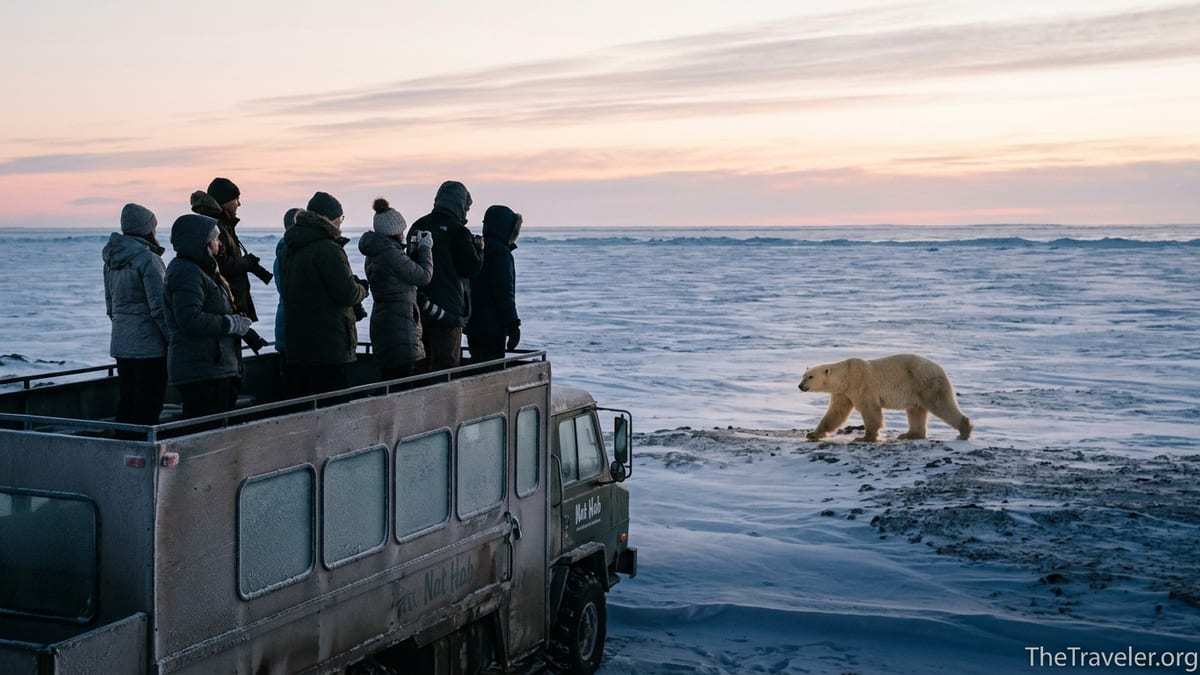
Another differentiator is group size and style. Nat Hab usually runs trips with fewer travelers than many mainstream operators. For example, its classic polar bear trips in Manitoba use custom built vehicles that seat fewer guests than standard tundra buggies, and Galapagos departures are typically on small expedition ships or chartered yachts rather than larger cruise vessels. In practice this often means more room for photographers to spread out, more time to ask questions of the guides, and fewer people jostling for a view when wildlife appears.
The company also promotes a high level of personal support. Prospective guests work with in house “adventure specialists” who know the specific trips well, and past travelers often mention detailed pre departure guidance, including packing lists tailored to extremely cold climates, or advice on camera gear for low light wildlife photography. For travelers who are new to expedition style trips, that kind of hand holding can be reassuring.
What Do Example Itineraries and Prices Look Like?
To decide whether Natural Habitat Adventures is worth booking, it helps to look at concrete examples. One of its flagship trips is a polar bear adventure in Churchill, Manitoba, typically running in October and November. A small group flies into the subarctic town on charter flights, then spends several days on the tundra in heated vehicles searching for polar bears and arctic foxes. These trips often include nights at a local lodge in Churchill, though some itineraries add overnights at a remote tundra lodge or even converted mobile “tundra lodge” units parked out on the ice seasonally.
Pricing for these polar bear trips usually runs into the high four or five figures per person in US dollars, depending on exact itinerary and length. This puts Nat Hab above many generalist tour operators that also visit Churchill, but roughly in line with other premium wildlife brands that focus on small groups and custom vehicles. When comparing operators, travelers often notice that a local Canadian operator might advertise a polar bear package in the range of several thousand Canadian dollars, while a similar length Nat Hab trip in US dollars can be substantially more, particularly when factoring in international flights handled by its in house travel desk and added cultural or photography components.
In warmer climates the pricing profile is similar. A one week Galapagos expedition on a small vessel with Nat Hab may cost more than many larger ship cruises or budget island hopping packages, but closer in price to boutique expedition lines that carry fewer than 20 to 40 guests. A jaguar trip in Brazil’s Pantanal, or a classic Botswana safari with tented camps inside or adjacent to private reserves, can run into the mid to high five figure range per person once internal flights, guiding, and park fees are included. The premium reflects not only the remote locations and logistics, but the decision to work with small lodges, charter flights, and experienced naturalist guides.
There are also less demanding and sometimes slightly more affordable itineraries. Nat Hab markets a category it describes as its easier adventures, which can include whale focused trips in Baja California, guided northern lights trips in Canada, or lodge based bear viewing in Alaska that does not require strenuous hiking. These trips can still be costly compared with independent travel, but they are examples of where the Nat Hab model is accessible to travelers who want wildlife experiences without multi day treks or camping.
How Strong Are the Guides, Group Experience, and Service?
For most nature and wildlife travelers, the quality of guiding is where trips live or die. In reviews from independent platforms and social channels, guests frequently highlight Nat Hab guides as a standout feature, often mentioning deep knowledge of local ecology and behavior, enthusiasm for photography coaching, and an ability to manage expectations when wildlife is unpredictable. Travelers returning from Galapagos itineraries, for instance, commonly describe guides spotting blue footed boobies, marine iguanas, and Galapagos penguins before anyone else on the trail, or explaining the island’s conservation challenges in detail during evening briefings.
On polar bear tours, Nat Hab guides and drivers are typically local specialists who have spent many seasons watching bear behavior on the tundra. That experience can matter when deciding whether to stay with a sleepy bear in hopes it may rise and interact, or move on in search of more active wildlife. In places such as Brazil’s Pantanal, where jaguars often appear along riverbanks, experienced guides know which bends of the river are historically productive and how to coordinate with local spotters without turning a sighting into a crowded circus.
Service touches on trip are generally consistent with an upscale adventure operator. Guests often mention that staff at lodges or on small ships learn individual preferences, from coffee orders at breakfast to dietary restrictions. Vehicles tend to carry snacks, hot drinks, and warm gear such as parkas and over boots in polar regions. It is not uncommon for travelers to note surprise extras such as a sundowner drink in the bush in Africa, or an impromptu stargazing session in a dark sky location when conditions allow.
At the same time, Nat Hab is clear that it sells adventure, not luxury for its own sake. In its published materials and fact sheets, the company stresses that accommodations are chosen primarily for access to wildlife and natural settings, with comfort a close second. That means you are more likely to be staying at a rustic tundra lodge with spectacular views and limited Wi Fi than a sleek design hotel in a city, even though the price point might suggest the latter if you were comparing only by nightly rate.
Conservation, Ethics, and Carbon Footprint
One of the central reasons many travelers choose Natural Habitat Adventures is its focus on conservation and lower impact practices. The company has presented itself as an early adopter of carbon neutral operations, describing how it measures emissions from its trips and office operations and funds projects that offset those emissions. It also designs itineraries to avoid practices that can harm wildlife, such as close contact feeding of animals for the sake of tourist photos, or crowding sensitive nesting areas during breeding seasons.
The WWF partnership is particularly relevant for travelers who care about where their money goes. WWF publicly notes that Nat Hab donates a portion of gross sales and an additional fixed annual amount to support conservation work in the destinations its trips visit. While the exact figures can vary from year to year, the message is that a trip to see monarch butterflies in Mexico, for instance, supports broader monarch conservation through research, advocacy, and local community projects. For some travelers this is a deciding factor, especially when comparing Nat Hab to operators that do not have formal conservation commitments.
Ethical considerations also show up in how groups move through communities. In Churchill, for example, polar bear tourism is a key pillar of the local economy. Nat Hab uses local hotels, tundra guides, and cultural experiences hosted by Indigenous residents and long term locals, which helps spread income beyond a single large lodge or chain hotel. In other destinations, such as Belize or Peru, the company may work with community owned lodges or local partners vetted for environmental practices, rather than building its own properties.
That said, any long haul wildlife trip involves flights and resource use, and carbon offsets alone do not erase the environmental cost. Travelers focused on minimizing their footprint might reasonably ask whether a once in a lifetime trip with a conservation oriented operator is preferable to more frequent, shorter flights for city breaks, or whether they can combine a Nat Hab itinerary with a personal carbon reduction plan at home. For some, Nat Hab’s conservation focus makes the trip feel more justifiable; for others, it is one factor among many.
How Does Nat Hab Compare to Other Wildlife Operators?
In the broader landscape of wildlife travel companies, Natural Habitat Adventures sits alongside names such as G Adventures’ National Geographic branded journeys, World Expeditions, and smaller niche operators that focus on specific regions or themes. Each company has its own balance of price, comfort, and conservation orientation. For example, G Adventures offers a wide range of trips, many of them less expensive and more youth oriented, but only a portion are wildlife focused and some run with larger group sizes. World Expeditions, by contrast, has a long track record in trekking and adventure travel, with wildlife as part of a broader portfolio rather than the sole emphasis.
When travelers compare concrete itineraries, the differences become clearer. A Galapagos trip with a mainstream adventure brand might place you on a ship with 80 to 100 guests and a mixed focus on snorkeling, families, and general sightseeing. Nat Hab is more likely to charter or partner with smaller vessels where natural history interpretation is the primary focus and wildlife time is prioritized over beach hours. Similarly, a safari in Kenya or Tanzania through a large generalist tour operator might rotate through big, popular lodges and move large groups in 4x4 vehicles, while Nat Hab tends to favor smaller camps and fewer guests per vehicle.
At the very high end, there are specialist companies that equal or surpass Nat Hab in luxury, using private concessions in Botswana or ultra high end ships in the polar regions, with prices to match. Travelers choosing between those and Nat Hab are often weighing whether they want maximum marble and gourmet dining or a more understated but still comfortable base with equivalent wildlife access. Nat Hab positions itself in the “premium but not ultra luxury” band, where conservation storytelling and guiding get as much marketing emphasis as food and thread count.
Travelers should also consider the company’s North American base and pricing. Some reviewers, especially Canadian travelers heading to Churchill, note that booking with Nat Hab in US dollars can feel notably more expensive than arranging similar logistics with an in country operator in Canadian currency. On the other hand, US based travelers sometimes appreciate being able to pay in their home currency, work with a US office for customer service, and add custom flight arrangements through Nat Hab’s dedicated air travel desk.
Who Will Get the Most Value From Booking With Natural Habitat Adventures?
Natural Habitat Adventures is best suited to travelers who value deep wildlife immersion, expert guiding, and conservation credentials more than they value the absolute lowest price. If your ideal trip is a once in a decade, bucket list wildlife journey where you want a high chance of rich encounters and strong educational content, Nat Hab aligns well with that goal. Examples include a serious photographer heading to the polar bear season in Churchill, a family keen on seeing Galapagos wildlife up close while learning about evolution and marine conservation, or a couple celebrating a milestone birthday with a Botswana or Namibia safari that includes small camps and long days out in the bush.
It also fits travelers who prefer structured support. People who are used to independent backpacking or self driving might find the level of organization unnecessary, but first time expedition travelers, older travelers, or those worried about language barriers and remote medical access often value having a dedicated expedition leader, support staff, and a 24 hour operations team in the background. Nat Hab’s detailed pre trip communication tends to appeal to planners who like to know exactly what to expect from weather to tipping practices.
Budget conscious travelers or those comfortable arranging logistics on their own may find better value by stitching together components independently or booking with smaller local operators. For instance, in Manitoba it is possible to book directly with local hotels and tundra tour companies, coordinating flights to Churchill independently. In the Galapagos, some travelers work directly with local boat owners or book on last minute deals once they arrive in Ecuador. These approaches can save substantial money, but require more time, flexibility, and personal risk tolerance than a curated Nat Hab package.
Another group that may not be ideal for Nat Hab is travelers primarily seeking luxury amenities, nightlife, or city based culture with wildlife as a minor add on. While Nat Hab trips often include overnights in gateway cities such as Quito, Winnipeg, or Arusha, the focus is firmly on early mornings, long days in the field, and evening talks about ecology rather than spa treatments or shopping.
The Takeaway
Is Natural Habitat Adventures worth booking for nature and wildlife trips? For travelers who care deeply about wildlife access, guide quality, and conservation impact, the answer is often yes, provided the price fits their budget. The company’s long standing partnership with World Wildlife Fund, emphasis on carbon conscious practices, and focus on small groups in wildlife rich habitats set it apart from many generalist tour operators. Guests tend to come home with strong memories of close but respectful encounters with polar bears, whales, jaguars, or penguins, along with a clearer sense of the environmental pressures those species face.
That said, Nat Hab is not the right choice for everyone. Its trips are rarely the cheapest way to see a destination, and they prioritize time in nature over urban comforts or luxury trimmings. Travelers who are primarily price sensitive, or who enjoy building their own itineraries and taking more logistical responsibility, may find better value working with local operators or combining shorter guided experiences with independent travel.
The most satisfied Nat Hab guests tend to be those who approach the experience as more than a holiday. They are looking for a mix of education, inspiration, and adventure, and they see the higher cost as part payment for conservation outcomes and part investment in a trip where most of the logistical and ethical homework has already been done. If that description resonates with your travel style and budget, Natural Habitat Adventures is very much worth serious consideration for your next wildlife focused journey.
FAQ
Q1. Is Natural Habitat Adventures considered a luxury tour company?
Nat Hab operates in the premium segment rather than at the ultra luxury end. Trips usually feature comfortable, well located lodges or small ships with strong guiding and service, but they prioritize proximity to wildlife and conservation credentials over opulent amenities like large spas, extensive room service menus, or high fashion interiors.
Q2. How expensive are Natural Habitat Adventures trips compared with other wildlife operators?
Nat Hab trips are often more expensive than group tours from mainstream adventure brands or local operators, especially when priced in US dollars, but generally comparable to other conservation focused, small group expedition companies. In many cases the higher price reflects smaller group sizes, charter flights, high quality guides, and the use of intimate lodges or ships rather than large hotels or vessels.
Q3. Are Nat Hab trips suitable for first time wildlife travelers?
Yes, many itineraries are designed with first time wildlife travelers in mind. The company provides detailed pre departure information, handles complex logistics such as internal flights and transfers, and offers easier rated trips for people who prefer less strenuous activities. Expedition leaders and local guides are used to answering basic questions about gear, photography, and wildlife behavior.
Q4. Does traveling with Natural Habitat Adventures really help conservation?
Travel with Nat Hab supports conservation in several ways, including financial contributions to World Wildlife Fund and other partners, as well as the use of local guides, lodges, and community experiences that spread economic benefits. While no trip is impact free, many travelers choose Nat Hab because they feel their spending supports organizations and projects that protect the species and ecosystems they have come to see.
Q5. What kinds of wildlife trips does Nat Hab specialize in?
Nat Hab focuses on trips where wildlife is the main attraction rather than a side activity. Examples include polar bear expeditions in Churchill, Galapagos small ship voyages, African safaris in countries like Botswana and Tanzania, bear viewing in Alaska, whale focused trips in Baja California, and jaguar trips in Brazil’s Pantanal, among others.
Q6. How big are the groups on Natural Habitat Adventures trips?
Group sizes vary by destination and itinerary, but are generally smaller than on mass market tours. Polar bear trips, for example, may have a limited number of guests per custom tundra vehicle, while Galapagos sailings are typically on small ships or yachts with far fewer passengers than mainstream cruises. Smaller groups mean more guide attention and less crowding at sightings.
Q7. Are Nat Hab trips physically demanding?
Physical demands depend on the specific itinerary. Some adventures involve only gentle walks and vehicle based wildlife viewing, while others may include hikes at altitude, uneven terrain, or time in cold or humid environments. Nat Hab publishes physical ratings and detailed activity descriptions so guests can choose a trip that matches their fitness and comfort level.
Q8. Can families with children travel with Natural Habitat Adventures?
Many Nat Hab trips welcome families, and some departures are specifically designated as family or teen friendly. These often feature slightly adjusted pacing, child friendly explanations from guides, and activities suitable for a wide range of ages. However, certain itineraries in extreme environments or on small vessels may have minimum age requirements.
Q9. How far in advance should I book a Nat Hab wildlife trip?
Popular wildlife trips, especially polar bear seasons, peak safari months, and prime Galapagos or Antarctica departures, often book out many months or even a year in advance. Booking early increases the chance of securing preferred dates, cabins, and room types, particularly if you are traveling as a family or small private group.
Q10. Is Natural Habitat Adventures a good choice for solo travelers?
Yes, solo travelers frequently join Nat Hab departures. The small group format, shared wildlife experiences, and hosted meals make it relatively easy to meet other guests, and the company can often help arrange shared accommodations to limit single supplements, depending on availability and willingness to share.