


Standing in front of a Tuscan duomo is one of those travel moments that lingers long after you fly home. Yet if your itinerary only has room for one great cathedral, a real dilemma appears: should you give that precious half day to Pisa Cathedral beside its famous Leaning Tower, or to Siena Cathedral with its striped marble and starry blue ceilings? Both are unforgettable, but they impress in very different ways. This guide breaks down what it actually feels like to visit each one today, how much time and money you should expect to spend, and which church is more likely to stay with you long after your trip.
Get the latest updates straight to your inbox!
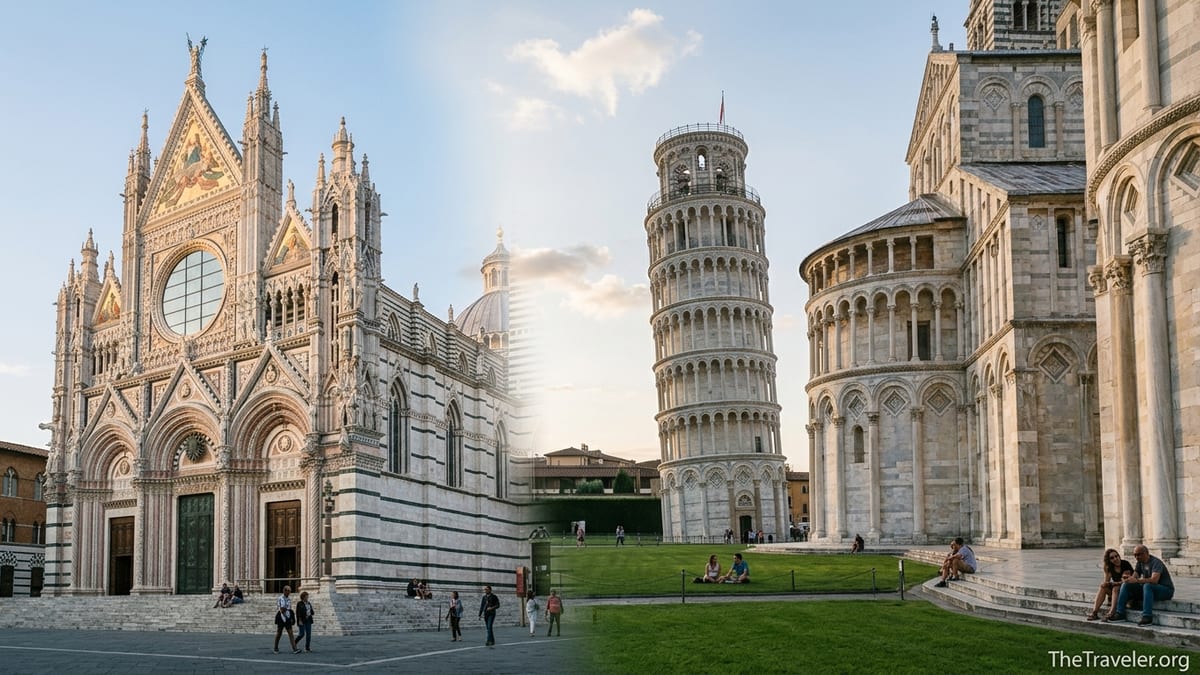
First Impressions: Square of Miracles vs Hilltop Medieval City
Your first encounter with each cathedral sets a very different mood. Pisa Cathedral rises from the broad lawn of Piazza dei Miracoli, a vast walled square where the white marble of the cathedral, baptistery and the Leaning Tower seem to float above the grass. Many travelers arrive on a quick train from Florence, step through the gate, and are hit with that postcard view in seconds. It is instantly recognizable and almost surreal, especially if you have seen the Leaning Tower in photos your entire life.
Siena Cathedral, by contrast, reveals itself slowly. The city itself sits high on a hill, and you typically walk up from the bus station or parking garages through a tangle of medieval streets. There are no lawns here, just brick alleys, small piazzas and stone staircases that suddenly open onto the striped facade of the duomo. Instead of one big reveal, it feels like discovering a secret layered inside a lived-in Tuscan town, with laundry hanging from windows and locals running errands around the cathedral square.
In practical terms, Pisa is easier to add as a fast side trip, especially from Florence or the Ligurian coast. Trains from Florence Santa Maria Novella to Pisa Centrale usually take around one hour, and from the station you can walk to Piazza dei Miracoli in about 20 minutes or take a short local bus or taxi. Siena takes more commitment. There is no direct fast train from Florence; most visitors either drive or catch a bus that takes around 1.5 hours, then continue on foot up into the old town. That extra effort, though, is part of why the Siena duomo often feels more immersive once you arrive.
If your idea of a powerful impression is a big, cinematic reveal in an open space dominated by a single global icon, Pisa has the edge. If you are drawn to atmosphere, wandering, and the sense of a cathedral embedded in daily life, Siena starts ahead before you even step through the door.
Architectural Impact: Romanesque Grandeur vs Gothic Drama
Pisa Cathedral, dedicated to Santa Maria Assunta, is one of the finest examples of Pisan Romanesque architecture. Its long, low profile, endless arcades of columns and creamy marble give it a serene, almost ship-like presence in the square. The facade is stacked with open galleries and rounded arches, but it remains relatively calm to the eye. Inside, the striped granite columns and coffered wooden ceiling decorated with gold create a harmonious, measured space. Visitors often comment that, compared with the sensation of climbing the Leaning Tower, the interior of the cathedral feels stately and composed rather than overwhelming.
Siena Cathedral is about contrast and vertical drama. Built largely in the 13th and 14th centuries, it mixes Romanesque and Gothic forms, but it is the Gothic energy that dominates your memory. The exterior bands of white and dark marble wrap the whole building like a zebra pattern, with a richly sculpted facade alive with statues, pinnacles and mosaics. Inside, those same stripes run up the columns toward a star-spangled blue vault in the nave. The effect can feel almost dizzying at first glance, especially in late afternoon when light filters through stained glass and picks out the gilded details.
Architectural highlights in Pisa include Nicola Pisano’s pulpit from 1260, a masterpiece of early Renaissance sculpture. Its carved scenes from the life of Christ reward slow viewing, especially if you have read a little about the transition from medieval to more naturalistic figures in Italian art. The sightlines inside the cathedral are fairly open, so even in busy periods you can usually find a quiet corner to study details like the mosaics in the apse or the finely worked bronze doors.
Siena’s architectural highlights are spread across vertical and hidden spaces. Many visitors opt for the “Gate of Heaven” rooftop route, a special visit that takes you onto walkways high inside the cathedral walls. From there you see the striped stonework and the nave from above, plus sweeping views across Siena’s terracotta rooftops. In 2026, this experience typically costs a little over 20 euros for adults and includes access to the broader cathedral complex, making it one of the more distinctive architectural tours in Tuscany. For travelers who “feel” buildings most strongly when they can get close to the structure itself, Siena’s rooftop paths leave a strong imprint.
Interiors & Art: Subtle Devotion vs Overload of Masterpieces
On the inside, Pisa Cathedral impresses with its scale and balance more than with a single “wow” artwork. The long nave, double aisles and rhythm of columns create a spacious hall that naturally draws your eye toward the mosaic of Christ in Majesty above the main altar. Some travelers describe the interior as slightly darker and more atmospheric than they expected, which can make the patches of gilding and marble stand out more sharply. The absence of a forest of side chapels, like you might find in some French cathedrals, contributes to a sense of order.
Siena Cathedral, in contrast, feels dense with art. At floor level, you walk over an elaborate inlaid marble pavement filled with scenes from the Old Testament, allegories and mythological figures. For much of the year, part of the floor is covered to protect it, but there are regular periods when larger sections are revealed. Looking up, you find statues of biblical figures and popes by artists including Michelangelo, along with a richly painted ceiling. The famous Piccolomini Library, accessed from inside the cathedral, envelops you in frescoes by Pinturicchio, with vivid scenes from the life of Pope Pius II and an almost jewel-box intensity of color.
From a purely artistic standpoint, Siena offers more star names in a single visit. In one afternoon you can stand before works linked to Michelangelo, Donatello and Bernini, then walk down into the baptistery to see frescoes and a sculpted baptismal font by early Renaissance masters. Many visitors who care about art history rank Siena among the most impressive church interiors in Italy, often on par with or even above Florence’s duomo interior experience.
That does not mean Pisa is artistically thin. Its pulpit alone is a landmark of European sculpture, and the cathedral once housed many treasures now moved to the nearby Opera del Duomo Museum. If you buy a combined ticket that includes the museum, you can see these works in better light and with fewer crowds than inside the church itself. Still, when people talk afterward about a single Tuscan cathedral that felt like an art museum, they are usually talking about Siena.
The Surrounding Experience: Iconic Tilt vs Medieval Streets
Any honest comparison between Pisa and Siena must acknowledge that in Pisa the Leaning Tower dominates the experience. Practically every traveler who comes to the cathedral also walks around the tower, and many schedule their whole stop around a timed ticket to climb it. In 2026, climbing the tower typically costs around 20 euros per adult for a timed half-hour slot, while combo tickets that add the baptistery, cemetery and museums can run into the mid-20s or more depending on the exact package and seller. If you take the time to climb, your strongest memory of Pisa may well be the sensation of walking on a staircase that tilts beneath your feet.
The rest of the Piazza dei Miracoli adds to the impression. The baptistery, with its extraordinary acoustics and echoing demonstrations by attendants, and the walled Camposanto cemetery with its frescoes and long cloisters, turn a visit into a multi-stop circuit. Guided tours that bundle the cathedral, baptistery and tower are common, and prices often start around 30 to 40 euros per person for group tours booked through major vendors. The net effect for many visitors is that the cathedral becomes one part of a broader monumental ensemble rather than a standalone star.
In Siena, the cathedral complex is also rich, but the mood is more layered. A popular ticket option, usually called the OPA Si Pass, grants access over multiple days to the cathedral, Piccolomini Library, baptistery, the Museo dell’Opera del Duomo and sometimes the panoramic terrace of the unfinished nave known as the Facciatone. Standard cathedral entry on its own can be under 10 euros depending on the season, while the full pass and special rooftop experiences cost more but also spread the visit out. Travelers often weave cathedral visits between coffee stops on Piazza del Campo, gelato runs, and simply getting lost among brick alleyways.
The real-world difference shows up in small details. In Pisa, you frequently share the square with day-tour buses, groups taking “holding up the tower” photos and a dense ring of souvenir stalls just outside the monumental area. In high season, the atmosphere is festive but can feel crowded and commercial. In Siena, although it is very busy on summer days and especially around the Palio horse races, the flow of people is generally diffused through the streets. After leaving the cathedral, you might duck into a quiet wine bar a few minutes away and find yourself surrounded mainly by locals and a handful of other travelers.
Practicalities: Time, Crowds, Tickets and Costs
From a time-management perspective, Pisa Cathedral can be seen fairly quickly. Many visitors who have a Leaning Tower climbing slot spend about 20 to 30 minutes inside the cathedral itself, plus longer exploring the square. Combined tower and monument tickets are often valid only for a specific day, and the tower entry is strictly timed. In busy months such as May through September, it is wise to book online in advance, especially if you are coordinating train schedules or a road trip. Families should also note that there are minimum age rules for climbing the tower, and children under a certain age cannot go up.
Siena Cathedral usually rewards a slower pace. Even a basic visit that includes the main interior and the Piccolomini Library can easily stretch to an hour. If you have the OPA Si Pass or a similar multi-attraction ticket, you may spread your cathedral-related visits across one or two days. The baptistery, museum and rooftop terraces each deserve at least 30 minutes on their own. Opening hours vary by season and by liturgical calendar, especially around the August and July Palio events, so it is worth checking schedules a few weeks before your trip rather than relying on a generic guidebook line about “9 am to 7 pm.”.
In terms of cost, neither destination is inexpensive once you factor in full experiences. A day in Pisa that includes the tower climb, cathedral, baptistery and cemetery will typically push your combined tickets toward the 25 to 30 euro range per adult, before any guided tours. In Siena, a simple cathedral entry may seem cheaper on paper but adding the floor visit when it is fully uncovered, the library, baptistery and rooftop options can bring your spend into a similar bracket, especially if you opt for an English-language guided tour that explains the artwork.
Crowds also shape the impression each cathedral leaves. Pisa’s square can feel extremely busy around midday when tour buses disgorge groups from Florence and cruise ship excursions from Livorno. If you arrive before 9:30 in the morning or late in the afternoon, you are more likely to have a calmer experience inside the cathedral. Siena’s duomo also sees lines, especially in the late morning, but because access is often managed through timed tickets and the city itself takes more effort to reach, the overall feeling is more measured. Many travelers who are sensitive to crowds report feeling more at ease and able to focus on details in Siena than in Pisa.
Emotional Impact: Which Cathedral Stays With Most Travelers?
When you talk to people after their trips or skim recent trip reports, a pattern emerges. Many mention that Pisa gave them one of the most recognizable views of their life, but Siena gave them one of the most beautiful church interiors they have ever seen. That distinction matters when you think about what it means for a building to leave a “bigger impression.”.
The Pisa experience is dominated by contrast between the surreal tilt of the tower and the serene order of the cathedral. Standing in the nave and then stepping outside to watch people posing with the Leaning Tower, you feel the tension between quiet spirituality and global tourism. For some travelers, especially families with children or first-time visitors to Europe, that playfulness and iconic status leaves a deep emotional mark. Few places combine a world-famous architectural anomaly with a functioning medieval cathedral so closely.
Siena’s emotional power tends to be quieter but deeper. The progression from dim medieval streets into a space of striped pillars, gold stars on the ceiling and complex marble inlays underfoot can feel almost theatrical. Many visitors describe just standing in the nave or the Piccolomini Library and slowly turning in a circle, overwhelmed by the density of beauty. Because the city around the cathedral retains so much of its medieval character, you may feel more connected to the centuries of worship and civic life that have played out there.
Ultimately, if your travel memories are dominated by single images, Pisa has the edge: the Leaning Tower and the smooth facade of the cathedral behind it. If your most powerful memories are often of spaces you inhabited for a while, sounds and textures and small artistic details, you are more likely to find that Siena’s duomo takes up permanent residence in your travel imagination.
How to Choose for Your Trip: Traveler Types and Itineraries
For travelers on their first short visit to Italy, especially those with limited time in Tuscany and a desire to “see the famous things,” Pisa Cathedral within the Piazza dei Miracoli is hard to skip. If you have one full day based in Florence, for example, a morning train to Pisa, a timed tower climb, a visit inside the cathedral and baptistery, and a late afternoon return give you a satisfying day-trip. In this scenario, the cathedral adds depth and context to the tower rather than acting as a stand-alone destination.
For those on a longer Tuscan itinerary, especially if you are staying a few nights in the countryside or in Siena itself, the balance shifts. A day devoted to Siena that includes the cathedral complex, a relaxed lunch on or near Piazza del Campo, and an evening stroll through the backstreets often becomes a highlight of the entire trip. If you are particularly interested in Italian Gothic art, early Renaissance sculpture or simply love losing yourself in atmospheric cities, Siena’s cathedral is more likely to deliver the kind of layered experience that justifies the travel time.
Families may also weigh factors differently. Children often respond strongly to the clear visual drama of Pisa’s Leaning Tower and the open lawns where they can run around between monument visits. The climb up the tower, when age rules permit, adds a sense of adventure. Teenagers and older kids with an interest in history or art, however, may find Siena more engaging if you frame the visit as a treasure hunt for famous names and hidden details in the marble floor and library.
If you already know that crowds and overt commercialization drain your enjoyment, lean toward Siena. If, on the other hand, you enjoy energetic places where people from all over the world converge around a single landmark, Pisa’s square will likely feel exhilarating rather than exhausting. Either way, planning ahead for tickets and timing will help ensure that logistics fade into the background and the architecture takes center stage.
The Takeaway
So which Tuscany church leaves the bigger impression: Pisa Cathedral or Siena Cathedral? In practice, it depends on what kind of impression you value most. Pisa offers one of the most iconic urban landscapes on earth, where the cathedral’s measured Romanesque form anchors a surreal, almost playful composition with the Leaning Tower and the baptistery. The impact is immediate and photogenic, and for many first-time visitors, simply walking into that square fulfills a long-held travel dream.
Siena, by contrast, works on you over hours rather than minutes. Its striped Gothic interior, extraordinary marble pavement and richly decorated library combine with the surrounding medieval streets to create a sense of immersion. The architecture, art and cityscape are so tightly woven together that leaving the duomo feels less like exiting a monument and more like stepping from one layer of history into another. For travelers who cherish atmosphere, detail and depth, Siena’s cathedral often becomes the Tuscan church they compare all others to.
In an ideal world, you would see both: a half day to feel the strange balance of serenity and spectacle in Pisa, and at least a full day or overnight in Siena to absorb its slower magic. If your itinerary forces a choice, ask yourself whether you are chasing an image you have carried since childhood, or looking for a space that will surprise you and perhaps even reshape how you imagine medieval Italy. That answer will point you, with confidence, either toward the lawns of Pisa or the hilltop streets of Siena.
FAQ
Q1. If I only have time for one cathedral, should I choose Pisa or Siena?
If you want an instantly recognizable, iconic scene and plan to climb the Leaning Tower, choose Pisa. If you care more about a rich interior, art and atmosphere inside a medieval city, Siena is the stronger choice.
Q2. How much time do I need to visit Pisa Cathedral and the surrounding monuments?
Plan at least two to three hours in Pisa’s Piazza dei Miracoli if you are climbing the Leaning Tower and also want to see the cathedral and baptistery. If you only step inside the cathedral itself without climbing or museum visits, you can see the main highlights in about 30 to 45 minutes.
Q3. How long should I budget for Siena Cathedral and its complex?
Allow at least one full hour for the cathedral interior and Piccolomini Library alone. If you add the baptistery, museum and any rooftop or “Gate of Heaven” tours, you can comfortably fill half a day, and many travelers spread their visits across a full day in Siena.
Q4. Which visit is more crowded in peak season, Pisa or Siena?
Pisa’s Piazza dei Miracoli usually feels more crowded in peak months because of day tours and cruise excursions, especially around midday. Siena can also be busy, but its cathedral lines are more controlled and the city streets help disperse visitors, so many people find the overall experience calmer.
Q5. Are tickets more expensive for Pisa Cathedral or Siena Cathedral?
Basic entry for Siena Cathedral alone can be less than a full Pisa combo, but once you add special visits and full complex passes in either city, total costs often end up in a similar range per person. Pisa’s Leaning Tower climb is a significant individual expense, while Siena’s rooftop and multi-site passes add up if you choose them.
Q6. Which cathedral is better for travelers interested in art and sculpture?
Siena generally wins for art lovers. Its interior includes major works associated with Michelangelo, Donatello and Bernini, plus the inlaid marble floor and the frescoed Piccolomini Library. Pisa has important pieces too, especially Nicola Pisano’s pulpit, but fewer visitors describe it as an art overload in the way they do Siena.
Q7. Is Pisa Cathedral worth seeing if I mainly care about the Leaning Tower?
Yes, it is worth stepping inside even if your main goal is the tower climb. The cathedral interior is peaceful compared with the busy square, and the striped columns, coffered ceiling and historic pulpit give you a better sense of Pisa’s medieval importance beyond the famous tilt.
Q8. Do I need to book Pisa or Siena Cathedral tickets in advance?
For Pisa, advance booking is strongly recommended if you plan to climb the Leaning Tower, since slots fill up quickly, especially from late spring to early autumn. For Siena, advance online booking is wise in high season or on days around the Palio, particularly if you want special rooftop or floor-view tickets.
Q9. Which experience feels more spiritual or reflective?
This is personal, but many travelers find Siena more conducive to quiet reflection because the interior is more enclosed, richly decorated and slightly removed from mass tourism circuits. Pisa’s cathedral can also feel spiritual, especially early or late in the day, but the surrounding square’s lively atmosphere tends to dominate.
Q10. Can I realistically visit both cathedrals in a single day from Florence?
It is theoretically possible, combining an early train or bus to one city and an afternoon transfer to the other, but it would be rushed and vulnerable to delays. Most travelers get more out of their trip by dedicating one day to Pisa and another separate day to Siena, or by pairing one of the cathedrals with a slower countryside or small-town excursion.