


Wildlife travel has never been more popular, and two names come up again and again when serious nature lovers start planning a dream trip: Natural Habitat Adventures and Lindblad Expeditions. Both are known for small groups, expert guides and strong conservation ethics, yet they deliver very different styles of trips. Understanding how they differ in pace, comfort, cost and focus can help you choose the operator that genuinely fits how you like to travel, not just the destination you want to see.
Get the latest updates straight to your inbox!
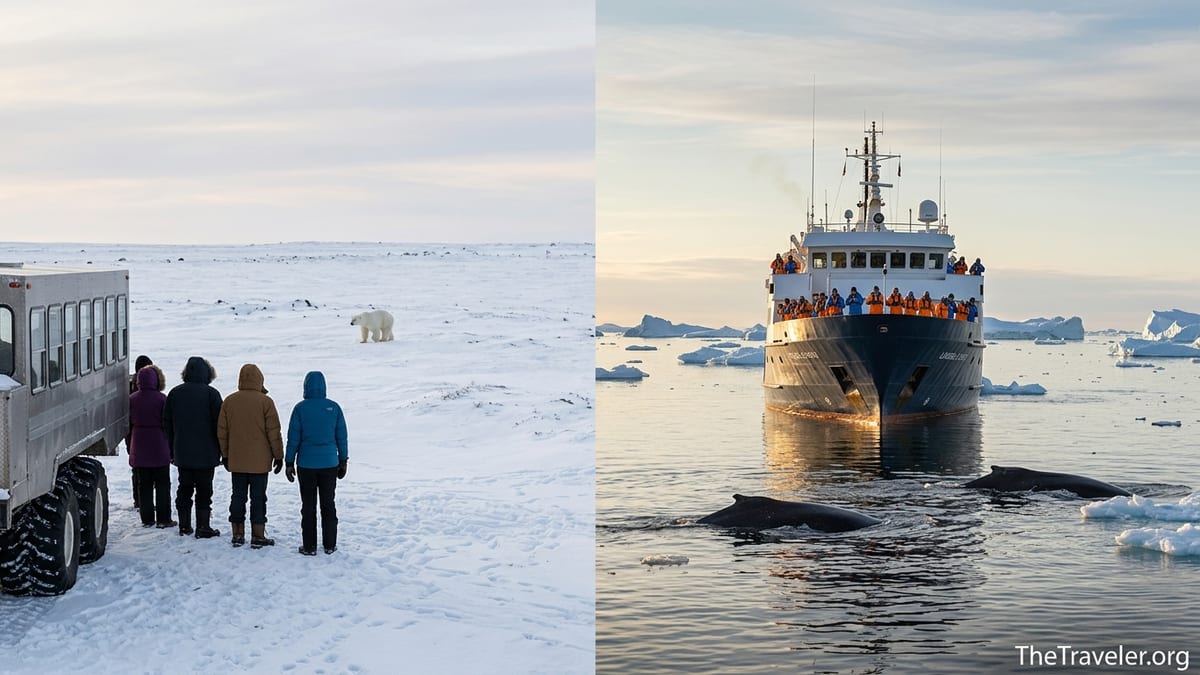
Who Are Natural Habitat Adventures and Lindblad Expeditions
Natural Habitat Adventures, often called Nat Hab, has specialized in small-group wildlife trips since the mid-1980s, with land-based and small-ship journeys from Alaska grizzly bear lodges to monarch butterfly forests in Mexico. The company positions itself as a conservation-focused operator, partnering closely with World Wildlife Fund to design itineraries that emphasize wildlife encounters and low-impact travel. Many trips are capped at roughly a dozen travelers, which gives the experiences an intimate, field-camp feel even when accommodations are comfortable lodges or boutique hotels.
Lindblad Expeditions, founded in the 1970s, is best known for pioneering expedition-style cruises to remote regions such as Antarctica, the Arctic, and the Galapagos. Today, Lindblad operates a fleet of small ships, many co-branded with National Geographic, with onboard naturalists, undersea specialists and professional photographers. The experience feels like a floating research platform with a strong educational lens: ships often carry kayaks, Zodiacs and sometimes even remote-operated vehicles to explore beneath the surface.
In 2016 Lindblad acquired a controlling stake in Natural Habitat Adventures, and the companies now share a conservation-forward ethos and occasionally cross-promote certain trips. Despite that corporate relationship, the guest experience is still distinct. Natural Habitat leans more toward immersive, land-based wildlife safaris and small expedition-style group tours, while Lindblad remains primarily a ship-based expedition cruise company.
For a traveler deciding between them, it is less about which company is objectively better and more about whether you picture your wildlife trip as waking up in a cozy tundra lodge or stepping onto the deck of an ice-strengthened expedition ship bound for the polar ice.
Trip Style: Land-Based Immersion vs Ship-Based Exploration
If you are happiest on solid ground, Natural Habitat Adventures will feel like a natural fit. Their signature polar bear trips in Churchill, for example, base you either in a small lodge on the tundra or in custom-built polar rovers that serve as mobile wildlife viewing platforms. Days are built around long hours outside scanning for bears, foxes and snowy owls, with guides adjusting the plan whenever wildlife appears. The rhythm resembles a classic safari, but in Arctic or rainforest environments rather than savanna.
Natural Habitat also runs lodge-based bear viewing in Alaska, Botswana-style safaris in southern Africa, and specialist trips such as the monarch butterfly migration in Mexico’s Central Highlands. On those monarch trips, participants often hike or ride horses up into fir forests to stand among trees literally coated in butterflies. You return each evening to small inns or eco-lodges, swapping stories over dinner with a dozen or so fellow travelers.
Lindblad’s core experience, by contrast, is built around a ship that serves as both transportation and home base. In Antarctica, for instance, you might sail aboard a National Geographic ship for 10 to 16 days, with days spent cruising between icebergs, heading out by Zodiac to land among penguin colonies or kayak along glacier fronts. In the Galapagos, guests typically sleep aboard small expedition ships and explore different islands each day, often landing on remote beaches at sunrise and snorkeling with sea lions in the afternoon.
Because the ship moves with you, Lindblad itineraries can cover more territory in a single journey, ideal for archipelagos and coastlines where wildlife highlights are scattered over hundreds of miles. The trade-off is that most nights you are at sea, and shore time is concentrated into set landing windows. Travelers who enjoy life on board and value seeing many locations in one trip tend to thrive on Lindblad’s format.
Destinations and Signature Experiences
Both brands go to many of the same headline destinations: Antarctica, the Galapagos, Alaska and parts of Africa appear in both catalogs. The way they showcase those places, however, differs. Natural Habitat’s portfolio leans into wildlife-focused, largely land-based itineraries. They are particularly well known for Churchill polar bear expeditions on Canada’s Hudson Bay, as well as small-group African safaris in Botswana and Namibia, brown bear trips in Katmai and Lake Clark in Alaska, and wolf-focused winter trips in Yellowstone and the Greater Yellowstone Ecosystem.
Lindblad’s identity is more clearly tied to the sea. Classic itineraries include Antarctic Peninsula voyages, Arctic Svalbard cruises in search of polar bears, and Galapagos sailings that combine island hikes with snorkeling and Zodiac cruises. The company also offers culturally rich river and coastal itineraries, such as journeys along the Columbia and Snake Rivers in the Pacific Northwest or coastal explorations of Baja California timed for gray whale season.
For example, a traveler keen to spot polar bears might choose Natural Habitat’s Churchill tundra program if they prefer slow, land-based days and cozy evenings, or opt for a Lindblad Arctic Svalbard expedition if they want ship-based exploration of ice-choked fjords with the chance of seeing polar bears hunting on sea ice. Both deliver polar bears, but the scenery, daily pace and travel style are dramatically different.
If your wish list skews toward rainforests, big cats or primates, Natural Habitat generally offers more depth in terrestrial ecosystems. For island chains, coastal ecosystems and destinations where access is from the water, Lindblad’s expedition ships open doors to places that would be difficult to reach any other way.
Group Size, Atmosphere and Onboard Culture
Group size is one of the biggest practical differences. Natural Habitat runs many trips with roughly 8 to 14 guests per departure. On a Yellowstone winter wolf trip, for instance, you might have a single expedition leader and wildlife guide with a small vehicle, easily shifting your plans to follow a wolf pack sighting or an especially photogenic sunrise. Meals often feel like dinner with friends rather than a large group tour.
Lindblad’s ships are still small compared with mainstream cruise lines, but they are significantly larger than a Nat Hab group. Many ships carry in the rough range of 50 to 150 guests, depending on the vessel and region. The atmosphere is more like a small floating campus than a tight-knit van tour. There are lectures in the lounge, a staffed bar, and multiple guides and specialists on board, including photographers, historians and undersea experts.
That difference shapes your social experience. Travelers who prefer an intimate group where everyone quickly knows each other by name often gravitate toward Natural Habitat’s departures. Those who enjoy meeting a wider cross-section of guests and having more diverse onboard programming tend to appreciate Lindblad. It can also matter for multi-generational travel: grandparents traveling with teens may value the extra social options and activities that a ship’s community creates.
In both cases, the guiding quality is a major draw. Naturalists for both operators typically have deep field experience and often advanced scientific or photographic backgrounds. The style, though, varies: Nat Hab guides frequently spend the entire trip with one small group, while on a Lindblad ship you might interact with a rotating team of specialists depending on which excursion you join each day.
Comfort, Cabins and Physical Demands
Neither Natural Habitat nor Lindblad sells itself as a luxury lifestyle brand, yet both tend to be comfortable to upscale, with a focus on functionality in harsh environments rather than glitz. Natural Habitat uses a mix of small lodges, tented camps and locally run accommodations. On an Alaska brown bear itinerary, you might stay in a simple coastal lodge with hearty meals and shared common spaces, designed to prioritize proximity to bear viewing sites rather than spa facilities or nightlife.
Lindblad’s ships are purpose-built expedition vessels. Cabins are compact compared to mainstream cruise ships but generally well appointed, with en suite bathrooms and large windows or balconies on newer ships. Public areas usually include a library, observation lounge and sometimes a small fitness room or spa. You will not find water slides or casinos, but you will find boot rooms, gear storage and lecture theaters.
In terms of physical demand, Natural Habitat trips can involve more walking or hiking on uneven terrain, as well as early starts in cold or hot environments. A monarch butterfly journey in Mexico, for example, requires riding horses or hiking up steep trails at altitude to reach the butterfly colonies. In Yellowstone, winter trips involve long days outside in subfreezing temperatures scanning for wolves, though transportation is often in heated vehicles and actual hiking is modest.
Lindblad expeditions require a basic level of mobility to get on and off Zodiacs and to manage ship staircases in sometimes rough seas. Daily activities can be tailored: one guest might join a strenuous hike while another chooses a gentler shoreline walk or scenic Zodiac cruise. Sea days and sheltered anchorages give you more downtime between outings than many Nat Hab itineraries, which can feel more continuously active.
Pricing, Inclusions and Value for Money
Both companies sit firmly in the premium price bracket. It is common to see per-person trip costs in the mid-four to high-five figures for long-haul expeditions, especially to polar regions. For context, recent traveler reports for a 16-day Lindblad National Geographic expedition to Antarctica, including pre and post extensions in South America, describe total outlays around the tens of thousands of dollars per person, depending on cabin category and extras. Shorter regional itineraries, such as coastal Alaska or Central America, can land closer to the mid four-figure range before international flights.
Natural Habitat, with its small groups and specialist focus, also prices many departures in the upper mid-range to high-end tier. A weeklong wildlife-focused itinerary in Alaska or Central America will often run in the mid- to upper-thousands of dollars per person before flights, with more remote or lodge-intensive programs costing more. Antarctic or high-end African safaris can push into the same financial territory as polar cruises, especially once charter flights and internal transfers are included.
What you get for those prices differs. Lindblad trips typically bundle shipboard accommodation, most meals, Zodiac excursions, lectures and basic Wi-Fi. Some itineraries also include charter flights, park fees and pre- or post-cruise hotel nights. Additional costs may include premium beverages, certain adventure options like kayaking, and gratuities. Natural Habitat packages usually include accommodations, most meals, park fees and guiding, with some trips bundling internal charter flights. Because group sizes are so small, per-person guiding costs are high but the level of personalized attention is correspondingly strong.
From a value perspective, travelers who care most about shipboard comfort and the ability to cover vast distances at sea may find Lindblad’s pricing makes sense relative to similar expedition cruise competitors. Travelers who prioritize intimate, land-based wildlife time and a near-safari style of guiding may see better value in Natural Habitat’s approach, especially on marquee trips like Churchill polar bears or Yellowstone wolves where their specialization is deepest.
Sustainability and Conservation Ethos
Both operators market themselves as conservation-minded, and for many travelers this is a major reason to choose either brand. Natural Habitat promotes its status as an early adopter of carbon-neutral practices and highlights its long-term partnership with World Wildlife Fund. Trip descriptions frequently include information about how permits, local partnerships and group size limits are designed to reduce impact on sensitive ecosystems. On the ground, that can look like staying in small, locally owned lodges, restricting group sizes in delicate habitats and adjusting daily plans to avoid stressing wildlife.
Lindblad has its own longstanding track record in conservation, rooted in its pioneering role in expedition cruising. The company has supported scientific research and conservation initiatives in polar and marine environments, and many voyages include onboard presentations about ongoing projects. Passengers may be invited to participate in citizen science, whether through contributing wildlife sightings to databases or assisting with simple observational projects.
In practice, both companies operate within the realities of long-haul travel, which inevitably comes with a carbon footprint. The meaningful differences for an individual traveler often lie in how the trips are structured. If you are concerned about overtourism in small communities or want reassurance that your money supports local conservation partners, it is worth reading the detailed trip notes and asking specific questions of each company’s staff before booking. That might include how many people a particular lodge hosts at a time, whether local guides are employed and how wildlife viewing distances are enforced.
For most travelers choosing between Natural Habitat and Lindblad, it is fair to view both as among the more responsible options in their respective niches, while still recognizing that truly low-impact wildlife travel usually involves longer stays in fewer places and thoughtful decisions about flights and extensions.
Which Company Fits Different Types of Travelers
If you are trying to decide where you fit, think first about your ideal daily rhythm and environment. Travelers who picture rolling out of a small lodge each morning, spending hours in one valley or along one stretch of river, and returning to the same base each night often feel most at home with Natural Habitat. They tend to enjoy the sense of being temporarily embedded in a specific landscape, even if that means seeing fewer total locations.
Lindblad tends to suit travelers who like the feeling of a journey unfolding over distance: waking up in a new bay each day, listening to naturalist briefings over coffee, and choosing from multiple excursions. If you derive as much pleasure from scanning the horizon from a ship’s bow as from sitting quietly in one meadow, the ship-based format can be deeply satisfying.
Age and mobility play a role but are not determinative. Both brands attract a mix of active retirees, middle-aged professionals and, on some departures, families with older children or teens. Natural Habitat’s very small groups can be ideal for solo travelers who value quick social cohesion, while Lindblad’s ships offer more anonymity and flexibility for couples or friends who sometimes want separate activities.
Budget is the final filter. If you have saved for a once-in-a-decade trip to Antarctica and want the combination of shipboard comfort, expert lectures and iconic National Geographic branding, a Lindblad voyage may match your expectations, with the understanding that costs can climb quickly with cabin upgrades and add-ons. If you are allocating similar resources but care more about tracking wolves in Yellowstone, quietly watching monarch butterflies or spending full days with polar bears, a Natural Habitat trip can deliver an intensely focused experience without the expense of operating a full ship.
The Takeaway
Natural Habitat Adventures and Lindblad Expeditions both occupy the upper tier of wildlife travel, yet they excel in different arenas. Natural Habitat is strongest when you want a deeply immersive, land-based wildlife experience with very small groups and a safari-like feel, from Arctic tundra to African savanna and North American national parks. Lindblad shines when your dream involves moving through remote seascapes on an expedition ship, combining shipboard comfort with Zodiacs, kayaks and a rotating team of experts.
Rather than asking which company is universally better, start with the mental image that excites you most. If that image is a cozy tundra lodge and a handful of fellow travelers huddled over a spotting scope, Natural Habitat is likely the better fit. If it is standing on a ship’s bow at midnight as icebergs glow in the southern summer light, Lindblad may be your match. Both can deliver extraordinary encounters with wildlife; your task is to pick the format that will let you be fully present when that first whale breaches or that first wolf appears on a ridge.
Whichever you choose, plan early, build extra days around your core trip to buffer against weather and delays, and be honest with your trip planner about your priorities and limits. The right match between traveler and operator can turn a good wildlife vacation into the kind of journey you remember every time you open a photo album or hear the distant call of a bird.
FAQ
Q1. Is Natural Habitat Adventures cheaper than Lindblad Expeditions?
Prices overlap, but Lindblad’s ship-based polar and Galapagos trips often run higher, especially in premium cabins, while some land-based Natural Habitat itineraries can be slightly less expensive for similar trip lengths.
Q2. Which is better for Antarctica, Natural Habitat or Lindblad?
Lindblad is generally the stronger choice for Antarctica because it operates its own expedition ships there, offering multiple itinerary lengths and ship styles focused on the Southern Ocean.
Q3. Which company is best if I am prone to seasickness?
If you strongly dislike being at sea, Natural Habitat’s land-based safaris and lodge-based trips are likely more comfortable than a ship-based Lindblad expedition in potentially rough waters.
Q4. Are Natural Habitat and Lindblad suitable for children?
Both can work for families, especially with older kids or teens, but Lindblad’s ships often have more varied daily options and social spaces, while Natural Habitat’s very small groups can be better for focused, patient young wildlife enthusiasts.
Q5. Do both companies include internal flights in their prices?
Sometimes. Certain itineraries on both sides bundle charter or internal flights, while others price them separately, so you need to check each trip’s inclusions line by line.
Q6. How far in advance should I book a trip with Natural Habitat or Lindblad?
For popular seasons like Antarctica, Galapagos or polar bear viewing, booking 12 to 18 months ahead is wise, while shoulder-season and less remote trips may have availability closer in.
Q7. Which is better for serious wildlife photography?
Both attract photographers, but Natural Habitat’s small groups and long spells with one subject can be ideal on land, while Lindblad offers ship-based access and National Geographic photographers on many departures.
Q8. Can solo travelers join Natural Habitat or Lindblad trips easily?
Yes. Both welcome solo travelers, with single supplements varying by departure. Natural Habitat’s small groups can make it easy to connect, while Lindblad ships offer more anonymity if you prefer it.
Q9. Do I need travel insurance for these expeditions?
Travel insurance is strongly recommended for both, particularly for remote destinations where weather or medical issues can disrupt flights, ship schedules or access to care.
Q10. How do I decide between them if I care most about conservation?
Both emphasize conservation, so the difference often comes down to trip design. Look at group size, local partnerships and how much time you spend in each ecosystem, then choose the itinerary that aligns best with your values.