


In Cannes, most first‑time visitors make a beeline for the glamorous private beaches along La Croisette. Yet just a short walk west of the Old Port lies another shoreline that locals quietly favor: Plages du Midi, the long ribbon of sand running along Boulevard du Midi toward La Bocca. If you are planning a trip to Cannes and wondering whether it is worth leaving the postcard promenade for this less showy stretch of coast, this guide walks you through what Plages du Midi really offers, who it suits best, and how it compares with the city’s better‑known beaches.
Get the latest updates straight to your inbox!
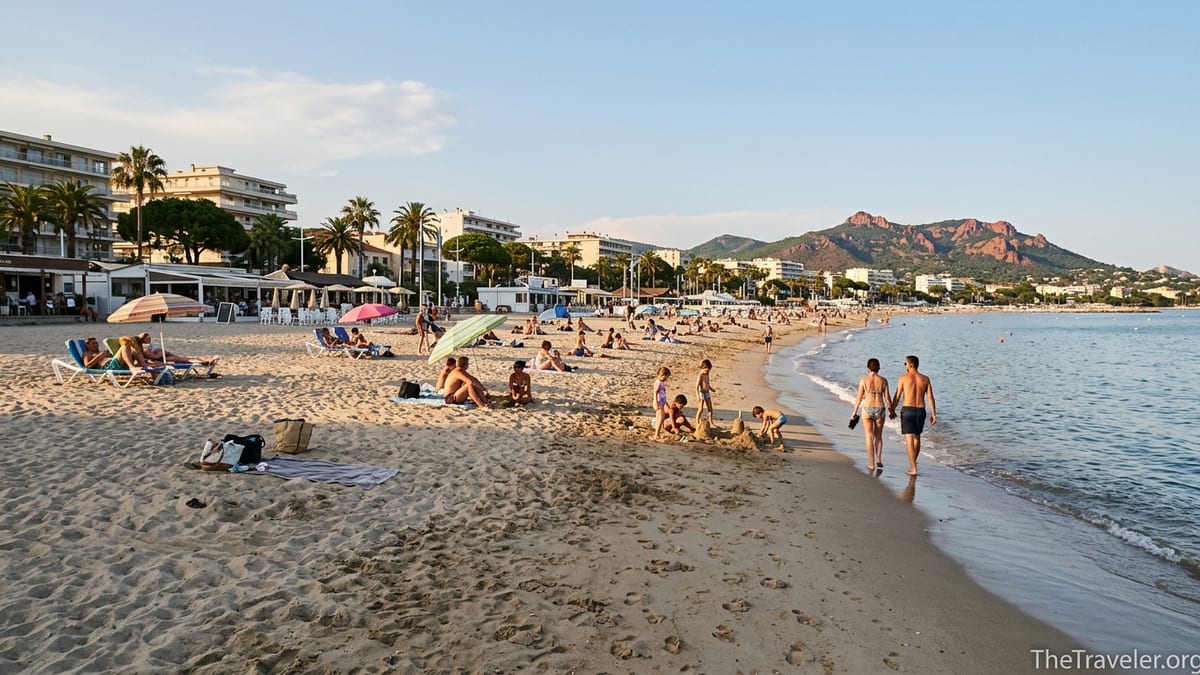
Where and What Exactly Is Plages du Midi?
Plages du Midi refers to the sequence of beaches lining Boulevard du Midi, beginning just west of Cannes’ Vieux Port and curving toward the more residential La Bocca district. The largest central section is often simply called Plage du Midi and extends for several hundred meters of sand between the Old Port and the first apartment blocks of La Bocca. Unlike the Croisette, which feels hemmed in by luxury hotels, this side of Cannes opens out onto a wide bay with views across to the Estérel red rocks and, on clear days, the Lérins Islands in the distance.
Geographically, it is close enough to the center that you can walk there in about 10 to 15 minutes from the Palais des Festivals, yet it feels noticeably more relaxed. The boulevard itself runs directly behind the sand, with a narrow promenade separating pedestrians and cyclists from the beach. Along the way you pass a mix of small public stretches such as Laugier, Mistral and Madrigal, plus several private beach clubs with neat rows of sunbeds and low‑rise residential buildings across the road rather than grand hotels.
Because locals and repeat visitors tend to talk about “les plages du Midi” as a whole, it is useful to understand that you are not looking at one single fenced‑off resort beach. Instead you get a chain of access points, showers and snack kiosks that you can dip in and out of as you walk west. That gives you more flexibility than the Croisette, where long private concessions can feel like barriers between you and the sea.
In practice, this means you could, for example, spread a towel for free on the public section near the Old Port in the morning, stroll 10 minutes down the promenade for lunch at a beach restaurant, then continue toward La Bocca for a quieter late‑afternoon swim, all without needing a car or complicated logistics.
Atmosphere: Quieter Local Vibes vs Croisette Glamour
The strongest argument in favor of Plages du Midi is the atmosphere. If La Croisette is Cannes’ shop window, all designer storefronts and hotel terraces, the Midi side feels more like the neighborhood beach. You still get soft, pale sand and the same Mediterranean water, but the crowd skews more local: families with strollers, retirees doing their daily swim, teenagers kicking a football at the back of the beach, and dog walkers on the promenade early or late in the day.
During July and August, it certainly gets busy, especially around the most convenient public sections, but even then it usually feels less compressed than the public parts of the Croisette where space between towels can be minimal by mid‑afternoon. Many visitors who stay in apartments in La Bocca or the old town choose Plages du Midi specifically to avoid having to reserve an expensive sunbed weeks in advance or elbow for sand between private concessions.
The mood is also more low‑key in terms of sound and visuals. Instead of DJs and bottle service, you are more likely to hear children playing, pétanque balls clacking on the promenade, or the distant hum of traffic from Boulevard du Midi. Beach clubs here tend to be simpler wooden decks with parasols rather than glossy designer spaces. That makes it appealing if you want a classic beach day rather than a full “see and be seen” scene.
On the flip side, travelers who dream of Cannes as a backdrop of glamorous hotels, yacht tenders and chic crowds may feel that Plages du Midi lacks the cinematic quality they imagined. If your priority is people‑watching celebrities during the film festival or sipping cocktails served in crystal glasses, you are still better off budgeting for a day at one of the Croisette institutions and treating Plages du Midi as your more casual alternative.
Water, Sand and Facilities: What You Actually Get
In terms of natural setting, Plages du Midi delivers many of the same advantages you get elsewhere in Cannes. The sand is mostly fine and comfortable underfoot, which is a welcome change for travelers coming from Nice’s pebble beaches. Entry into the sea is generally gradual, particularly near the central Plage du Midi section, making it easier for children and less confident swimmers. The bay is partly sheltered, so on typical calm summer days waves are modest and the water stays swimmable most of the time.
The city has invested in keeping this shoreline organized and family‑friendly. There are municipal showers at various access points, a lifeguard‑supervised swimming zone during the main summer season, and marked areas reserved for ball games to keep them away from bathers. Parts of Plage du Midi have also been awarded environmental quality labels in recent years, a sign of ongoing efforts to manage water quality and beach cleanliness. That said, as with any urban beach, occasional days after storms can see more debris, so it is wise to be flexible about timing your swims.
Food and drink options are straightforward. Between the Old Port and La Bocca you will find kiosks selling coffee, soft drinks and ice cream, plus several beach restaurants and clubs where you can order salads, grilled fish, pizzas and plat du jour at prices that are often a bit softer than on La Croisette. For example, on a recent 2024 menu at a mid‑range beach restaurant in Cannes, a scoop of ice cream ran around 4 euros and simple pasta dishes hovered around the mid‑teens. Inland one block, neighborhood bakeries and small supermarkets give you the option of grabbing a takeaway sandwich and eating right on the public sand for the cost of a few euros.
Showers, basic toilets and water points are distributed along the promenade, but they are not present at every single staircase. If you have mobility concerns or young children, it is worth scouting your preferred section the first time you visit to see how close the amenities are and where the lifeguard posts are located during your travel month.
Costs: Free Towel Spots and Cheaper Sunbeds
For budget‑conscious travelers, Plages du Midi is usually more appealing than the Croisette because you can combine generous free zones with comparatively affordable private options. Large stretches of sand are entirely public, so laying down a towel costs you nothing more than sunscreen and water. You can pick up a chilled bottle and snacks at a nearby supermarket for under 10 euros and still enjoy the same view of the bay as the hotel guests across the water.
If you prefer the comfort of a lounger and waiter service, private beach clubs along Plages du Midi often charge noticeably less than the big names on the Croisette. Online discussions from recent seasons suggest that while prime first‑row sunbeds at some Croisette institutions can push into the 80 to 100 euro range per person in peak summer, comparable loungers at clubs on Plages du Midi tend to be closer to the few‑dozen‑euro mark for a full day, depending on row and date. Some smaller clubs west toward La Bocca may offer mid‑week packages that combine a sunbed, parasol and soft drink for prices that many visitors find more manageable.
To put this into a real‑world scenario, imagine a couple visiting in July. On La Croisette, they might easily spend over 200 euros for two front‑row beds and lunch with drinks at a marquee hotel beach. The next day on Plages du Midi, they could opt for a pair of loungers further back at a simpler beach club for roughly half that overall outlay, or skip the club entirely and enjoy the public sand with picnic supplies for under 30 euros total. This flexibility makes the Midi side particularly attractive for longer stays when you do not want every beach day to feel like a financial event.
Of course, “cheaper” does not mean cheap in absolute terms compared with smaller towns on the Riviera. Prices in Cannes reflect its status as a high‑demand resort, so if your budget is extremely tight you might still prefer to base yourself in more modest coastal villages and visit Cannes as a day trip. Yet within Cannes itself, Plages du Midi is often the sweet spot between comfort and cost.
Access and Practicalities: Getting There Without a Car
Reaching Plages du Midi is straightforward whether you are staying in central Cannes or further along the coast. From the Palais des Festivals or the train station, you can walk down to the Old Port, turn right with the sea on your left and simply follow the waterfront. Within about 10 minutes you will see the first stretches of sandy beach signposted along Boulevard du Midi, and from there you can choose any staircase or ramp leading down from the promenade.
Local buses operated by the Palm Bus network stop along Boulevard du Midi and in La Bocca, with several routes serving stops such as “Plage du Midi” or “Boulevard du Midi.” Tickets are relatively inexpensive and can usually be purchased on board or via machines in town. In summer, a free seasonal shuttle service connects car parks in La Bocca with the beachfront, making it easier for day trippers who do not want to fight for seaside parking. For visitors arriving by train from Nice or Antibes, you can either walk 20 to 25 minutes from Cannes’ main station or use a short bus hop; trains also stop at the smaller Cannes La Bocca station, which is just a few minutes’ walk from the western end of the beaches.
Parking directly on or near Boulevard du Midi is limited and fills up quickly on sunny days, especially weekends. If you are driving, it can be more realistic to use one of the larger car parks closer to the center or in La Bocca and then finish the journey on foot or by shuttle. Cycling is another pleasant option. Several bike‑rental companies in Cannes offer classic and electric bikes, and the relatively flat shoreline route from the Old Port along Plages du Midi makes for an easy ride even for casual cyclists.
Accessibility is gradually improving but varies by section. Some access points have ramps suitable for strollers and wheelchairs, while others still rely on stairs. If you or someone in your group has limited mobility, look for the central, more recently upgraded areas of Plage du Midi, where the city has put more emphasis on inclusive infrastructure and seasonal beach matting.
Who Will Love Plages du Midi (and Who Might Not)
Plages du Midi tends to appeal most to travelers who value space, authenticity and manageable prices over glamour. Families with young children like the combination of sandy entry, supervised zones in high season, and room at the back of the beach for games without constantly worrying about bumping elbows with neighbors. Many parents also appreciate being able to mix paid and free days, splurging on loungers for one afternoon and then returning with a picnic and beach toys the next.
Couples staying in mid‑range apartments in the old town or La Bocca often adopt Plages du Midi as their default beach. It fits well with a routine of walking down late morning, renting a pair of loungers at a moderate club once or twice a week, and otherwise enjoying simple café lunches and sunset strolls. Solo travelers who dislike the idea of walking through high‑end hotel lobbies in a swimsuit may find the Midi side less intimidating, since the clientele and staff are generally more mixed and the architecture more residential.
On the other hand, if your dream trip revolves around classic Cannes iconography, Plages du Midi might feel almost too ordinary. Visitors coming for a single short stay sometimes prefer to concentrate their limited time along the Croisette, where they can combine designer shopping with cocktails at a famous hotel bar and a deluxe beach day with full amenities and highly choreographed service. Guests who enjoy energetic beach clubs with live DJs, elaborate bottle presentations and late‑afternoon parties will also find more of that energy closer to the big names on the Croisette or at dedicated party beaches in neighboring towns.
It is also worth noting that the promenade behind Plages du Midi carries regular vehicle traffic, so while the beach itself is pleasant, the audible backdrop is not as hushed as a remote cove. Travelers who are highly sensitive to road noise or who picture a wilderness setting may prefer to treat Plages du Midi as an urban beach break between excursions to quieter coastal spots like Théoule‑sur‑Mer or the Lérins Islands.
Sample Itineraries: How to Fit Plages du Midi Into Your Cannes Stay
Because of its location and character, Plages du Midi works best as part of a mix rather than your only Cannes beach experience. A classic three‑day itinerary might look like this: on day one, you arrive and explore the old quarter of Le Suquet, then walk down to the eastern end of Plages du Midi for a late‑afternoon swim as the light softens over the bay. On day two, you splurge on a Croisette beach club for the full “classic Cannes” experience. On day three, you return to Plages du Midi for a relaxed, low‑budget beach picnic before catching a sunset from the viewpoint above the Old Port.
For a week‑long stay in an apartment, many visitors alternate between simple towel days on the public sand and occasional sunbed rentals. For example, a family of four might choose to rent two loungers and share them mornings at a modest Midi beach club three times during the week while the children alternate between the sand and the water, then spend the other days entirely on the free stretch with supermarket baguette sandwiches and fruit. Over the course of the week, that rhythm keeps overall expenses in check without feeling deprived.
The Midi shoreline is also well suited to early‑morning or evening routines. Joggers and walkers use the promenade for exercise before the sun gets strong, while photographers appreciate the golden light hitting the Estérel hills just after sunrise or before sunset. Even if you never plan to sit on this beach for hours, a simple out‑and‑back walk from the Old Port to La Bocca and back makes a pleasant, low‑effort outing with constant sea views.
If you are visiting outside high season, say in late September or early October, Plages du Midi can feel particularly rewarding. The water often stays swimmable, crowds thin appreciably, and prices at beach clubs sometimes soften. You may find that a weekday afternoon in early autumn delivers exactly the quiet, sun‑drenched Cannes experience you were hoping for, without the intensity of mid‑summer.
The Takeaway
So, is Plages du Midi worth visiting during a trip to Cannes? For most travelers, the answer is yes, provided you understand what it is and what it is not. This is not the city’s polished, high‑gloss showcase. Instead it is a long, lived‑in stretch of urban beach where locals swim before work, families spread towels without worrying about dress codes, and visitors can enjoy the same soft sand and gentle sea at a more forgiving price point.
If your stay in Cannes is short and you are coming primarily for a once‑in‑a‑lifetime taste of Croisette glamour, you might prioritize one of the iconic hotel beaches and view Plages du Midi from the promenade as you walk by. But if you have several days, are traveling with children, or simply prefer a relaxed, less performance‑driven beach environment, setting aside at least one or two sessions on Plages du Midi will likely deepen your sense of what everyday Cannes feels like.
The real value of this shoreline lies in its flexibility. You can walk there without a car, choose each day between free sand and reasonably priced loungers, and combine a swim with a simple café lunch or a quiet sunset stroll. For many visitors, that combination of accessibility, atmosphere and relative affordability makes Plages du Midi not only worth a visit, but an essential counterpoint to the city’s more famous facade.
FAQ
Q1. Is Plages du Midi free to access?
Yes. Large parts of Plages du Midi are completely public, so you can lay down a towel on the sand without paying an entry fee or rental charge.
Q2. How does Plages du Midi compare in price to beaches on La Croisette?
In general, sunbed rentals and restaurant prices along Plages du Midi are noticeably lower than at the most famous Croisette hotel beaches, while public areas remain free on both sides.
Q3. Is Plages du Midi suitable for children and families?
Yes. The fine sand, relatively gentle water, supervised swimming zones in high season and room to play at the back of the beach make it a practical choice for families.
Q4. Can I reach Plages du Midi without a car?
Absolutely. It is an easy walk from central Cannes and the Old Port, and several local bus lines stop along Boulevard du Midi and in La Bocca near the various beach access points.
Q5. Are there showers and toilets at Plages du Midi?
Yes. Municipal showers and basic toilet facilities are available at several access points along the promenade, though not at every single staircase, so you may need to walk a short distance.
Q6. Do I need to reserve a sunbed in advance?
In peak summer and on weekends it is wise to reserve loungers at popular beach clubs, especially closer to the Old Port, but for simple towel space on the public sand no reservation is needed.
Q7. Is Plages du Midi crowded in July and August?
It does get busy during high season, particularly near the easiest access points, but it usually feels less packed than the main public stretches of La Croisette, with more room to spread out.
Q8. What is the best time of day to visit Plages du Midi?
Early mornings and late afternoons often offer softer light, slightly cooler temperatures and fewer people, while midday is best if you want maximum sun for swimming and tanning.
Q9. Are there restaurants and cafés nearby?
Yes. Several beach restaurants and clubs sit directly on the sand, and just across Boulevard du Midi in La Bocca you will find additional cafés, bakeries and small supermarkets.
Q10. Is Plages du Midi a good base for a longer stay in Cannes?
It can be. Many visitors rent apartments in La Bocca or the old town and use Plages du Midi as their everyday beach, combining it with occasional outings to the Croisette and nearby coastal towns.