


Cannes may be famous for its red carpet, but most visitors spend far more time on the sand than on the steps of the Palais. The real question is where to spread your towel: the relaxed, largely local Plages du Midi stretching west from the old port, or the iconic, high-glamour beaches along La Croisette in the heart of town. Both offer Mediterranean sunshine and soft sand, yet they deliver very different experiences. This guide walks you through concrete, real-world scenarios so you can decide which Cannes beach scene truly fits the way you like to travel.
Get the latest updates straight to your inbox!
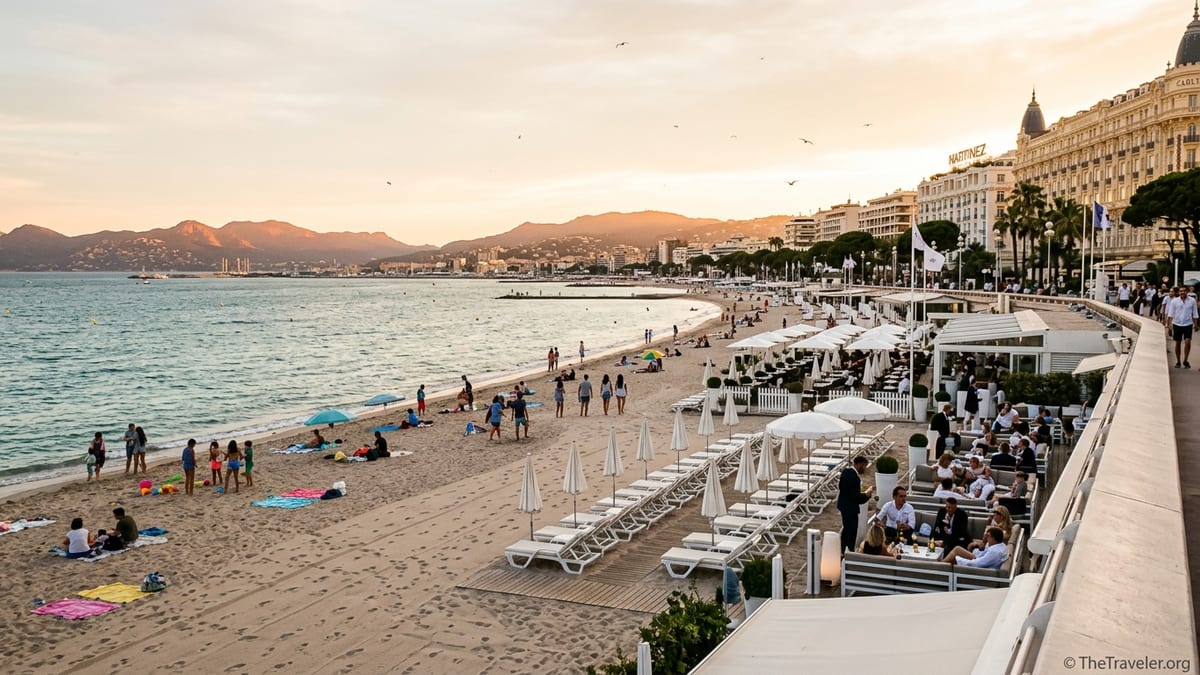
Getting Your Bearings: Two Very Different Strips of Sand
Stand by the Vieux Port of Cannes and look east and west. To your right, La Croisette curves around the famous bay, framed by five-star hotels and designer boutiques. To your left, Boulevard du Midi runs along a long, more residential sweep of sand known as Plages du Midi, continuing toward La Bocca and Mandelieu. Geographically close, the two areas feel like different resorts stitched together.
La Croisette’s beaches sit directly beneath luxury properties like the Carlton, Martinez and Majestic. Here, private beach clubs dominate, interspersed with a handful of public stretches such as Plage Macé and Plage du Casino. You are never far from polished boardwalks, luxury shopping and conference venues, which makes this strip feel lively and urban, especially during events like the Cannes Film Festival in May or major trade shows.
Plages du Midi start where the old port ends and extend along Boulevard du Midi-Louise-Moreau. This side of Cannes opens up rapidly: the sand is wide, views stretch across to the Estérel hills and the Lérins Islands, and the promenade is used more by joggers, dog walkers on the pavement and local families heading to the sea. There are some private concessions, such as Belle Plage and a few simple beach restaurants, but large sections remain public and unpretentious.
If you picture yourself carrying a baguette and a bottle of chilled rosé from the supermarket and staking out a spot without fuss, Plages du Midi will match that image. If you are imagining ordering a glass of pale Provence rosé from a waiter while you lounge on a plush sunbed in front of a legendary hotel, La Croisette is the Cannes you are looking for.
Atmosphere: Glamour vs Everyday Riviera Life
The easiest way to decide between Plages du Midi and La Croisette is to be honest about what kind of atmosphere you enjoy on holiday. La Croisette is designed for spectacle. Expect a see-and-be-seen crowd, especially in summer and during festivals: polished couples in linen, groups of friends taking photos with the bay behind them, and conference delegates squeezing in a swim between meetings. At midday in July, the soundtrack is a mix of clinking glasses from beach club restaurants and upbeat lounge music drifting across the sand.
For example, a Saturday in late June at a Croisette club like La Môme Plage or Copal often feels almost like a day party: guests arrive late morning, order a round of cocktails such as Aperol spritz or local rosé, share sushi platters or grilled fish for lunch, and linger until late afternoon when the music picks up. If your idea of a beach day includes a DJ, a polished crowd and the possibility of spotting someone from the festival circuit, this energy can be part of the fun.
Plages du Midi are more about everyday life on the Côte d’Azur. On a similar Saturday you are more likely to see local families unloading beach toys from compact cars, elderly couples walking ankle-deep in the water, and small groups of friends playing beach volleyball near permanent nets. Music tends to come from portable speakers at low volume, and conversations are just as likely to be in French or Italian as in English. Restaurants along this strip feel more like neighborhood spots, with simple menus of grilled sardines, niçoise salads and pizzas.
That is not to say Plages du Midi are sleepy. In high summer, the central sections can be busy, and local beach restaurants do good trade at lunch. But the vibe remains inclusive rather than exclusive. If you show up with sandy hair, a beach bag from a local supermarket and no reservation, no one will look twice. Travelers who prefer a relaxed, low-key day by the sea generally feel more at ease here than in the polished world of La Croisette.
Costs in Real Terms: What You Will Actually Spend
Budget is often the deciding factor, and the difference between the two areas is substantial once you add up a full day. Along La Croisette, a sunbed with parasol at a mid-range private beach club in high season can easily run to roughly 60 to 90 euros per person for the day, depending on row and prestige. At the most famous hotel-backed clubs right in front of properties like the Carlton or Martinez, prime front-row beds can be higher, especially during August or major events, and some clubs apply a minimum spend on food and drinks.
Consider a couple visiting in July. If they book two front-row sunbeds at a well-known Croisette club, they might spend around 150 to 200 euros before ordering anything. Add a simple lunch of grilled fish or a salad and a glass of wine, plus water and coffee, and the bill for the day could reach 250 to 300 euros. For a group of four friends, the same day could easily climb above 400 euros once cocktails and desserts are involved.
On Plages du Midi, private concessions and simple beach clubs price sunbeds more gently. Travelers regularly report finding beds in the range of roughly 25 to 40 euros per person for a full day at smaller, independent establishments, sometimes less outside peak dates or if you are content with a back-row lounger. A couple could realistically enjoy two beds, a shared carafe of house rosé, a plate of calamari and a couple of coffees for under 150 euros altogether, and often noticeably less in June or September.
Public access also changes the equation. Both areas offer free public sections, but they are more extensive and easier to use along Plages du Midi. A family of four who brings their own parasol, a cooler from a local Carrefour and a beach mat will pay essentially nothing beyond parking or bus fare on the Midi side, yet still have showers and basic facilities nearby. Doing the same directly on La Croisette is possible on beaches like Plage Macé or Plage du Casino, but you will be flanked by high-end clubs and the ambiance will still feel premium even without the bill.
Practicalities: Access, Facilities and Convenience
La Croisette wins for centrality. If you are staying in one of the big hotels or an apartment five minutes from the Palais des Festivals, you can walk to the sand in flip-flops, swim, and be back in your room within half an hour. This makes it ideal for short stays or business trips where you want to squeeze in beach time between meetings. The promenade is flat and well maintained, with frequent crossings, making it friendly for strollers and wheelchairs. Public beaches like Plage Macé and Zamenhof have showers, toilets and seasonal lifeguards, and in some sections adapted equipment for visitors with reduced mobility.
Plages du Midi are still close, but you will factor in a little more movement. From the old town of Le Suquet, you can reach the start of the Midi beaches on foot in roughly five to ten minutes, and from there the sand extends for more than a kilometer. The upside is that you can simply keep walking until you find a quieter section. The promenade here is also flat and suitable for bikes and prams, and you will see locals using it year-round. Lifeguard posts, showers and public toilets are spaced along the shore, and in summer there are designated non-smoking zones and supervised swimming areas similar to those on La Croisette.
Regulations are comparable across Cannes. Dogs are not allowed on the city beaches, and there are municipal rules around barbecues and glass on the sand. Smoking is restricted or banned on a growing number of stretches, with zones clearly marked by signs. In practice that means you might see designated smoke-free family sections both on La Croisette and along Plages du Midi during the main season, which contributes to cleaner sand and fewer cigarette butts.
For transport, visitors without a car will find La Croisette particularly easy: most city buses stop close to the promenade, and the main train station is only about a ten to fifteen minute walk. Plages du Midi have their own bus stops along Boulevard du Midi and are served by regional trains that stop at nearby stations such as Cannes-La Bocca, which can be useful if you are staying outside the center and want a less crowded beach. Parking along the Midi promenade is a mix of on-street spaces and a few car parks, often slightly less expensive and less congested than underground garages under La Croisette in high season.
Who Each Beach Suits Best: Real Traveler Profiles
Imagine a couple in their early thirties visiting Cannes for a long weekend in July, staying near Rue d’Antibes. They enjoy nightlife, follow fashion accounts on social media and are curious about the festival glamour. For them, La Croisette is the obvious first choice. They might book a pair of sunbeds at a beach club like La Môme Plage or a hotel-backed concession, order cocktails, browse designer shops between swims, then continue straight into aperitif hour at a seafront bar. The higher daily cost is justified because the beach is part of the overall luxury city-break experience.
Now consider a family of four with school-aged children visiting in August with a modest budget. They are staying in a rental apartment in the Suquet area and want space for sandcastles, shallow water for paddling, and somewhere they can come and go without constantly monitoring a tab. Plages du Midi align better with that reality. Parents can rent a single parasol and two loungers at a simple beach restaurant, while the kids play in front on the public sand. Lunch might be a shared pizza, ice creams from a kiosk and bottles of water from a nearby supermarket, turning what could have been a 250-euro day on La Croisette into a relaxed 80 to 120-euro outing.
Solo travelers and digital nomads often find Plages du Midi appealing as a daily routine. It is common to see people with laptops at shaded café terraces, stepping away for a quick swim before returning to work. The crowd here feels more local, and regulars quickly find favorite sections of sand where they recognize the same morning swimmers. In contrast, La Croisette suits those who want every day to feel like an event, even if it is just an hour on a public beach after shopping.
Finally, think about shoulder seasons. In late September or early October, when prices ease and conference traffic is lighter, La Croisette’s public beaches can feel almost mellow, with locals taking advantage of warm seas. If you travel outside peak months and still want the classic postcard view of Cannes bay without the crush, you might happily choose La Croisette even on a tighter budget, using only the free public sections.
Food, Drinks and After-Beach Options
On La Croisette, food and drink are part of the performance. Private beach restaurants often serve refined Mediterranean menus: think tuna tartare, truffle pasta, refined burgers and carefully plated desserts. A main course at a well-regarded Croisette club easily runs to 30 to 45 euros, with glasses of Provence rosé in the 8 to 15 euro range. Service is generally polished and multilingual, and it is not unusual to see dishes arrive on slate boards or in creative presentations suitable for social media photos.
For many visitors, this is a highlight. A typical day might involve arriving around 11:00, settling into your reserved lounger, then heading up to a shaded restaurant deck for a two-hour lunch with a bottle of wine, before returning to the beds until late afternoon. Some clubs offer set lunch menus or packages combining a sunbed with a two- or three-course meal, which can soften the cost if you plan to spend the whole day there.
Plages du Midi lean more toward honest, straightforward food. Beachfront restaurants and snack bars serve grilled fish, salads, simple pastas and daily specials at prices that are often a notch below those on La Croisette. A family could reasonably share a large salad niçoise, a plate of moules-frites and a children’s menu and keep the bill under the level of two main courses on the Croisette. For those watching their budget, the presence of supermarkets and bakeries just behind the seafront means you can pick up fresh baguettes, fruit and pastries and enjoy an impromptu picnic on the sand.
As the sun sinks, the difference between the two areas shows again. Apéro hour on La Croisette tends to be chic and buzzy, with hotel terraces filling up, people-watching from smart bar stools and cocktails served with polished canapés. Along Plages du Midi, sunset is more casual: locals sit on benches with takeaway pizzas, friends bring bottles of wine to share on the sand, and the orange light over the Estérel provides the main spectacle. Both are memorable, but they suit different moods.
Planning Strategy: How to Mix and Match Both Beaches
You do not have to choose one side of Cannes forever. Many visitors are happiest when they consciously build both experiences into their stay. One effective approach is to designate a single day as your “Croisette splurge.” Book a well-reviewed beach club in advance, especially if you are visiting in July or August. Arrive early enough to enjoy the quieter morning atmosphere, linger over a proper lunch, and treat it as a complete experience, not just a place to put your towel.
The rest of the time, use Plages du Midi as your everyday beach. Mornings are especially pleasant here: you can pick up coffee and pastries from a bakery in Le Suquet, walk down to the sand before 10:00, and enjoy a few hours of swimming before the heat builds. If you are staying several days, you will quickly find a favorite sector, whether it is closer to the old port for convenience or farther west near La Bocca for more space.
Another strategy is to time your choice around the events calendar. During the Cannes Film Festival in May, parts of La Croisette feel almost like a closed set, with extra security, temporary structures on the beach and sky-high prices at some venues. In those weeks, Plages du Midi can offer a calmer escape. In contrast, during quieter months like early June or late September, La Croisette’s public beaches can be surprisingly accessible, making them a great way to enjoy the iconic view without the full high-season premium.
Whatever you decide, planning ahead for basic details helps. Bring a compact, packable parasol if you intend to rely on public beaches, as shade is limited. Invest in simple water shoes if you have sensitive feet, since parts of the seabed can be slightly pebbly at the shoreline. And consider travel insurance or basic coverage that includes water sports if you plan to rent paddleboards or jet skis from licensed operators on either side of the bay.
The Takeaway
Choosing between Plages du Midi and La Croisette is less about which beach is “better” and more about matching the rhythm of Cannes to your own. La Croisette delivers the archetypal Riviera fantasy: designer-backed promenades, hotel-branded beach clubs, carefully mixed cocktails and the hum of international visitors drifting between the sand and the red carpet. It suits travelers who see the beach as an extension of a luxury city break and are comfortable with the costs that come with that image.
Plages du Midi offer another face of Cannes: wide sandy stretches used by locals, family-friendly water, more generous public areas and prices that allow you to make the beach part of everyday life rather than an occasional treat. Here you are more likely to remember spontaneous picnics, sunset swims and the feeling of having enough space to breathe.
In practice, many travelers find the ideal Cannes beach experience in a combination of both. Spend one day indulging in the full Croisette beach club routine, and balance it with simpler days on Plages du Midi where you can come and go as you please. Whichever side you favor, paying attention to vibe, budget and season will help you make the most of this compact but remarkably varied slice of the French Riviera shoreline.
FAQ
Q1. Are the beaches on La Croisette and Plages du Midi sandy or pebbly?
The main city beaches in Cannes, both along La Croisette and Plages du Midi, are predominantly sandy, with only occasional small pebbles at the waterline in some spots.
Q2. Which is better for families with young children, Plages du Midi or La Croisette?
Plages du Midi generally work better for families thanks to wider public sections, a more relaxed atmosphere, slightly lower prices and plenty of space for games and sandcastles.
Q3. Do I need to reserve a sunbed in advance on La Croisette?
In peak season and during major events, reserving sunbeds at Croisette beach clubs at least a few days ahead is strongly recommended, especially for front-row loungers and weekends.
Q4. Can I enjoy La Croisette beaches on a tight budget?
Yes. Use the public beaches such as those near the Palais area, bring your own towel and snacks, and limit spending to occasional coffees or ice creams along the promenade.
Q5. Are Plages du Midi safe for swimming?
In season, supervised sections on Plages du Midi have lifeguards on duty, clearly marked swimming zones and water conditions similar to La Croisette, making them suitable for most swimmers.
Q6. How early should I arrive to find space on the public beaches in summer?
In July and August, arriving before late morning, around 9:30 to 10:00, gives you a much better chance of finding comfortable space on both Croisette and Midi public beaches.
Q7. Are there showers and toilets on both beach areas?
Yes. Both La Croisette and Plages du Midi have public showers and toilets at intervals along the seafront, though you may need small change for some facilities.
Q8. Is one side better for nightlife after the beach?
La Croisette is closer to upscale bars, hotel lounges and late-opening restaurants, while Plages du Midi offers a more low-key evening scene focused on casual dinners and sunset strolls.
Q9. Can I walk between La Croisette and Plages du Midi in one day?
Yes. The distance from the central Croisette area to the start of Plages du Midi near the old port is easily walkable, and many visitors explore both on foot in a single day.
Q10. If I have only one day in Cannes, which beach should I choose?
If you want the classic Cannes postcard experience, choose La Croisette. If you prefer a laid-back, local feel and more affordable day, head to Plages du Midi.