


Pompeii welcomed almost four million visitors in 2023, a record that pushed Italy to confront overtourism at one of its most fragile archaeological sites. With new daily caps, timed-entry tickets and social media hype still driving bucket-list crowds, many travelers now ask a fair question: is Pompeii still worth visiting, or has it become a stressful crush of tour groups and selfie sticks? The answer depends less on Pompeii itself and more on how, and when, you choose to experience it.
Get the latest updates straight to your inbox!
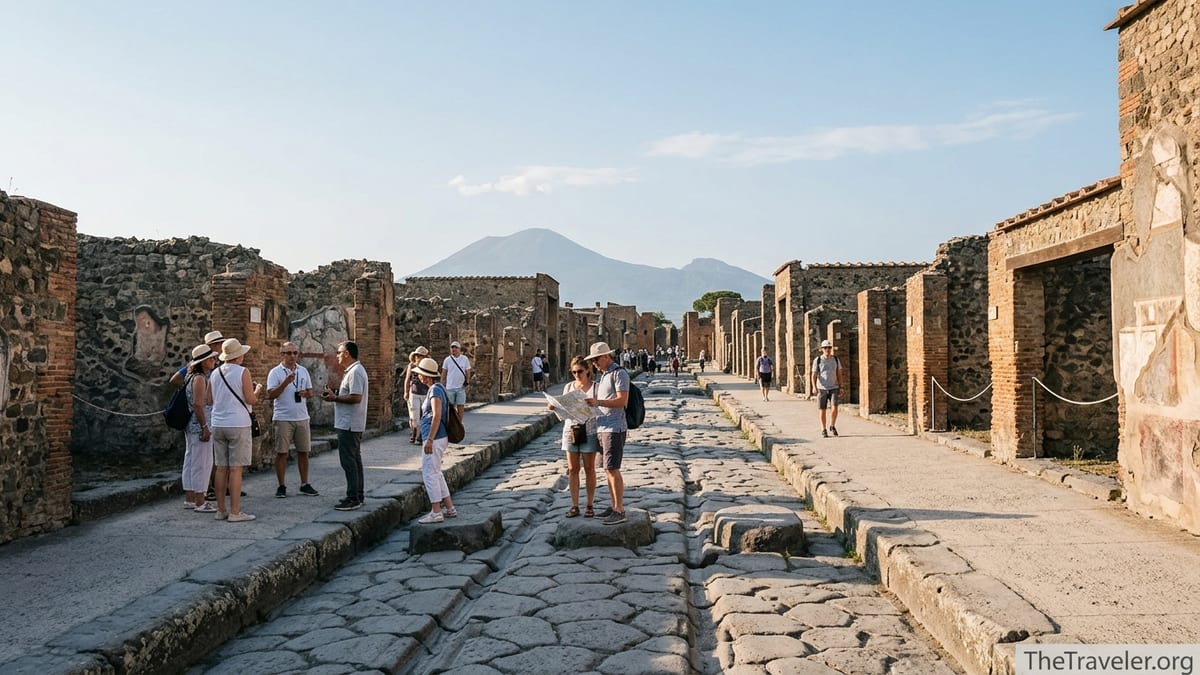
How Crowded Is Pompeii Really Today?
Pompeii is no longer a quiet ruin you stumble into on a whim. In 2023 the archaeological park reported roughly four million visitors, its busiest year on record. Peak months like April, May, June and August each saw well over 400,000 people, which translates into visibly dense crowds in the Forum area, at the famous plaster casts near the Garden of the Fugitives, and inside headline houses such as the House of the Faun and the House of the Vettii.
On some promotional free-entry Sundays before new rules came in, local media reported more than 30,000 visitors in a single day, creating gridlock at the Porta Marina entrance and long queues in front of the site’s most photogenic spots. Travelers arriving from cruise ships in Naples or tour buses from Rome often converge between late morning and early afternoon, the same window independent visitors tend to target. That bunching effect can make parts of Pompeii feel uncomfortably busy, even if the overall site is large enough to absorb people.
In response, Italian authorities introduced a daily cap of about 20,000 visitors starting in November 2024, combined with timed-entry tickets. In practical terms, this means a sold-out summer day now spreads visitors out more evenly from opening to closing, and spontaneous walk-up tickets are less certain during holidays and school vacation periods. Reports from 2025 and early 2026 suggest the new system has eased the worst bottlenecks at the gates, but midday remains crowded around the main monuments.
For a traveler, the key is to understand that Pompeii behaves less like a single attraction and more like a small open-air city. Certain “famous” zones do feel packed at popular times, while other blocks just a few minutes’ walk away remain almost silent. Whether Pompeii feels too crowded or deeply atmospheric often comes down to how willing you are to step off the main axis and how flexible your schedule is.
What Has Changed: Caps, Timed Tickets and New Routes
The most visible change for visitors is the introduction of nominative, timed tickets sold through the official system. As of 2025 and 2026, you are expected to choose a specific entry time, present an ID that matches your ticket name, and respect a same-day, single-entry policy. For example, a traveler from New York planning a June visit might pre-book a 9:00 a.m. slot several weeks ahead, particularly if they are visiting on a Saturday or holiday period.
Behind the scenes, the archaeological park has worked on changing how people move through the ruins. Authorities have expanded the number of open houses and designed several suggested itineraries, from short “express” loops to half-day circuits that distribute visitors onto less obvious streets. The idea is to reduce constant pressure on a handful of famous stops by making it easier to discover alternatives like the House of the Skeleton, the palestra exercise grounds, and quieter residential insulae at the edges of the excavation.
Digital tools are slowly becoming part of crowd control. A dedicated app connected to the park can indicate which areas are congested in real time and suggest different routes. In practice, this might mean that if the app flags heavy traffic around the Forum and the theaters at 11:30 a.m., you could divert to the amphitheater district and the Villa of Diomedes, then loop back later when pressure has eased.
There are also more evening events and special openings, particularly in summer, such as night tours that illuminate key buildings after regular closing time. These require separate tickets and sell out quickly, but they spread demand into cooler, less crowded hours. For a couple staying in Naples in July, pairing a leisurely morning at the National Archaeological Museum with a Pompeii night visit can be a more pleasant alternative to a sweltering noon-time march through packed streets.
When To Go So Pompeii Still Feels Magical
Seasonality matters enormously. Spring and autumn are still the sweet spots for many independent travelers. From late March to early June and again from late September to late October, temperatures are generally milder than in the Neapolitan summer, and crowds are a notch thinner than in July and August. Visiting on a Tuesday or Wednesday in mid-October, for example, typically feels calmer than a Saturday in May, even though the site remains popular year-round.
Winter can be a surprisingly rewarding time if you are willing to gamble on mixed weather. January and February see fewer visitors, cheaper hotel rates in Naples and Sorrento, and noticeably shorter security and ticket lines. A solo traveler on a budget might base themselves in Naples, take the Circumvesuviana or Campania Express train out on a cold but sunny weekday, and enjoy long stretches of empty cobbled streets. The trade-off: shorter opening hours, occasional closures of specific houses for restoration, and a real risk of rain.
Time of day is just as important as month. The first 90 minutes after opening are consistently the most atmospheric, especially under the new daily caps that favor early bookers. Walking up Via dell’Abbondanza at 9:15 a.m. on a May morning, you are likely to share the space with a few photography enthusiasts and small tour groups still clustered near the gate. By 11:00 a.m., school groups, cruise excursions and day-trippers from Rome tend to fill the main arteries, and the noise level rises sharply.
If you cannot make it early, consider a late-afternoon entry in summer. With extended summer opening hours, entering around 4:00 p.m. can mean declining crowds, golden light over the Forum and Mount Vesuvius, and cooler temperatures. You might spend two or three hours in the quieter eastern districts before looping back past the theaters as the site empties. Evening specials, when offered, further extend this window and can transform what might have been a tiring midday march into a memorable, almost theatrical experience.
How Crowds Change the Experience on the Ground
The reality of crowds at Pompeii is felt in very concrete ways. On a busy April morning, you might queue 20 to 40 minutes simply to enter the House of the Vettii or the Lupanar brothel, with staff periodically closing doors to prevent damage to frescoes. Inside, shuffling through narrow doorways at the same pace as a dozen other tours can make it difficult to pause and appreciate small details like graffiti or mosaic borders.
Photography becomes more challenging too. Classic postcard shots of the Forum, the Temple of Jupiter with Vesuvius behind, or the long colonnades of the Stabian Baths now often involve waiting for gaps in the stream of visitors. A traveler intent on capturing clear architectural lines might spend 10 or 15 minutes at a single vantage point in high season, while the same composition could be snapped almost instantly at 9:10 a.m. in March or on a drizzly winter afternoon.
Heat amplifies crowd fatigue. In July and August, stone paving reflects the sun and shaded spots are limited. Even with water fountains scattered around the site, many visitors find that a four-hour midday visit quickly becomes physically draining, especially for children or older travelers. A family arriving from a cruise ship at noon in August might realistically manage only a truncated circuit of the Forum, theaters and a couple of houses before energy levels drop.
Yet the crowds are uneven. Walk just five minutes beyond the main artery of Via dell’Abbondanza and the feel can change abruptly. Back streets near the city walls, stretches of the necropolis outside Porta Nocera, or residential blocks toward the less excavated edges often remain almost empty, even on busy days. Travelers who deliberately plan time for these quieter districts frequently report that their most powerful moments in Pompeii occurred away from the headline sites: standing alone in a modest courtyard, hearing only the wind, and suddenly imagining the ordinary lives that once unfolded there.
Strategies For Experiencing Pompeii Without Being Overwhelmed
Thoughtful planning can make the difference between a crowded disappointment and a highlight of your trip. The single most effective tactic is to secure an early time slot through the official ticket system as soon as your travel dates are firm. For a peak-season Saturday in June, that might mean booking a 9:00 a.m. entry several weeks in advance and arranging your train or transfer schedule around it. Arriving at the gate 20 to 30 minutes before your slot reduces stress and gives you a head start before day-tripper buses unload.
Once inside, consider front-loading the most popular spots. A practical route for an independent traveler could be: Forum, Basilica, Temple of Apollo, the theaters and the plaster casts at the beginning, while groups are still forming. From there, peel off toward less crowded residential blocks, looping back to big-ticket houses later if queues look manageable. If you see a serpentine line spilling out of a doorway, weigh whether that particular fresco or courtyard is worth 30 minutes of your limited time, especially in hot weather.
Guided tours can be a smart way to navigate crowd pressure, but choose carefully. Short, archaeologist-led walks that start at or near opening often combine fast-track group entry with tightly focused itineraries. A two-hour morning tour might cost around the same as a mid-range restaurant meal in Naples, yet save you from getting lost in side streets and standing in unnecessary lines. On the other hand, large bus tours that arrive mid-morning can feel rushed and herded, with less flexibility to adapt if the House of the Faun is temporarily closed or overwhelmed.
Finally, treat logistics as part of the crowd-management strategy. If you base yourself in Naples, you can catch an early Circumvesuviana or Campania Express train that drops you a short walk from the main gate, beating many Rome day-trippers. Staying in Sorrento or along the Amalfi Coast, look for shuttle services or organized day trips that include early-entry guarantees. Carry a refillable water bottle, hat and sunscreen, and build in a clear cutoff time; deciding in advance that you will leave by 2:00 p.m., for example, helps prevent the “we should see just one more thing” exhaustion that often hits visitors hard at Pompeii.
Costs, Value and Alternatives in the Bay of Naples
Ticket prices at Pompeii are broadly in line with major European heritage sites, and for most travelers the question is not the cost but whether the experience still feels worth a half or full day of their itinerary. A standard day admission purchased through official channels, sometimes branded as an “Express” ticket covering the main excavation area, is typically priced in the range of other top Italian attractions. A “Plus” ticket that includes suburban villas and shuttle access costs a bit more but can offer better value if you have a full day to explore.
Guided experiences add another layer. Small-group tours with priority access often run in the tens of euros per person, depending on duration and group size, while private guides command higher rates similar to personalized city tours in Rome or Florence. Some visitors combine Pompeii with Mount Vesuvius or Herculaneum in a single, more expensive full-day package from Naples, Sorrento or even Rome, trading flexibility for convenience and seamless transfers.
Travel cards such as the Campania Artecard can reduce overall costs if you plan to visit several sites. A traveler spending three days in the region might use the card to cover the National Archaeological Museum in Naples, Pompeii and Herculaneum, effectively spreading transport and entry fees across multiple visits. This can make it easier to justify a shorter, crowd-conscious stint at Pompeii rather than feeling obliged to stay until closing to get your money’s worth.
Crucially, Pompeii is not the only ancient city frozen in volcanic time. Herculaneum, just up the line from Naples, is far more compact and usually far less crowded, with multi-story houses, colorful frescoes and carbonized wood preserved in extraordinary detail. The villas at Oplontis and Stabiae receive a fraction of Pompeii’s visitors but showcase opulent wall paintings that rival the site’s most famous houses. For some travelers, especially those with a strong interest in domestic architecture and less in sheer scale, combining one or two of these quieter sites with a shorter, targeted visit to Pompeii offers the best balance of atmosphere and depth.
The Takeaway
Pompeii is undeniably crowded and, at times, overwhelming. Yet it remains one of the most vivid windows into the ancient world that a traveler can step through in a single day. Recent visitor caps, route redesigns and timed tickets have mitigated some of the worst overtourism pressures, even if they have not eliminated midday bottlenecks or the occasional crush around headline houses.
Whether Pompeii is still “worth it” depends on your expectations and flexibility. If you picture a solitary wander through empty streets in peak season at noon, you will almost certainly be disappointed. If, however, you are willing to book early, arrive early or late, accept that certain rooms may be crowded or temporarily closed, and deliberately seek out quieter districts, Pompeii can still deliver moments of extraordinary intimacy and insight.
For many travelers, the most satisfying approach is to treat Pompeii as part of a wider archaeological landscape. Pair it with Herculaneum or the Naples Archaeological Museum, distribute your time so that you are not fighting midday heat for more than a few hours, and hold your plans lightly enough to adapt to conditions on the ground. Do that, and Pompeii remains not a victim of its own fame, but a powerful, if popular, encounter with a lost city.
FAQ
Q1. Has Pompeii become too crowded to enjoy?
Not necessarily. The busiest areas and times can feel very crowded, but early-morning or late-afternoon visits, along with choosing quieter streets and less famous houses, still offer a rewarding experience.
Q2. What is the best time of day to visit Pompeii to avoid crowds?
The first 1 to 2 hours after opening are usually the calmest, especially in spring and autumn. In summer, late afternoon also offers thinning crowds, cooler temperatures and softer light.
Q3. Do I really need to buy Pompeii tickets in advance now?
Advance purchase is strongly recommended, especially from April to October and on weekends. Daily visitor caps and timed-entry slots mean same-day walk-up tickets may be limited or sold out during peak periods.
Q4. How long should I plan to spend at Pompeii?
Three to four hours is enough for a focused visit that covers major landmarks and a few quieter streets. History enthusiasts often stay five to six hours but should plan for breaks, shade and hydration.
Q5. Is a guided tour worth it, or can I explore alone?
Both work. Guided tours, particularly small groups with an archaeologist or specialist, help you navigate crowds and understand what you are seeing. Independent travelers who prepare a route and use a map or audio guide can also have a rich experience.
Q6. How does Pompeii compare with Herculaneum for crowd levels?
Herculaneum is smaller, generally much quieter and easier to absorb in 2 to 3 hours. Pompeii is larger and more famous, so it attracts more people but also offers far more space to spread out if you seek side streets.
Q7. Are there specific days I should avoid visiting Pompeii?
Public holidays, weekends in late spring and early summer, and any free-entry days tend to be the most crowded. If possible, choose a midweek visit outside local school vacation periods.
Q8. Can I leave and re-enter Pompeii on the same ticket?
Current ticketing rules generally allow one entry per ticket, so leaving for lunch and coming back is usually not possible. Plan to bring water and snacks or use services inside the site so you do not need to exit early.
Q9. Is Pompeii suitable for travelers with limited mobility given the crowds?
The ancient streets are uneven, and crowds can make movement slower, but there are partially accessible routes and some adapted paths. Travelers with mobility concerns should research current accessibility options and consider a shorter, carefully planned visit.
Q10. If I only have one day in the area, should I choose Pompeii or Herculaneum?
If you value sheer scale and iconic sights, choose Pompeii and plan your visit carefully around crowds. If you prefer a more compact, often calmer site with excellent preservation, Herculaneum may be the better one-day choice.