


Chase’s Sapphire Lounges have quickly become some of the most talked‑about airport spaces in the United States, offering craft cocktails, full buffets, and quiet work zones that rival or beat many traditional airline clubs. But access is not straightforward, and the true cost is wrapped up in annual card fees, guest charges, and fine print that varies by card and by lounge. Here is a practical, current guide to what Chase Sapphire Lounge access really costs in 2026, and how to decide whether it is a smart value for the way you actually travel.
Get the latest updates straight to your inbox!
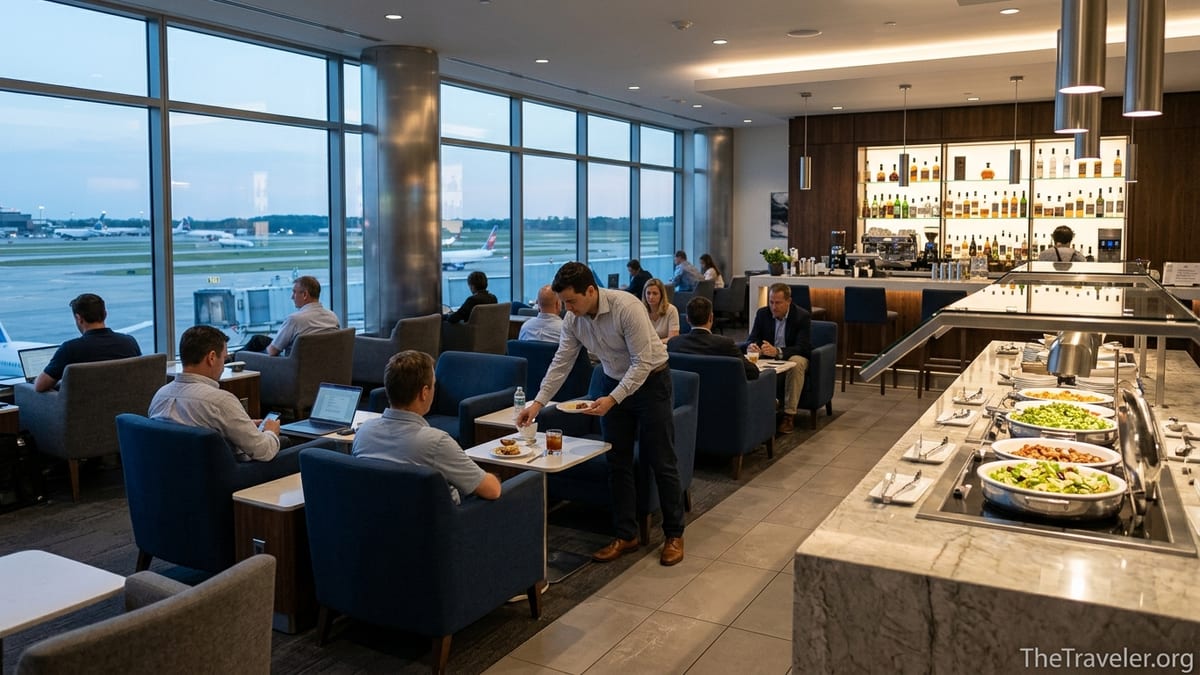
What Are Chase Sapphire Lounges and Where Will You Find Them?
Chase Sapphire Lounges by The Club are premium airport lounges operated in partnership with The Club, designed to compete with American Express Centurion Lounges and Capital One Lounges. Inside, you will typically find a full hot and cold buffet, a staffed bar pouring complimentary cocktails, quiet work areas, showers, and family spaces, all decorated to reflect the city around the airport rather than a generic corporate template.
As of mid‑2026, Sapphire Lounges are open at major hubs including Boston Logan, New York JFK, LaGuardia, Washington Dulles, Phoenix, Las Vegas, and Philadelphia, with additional locations in the pipeline and an expanding presence internationally. The Boston lounge, for example, sits in Terminal B near gate B40 and is a popular stop for transatlantic flyers and business travelers heading to hubs like London and Dublin. The JFK lounge serves Terminal 4, where it competes directly with airline‑run clubs for flyers heading to Europe, the Middle East, and long‑haul domestic routes.
These spaces are deliberately positioned in terminals with heavy premium traffic. That means they tend to be busiest in the early morning and late afternoon bank of departures. Travelers often compare them with Delta Sky Clubs or United Clubs in the same terminal and make a decision simply by peeking in: many report that the Sapphire Lounges feel less crowded and have stronger food and beverage offerings than the average legacy airline club, which is a big part of the value equation.
To understand what you will actually pay to enjoy these lounges, though, you have to look past the door and into the details of how access is granted through specific credit cards and memberships.
Which Cards Actually Get You Into Chase Sapphire Lounges?
The key point in 2026 is that complimentary Sapphire Lounge access is tied to premium Chase cards, not to every card with the “Sapphire” name. Chase Sapphire Reserve, Chase Sapphire Reserve for Business, J.P. Morgan Reserve, and The Ritz‑Carlton Credit Card all come with unlimited complimentary access for the primary cardholder and authorized users, provided they present their physical card or digital Priority Pass membership alongside a same‑day departing boarding pass.
By contrast, the popular Chase Sapphire Preferred does not include free lounge access of any kind. Travelers often arrive at the door in Boston or JFK expecting that a $95‑annual‑fee Sapphire Preferred card will work the same way as its more expensive sibling, only to be turned away or told they would need a separate Priority Pass membership with its own fee. This is a major source of confusion, so if you currently hold Sapphire Preferred and care about lounges, you should think of it as a card without built‑in lounge benefits.
Non‑Chase Priority Pass members can access Sapphire Lounges, but the policy is restrictive. Most Priority Pass members whose membership comes from another premium card, such as Capital One Venture X or a co‑branded airline card, can visit a Sapphire Lounge only once per calendar year. After that first visit, access is charged at a relatively high walk‑up fee per visit, which makes frequent use through a non‑Chase membership poor value compared to holding a Sapphire Reserve directly.
Because of these differences, the real financial question is less “What is the day‑pass price at a Sapphire Lounge?” and more “Does a premium Chase card with built‑in access make sense for my travel pattern when I consider all the fees and credits?”
The Real Cost: Annual Fees, Guest Fees, and Hidden Charges
On paper, Chase Sapphire Lounges themselves do not have a posted entry fee for eligible cardholders. Instead, access is bundled into the annual fees and benefit structures of premium cards. The flagship Chase Sapphire Reserve now carries an annual fee in the mid‑hundreds of dollars; financial outlets in early 2026 reported the fee at roughly the same level as, or slightly below, the American Express Platinum, which now charges close to nine hundred dollars per year. That means you should think of lounge access as one line item in a larger package that also includes travel credits, insurance protections, and bonus earning on spending.
For Sapphire Reserve cardholders and similar premium Chase cards, entry to Sapphire Lounges is complimentary for the cardholder and up to two guests. If you arrive as a family of four, for example, a parent with a Sapphire Reserve could bring a partner and two children in without any additional charge. A third adult guest, however, would trigger a per‑visit guest fee billed directly to the card. Chase’s current policy sets that fee at a modest level relative to the price of an airline club day pass, but it still adds up quickly if you travel in larger groups multiple times a year.
Additional costs can emerge in more subtle ways. All eligible cardholders must enroll in their complimentary Priority Pass Select membership for the system to recognize their privileges at the door. Forget to activate that membership, and you may find yourself either paying a standard Priority Pass visit fee through your membership provider or being denied entry despite holding a Sapphire Reserve. Similarly, some lounges enforce a rule that you may enter only within three hours of a departing flight, which matters for long layovers or when you arrive at the airport very early; if you show up five hours before departure, you might have to wait in the main terminal longer than you expected before the staff can check you in.
For travelers who are not eligible for complimentary entry but hold a different Priority Pass membership, the “hidden” cost shows up as an opportunity cost. If your membership includes only a limited number of free annual visits, using them at a Sapphire Lounge once per year may mean forgoing access to another lounge on a longer international journey. After your one complimentary Sapphire visit, subsequent entries at around the seventy‑five‑dollar range per person begin to look hard to justify unless the lounge essentially replaces buying an expensive restaurant meal and bar tab at the airport.
How Sapphire Lounge Value Compares With Other Lounge Options
To judge whether the fees behind Sapphire Lounge access are worth paying, it helps to compare the experience and cost to other common options: airline‑operated clubs, Priority Pass lounges, and other bank‑branded lounges from competitors like American Express and Capital One.
First, consider a typical domestic airline club day pass, which often runs around sixty to eighty dollars per person in 2026. A traveler at New York JFK without any premium credit card might pay that amount to access a major carrier’s club for a single visit. Inside, they might find snack‑level food, a limited bar with many drinks carrying a surcharge, and a crowded seating area at peak times. By contrast, a Chase Sapphire Reserve cardholder can bring themselves and two guests into the Sapphire Lounge at no per‑visit charge beyond the card’s annual fee. If they use the lounge four or five times per year with one or two guests, they could easily be getting several hundred dollars of comparable value just from the food, drinks, and workspace alone.
Compared with generic Priority Pass lounges, Sapphire Lounges tend to be newer, with better design and more consistent food quality. For example, travelers at Boston Logan often note that while a traditional contract lounge in the same airport might offer packaged snacks and basic drinks, the Sapphire Lounge serves hot dishes, local craft beer, and barista‑style coffee at no extra cost. For a business traveler connecting through Boston twice a month, those higher‑quality visits can add up to meaningful value over time, especially if they replace a sit‑down airport restaurant meal that might easily cost thirty to forty dollars per person.
Against competitor bank lounges, the picture is more mixed. American Express Centurion Lounges and Capital One Lounges often have similarly high‑end amenities and can sometimes be larger or better located in certain airports. The decision then comes down to which network aligns best with your home airport and typical routes. If you live near Phoenix or Las Vegas, where Chase has an active Sapphire Lounge footprint, a Sapphire Reserve might beat an Amex Platinum or Capital One Venture X purely based on where you fly. Conversely, if your main hub lacks a Sapphire Lounge but has a Centurion Lounge, you will want to consider that when evaluating the annual fee you are paying for lounge access.
From a fee‑for‑value standpoint, the key comparison is that Chase bundles Sapphire Lounge access with a Priority Pass membership that reaches more than a thousand lounges worldwide. If you would otherwise pay several hundred dollars per year for a standalone Priority Pass membership plus occasional airline club day passes, holding a Sapphire Reserve that combines both access types can quickly look like the more economical path.
When Paying for Sapphire Lounge Access Makes Sense
The easiest scenario in which Sapphire Lounge access is clearly worth the underlying fees is for frequent travelers who can reliably use both the lounges and the broader credits on the card. Take a consultant who flies from Boston Logan to Chicago twice a month and uses the Sapphire Lounge before nearly every outbound flight. If that traveler arrives early enough to eat a full breakfast or dinner in the lounge and enjoys a couple of drinks, they may avoid spending thirty to fifty dollars in the terminal each trip. Over twenty or more visits per year, the avoided spending can easily exceed several hundred dollars, roughly equal to or greater than the net cost of the Sapphire Reserve once they also use the card’s annual travel credit.
Another clear value case is for families who plan one or two big trips per year through airports with Sapphire Lounges. Imagine a family of four flying from New York to London out of JFK. Without a lounge membership, they might have dinner at a sit‑down restaurant in Terminal 4, buy drinks, and entertain the kids with snacks, spending one hundred to one hundred fifty dollars before even boarding the plane. With a Sapphire Reserve, they can enter the Sapphire Lounge as a group, eat a full meal, let the kids use the quiet or family area, and enjoy drinks, effectively redirecting what would have been restaurant spending into value extracted from their annual fee.
Guest policies are central to this math. Because the Reserve and similar cards allow two complimentary guests, a single cardholder can directly cover small groups or families for free. Bigger parties, such as six friends on a group trip to Las Vegas, will still face guest fees for the extra people, but they can split those costs and still end up paying less per person than they would for food and drinks in the terminal. If each additional guest pays the cardholder back for the per‑visit fee and another twenty dollars they would have spent at a bar, the group still comes out ahead.
There are also situational benefits that do not show up on a spreadsheet but add real value. A traveler connecting through Philadelphia or Washington Dulles on a tight layover may find that being able to grab quick, high‑quality food in the lounge, charge devices, and take a quick shower between long‑haul flights dramatically improves the trip, enough that they are willing to accept a somewhat higher annual fee than they strictly “earn back” in cash‑equivalent terms.
When Sapphire Lounge Access Probably Is Not Worth the Cost
On the other hand, there are plenty of situations where paying the implicit fees for Sapphire Lounge access is difficult to justify. The classic example is the casual vacationer who flies two or three short domestic trips a year from airports without a Sapphire Lounge. If you live in a smaller city where the only lounges are basic Priority Pass spaces that may already come with a less expensive credit card, the high annual fee of a Sapphire Reserve starts to look like overkill.
Similarly, if your home airport has strong airline‑branded lounges that you already receive access to through elite status or a co‑branded credit card, adding a separate premium card purely for Sapphire Lounges can be redundant. A frequent Delta flyer based in Atlanta, for instance, might already get Sky Club access via a Delta Reserve card. For them, the marginal benefit of also having access to Sapphire Lounges, which are not yet available in Atlanta, could be small compared with the added annual fee burden.
Travel patterns matter as well. If you tend to arrive at the airport close to departure and rarely spend more than twenty or thirty minutes at the gate, you will not get as much value from lounges in general. In these cases, even with generous food and beverage options available, you may only have time for a quick snack and soft drink, which is unlikely to offset a premium annual fee unless you fly extremely often.
Finally, anyone who does not use the other big‑ticket benefits that come with a Sapphire Reserve, such as the large annual travel credit, dining or ticket statement credits, and built‑in travel protections, is effectively overpaying for lounge access alone. When you strip away those extras, you are essentially paying several hundred dollars per year for a Priority Pass membership and a handful of Sapphire Lounge visits, which is rarely the optimal allocation of your travel budget.
How to Estimate Your Personal Break‑Even Point
Because the core Sapphire Lounge fee is wrapped into your credit card’s annual price, the most practical way to decide whether it is worth it is to calculate your own rough break‑even point. Start with the card’s annual fee, then subtract any credits that you are confident you will use every year. For many travelers, the broad travel credit that applies to flights, hotels, and even some rideshare services is nearly as good as cash, which can significantly lower the effective cost of holding the card.
Once you have an effective annual cost in mind, estimate how many times per year you realistically expect to use a Sapphire Lounge or a Priority Pass lounge. For each visit, assign a conservative dollar value based on what you would otherwise spend in the terminal. For instance, if you usually buy a simple meal and drink for around twenty‑five dollars when you travel alone, you might value each solo lounge visit at twenty‑five to thirty dollars. If you sometimes travel with a companion and would otherwise buy food for both of you, you might assign a value of forty to fifty dollars to those visits.
Imagine a traveler with an effective annual Sapphire Reserve cost of around three hundred dollars after using all statement credits. If they take six round‑trip journeys a year, and manage to use a lounge on eight of those twelve flight days, valuing each visit at thirty dollars, they are getting around two hundred forty dollars of value strictly from food, drinks, and workspace. Add the peace of mind of travel protections and the convenience of having a global lounge network through Priority Pass, and it becomes easier to argue that the overall package is worth the net three hundred dollars. If, however, that same traveler only manages two lounge visits per year, their value drops to perhaps sixty dollars, making the card much tougher to justify.
It is also helpful to compare this scenario with alternatives. If you fly occasionally through airports with airline clubs that sell day passes, tally what you spent last year on those passes or restaurant meals during layovers. If that number already approaches a couple of hundred dollars and you have a few international trips coming up, upgrading to a premium card with Sapphire Lounge access might be a logical move instead of continuing to buy access piecemeal.
By walking through this exercise honestly, you avoid the trap of assuming that owning a premium card automatically makes you a “savvy traveler.” The value only materializes when you actually use the lounges and credits in ways that fit your normal habits.
The Takeaway
Chase Sapphire Lounges occupy an increasingly important place in the airport landscape, offering an experience that rivals or beats many airline clubs while being accessible through a small group of premium credit cards. The actual “fees” for using these lounges are rarely paid at the door, but instead are embedded in annual card charges, guest policies, and the opportunity cost of using Priority Pass visits that might otherwise be saved for other trips.
For frequent flyers who pass regularly through airports with Sapphire Lounges, or who can reliably tap both the lounges and the broader suite of credits and protections on a card like Chase Sapphire Reserve, the numbers can be compelling. A handful of well‑timed visits each month, particularly when traveling with guests, can offset a large portion of the card’s effective cost while making the travel day smoother and more enjoyable.
For occasional travelers, or for those whose home airports and routes are better served by other lounge networks, Sapphire Lounge access is less likely to be the deciding factor in choosing a premium card. In those cases, a more modest travel card or an airline‑specific product might deliver a better return on annual fees.
Ultimately, the worth of Chase Sapphire Lounge access depends on your own pattern of trips, airport choices, and spending habits. Treat the lounges as one piece of the broader travel puzzle, run the numbers for your situation, and you will be far better positioned to decide whether those quiet corners and complimentary cocktails are genuinely worth what you are paying for the privilege.
FAQ
Q1. Does the Chase Sapphire Preferred card include access to Chase Sapphire Lounges?
Chase Sapphire Preferred does not include complimentary access to Chase Sapphire Lounges or a free Priority Pass membership. If you want built‑in lounge benefits from Chase, you need a higher‑tier card such as Chase Sapphire Reserve or a similar premium product.
Q2. Which Chase cards offer free entry to Chase Sapphire Lounges?
Chase Sapphire Reserve, Chase Sapphire Reserve for Business, J.P. Morgan Reserve, and The Ritz‑Carlton Credit Card offer complimentary entry to Sapphire Lounges for the primary cardholder and, in most cases, authorized users, when they present an eligible card or linked Priority Pass membership plus a same‑day departing boarding pass.
Q3. How many guests can I bring into a Chase Sapphire Lounge for free?
Most eligible Chase premium cards allow the cardholder to bring up to two guests at no additional charge. Any guests beyond that limit are typically billed to the card at a per‑visit guest fee, which is set well below the cost of many airline club day passes but can still add up for large groups.
Q4. Can I access a Sapphire Lounge with a Priority Pass membership from another bank card?
Yes, but with restrictions. Many Priority Pass members whose membership comes from a non‑Chase card can visit a Sapphire Lounge once per calendar year at no extra charge. After that first visit, additional entries are usually subject to a relatively high per‑visit fee, making it an occasional rather than everyday option.
Q5. Do I need to enroll in Priority Pass if I have a Chase Sapphire Reserve?
Yes. Even though Priority Pass Select membership is complimentary with Chase Sapphire Reserve and similar cards, you must still activate it through your Chase account. Without activation, lounge staff may not be able to verify your membership, and you could be denied entry or charged standard visit fees.
Q6. How close to my flight time can I enter a Chase Sapphire Lounge?
Most Chase Sapphire Lounges require that you have a same‑day departing boarding pass and will only admit you within roughly three hours of your scheduled departure. This rule helps manage crowding and means that travelers with very long layovers or who arrive extremely early may need to wait before they are allowed to check in.
Q7. Is food and alcohol really free inside Chase Sapphire Lounges?
Yes, standard food and most alcoholic beverages are included at no extra charge once you are inside the lounge. Many locations offer a full hot buffet, snacks, desserts, draft beer, wine, and a selection of cocktails. Premium or top‑shelf drinks, where available, may carry a separate charge, but most travelers find they can comfortably eat and drink without opening their wallet.
Q8. How do Sapphire Lounges compare to airline clubs for value?
In general, Sapphire Lounges tend to offer better food quality, stronger beverage selections, and more modern design than many traditional domestic airline clubs. For travelers who already hold an eligible Chase card, the ability to bring two guests for free can also make the per‑visit value higher than buying individual airline club day passes, especially for families or couples.
Q9. If I rarely fly, should I get a Chase Sapphire Reserve just for lounge access?
Probably not. If you take only a few short domestic trips per year and do not regularly pass through airports with Sapphire Lounges, it is hard to justify a high annual fee solely for lounge access. Infrequent travelers are often better served by a lower‑fee travel rewards card and paying for occasional lounge access only when truly needed.
Q10. How can I tell if a Chase Sapphire Lounge is at an airport on my itinerary?
You can check Chase’s current list of Sapphire Lounge locations, which is updated as new lounges open at major hubs like Boston, New York, and Phoenix. Before a trip, look at the terminals you will use and compare them with the location of any Sapphire Lounge in that airport so you know whether visiting will be convenient given your connection time and security checkpoints.