


More news on this day
Passengers flying out of the United Arab Emirates today are being urged to double check their bookings as major carriers Emirates, Etihad Airways and Air Arabia continue to adjust schedules, cancel services and reroute flights in response to evolving regional airspace restrictions and operational challenges.
Get the latest news straight to your inbox!
Emirates trims schedules and reroutes key long haul services
Publicly available flight information shows Emirates operating a reduced but steadily rebuilding schedule from Dubai International Airport after months of disruption linked to airspace closures and security concerns affecting parts of the Gulf region. While most core trunk routes are running, the pattern of ad hoc cancellations, retimed departures and aircraft swaps remains visible across several departure banks.
Recent operational notices indicate that Emirates has periodically suspended or consolidated flights on selected routes, particularly where traffic rights or overflight permissions have been constrained. Services to some Australian, European and Asian gateways have seen frequency reductions compared with pre-crisis timetables, with passengers often rebooked onto alternative departures later the same day or the following day where capacity allows.
Industry coverage points to ongoing rerouting of many Emirates services around sensitive airspace, extending flight times on sectors between Dubai and Europe, North America and parts of Asia. These longer routings can have knock on effects for aircraft rotation, sometimes forcing late schedule changes or day of departure cancellations when crews and equipment are out of position.
For travellers leaving the UAE today, the most significant practical impact is the need to monitor booking status closely even after online check in. Reports from recent weeks show that some customers have seen their reservations flagged as disrupted while flights still appear on airport departure boards, underscoring the importance of checking both the airline’s manage booking tools and the latest airport information.
Etihad Airways adjusts Abu Dhabi departures amid regional constraints
Etihad Airways, based at Abu Dhabi’s Zayed International Airport, has also been operating a trimmed schedule as the wider regional situation continues to affect traffic flows across the Gulf. Published travel advisories and aviation industry briefings describe a pattern of limited commercial services on selected days and routes, with priority given to maintaining core connections to Europe, Asia and key destinations in the Indian subcontinent.
Available information suggests that Etihad has responded through a mix of outright cancellations, aircraft upgauging on remaining flights and retiming of departures to fit windows of available airspace. On some routes, multiple daily frequencies have been consolidated into a single service, while others have been suspended for extended periods and are gradually being phased back into the timetable as conditions permit.
Passengers departing from Abu Dhabi today are likely to encounter fuller than usual flights and longer minimum connection times, particularly on itineraries involving onward travel to North America or northern Europe. Where cancellations occur, rebooking is generally being offered on the nearest available Etihad service, although in some cases travellers have been redirected via partner airlines or alternative hubs when same day options out of the UAE are limited.
Travel industry guidance continues to emphasise that schedules remain subject to late change. As a result, travellers are advised to allow additional time at the airport, keep contact details updated in their booking profiles and monitor airline notifications closely in the 24 hours leading up to departure.
Air Arabia operations from Sharjah and regional bases under pressure
Low cost carrier Air Arabia, headquartered at Sharjah International Airport, has faced its own wave of cancellations and schedule changes as regional airspace restrictions and demand shifts ripple through short haul networks. Passenger accounts from recent months highlight instances of flights being cancelled several days before departure, with automatic refunds or credit vouchers offered instead of immediate rebooking options.
Sharjah based operations appear to be running on a leaner timetable, with some high frequency routes into the Levant, North Africa and South Asia operating fewer daily or weekly services than in previous seasons. In certain cases, daytime departures have been consolidated into single evening flights, reducing same day flexibility for travellers and placing a premium on the limited seats that remain.
Air Arabia’s additional bases in Ras Al Khaimah and other regional airports have also seen modifications to planned summer schedules, as the airline balances aircraft utilisation against fluctuating demand and evolving overflight permissions. This has resulted in isolated last minute cancellations where aircraft have been reassigned to busier or operationally less constrained routes.
For those flying with Air Arabia today, publicly available guidance stresses the importance of reconfirming travel plans via the airline’s website or app and reviewing any email or SMS notifications received in recent days. Passengers on cancelled services are typically being offered the choice of refunds or credit for future travel, but same day alternatives may be limited on certain niche routes.
What UAE bound and departing passengers should expect today
Across Emirates, Etihad and Air Arabia, the common theme for travellers flying from the UAE today is continued volatility in departure times and, on some routes, in the very operation of flights themselves. While the overall volume of services leaving Dubai, Abu Dhabi and Sharjah has improved compared with the height of the airspace closures earlier in the year, the network remains less predictable than pre conflict norms.
Regional and international aviation analyses note that many carriers using Gulf hubs are still routing around large no fly zones, which increases congestion along alternative corridors. This creates additional complexity for air traffic control and airline operations teams, sometimes forcing late tactical adjustments such as departure delays, en route holding or last minute cancellations when slots cannot be secured.
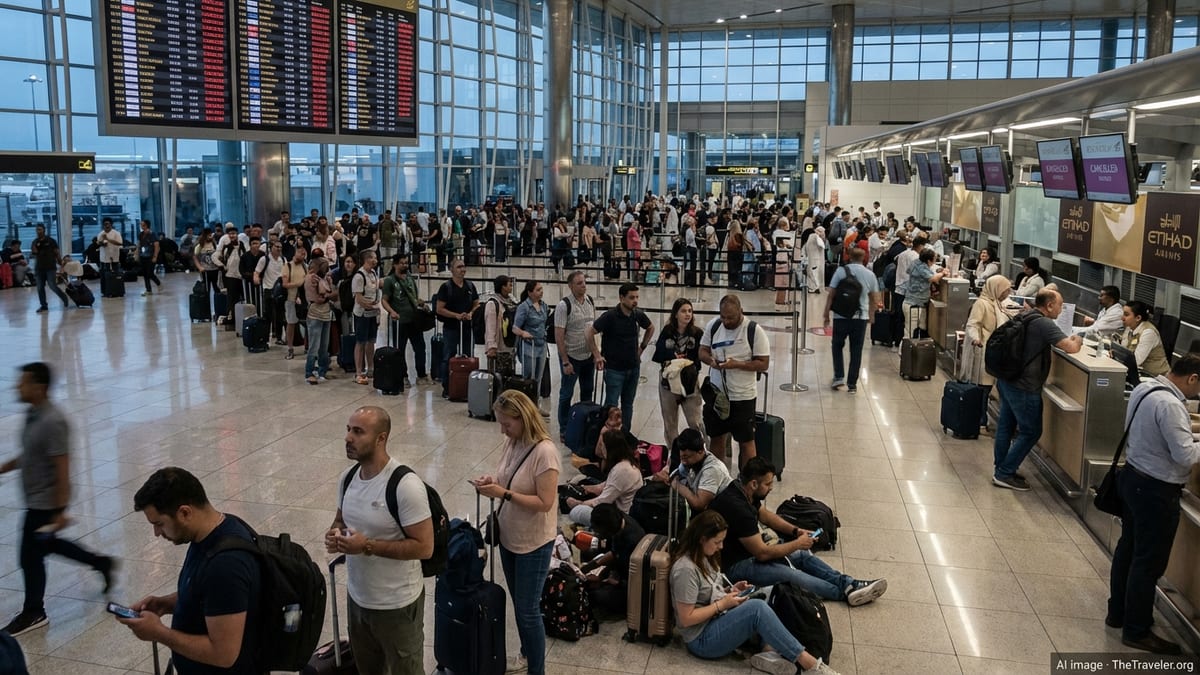
Travellers can therefore expect busy terminals, longer check in and security queues at peak times and a higher likelihood of missed connections if minimum transfer windows are tight. Those with non changeable or tightly timed onward plans, such as cruises or rail journeys, may face particular exposure and are being encouraged by travel advisers to build in extra buffer time or consider more flexible arrangements.
At the same time, the publicly reported trajectory in recent weeks has been toward gradual stabilisation, with more flights operating each day and airlines working through backlogs of disrupted passengers. For many routes, especially high demand corridors to major global cities, operations are close to normal levels, even if flight times remain slightly longer than before due to rerouting.
How passengers flying today can minimise disruption
For passengers departing the UAE in the coming hours, practical steps can significantly reduce the risk of unpleasant surprises at the airport. Industry bodies and travel advisers uniformly recommend checking the live status of flights through airline channels on the day of departure, rather than relying solely on booking confirmations issued weeks or months earlier.
Arriving at the airport earlier than usual is also advised, particularly for morning and late night departure waves when Emirates, Etihad and Air Arabia concentrate much of their long haul and connecting traffic. Extra time can help passengers navigate any unexpected check in delays related to overbooked services, document checks for rerouted itineraries or longer than anticipated security queues.
Passengers are also being encouraged to keep digital copies of tickets, booking references and any recent schedule change notifications easily accessible, in case ground staff need to verify rebookings or apply disruption policies. For those with tightly timed connections beyond the first point of arrival, monitoring the status of onward legs and considering fallback options can provide an additional layer of resilience.
Although the situation remains fluid, publicly available data indicates that the majority of scheduled flights from UAE hubs are operating, even if not always at their originally advertised times. With careful preparation and close attention to real time updates, most passengers flying today should still be able to complete their journeys, albeit with a higher than usual chance of delays, rerouting or schedule adjustments along the way.