


For many first-time travelers to Rome, the Vatican Museums sit at the top of the must-see list, right alongside the Colosseum and Trevi Fountain. Yet more and more visitors now wonder if the experience really lives up to the hype, especially when they hear about three-hour queues, dense crowds and rising ticket prices. Deciding whether the Vatican Museums are worth it depends less on abstract bucket lists and more on your interests, budget, timing and tolerance for crowds. This guide looks at the experience in real detail so you can decide with clear, practical information rather than fear of missing out.
Get the latest updates straight to your inbox!
What the Vatican Museums Actually Are, Not Just the Sistine Chapel
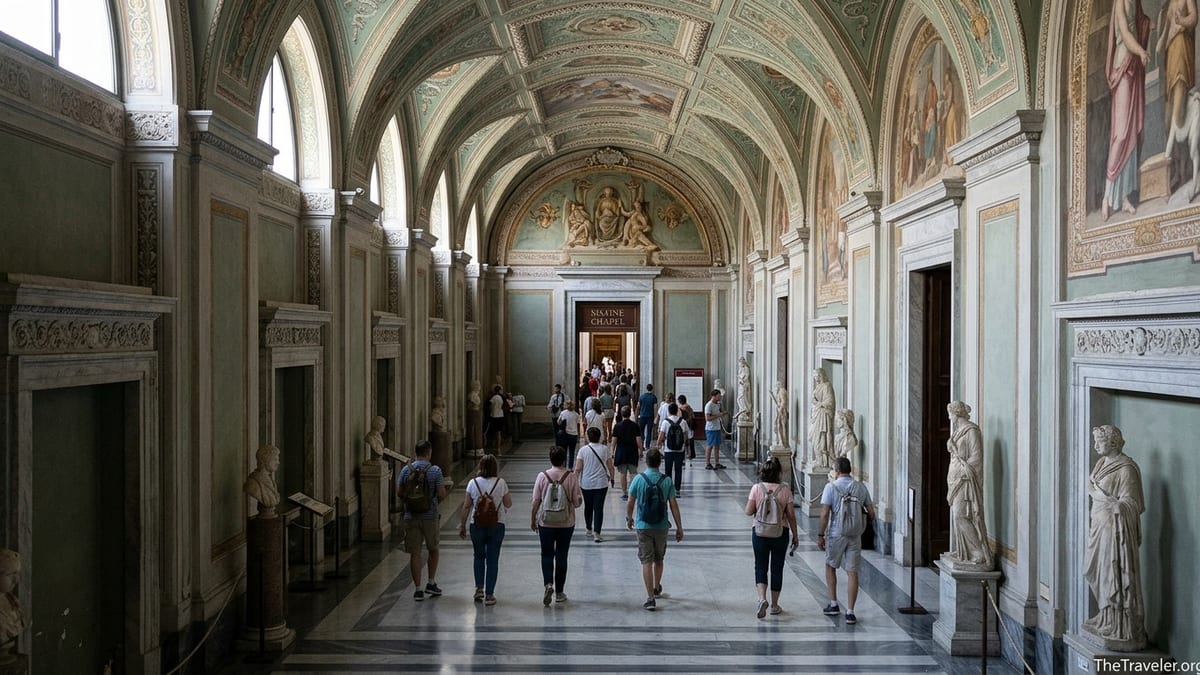
First-time visitors are often surprised to learn that the Sistine Chapel is only one small part of the Vatican Museums. The museums are actually a vast complex of galleries created over centuries by popes, covering everything from ancient Greek and Roman sculpture to Egyptian mummies, Renaissance masterpieces and modern religious art. For most visitors, the highlight route includes the Pinecone Courtyard, the Gallery of Maps, the Raphael Rooms and finally the Sistine Chapel.
Walking this standard route takes at least two to three hours at a brisk pace, and many visitors report spending closer to four hours if they stop to look at key works and take short breaks. Even if you only care about the Sistine ceiling, you cannot simply “pop into” the chapel. You must pass through a large portion of the museums first, following a one-way circuit. Understanding this is important when deciding if the visit is worth your limited time in Rome.
The collection itself is world class. In practical terms, that means you are looking at original works by Raphael, Michelangelo, Leonardo da Vinci and Caravaggio, along with treasures like the Laocoön Group, one of the most famous sculptures from ancient Rome. There is also a modern and contemporary art section with works by artists such as Van Gogh, Rodin and Matisse. For any traveler who values art and history, this concentration of masterpieces in one complex is a strong argument in favor of visiting.
However, the size and density of the collection can be overwhelming. Signs and labels are often brief, and audio guides or guided tours are what turn the experience from a blur of rooms into something meaningful. If you know in advance that you do not enjoy large museums or that you quickly feel saturated by art, then the Vatican Museums may feel like an obligation rather than a highlight.
Cost, Time and Crowds: What You Really Commit To
From a practical budgeting standpoint, a standard adult ticket to the Vatican Museums in 2026 costs about 20 euros on the official website, plus a 5 euro online reservation fee for a timed entry. Children between 7 and 17, as well as many students under 25, pay about 10 euros plus the same booking fee. Children under 7 enter free. An optional audio guide costs around 7 euros per person. Third-party sellers bundle timed entry with skip-the-line marketing and often charge from 30 to 40 euros or more for a basic entrance slot.
The bigger cost, however, is time. Even with a timed ticket, you should expect to commit at least half a day. Most visitors find that three hours is the minimum to walk through the key sections without rushing, and that does not include transportation to and from the Vatican or any time in St Peter’s Basilica afterward. If you book a morning slot at 9:30, for example, you might realistically finish the museums around 12:30 or 13:00, then continue to the basilica and not be fully done until mid-afternoon.
Crowd levels are usually intense. The Vatican Museums are among the most visited museums on the planet and commonly receive millions of visitors each year. In high season from March to early November and around Easter and Christmas, corridors like the Gallery of Maps can feel tightly packed. Visitors often describe moving along in a slow shuffle, especially in the hour before reaching the Sistine Chapel. Early morning timed entries and the last entry of the day can be somewhat less congested, but “empty” is not a realistic expectation.
For a first-time visitor trying to squeeze Rome into two or three days, this combination of cost, time and crowds raises a legitimate question. If you have only one full day in the city, spending half of it in a single museum complex may not match your priorities. On the other hand, if you have four or more days, the commitment is easier to absorb, and the uniqueness of the collection becomes a stronger justification.
Who Will Find the Vatican Museums Deeply Rewarding
The Vatican Museums tend to be most rewarding for travelers with a clear interest in art, history or religious heritage. If you can name at least a few works you are excited to see, such as Michelangelo’s Sistine ceiling, Raphael’s School of Athens, or the ancient Apollo Belvedere sculpture, you will likely leave feeling satisfied despite the crowds. Visitors who have enjoyed other large museums like the Louvre in Paris or the Uffizi in Florence often put the Vatican in the same category of essential experiences.
Consider a couple from New York spending five days in Rome. They book a 9:00 timed ticket on the official site two months ahead, pay roughly 50 euros total in admission and booking fees, and add two audio guides at the entrance. They arrive 30 minutes early, clear security in about 20 minutes, and then spend three and a half hours inside. They recognize works from art history classes and enjoy listening to detailed explanations as they move along. Afterwards they step into St Peter’s Basilica, which is free to enter, and climb the dome for panoramic views of Rome. For them, the time and cost feel well justified.
The museums also hold particular meaning for Catholic or Christian travelers who see the visit as a form of pilgrimage. Standing beneath Michelangelo’s Last Judgment or walking through the papal apartments painted by Raphael can feel spiritually significant. For these visitors, even a crowded, tiring visit often carries emotional weight that makes the experience worth the effort.
Finally, travelers who appreciate “once in a lifetime” cultural highlights tend to value the visit. If you are the type who would plan a trip around seeing the Mona Lisa or the Acropolis, experiencing the Sistine Chapel ceiling in person, even briefly and in silence, can be a powerful moment. In that case, the visit fits naturally into your style of travel and likely should not be skipped.
Who Might Decide to Skip or Shorten the Visit
On the other side, the Vatican Museums are not a universal fit. Travelers who strongly dislike crowds, suffer from claustrophobia, or are particularly sensitive to heat may find the experience difficult in peak season. Some visitors in July and August report sections of the route feeling airless and exhausting, even with occasional air conditioning. Families with toddlers or travelers with mobility challenges can struggle with the long, one-way paths and limited seating.
Imagine a family of four visiting Rome for two days in July with children aged 6 and 9. They are already planning the Colosseum, Roman Forum, Trevi Fountain and gelato stops. Adding a three-hour museum visit with dense crowds and a strict quiet rule in the Sistine Chapel may not align with their children’s energy levels. In such a case, it can be more enjoyable to admire St Peter’s Square and Basilica, which are free, and save the museums for a future trip when the kids are older and more interested.
Travelers on a very tight budget might also choose to skip. While the basic official ticket is not extreme compared to other major European museums, the costs add up quickly if you add audio guides or guided tours for several people. Meanwhile, Rome offers many other art experiences at lower prices and with fewer crowds, such as the Capitoline Museums, which cost roughly 15 euros and are often nearly queue-free, or smaller churches where you can see Caravaggio or Bernini works for free or for a small donation.
Short-trip visitors who prefer being outdoors may also find better use of their limited hours. Strolling the Trastevere neighborhood, watching the sunset from the Pincian Terrace above Piazza del Popolo, or exploring the Appian Way by bike may leave you with stronger memories than pushing through crowded galleries if museums are not a personal passion.
Tickets, “Skip the Line” Claims and How to Visit Smart
For first-time travelers, ticket choices can be confusing. The official Vatican Museums ticket offers timed entry and costs about 20 euros plus a 5 euro booking fee. This already lets you bypass the long line of people trying to buy tickets at the door. When you see “skip the line” offered by third-party sites at higher prices, you are mostly paying for someone else to buy the same timed ticket for you, plus often an audio guide or basic group tour.
It is important to understand that no ticket lets you skip security. All visitors must pass through metal detectors similar to airport checks, and at busy times there can still be a short queue even with a timed ticket. What you truly avoid with advance booking is the unpredictable, often long line to buy tickets in person, which on crowded mornings can stretch around the corner and last an hour or more.
In practice, this means that if you are reasonably comfortable booking online, the smartest and usually cheapest option is to purchase your timed ticket directly from the official Vatican Museums ticket office well before your visit. For most first-time visitors, there is no need to pay extra for vague “priority” access claims. Consider adding the official audio guide or booking one of the museum’s own guided tours if you want more context. These official tours are usually well reviewed and follow a clear route through the highlights.
If you are planning late and official tickets are sold out for your dates, then a reputable third-party ticket or guided tour can still be worthwhile to secure entry, especially in peak months like May, June and October when walk-up availability is very limited. Just be aware that you are paying a premium for a service rather than for magical crowd control. Reading recent reviews carefully helps you avoid low-quality operators and unrealistic promises.
Best Times, Dress Code and Practical Logistics
Timing makes a significant difference to how worthwhile the visit feels. Early morning entry between 8:00 and 9:30 often offers the most comfortable experience, particularly outside of peak summer. Late afternoon entries, especially the last available time slot, can also be relatively calmer, though you will have less time inside before closing. Mid-morning and late morning are usually the most crowded, as are Saturdays and Monday mornings after the museums have been closed on Sunday.
For dress code, remember that the Vatican Museums lead into the Sistine Chapel, which is a sacred space. You must have shoulders and knees covered, and clothing should not be transparent. In practical terms, that means T-shirts or light blouses rather than tank tops and shorts or skirts that reach at least the knee. Many travelers simply carry a light scarf or shawl in their daypack and put it on at the entrance. While the enforcement can vary slightly, it is safest not to gamble with short shorts or strappy tops, since being turned away at security would waste both your ticket and your time slot.
Backpacks, large umbrellas and some other items may be required to go into the cloakroom, which adds a few minutes on both arrival and departure. Photography is allowed in most museum areas but forbidden in the Sistine Chapel, where staff regularly remind visitors to put phones and cameras away. Talking is also restricted in the chapel, so guides usually give their explanations beforehand in a side room.
Planning the rest of your day around the visit also affects how worthwhile it feels. Many first timers pair a morning in the Vatican Museums with an afternoon at St Peter’s Basilica, including possibly climbing the dome. Others schedule the museums on a different day from the Colosseum and Forum to avoid fatigue. Leaving some buffer time and not booking tightly scheduled restaurant reservations immediately afterward keeps the visit from feeling rushed or stressful.
Alternatives and Complements for First-Time Visitors
Even if you decide that the full Vatican Museums experience is too much for your first trip, you can still enjoy the spirit of the Vatican area. St Peter’s Basilica itself is free to enter, though you go through security queues. Inside, you can see Michelangelo’s Pietà, Bernini’s baldachin over the main altar, and the immense scale of the nave. Climbing the dome for a fee gives one of the best views in Rome, with the city’s terracotta roofs spreading out in every direction.
Elsewhere in the city, Rome’s civic museums and churches offer powerful art experiences with far fewer crowds. The Capitoline Museums on the Capitoline Hill overlook the Roman Forum and house classical sculptures and paintings for about 15 euros, and lines are typically short. The Borghese Gallery in Villa Borghese Park requires advance reservations but limits visitor numbers, meaning you can admire Bernini’s sculptures and Caravaggio’s paintings in far calmer conditions. Several central churches, such as San Luigi dei Francesi and Santa Maria del Popolo, display Caravaggio masterpieces for the price of a coin to illuminate the paintings.
These alternatives can be particularly attractive if your time in Rome is short or if you are traveling with companions who do not share your enthusiasm for large museums. Visiting one or two of these sites can give you a rich sense of Roman art and history while keeping your schedule lighter. You can always save the Vatican Museums for a future trip when you can devote more time and energy to the experience.
For many travelers, the ideal compromise is to see the Vatican Museums once and then explore smaller sites for deeper, more relaxed enjoyment. On a first trip of four or five days, you might schedule the Vatican for one morning, the Colosseum and Forum for another, and then choose a smaller museum like the Capitoline or Borghese plus neighborhood wandering on the remaining days.
The Takeaway
Whether the Vatican Museums are worth it for first-time travelers to Rome depends on how you personally balance must-see art against crowds, cost and time. The museums offer a concentration of masterpieces and religious heritage that you simply cannot find elsewhere, crowned by the experience of standing beneath the Sistine Chapel ceiling. For visitors who value art history, cultural icons and spiritual landmarks, this alone can justify several hours in busy galleries.
At the same time, the visit demands preparation. You need to book timed tickets in advance, follow a dress code, allocate at least half a day, and accept that large parts of the visit will be crowded, especially in peak months. For travelers on short stays, with small children, on very tight budgets, or with low interest in museums, it can be entirely reasonable to skip the Vatican Museums on a first trip and instead focus on Rome’s outdoor spaces, free churches and smaller, calmer museums.
If you are undecided, a practical test is to ask yourself two questions. First, would you regret leaving Rome without seeing the Sistine Chapel and Raphael Rooms at least once in your life. Second, are you willing to trade several hours of your limited time and the price of admission for that experience. If the answer to both is yes, then with smart planning the Vatican Museums are likely worth it. If either answer is no, you can skip them without guilt and still have a rich, memorable first encounter with the Eternal City.
FAQ
Q1. Do I really need to book Vatican Museums tickets in advance as a first-time visitor.
Yes, in most seasons it is strongly recommended. Same-day tickets at the door are limited and can come with long waits, while official timed tickets purchased ahead let you bypass the ticket-purchase queue and enter in a reserved time slot, which makes the visit much more manageable for first-time travelers.
Q2. How much time should I plan for a first visit to the Vatican Museums.
Most first-time visitors should allow at least three hours inside the museums themselves, plus extra time for security, cloakroom, brief breaks and a possible visit to St Peter’s Basilica afterward. In total, it is wise to block off half a day in your Rome itinerary.
Q3. Are the Vatican Museums too crowded to enjoy for a first-time traveler.
They can feel very crowded, especially in high season and late mornings, but many first-time visitors still find the experience worthwhile. Booking early morning or late afternoon entries, moving steadily rather than lingering in bottlenecked corridors, and taking occasional breaks in courtyards can help keep the visit enjoyable.
Q4. Is a guided tour worth paying for on a first visit.
For many first-time travelers, a good guided tour or at least an audio guide makes a big difference. The collection is vast and signage is limited, so expert commentary helps you focus on major works and understand their stories instead of just walking through endless rooms without context.
Q5. Can I visit only the Sistine Chapel without doing the full museums.
No, you cannot. The Sistine Chapel sits at the end of the museum route, and all visitors must pass through a series of galleries to reach it. Even if you are mainly interested in the chapel, you will still walk through a substantial portion of the museums.
Q6. What should I wear to make sure I am not turned away.
Plan on covering shoulders and knees with clothing that is not transparent. A simple T-shirt or blouse and trousers, capri pants, or a skirt or dress that reaches the knee usually works well. Many visitors carry a light scarf to cover bare shoulders just before entering.
Q7. Are the Vatican Museums suitable for young children on a first trip to Rome.
It depends on the child and the season. Some school-age children enjoy specific sections like the Egyptian collection or the vivid ceiling paintings, while others find the crowds and long walking route tiring. In hot, busy months or on very short trips, families often choose outdoor sights and smaller museums instead.
Q8. How much will a first-time visit to the Vatican Museums typically cost.
As a rough guide, two adults booking official timed tickets and audio guides might spend around 60 to 70 euros in total. Guided group tours cost more, especially from third-party providers, while children and many students receive reduced admission that lowers the overall family cost.
Q9. Is it better to combine the Vatican Museums and St Peter’s Basilica on the same day.
Yes, most first-time visitors plan them together because they are next to each other and share similar dress code requirements. A common pattern is to tour the museums and Sistine Chapel first, then continue to the basilica and, if you still have energy, climb the dome for city views.
Q10. If I skip the Vatican Museums, will I still feel like I have experienced the Vatican.
You can still have a meaningful Vatican experience without the museums by visiting St Peter’s Square and Basilica, seeing Michelangelo’s Pietà inside the church, and spending time in the surrounding area. Many first-time visitors who skip the museums on short trips feel satisfied and choose to save the full museum visit for a future journey when they have more time and energy.