


The French Riviera is full of legendary names, but two loom largest in travelers’ imaginations: Monaco and Cannes. Both promise superyachts, sun-soaked terraces and a certain champagne-fizz energy, yet they deliver very different kinds of memories once you land. If you are choosing between the principality of Monaco and the coastal city of Cannes for an upcoming trip, the details matter: where you will actually swim, what a glass of wine will cost on a Tuesday night, how crowded the streets feel when a major event is on. This guide looks closely at real-world experiences in 2026 to help you decide which destination will leave the deeper impression.
Get the latest updates straight to your inbox!
First Impressions: Atmosphere and Scale
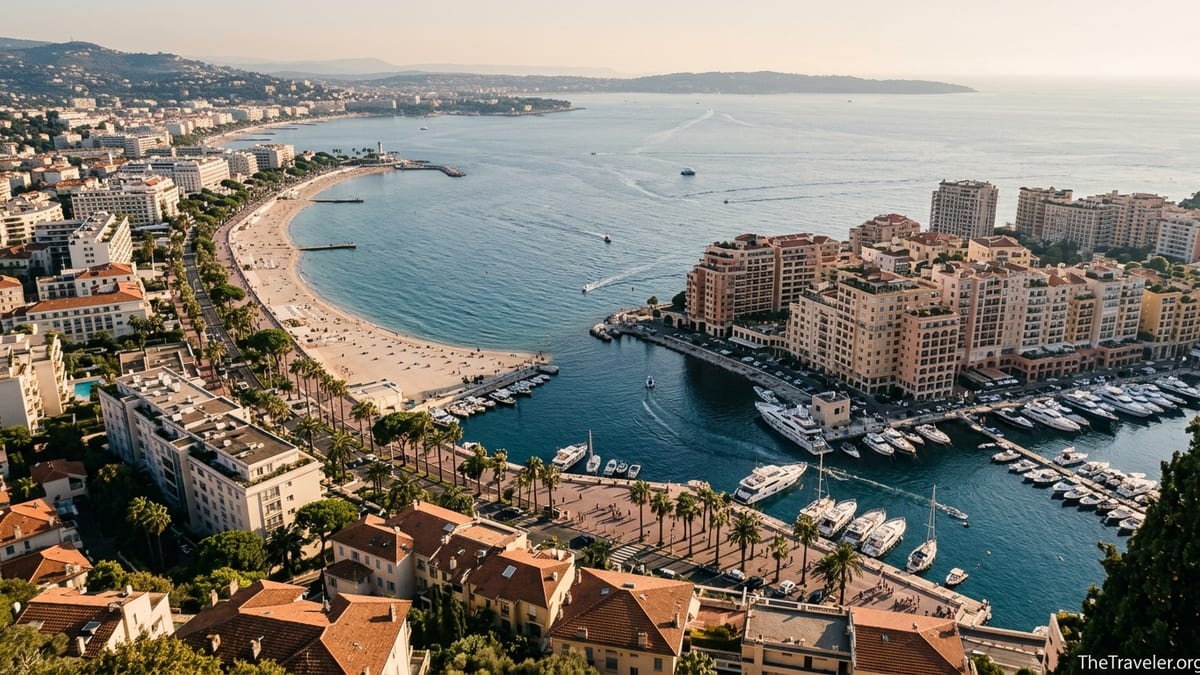
Arriving in Monaco, many visitors describe the principality as almost unreal at first glance: steep cliffs crammed with towers of glass and limestone, terraced gardens, elevators and escalators linking levels of the city, and a harbor jammed with superyachts flying flags from around the world. With a resident population in the mid‑30,000s but tens of thousands more commuters and visitors flowing in daily, Monaco can feel more like an elite event venue than a traditional town, especially around Monte‑Carlo’s casino square and the Formula 1 circuit streets.
Cannes, by contrast, reveals itself more gradually. Stepping out of the SNCF station, you are a short walk from the old port, the Palais des Festivals and the palm-lined sweep of La Croisette. Behind the waterfront, streets of apartments and local shops lead up to Le Suquet, the old hilltop quarter. Even in 2026, as luxury hotels and beach clubs continue to upgrade, Cannes still feels like a functioning city with layers: market traders at Marché Forville each morning, families on the public Plage du Midi, and film industry insiders darting in and out of the Palais every May.
On sheer visual drama, Monaco often wins that first jaw-dropping reaction, especially at night when the cliffside skyline and harbor lights glow against the dark sea. Yet many travelers find Cannes leaves a stronger emotional imprint because it is easier to inhabit: you can wander the back streets, stumble into a neighborhood bakery, or walk from a budget hotel to a world‑class cinema event without feeling like you have stepped into a gated enclave.
If your ideal French Riviera memory is standing above a harbor packed with megayachts and feeling you are at the world’s financial and social center for a weekend, Monaco is hard to beat. If you want to feel part of a city that shifts from glamorous to everyday in the space of a few blocks, Cannes tends to resonate more deeply.
Beaches and Waterfront: Sand vs Spectacle
Ask regular Riviera visitors where they go to actually swim and sunbathe, and many will say Cannes long before Monaco. The reason is simple: sand. The main town beaches in Cannes, such as Plage Macé and Plage du Midi, are gently sloping, sandy stretches right off La Croisette or just beyond the old port. In between the private beach clubs, there are free public sections where you can lay down a towel without paying a cent beyond the price of your sunscreen.
In 2026, a sunbed and umbrella at a mid‑range Cannes beach club along La Croisette typically runs around 40 to 70 euros per day, more on peak weekends or during major events. A couple might easily spend 120 euros on two loungers, a simple lunch and a bottle of chilled rosé at a well‑known club, but they still have the option of mixing in days on the public beaches to balance the budget. Ferries leave regularly for the Lérins Islands, where rocky coves and pine-shaded trails offer quieter swimming for the cost of a short boat ride.
Monaco’s coastline is much shorter and more heavily built‑up, so your beach choices are limited. The main public beach, Larvotto, was recently reworked into a broad, pebbly‑sand cove with protected family‑friendly swimming. It is beautiful in its own way, with tall buildings rising directly behind the promenade, but it feels more engineered than wild. Private beach clubs attached to luxury hotels and resorts occupy some of the best spots, and prices for a sunbed can be at the top end of the Riviera range, reflecting the principality’s higher overall costs.
If your mental image of the French Riviera involves kicking off your sandals and walking a long curve of sand at sunset, Cannes delivers that textbook experience more easily and more cheaply. Monaco gives you a front-row seat to the yacht lifestyle above the waterline, but for long lazy beach days with your feet in the sand, Cannes tends to leave the stronger sensory memory.
Budgets, Prices and Realistic Trip Costs
Neither Monaco nor Cannes is a budget destination, but the way your money stretches differs sharply. Current 2026 estimates for Monaco routinely note that everyday prices are roughly 20 to 40 percent higher than in nearby French Riviera cities. Coffee on a terrace near the Monte‑Carlo Casino can edge close to 7 or 8 euros, and a simple lunch in a mid‑range brasserie easily pushes past 30 euros per person without alcohol. Luxury hotels such as the Hotel de Paris or the Hermitage regularly price standard rooms in high season in the high hundreds of euros per night, and more exclusive suites climb far beyond that.
Event periods push numbers even higher. For the Monaco Grand Prix in early June 2026, terrace hospitality packages with race views have advertised prices in the several thousand pounds or euros range per person, and entire yachts are chartered as floating grandstands. Even travelers staying in nearby Nice or Menton during the race weekend reported in 2026 that restaurant and bar prices rose notably, with some beach clubs adjusting menus for the influx of high‑spending visitors.
Cannes, while still expensive by broader European standards, offers a wider pricing spectrum. Recent guides put a realistic mid‑range daily budget in the ballpark of 150 to 300 US dollars or equivalent per person when you factor in a decent hotel, restaurant meals and some beach club time. During the Cannes Film Festival in May 2026, travelers and even honeymoon planners reported that hotel rates on and just behind La Croisette skyrocketed and availability vanished, but outside those dates you can still find three‑star hotels a few streets back from the seafront at more moderate prices, especially if you book shoulder seasons like late April or September.
The impression the two cities leave on your wallet is very different. In Monaco, many visitors come away with the sense that the destination is designed around people for whom price is a secondary concern. In Cannes, it is entirely possible to splurge on a Michelin‑starred dinner one night, then eat socca and fresh fruit from Marché Forville the next day and picnic on the public beach. If part of what impresses you is feeling that you got good value for what you spent, Cannes is usually kinder to your post‑trip reflections.
Iconic Events: Grand Prix vs Film Festival
Much of Monaco’s global image is built on a single annual weekend: the Formula 1 Monaco Grand Prix. The 2026 edition again turned the principality into a roaring amphitheater, with temporary grandstands erected around the harbor and race cars threading the same narrow streets visitors stroll on the rest of the year. Ticket holders who shelled out hundreds of euros for basic grandstand seats, and many thousands for trackside terraces or hospitality on rooftop decks, describe the visceral impact of the race as unforgettable: the echo of engines between apartment blocks, the smell of rubber and fuel, and helicopters shuttling VIPs overhead.
Yet the Grand Prix also transforms the city into a logistical puzzle. In the days before and after the race, streets are partially closed, pedestrian routes are re‑routed and regular bus lines are disrupted. Many fans stay in Nice or other nearby towns and rely on regional trains that can be crowded and delayed after the checkered flag. For some visitors, the sheer intensity and cost mean Monaco during Grand Prix weekend is a thrilling but exhausting one‑time experience rather than something they would repeat annually.
Cannes’ defining event is of course the Cannes Film Festival, with the 79th edition scheduled across mid‑May 2026. While the official competition screenings, markets and industry events are heavily credentialed, the festival spills into the streets. Travelers without badges can watch the red carpet arrivals from public viewing areas outside the Palais or attend free outdoor screenings at Cinéma de la Plage on Macé Beach, where deckchairs are laid out for nightly showings. For many, the contrast between everyday beach life and black‑tie premieres a few meters away creates some of their clearest memories of Cannes.
Festival season also has downsides. Local travel advisors frequently warn that during the film festival, hotel rates in Cannes climb dramatically and many properties impose minimum‑stay requirements. Restaurants on La Croisette book out weeks in advance, and even simple errands like catching a taxi or grabbing a supermarket sandwich can take longer because of crowds and security barriers. Some honeymoon planners in particular have been advised to avoid those exact dates to preserve a more relaxed experience.
If your bucket list includes hearing F1 cars reverberate off harbor walls or catching a world‑premiere screening steps from the Mediterranean, both destinations deliver a “pinch me” event moment. The question is whether you want your strongest impression to come from a few ultra‑intense days wrapped around a single spectacle, as in Monaco, or from a longer festival atmosphere that seeps into the city for nearly two weeks, as in Cannes.
Nightlife, Dining and Everyday Evenings
Monaco’s nightlife reputation leans toward exclusive clubs and high‑end hotel bars. Venues like Jimmy’z or Sass Café attract an international clientele of residents, yacht guests and weekend visitors. Expect dress codes, velvet ropes and cocktails easily topping 25 euros. Beach clubs operated by major hotels often morph into evening lounges in summer, with DJ sets rolling late into the night. Diners willing to spend heavily can book tables at starred restaurants inside the grand hotels, where tasting menus spotlight Mediterranean seafood, caviar and truffles.
The flip side is that casual, moderately priced options can feel sparse in the most postcard‑ready parts of Monaco. You can find pizzerias and cafes on the fringes of the tourist zones or up toward more residential districts, but many visitors describe a sense that they are always one step away from overspending if they are not watching menus closely. As a result, some travelers base themselves in neighboring French towns such as Beausoleil or Cap‑d’Ail and commute into Monaco for evenings, combining the principality’s spectacle with more grounded dining outside its borders.
Cannes offers a more layered evening scene. On any given night in high season, you might see tuxedoed guests spilling out of a gala at the Palais while, two blocks inland, locals queue for gelato and teenagers gather along the harbor wall. The cluster of restaurants around the old port and Le Suquet ranges from family pizza places to chic seafood bistros with terrace views. Along La Croisette, institutions like glamorous hotel bars and beach club restaurants mix with newer venues trying out lighter, Mediterranean‑fusion menus geared to a younger crowd.
Budget‑conscious travelers often grab ingredients at Marché Forville in the morning, then snack on local cheeses, olives and bakery goods back in their apartment before heading out for a single glass of wine at a seafront bar. Others plan one blowout dinner at a renowned address, balancing that with low‑key meals the rest of the week. The overall impression many visitors carry home from Cannes is that their evenings felt varied: some nights high‑glamour, others relaxed and local. In Monaco, nights may feel more uniformly polished and pricey, which can be exactly the point if you are chasing that singular, high‑octane impression.
Access, Transport and Day‑Trip Potential
Both Monaco and Cannes benefit from the same basic geography: they are strung along the coastal rail line that connects the French Riviera, with Nice and its international airport near the midpoint. In practice, though, your experience of movement differs. Monaco, despite its very small territory, is built almost vertically. The principality has invested heavily in public escalators, elevators and moving walkways linking different levels, which helps, but new visitors can still find themselves slightly disoriented as they pop out of passages at entirely different elevations from where they started.
Many Monaco travelers in 2026 chose to stay in Nice, Menton or even Cannes and commute in for the day using regional TER trains. The ride from Nice Ville to Monaco Monte‑Carlo typically takes around 20 to 25 minutes along a scenic coastal stretch. After a day exploring the palace district, the Oceanographic Museum, the casino and Larvotto Beach, they return to a base where hotel prices are lower and dining options more plentiful. The net impression is that Monaco shines brightest as a concentrated, high‑impact day trip or single overnight, unless you have the budget and appetite to immerse yourself more fully.
Cannes sits more or less in the middle of the Riviera’s coast, and many visitors use it as a hub. Regional trains and coastal buses fan out toward Antibes, Nice and Monaco to the east, and toward Saint‑Raphaël and lesser‑known coves to the west. A traveler waking up in Cannes can decide over breakfast whether to catch a mid‑morning ferry to the Lérins Islands, a train to Monaco for casino‑hopping and yacht‑spotting, or a bus to a quieter beach town, then return in the evening to familiar streets and a hotel they know.
If you want your French Riviera base to feel like part of a wider network of easy day trips, Cannes generally leaves a stronger impression as a convenient, central launchpad. Monaco, in turn, leaves perhaps a sharper but narrower imprint: a place you remember vividly for a small number of high‑drama experiences rather than a flexible gateway.
Which Travelers Each Destination Impresses Most
By 2026, a subtle consensus has emerged among frequent Riviera visitors. Monaco excels as a showpiece. Travelers celebrating a major anniversary, splurging on a once‑in‑a‑lifetime Formula 1 weekend, or craving that surreal feeling of walking past Lamborghinis and high‑jewelry boutiques on the way to a rooftop cocktail bar are often dazzled. The principality also impresses cruise passengers and day‑trippers who step ashore to find a dense collection of headline sights within a compact area.
However, some guests leave Monaco feeling slightly disconnected. The extreme polish and pricing can create an invisible barrier between the everyday traveler and the residents and long‑term regulars who truly live that lifestyle. Unless you are part of the yacht‑and‑penthouse crowd, many of your most vivid memories might be the views looking down into the harbor from the palace ramparts or an evening stroll past the casino, experiences that, while spectacular, are quick to collect.
Cannes generally resonates more with travelers who value contrast and texture in a destination. Couples on a first French Riviera trip often base themselves in Cannes because they can combine afternoons on sandy beaches, budget‑friendly street food near the station, and occasional splurge nights in sparkling hotel bars. Film enthusiasts time their visits around the festival not necessarily to walk the red carpet, but to soak up the atmosphere, attend free beach screenings and watch the global industry swirl around them from just outside the velvet ropes.
Families, too, frequently report that Cannes works better as a base: kids can run straight onto the sand, playgrounds along the waterfront offer breaks from museums, and self‑catering apartments are easier to find at mid‑range prices than in Monaco. For solo travelers, Cannes can feel less intimidating; it is simpler to slip anonymously into a crowd at an outdoor cinema or share a café table than in Monaco’s more stratified social landscape.
The Takeaway
If you measure a destination’s impact by pure visual spectacle and the thrill of brushing up against the world’s wealthiest circles, Monaco almost certainly leaves the sharper initial impression. The cliffside towers, the racing circuit coiled through city streets, the sight of a superyacht harbor crammed so tightly it resembles a floating city: these images stay with you long after your plane lifts off from Nice.
Yet if you define a lasting impression as the sum of many small experiences over several days, Cannes often wins. A walk along La Croisette at golden hour, plastic cup of market strawberries in hand. An impromptu decision to hop a ferry to the Lérins Islands. A free film screening on the beach where locals, students and visiting cinephiles lean back in deckchairs as the sun sets behind the Esterel hills. These are the scenes people find themselves describing to friends months later.
In practical terms, travelers with a tighter budget or a desire for a central base that combines beaches, culture and nightlife will generally get more out of Cannes. Those looking for one ultra‑concentrated, high‑glamour hit might choose to base elsewhere but carve out a full day or night in Monaco, or plan a specific splurge such as a Grand Prix visit or dinner at an iconic casino‑side restaurant.
The good news is that you rarely have to choose entirely. In 2026, frequent, relatively affordable trains still link the entire French Riviera. Many visitors book four or five nights in Cannes, then ride the rail east for a Monaco day trip. In doing so, they let each place play to its strengths: Monaco as the dazzling cameo, Cannes as the setting where the rest of their Riviera story unfolds.
FAQ
Q1. Is Monaco or Cannes cheaper for a 3‑ or 4‑night stay?
For most travelers, Cannes works out noticeably cheaper. Mid‑range hotels, restaurant meals and beach clubs cost less than in Monaco, and you have more options from simple apartments to luxury suites, which makes it easier to match your budget.
Q2. Which destination has better beaches for swimming?
Cannes generally wins for beach time. Its town beaches are long, sandy and gently sloping, with both public sections and private clubs. Monaco has a single main beach at Larvotto that is pleasant but more compact and engineered.
Q3. Is it worth staying in Monaco, or should I just do a day trip?
If you have a generous budget and want to immerse yourself in the atmosphere, one or two nights in Monaco can be unforgettable. Otherwise, many visitors base in Cannes or Nice and visit Monaco as a day trip, which still delivers the highlights without the hotel costs.
Q4. How crowded do Monaco and Cannes get during big events?
During the Monaco Grand Prix and the Cannes Film Festival, both places are extremely busy. Streets close, security tightens, hotel prices spike and restaurant reservations become essential. If you prefer a relaxed vibe, avoid those exact dates or stay in a quieter nearby town.
Q5. Can I visit both Monaco and Cannes in one trip without a car?
Yes. Regional TER trains link the Riviera towns, and the line between Cannes, Antibes, Nice and Monaco is frequent and relatively inexpensive. Many travelers base in one city and take day trips to the other without renting a car.
Q6. Which destination is better for families with children?
Cannes is usually more family‑friendly. The sandy beaches, waterfront playgrounds, easy access to the Lérins Islands and availability of apartments make it simpler to keep kids entertained and costs manageable compared to Monaco.
Q7. Where will I feel less out of place if I am not into ultra‑luxury?
Cannes tends to feel more relaxed and varied. You will see luxury boutiques and yachts, but also local markets, casual eateries and students on the promenade. In Monaco, the concentration of high‑end venues can feel more exclusive if you are not planning to spend heavily.
Q8. Is nightlife better in Monaco or Cannes?
Monaco’s nightlife is glitzy, with famous clubs and hotel bars aimed at a high‑spending crowd. Cannes offers a broader mix, from chic cocktail bars and beach clubs to casual harborfront spots, so most travelers find they have more choice there.
Q9. What is the best time of year to visit if I want fewer crowds?
Late April, early June outside Grand Prix dates, and September are often sweet spots. The weather is warm enough for the beach but the biggest events are over or not yet started, so hotels are cheaper and the promenades are less crowded.
Q10. If I have to choose just one, which destination leaves the stronger overall impression?
If you want a high‑drama snapshot of Riviera wealth and spectacle, Monaco leaves the sharper single memory. If you want a place that balances glamour with everyday life and gives you more varied days and nights, most travelers find Cannes leaves the deeper overall impression.