


Seeing the Vatican Museums and Sistine Chapel is a highlight of any trip to Rome, but it can also be one of the most overwhelming. Tickets sell out weeks ahead in high season, lines snake around the walls of Vatican City, and it is easy to waste precious time or miss experiences you did not know had to be booked in advance. With a little planning and the right reservations, you can turn a stressful rush into a well-paced, memorable visit.
Get the latest updates straight to your inbox!
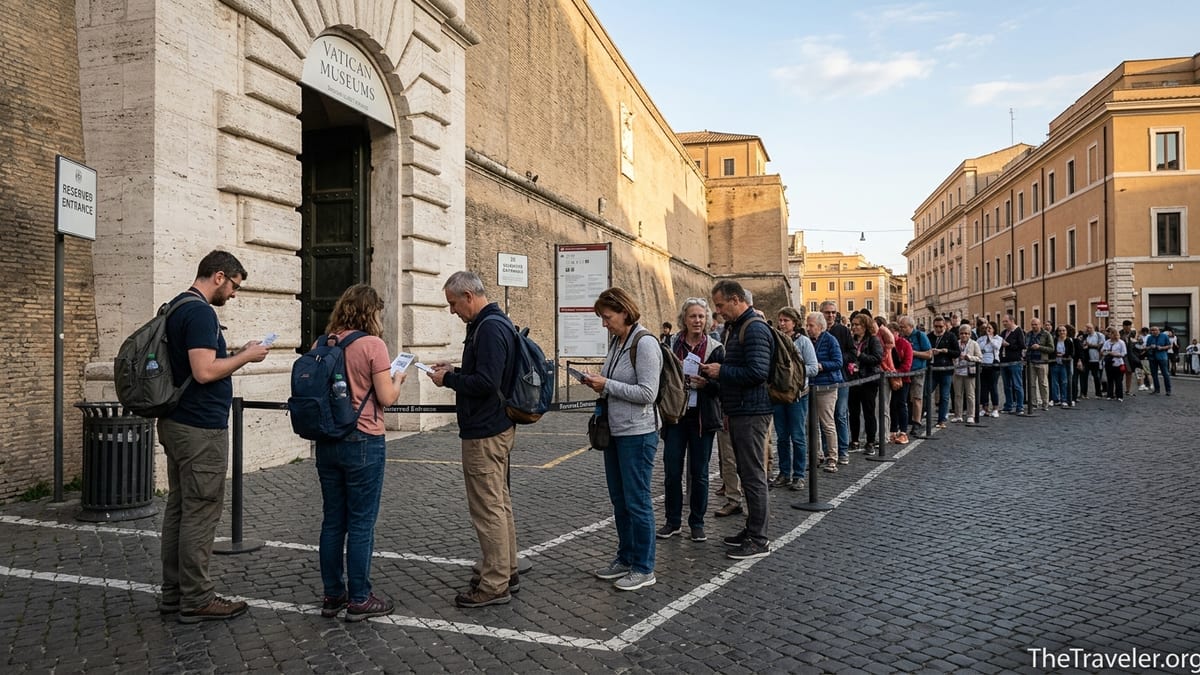
Start With the Right Vatican Museums Ticket
The single most important thing to book before visiting the Vatican Museums is your entry ticket. The Vatican sells timed-entry tickets through its official online ticket office, which is the safest place to start. As of 2026, a standard adult ticket typically costs around 20 to 25 euros plus a small online booking fee, with reduced prices for children and some concessions. Booking directly means your name is on the Vatican’s list at a specific time, and you go straight to the security and ticket-holder entrance instead of the long general ticket line.
Availability fluctuates, but in peak months like May, June, September and October, morning slots often disappear several weeks in advance. Travelers who check the official site a month out frequently find only a scattering of late-afternoon times left, or some days showing as sold out entirely. If you are planning a short stay in Rome and can only visit on one or two specific days, booking the moment you know your travel dates is wise.
There are several ticket types beyond the basic museum entry. The Vatican also sells combined options like Vatican Museums with breakfast in the courtyard, early-opening "before hours" visits, and special itineraries that include the Vatican Gardens. These have more limited capacity and can sell out even sooner. For example, small-group early-entry visits that let you into the Museums before regular opening hours are in high demand because they offer a less crowded Sistine Chapel; if that calmer experience matters to you, prioritize booking these first.
If you find that the official site is showing no availability for your dates, all is not lost. Recheck regularly, because cancellations do happen, and new slots are sometimes released in batches. In parallel, look at reputable third-party platforms and qualified tour operators. Their prices are usually higher, but they often hold allocations that are not visible on the Vatican’s own site, making them a practical fallback if your visit is soon and the calendar looks full.
Decide Early: Self-Guided, Audio Guide, or Fully Guided Tour
Once your timed entry is secured, the next decision that shapes your Vatican Museums experience is how you want to explore: on your own, with the official audio guide, or on a guided tour. Each option can be booked in advance, and choosing the right one for your travel style will make the difference between wandering aimlessly and feeling engaged with what you are seeing.
A self-guided visit with no extras works best if you are an experienced museum-goer who enjoys reading labels and moving at your own pace. You still need to choose a time slot in advance, but you do not have to commit to more. This is the most budget-friendly approach: you pay only the base ticket and can spend two or three hours selectively focusing on the galleries that interest you, such as the Raphael Rooms or the Gallery of Maps.
Booking the official Vatican Museums audio guide is a middle ground and is worth considering at busy times. You collect a device at the entrance and hand it back before leaving. The cost is usually under 10 euros per person. The commentary covers the main sections and the Sistine Chapel, and it is designed for first-time visitors, which helps you understand why certain works matter. Reserving the audio guide when you buy your ticket avoids standing in a second line inside.
Fully guided tours, either through the Vatican or trusted tour companies, offer more structure and often include priority group entrances. Typical three-hour tours of the Vatican Museums and Sistine Chapel with a licensed guide in English often range from about 60 to 100 euros per person, including admission. Some premium options go higher but limit groups to around 10 guests. These need to be booked well in advance in high season, particularly morning departures and small-group formats. If you know you appreciate context and dislike crowd navigation, confirming a guided tour at the same time as your ticket is one of the best investments you can make.
Timing Your Visit and Managing Crowds
Even the right ticket can feel underwhelming if you choose a time of day that clashes with major crowds. You cannot book away the popularity of the Vatican Museums, but you can stack the odds in your favor by thinking about timing while you reserve. Morning slots between opening and mid-morning on weekdays typically see intense demand from tour groups, while late morning blends those groups with independent visitors.
If you prefer a slightly calmer atmosphere, consider booking a mid-afternoon entry, arriving around 2:30 or 3 p.m. While you will never have the place to yourself, many organized tours are winding down by then, and families with young children often choose earlier visits. The trade-off is that you must keep an eye on closing times; the museums normally close in the early evening, with last entry in late afternoon, and you need at least three hours to move comfortably without rushing past everything.
Night openings, on selected evenings in certain months, can be a rewarding option to book ahead if the timing suits your itinerary. These special sessions typically require a specific ticket and often include concerts or themed events. Capacity is more tightly controlled, so they may feel less compressed than daytime visits. Check upcoming dates and book early if a Friday night stroll through the galleries appeals to you.
Also think about the calendar week. The Vatican Museums are closed on most Sundays except for specific free-entry Sundays that draw extremely large crowds. If a free Sunday coincides with your trip, be aware that you cannot reserve that free entry in advance, and lines can start forming early in the morning. For most travelers who value comfort over saving on the ticket price, it is better to book a paid timed-entry slot on a different day.
Pairing the Museums With St Peter’s Basilica and Dome
Many travelers hope to see both the Vatican Museums and St Peter’s Basilica on the same day. Planning this pairing is crucial, because not every element can be reserved in the same way. Entry to St Peter’s Basilica itself remains free, but there are now bookable options for guided visits to the basilica and combined packages with a dome climb, as well as third-party tours that link the basilica with the museums and the Sistine Chapel.
You should first decide whether you want to start with the museums or the basilica. Several tour companies sell combined Vatican packages that begin with an early Vatican Museums visit and then use a special corridor to enter St Peter’s Basilica directly from the Sistine Chapel. This door is reserved for guided groups and is never guaranteed, but when it is operating, it eliminates the need to queue on St Peter’s Square. If that is a priority, book a reputable combined tour that clearly states basilica access is included, and check any fine print regarding possible closure of the passage.
For the dome climb at St Peter’s, there are two main ways to plan ahead. First, there are official basilica products that combine a guided or audio-guided visit to the church with a timed dome visit purchased in advance. Second, you can buy a simple dome ticket at the desk inside on the day. The standard prices for the dome itself are modest, often around 8 euros if you take the stairs and slightly higher, around 10 euros, if you use the elevator to the first platform. However, same-day lines can be long in peak season, and climbing in the heat of midday is tiring. If you prefer structure, pre-book a combined basilica-and-dome experience for a morning slot on a different day than your Vatican Museums visit, so each major site gets the attention it deserves.
If you decide to see everything in one long day, book the earliest museum slot you can reasonably manage, plan two to three hours inside, and then head directly to the basilica by exiting and walking around the walls to St Peter’s Square. You cannot reserve the basic basilica entry, but having your museum time fixed in advance at least gives your day a clear anchor. Some travelers choose to flip this and attend a morning papal audience on a Wednesday, then visit the museums afterward; in that case, book a later museum slot to account for security checks and possible delays during the audience.
Passes, Packages, and When They Make Sense
In addition to standalone tickets, Rome has a range of city passes and Vatican-focused packages that bundle entry to the Vatican Museums with other sights and services. The most prominent example is the family of Vatican & Rome passes branded as Omnia cards. These products, offered in formats such as 72-hour or 24-hour versions, typically include a Vatican Museums and Sistine Chapel entry or tour, access to St Peter’s Basilica with an audio guide or hosted visit, and combined transport or entry benefits at sites like the Colosseum via the city’s Roma Pass program.
These passes are not universally the best value, but they can simplify planning if you know you will be visiting several included attractions in a short timeframe and prefer to organize everything before arrival. The key is to compare the price of the pass to what you would pay booking each element individually. For example, if a 72-hour card costs significantly more than the sum of a Vatican Museums ticket, a Colosseum ticket, and a transport pass for the same number of days, consider whether the convenience of a single purchase, fast-track entries, and included audio guides justifies the difference.
Many third-party sites also sell Vatican "skip the line" tickets that look very similar at first glance but differ in what is included. Some are simple timed-entry tickets with a representative who meets you nearby and escorts you to the correct entrance. Others offer a brief orientation or access to a self-guided app. Prices for these can be noticeably higher than the face value of the Vatican ticket because you are paying the reseller’s fee. When you are booking, always read the description carefully. Confirm whether the price includes admission itself or only a guided visit that still requires you to purchase a separate ticket, and make sure start times and languages match your needs.
If you are traveling in peak season with limited flexibility and find the official Vatican calendar closed for your dates, a more expensive third-party ticket or pass may be worth the premium as a backup. On the other hand, if your visit is months away or you are traveling in quieter winter periods, booking directly through the Vatican and keeping your schedule flexible will usually be more economical.
Practical Details to Lock In Before You Go
Beyond tickets and tours, a few unglamorous but important details are worth planning before you leave home. The first is identification. The Vatican Museums reserve the right to check ID against the name on your ticket, especially for reduced or free entries. Make sure the lead traveler’s name on the booking matches the passport they will carry, and if you are using discounts for children, students, or clergy, bring the relevant documents.
Next, consider how long you realistically want to spend inside and build your day around that. The Vatican Museums house miles of galleries. Even with a focused route, most visitors spend at least two and a half to three hours. If you book a two- or three-hour guided tour, decide in advance whether you want to stay on afterward to explore specific rooms in more depth and factor that into meal plans and transport. Making a lunch reservation nearby or identifying a couple of relaxed trattorias within walking distance of the exit can make the transition from intense sightseeing to a break much smoother.
Clothing and bags are another area where advance thinking helps. The Vatican enforces a dress code that applies both to the museums and to St Peter’s Basilica: shoulders should be covered, and shorts or skirts should reach roughly to the knee. You do not need to book clothing, of course, but packing a light scarf or shawl and planning outfits that meet these expectations will prevent last-minute purchases from souvenir stands outside. Likewise, large backpacks, tripods, and certain items are not allowed and must be checked in the cloakroom. If you plan to move on immediately to another part of Rome afterward, travel with a modest day bag rather than heavy luggage, so the cloakroom does not slow you down.
Finally, think through how you will get to and from the Vatican. You cannot book public buses in advance, but you can decide whether to arrive by metro, taxi, or on foot and roughly how long the journey will take from your hotel. Many morning visitors underestimate rush-hour crowds on Rome’s transport network. Leaving at least 30 to 40 minutes between arriving in the neighbourhood and your timed entry slot gives you a buffer for security lines and finding the correct entrance gate without stress.
The Takeaway
Booking a rewarding visit to the Vatican Museums is less about chasing a special label and more about locking in the fundamentals: a timed-entry ticket from a reliable source, the type of visit that best suits your interests, and realistic timing that respects both crowds and your own pace. When those pieces are in place, everything else, from admiring Michelangelo’s ceiling in the Sistine Chapel to lingering over lesser-known galleries, feels more spacious and enjoyable.
Decide what matters most to you, whether it is an early, quieter entry, an in-depth guided tour, or pairing the museums with a dome climb over St Peter’s Square. Then reserve those keystone experiences before you even board your flight. With the main reservations confirmed and a few practical details thought through, your time inside the Vatican’s walls can be spent absorbing centuries of art and history rather than worrying about queues and logistics.
FAQ
Q1. How far in advance should I book Vatican Museums tickets?
For visits between roughly April and October, it is prudent to book as soon as you know your travel dates, ideally four to six weeks in advance for popular morning slots. In quieter winter months, you may find availability closer to your visit, but you should still reserve at least a week ahead to secure your preferred time.
Q2. Is there an official Vatican Museums ticket website?
Yes. The Vatican operates its own online ticket office dedicated to the museums and official guided tours. When booking, check that you are on a site clearly identified as an official Vatican domain and be wary of intermediaries that imitate the look of the official portal but add substantial markups.
Q3. Do “skip the line” tickets really let me bypass all queues?
So-called skip-the-line tickets usually allow you to bypass the line of people waiting to buy tickets on the day, which can be very long. They do not exempt you from airport-style security checks or from the controlled entry of timed ticket holders, so you should still arrive at least 15 to 30 minutes before your booked slot.
Q4. Can I visit the Vatican Museums and St Peter’s Basilica on the same ticket?
The standard Vatican Museums ticket includes the museums and Sistine Chapel only, not St Peter’s Basilica. Some guided tours sold by reputable companies combine a museum visit with direct access to the basilica, but the church itself remains free to enter and is treated as a separate part of your day.
Q5. Do I need to book St Peter’s Basilica in advance?
You do not need a ticket to enter the basic interior of St Peter’s Basilica, and it cannot usually be reserved in the same way as the museums. However, there are bookable options for guided or audio-guided visits, combined basilica-and-dome experiences, and special tours such as the excavations beneath the basilica, all of which should be arranged well in advance.
Q6. Are guided tours of the Vatican Museums worth booking?
If you enjoy context, storytelling, and help navigating crowded spaces, a guided tour is often worth the extra cost. Small-group tours led by licensed guides can transform what might otherwise feel like a blur of masterpieces into a coherent journey, and many include more efficient group entrances that save time compared with a basic ticket.
Q7. What should I book if I am short on time in Rome?
If your time is limited, prioritize a timed-entry ticket to the Vatican Museums and, if budget allows, a focused three-hour guided tour that covers the highlights and the Sistine Chapel. Pair this with either an early morning or late afternoon visit to St Peter’s Basilica on the same or a different day, depending on your schedule and energy.
Q8. Are Vatican and Rome city passes a good deal?
They can be, especially if you plan to visit several included attractions in two or three days and value the simplicity of a single purchase. Before buying, compare the total cost of the pass with adding up individual tickets and transport for the same period. Passes are most beneficial for visitors who will make full use of the bundled entries and services.
Q9. What happens if the official Vatican Museums site is sold out?
If the official calendar is fully booked for your dates, keep checking for cancellations and consider widening your time-of-day preferences. At the same time, look at well-reviewed tour operators and resellers, which sometimes have allocations not visible on the Vatican’s own system. Expect to pay more than face value, but it can be a practical way to secure entry when demand is high.
Q10. Do I need to book anything for children visiting the Vatican Museums?
Children also require tickets, even when they qualify for reduced or free entry. When booking online, select the appropriate age category for each child and bring identification that confirms their age. Some tours and passes offer family-focused options; if you are traveling with young children, look for shorter routes and early time slots that fit their energy levels.