


Rome offers more world-class art than most travelers can hope to see in one visit, and two names rise quickly to the top of any culture lover’s list: the Vatican Museums and the Capitoline Museums. Both are extraordinary, but they deliver very different experiences in terms of crowds, atmosphere, content, and even how they fit into a busy Rome itinerary. Choosing between them is less about which is "better" and more about which one makes sense for your time, budget, and interests.
Get the latest updates straight to your inbox!
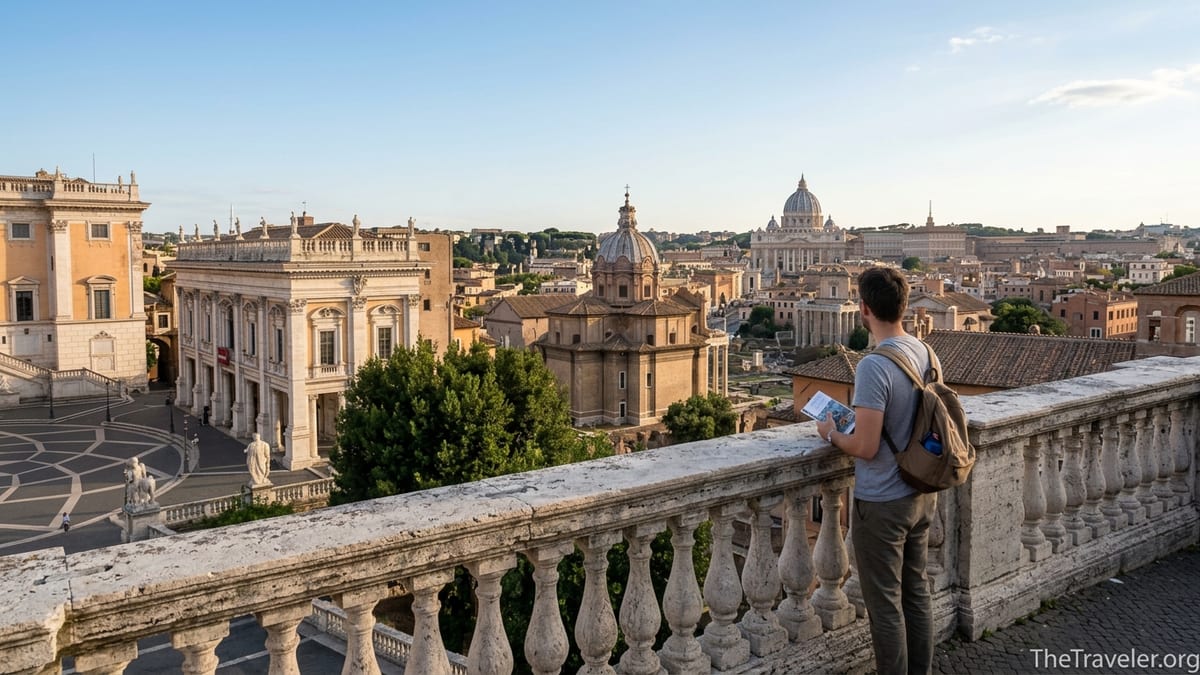
The Big Picture: Two Icons With Very Different Personalities
The Vatican Museums are one of the most visited museum complexes on the planet, with well over six million visitors a year and a route that culminates in the Sistine Chapel. The experience is intense, crowded, and often emotional, especially for travelers who have dreamed for years of standing under Michelangelo’s ceiling. For many first-time visitors to Rome, the Vatican Museums feel like a once-in-a-lifetime “must.”
By contrast, the Capitoline Museums sit quietly atop the Capitoline Hill, overlooking the Roman Forum. They are considered the world’s first public museum complex and remain Rome’s municipal museums, rooted in the story of the city itself. Here the atmosphere is calmer, the flow more relaxed, and the focus squarely on ancient Rome and classical sculpture, plus a compact but excellent painting gallery.
Where the Vatican Museums feel like a high-stakes blockbuster, complete with long security lines and timed tickets, the Capitoline Museums feel more like an elegant deep cut: still major, but without the same pressure or crowds. If you only have the stamina for one museum-heavy day in Rome, it helps to think about whether you want a global, encyclopedic Catholic collection with a Sistine finale, or an encounter with the art and archaeology that define Rome’s own identity.
In practical terms, many travelers end up doing both only on longer stays of four or more full days in the city. On shorter trips, choosing one often comes down to logistics, cost, and what you personally want to remember when you think back on Rome.
Location, Logistics, and Crowd Levels
The Vatican Museums are located in Vatican City, on the western bank of the Tiber. To reach them you usually walk from the Ottaviano or Cipro metro stops or arrive by taxi along Viale Vaticano, where the museum entrance sits behind the Vatican walls. The area is busy from early morning with tour buses and group check-ins, and airport-style security screening can add an unpredictable buffer to your entry time.
For 2026, the Vatican Museums are generally open Monday to Saturday from around 8:00 to 18:00 or 20:00 depending on the season, with last entry typically two hours before closing. Special evening openings on selected Fridays are advertised separately and can be a way to see the collections with slightly fewer day-tripper crowds. The Museums close on many Catholic feast days, which is crucial if your dates in Rome are limited, so checking the official calendar before you commit is essential.
The Capitoline Museums occupy three palaces around Michelangelo’s Piazza del Campidoglio, a short uphill walk from Piazza Venezia and within easy reach of the Colosseum and Roman Forum. This makes them particularly convenient if you are spending a day focused on ancient Rome. Typical opening hours run from morning until early evening every day except certain holidays, and in practice you can usually just walk up and buy a ticket at the door without advance booking, even in high season.
In terms of crowd levels, the difference is striking. The Vatican Museums often see tightly packed corridors, especially along the main “highlights” route to the Sistine Chapel, with group tours moving in waves. In peak months like May, June, and October, shoulder-to-shoulder conditions are common in places such as the Raphael Rooms. By comparison, even on a busy afternoon at the Capitoline Museums you will usually find generous breathing space, opportunities to linger in front of masterpieces, and quiet corners where you might share a room with only a handful of other visitors.
Tickets, Costs, and How to Get Good Value
Ticket prices and add-ons can influence which museum makes more sense, especially for couples, families, or budget-conscious travelers. As of early 2026, a standard adult ticket for the Vatican Museums booked directly online typically costs in the mid-20 euro range, with a small surcharge for online reservations. Third-party agencies often bundle skip-the-line access with guided tours, where group prices commonly fall in the 50 to 80 euro range per person depending on group size and whether St Peter’s Basilica is included.
These guided options can make financial sense if you place high value on context and structure, or if queuing with no guarantee of entry at your preferred time feels stressful. For example, a first-time visitor on a short March city break might gladly pay more for a 3-hour early-morning small-group tour that enters before general opening, maximising time and energy. Families with teenagers often report that a good guide helps keep attention from drifting after several hours in dense galleries.
At the Capitoline Museums, a standard adult ticket is usually around 15 euros according to recent Roma Capitale tariff tables, with reduced rates for EU youth and occasional price adjustments during major temporary exhibitions. Multi-museum passes such as the Roma Pass sometimes include the Capitoline Museums as one of the free entries, making it excellent value if you are already planning to use public transport and see at least one other paid site like the Colosseum or Castel Sant’Angelo.
From a cost-per-hour perspective, many travelers feel they get more relaxed value out of the Capitoline ticket, simply because they are not rushing, sweating through crowds, or dealing with the same level of logistical overhead. On the other hand, the “value” of seeing the Sistine Chapel is hard to quantify: even if the experience is compressed into a crowded fifteen minutes of neck-craning, for some visitors that moment alone justifies the entire cost of the Vatican day.
What You Actually See: Art Highlights in Real Terms
At the Vatican Museums, the journey is as important as the destination. After the initial courtyard areas, most visitors follow a one-way path through a dense sequence of galleries: the Gallery of Maps with its vast painted topographical views of Italy, the Tapestry Gallery, classical sculpture courtyards, and then, crucially, the Raphael Rooms, where Raphael’s School of Athens draws visitors into a swirl of philosophers and Renaissance color. Even travelers with only moderate interest in art history often recognize these spaces from films, textbooks, or social media.
The final stretch leads into the Sistine Chapel. Here photography is banned and silence is requested, though a soft, continuous murmur is more realistic. Standing beneath Michelangelo’s ceiling and The Last Judgment, you will likely share the space with several hundred people at any given moment in high season. Guards circulate, asking visitors to move further inside. The effect can feel overwhelming, but many travelers describe it as one of the most powerful cultural experiences of their lives, especially those with a personal connection to Catholicism or Renaissance art.
The Capitoline Museums, by contrast, tell the story of Rome and its empire. In the Palazzo dei Conservatori you encounter the bronze Capitoline Wolf, associated with the legend of Romulus and Remus, and the famous equestrian statue of Marcus Aurelius, now housed indoors to protect it from the elements. The Palazzo Nuovo brings you close to iconic sculptures like the Dying Gaul and the marble busts that line the Hall of the Emperors, each face hinting at fragments of ancient biography and propaganda.
There is also the Capitoline Picture Gallery, with paintings by Caravaggio, Titian, and Rubens, among others. From certain windows and from the Tabularium section of the complex, you gain one of Rome’s most atmospheric views over the Roman Forum, with the ruined temples and basilicas spread out below. Travelers interested in connecting archaeological sites like the Forum and Colosseum with the objects originally housed there often find that the Capitoline visit pulls the ancient city into sharper focus.
Time, Energy, and the Overall Experience
Visiting the Vatican Museums is typically a half-day commitment at minimum. Between getting there, passing security, navigating to the start of the museum route, and walking the often several-kilometer path through the galleries, many visitors spend three to four hours inside, not counting a stop at the café or a side visit to St Peter’s Basilica. In warmer months, simply being among so many people in enclosed spaces can be physically draining.
A practical example: a couple traveling in late June might book an 8:30 timed entry, arrive at the queue by 8:00, spend three hours moving through the main highlights, and exit around midday. After a quick lunch nearby, they might visit St Peter’s and then find they have little energy left for anything more than an evening stroll and dinner. As such, pairing the Vatican with another major museum on the same day rarely makes sense unless you have exceptional stamina.
The Capitoline Museums are more forgiving. Many travelers feel satisfied with two to three hours inside, and you can adapt your visit easily. If you are short on time, you might focus on the main ancient sculpture rooms and the Forum viewpoint, then move on to explore the nearby Forum or Trastevere. If you have a full afternoon, you can wander more slowly, pausing to read room panels or simply enjoy the architectural setting of the piazza and palaces.
For travelers whose mobility is limited or who are visiting Rome with young children, this difference in intensity can be decisive. Strollers and wheelchairs are accommodated at both sites, but the Vatican route often involves ramps, elevators, and crowds that require extra patience. The Capitoline layout still involves staircases and some uneven floors, but staff are generally able to guide visitors along accessible paths without the same mass pressure from tour groups.
Which Museum Suits Which Traveler?
If this is your first visit to Rome and you have at least three full days in the city, the Vatican Museums are hard to skip, especially if Renaissance art, Michelangelo, or Catholic history mean something to you personally. Someone who has grown up seeing images of the Sistine ceiling in schoolbooks may feel deep satisfaction finally stepping into that space, even if the conditions are not ideal. In that sense, the Vatican is often about fulfilling a long-held wish rather than about a leisurely museum stroll.
For returning visitors, or for those whose main interest lies in ancient Rome rather than Renaissance painting, the Capitoline Museums may be the more rewarding choice. Imagine a traveler who has already seen the Colosseum and Forum and now wants to understand the political symbolism of imperial statues or see portraits of emperors they have read about. Spending a late-morning at the Capitoline, then walking down the sloping path toward the Forum with that historical context fresh in mind, can be far more meaningful than repeating the Vatican experience.
Travelers who are sensitive to crowds, introverted, or prone to sensory overload often report enjoying the Capitoline far more. The ability to stand in front of the Dying Gaul or the Capitoline Wolf for ten or fifteen minutes without being jostled, to hear your own footsteps in some galleries, and to take breaks by the windows with views across the city, creates a qualitatively different kind of cultural experience than the dense, procession-like movement through the Vatican.
Budget also plays a role. A solo backpacker visiting in January on a tight budget might decide that a 15 euro Capitoline ticket, combined with free church visits around the historic center, offers a very strong cultural day without the higher cost and pre-planning of the Vatican. A family of four, on the other hand, may designate the Vatican Museums as their one big “art day,” choosing to save on other activities so that they can book a guided tour that keeps children engaged.
Planning Strategies: When Doing Both Makes Sense
If you have four or five days in Rome, seeing both museums can absolutely make sense, as long as you space them out and balance them with outdoor or lower-key activities. One common strategy is to dedicate one morning to the Vatican Museums and St Peter’s, then follow that with a light afternoon in Trastevere or on the Gianicolo hill rather than piling on more culture. A different day can then focus on the Colosseum and Forum in the morning and the Capitoline Museums in the later afternoon, taking advantage of their proximity.
Seasonality matters too. In the high summer months, you might book the earliest possible Vatican entry time to beat the heat and some of the crowds, then choose a cooler day or an overcast afternoon for the Capitoline, where much of the visit is indoors. In spring and autumn, when temperatures are milder, it can be pleasant to reverse this pattern, spending a sunny morning wandering the ancient sites and reserving the later hours for the Capitoline’s climate-controlled galleries.
For travelers particularly passionate about art and history, doing both with guided context can be transformative. Some independent guides offer thematic days that link the collections. For example, you might spend one day tracing the image of emperors from ancient sculptures at the Capitoline to Renaissance interpretations in the Vatican’s painting galleries. Another popular approach is to visit the Vatican Museums independently with an audio guide, then hire a private guide for a focused two-hour tour at the Capitoline to deepen your understanding of specific works.
If your time is tight, consider how your accommodation location and transport options affect each choice. A hotel near the Vatican or across the river in Prati makes an early Vatican start more comfortable, while staying near Piazza Navona, Campo de’ Fiori, or the Monti district means the Capitoline is a short, pleasant walk away. Factoring in these practicalities can prevent you from spending half your museum day in transit or queues.
The Takeaway
Choosing between the Vatican Museums and the Capitoline Museums is ultimately about aligning your expectations, energy, and interests with the right experience. The Vatican Museums deliver a monumental, sometimes overwhelming encounter with global art and Catholic heritage, crowned by the Sistine Chapel. It is an experience many travelers remember for the rest of their lives, even if they also remember the crowds, heat, and logistical effort.
The Capitoline Museums offer a quieter but deeply resonant journey through the artistic and political history of Rome itself. They reward curiosity about the ancient city, invite lingering in front of masterpieces, and pair beautifully with visits to the Forum and Colosseum. For some travelers, especially those returning to Rome or seeking a calmer cultural day, they end up being the more satisfying choice.
If you have the time, seeing both on separate days gives you two complementary lenses on Rome: one from the vantage point of the Catholic Church and Renaissance papacy, the other from the civic and imperial heart of the city. If you must choose, ask yourself what image you most want to carry home: the painted vault of the Sistine Chapel, or the bronze wolf of Rome and marble emperors watching over the Forum. Your answer to that question will usually tell you which museum makes more sense for your trip.
FAQ
Q1. If I only have one full day in Rome, should I choose the Vatican Museums or the Capitoline Museums?
If this is your first visit and you value the Sistine Chapel experience, the Vatican Museums usually make more sense. If you prefer a calmer visit focused on ancient Rome with fewer crowds, the Capitoline Museums can be the better fit.
Q2. How long should I plan to spend inside each museum?
Most visitors spend about three to four hours in the Vatican Museums, especially if they include the Raphael Rooms and a brief pause in the courtyards. At the Capitoline Museums, two to three hours is often enough for a satisfying visit, though art lovers may stay longer.
Q3. Do I really need to book Vatican Museums tickets in advance?
For most of the year, especially from spring through autumn, advance booking is strongly recommended to secure a specific entry time and avoid long standby lines. For the Capitoline Museums, same-day walk-up tickets are usually fine unless a major temporary exhibition is attracting extra visitors.
Q4. Which museum is better for families with children?
The Vatican Museums are impressive but can feel exhausting for young children because of the crowds and long, one-way route. Many families find the Capitoline Museums more manageable, with shorter visit times, more space to move, and visually striking statues that appeal to kids’ imaginations.
Q5. Is there a dress code for the Vatican Museums and the Capitoline Museums?
At the Vatican Museums, modest dress is required, especially if you plan to visit the Sistine Chapel and St Peter’s Basilica afterward. Shoulders and knees should be covered. The Capitoline Museums do not enforce a religious dress code, so ordinary casual attire is acceptable.
Q6. Can I visit St Peter’s Basilica with a Vatican Museums ticket?
A standard Vatican Museums ticket does not automatically include a guided visit to St Peter’s Basilica, but the two are adjacent and many visitors see both on the same day. Some guided tours combine the Museums, Sistine Chapel, and Basilica in a single itinerary, which can be convenient if you want a structured experience.
Q7. Are the museums accessible for visitors with limited mobility?
Both complexes have elevators and accessible routes, but the Vatican Museums can be more challenging due to crowds and the length of the itinerary. The Capitoline Museums also involve stairs and some uneven floors, yet staff can usually suggest lifts and alternative paths that make a shorter, more comfortable route possible.
Q8. Which museum offers better views of Rome?
The Capitoline Museums have a notable advantage here. From the Tabularium and certain windows, you get atmospheric views over the Roman Forum and toward the Colosseum. The Vatican Museums have internal courtyards and glimpses of the dome of St Peter’s, but not the same sweeping vistas of the ancient city.
Q9. Can I combine either museum with other major sights in a single day?
The Vatican Museums pair naturally with St Peter’s Basilica, and that combination is usually enough for one full day. The Capitoline Museums combine very well with the Colosseum, Roman Forum, and Palatine Hill because of their proximity, creating a full but coherent “ancient Rome” day.
Q10. If I am returning to Rome, is it worth revisiting the Vatican Museums or should I prioritize the Capitoline?
Returning visitors who have already experienced the Vatican often find greater value in discovering the Capitoline Museums, especially if they are interested in deepening their understanding of Roman history. That said, art enthusiasts sometimes revisit the Vatican to focus on specific sections, such as the Raphael Rooms or lesser-known galleries they rushed through the first time.