


The Ischia to Naples ferry crossing seems straightforward on paper: about an hour across the Gulf of Naples and you are back on the mainland. In reality, this short journey involves moving parts that can go wrong if you leave everything to chance. Tickets sell out on busy summer weekends, queues at Naples port terminals grow long under the sun, and a missed connection can mean a costly last-minute hotel or a stressful dash to the airport. With a few strategic bookings made before you sail, you can turn the crossing into a smooth, almost effortless end to your island stay.
Get the latest updates straight to your inbox!
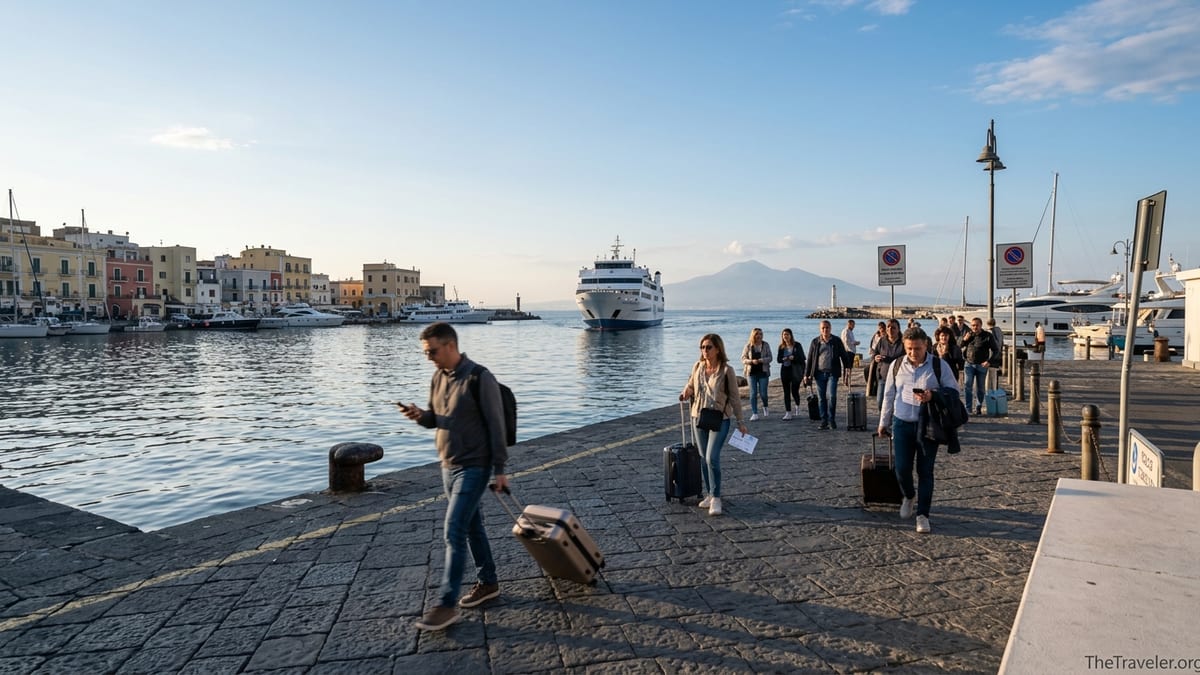
Understand the Route: Ports, Operators and Crossing Times
Before you start booking anything, it helps to understand exactly what “Ischia to Naples” means. Most travelers use Ischia Porto, the main port on the island, but ferries and hydrofoils also depart from Casamicciola. On the mainland side you have two main terminals in central Naples: Calata Porta di Massa, used primarily by slower car ferries, and Molo Beverello, used mainly by passenger-only hydrofoils. Several companies operate on these routes, including Caremar, Medmar, Alilauro and SNAV, with a mix of traditional ferries and high-speed hydrofoils that vary in comfort, luggage rules and price.
As a rule of thumb, hydrofoils between Ischia Porto and Naples Molo Beverello take about 50 to 60 minutes, while conventional ferries to Calata Porta di Massa are closer to 1 hour 20 minutes or 1 hour 30 minutes, depending on the vessel and any intermediate stops. For example, on a typical summer timetable, an Alilauro hydrofoil leaving mid-morning from Ischia Porto is scheduled to arrive at Molo Beverello in around 55 minutes, while a Caremar or Medmar car ferry on a similar mid-morning departure usually takes roughly 1 hour 30 minutes to reach Calata Porta di Massa. These timings matter when you are coordinating train departures from Napoli Centrale or a flight from Naples Capodichino.
Prices fluctuate by season and operator, but in high season you can expect a one-way adult ticket on a hydrofoil to cost noticeably more than on a regular ferry. Travelers often report that hydrofoil tickets in peak summer sit somewhere around the price of a short intercity train ride within Italy, with standard ferries a little cheaper. Because prices and fuel surcharges can change, the key decision is not the exact fare, but whether you prioritize speed and a shorter crossing (hydrofoil to Molo Beverello) or a slightly cheaper ticket and more forgiving luggage space (ferry to Calata Porta di Massa).
For most visitors, it is also important to know that the sea in the Gulf of Naples is generally calm in summer, but can become choppy in shoulder seasons. Those prone to seasickness sometimes prefer the larger, more stable ferries even if they take longer. Others, especially those trying to reach an afternoon high-speed train to Rome, opt for the earliest available hydrofoil and are willing to pay a premium for the time saved.
Book Your Ferry or Hydrofoil Ticket in Advance
The single most important thing to book before your Ischia to Naples crossing is your actual ticket. In low winter season, local commuters sometimes buy their tickets on the same day at the port kiosks. In contrast, on a Saturday in late July or around mid-August holidays, multiple departures on the Ischia to Naples route can sell out entirely, particularly the morning and late-afternoon hydrofoils used by travelers connecting with flights and long-distance trains. Securing your ticket online several days in advance is a simple way to avoid queuing for an hour at the pier only to discover the next two departures are fully booked.
When reserving, choose carefully between hydrofoil and ferry, and pay attention to the specific ports. For example, if you are staying in central Naples near the historic center or need quick access to the metro at Municipio, arriving at Molo Beverello by hydrofoil usually makes for an easier walk. If you are traveling with a rental car or large suitcases, a Caremar or Medmar ferry into Calata Porta di Massa is more practical, as these services are set up for vehicles and bulkier luggage. Booking platforms often list both options side by side with departure and arrival ports clearly indicated, but it is easy to overlook the detail when you are in a hurry.
Families and groups should pay particular attention to seat availability. On summer weekends, the difference between an 08:00 and a 10:00 sailing can be the difference between a quiet crossing and a crowded cabin with luggage piled high in the aisle. Booking the exact departure that fits your train or flight schedule also reduces the temptation to board an earlier boat on a flexible ticket and find yourself rushing on board without time to sit or stow bags properly. Whenever possible, choose a departure that gives you a generous buffer in Naples: at least two hours between scheduled arrival at the port and any long-distance connection.
Travelers who plan on using the same operator for both legs, such as a Naples to Ischia outbound and an Ischia to Naples return, sometimes find modest savings by booking a round-trip ticket in one transaction. While the discount is not always dramatic, securing both journeys ahead of time offers peace of mind, especially in shoulder seasons when weather disruptions may lead operators to shift passengers between departures. With a proper reservation, you are at least protected against being the last in line for any seat reassignments.
Reserve Your Land Transfers on Both Sides
Another key element to book before your crossing is the transport to and from the ports. On Ischia, taxis cluster around Ischia Porto and Casamicciola, but demand spikes around popular departure times. If you are staying in Sant’Angelo, Forio or Lacco Ameno and need to reach an early morning ferry, pre-booking a taxi through your hotel is far safer than assuming one will appear on an empty street at 6:00 in the morning. Hotels on Ischia are used to coordinating such transfers and can often advise you on the right pickup time based on current traffic conditions and any roadworks on the coastal roads.
In Naples, the logistics can be more complex, especially if you are connecting onward. From Molo Beverello and Calata Porta di Massa it is a short taxi ride to Napoli Centrale station or to the airport, but traffic around the port gets heavy during rush hour and cruise ship days. Many visitors now pre-book a private transfer that meets them at the ferry terminal exit with a name sign and takes them directly to the airport or their hotel in the historic center. Although more expensive than a metered taxi, this option avoids queuing at the taxi stand and the occasional confusion over luggage surcharges or fixed fares.
Budget-conscious travelers can look at public transport options. A shuttle bus service known locally as Alibus connects the airport, Napoli Centrale (Piazza Garibaldi) and the port area, with stops within walking distance of both Molo Beverello and Porta di Massa. On paper the route is simple, but at busy times it can be crowded and not ideal for travelers with multiple large suitcases or small children. If you plan to rely on this bus on the day of your crossing, it is wise to check updated timetables before you travel and allow extra time. In central Naples, the metro Line 1 runs from Piazza Garibaldi to Municipio station, a short walk from Molo Beverello; knowing this and planning your route in advance can save you a hot, confusing search for the right tram or bus.
Concrete timing examples help when planning. If your hydrofoil from Ischia Porto is scheduled to arrive at Molo Beverello at 11:30 and you have a high-speed train from Napoli Centrale at 13:00, a pre-booked taxi or transfer gives you a realistic buffer, even with moderate traffic. If instead you count on walking to a bus stop, waiting for a crowded bus and then navigating the station, that same 90-minute window can start to feel tight. Booking the ground connection in advance allows you to select a safer train time or decide to take an earlier ferry.
Coordinate Check-out, Luggage and Port Services
Hotel check-out times on Ischia often fall around 10:00 or 11:00, which can clash with mid-morning or early afternoon ferry departures. Before the day of your crossing, confirm with your hotel whether they can store your luggage after check-out and until your transfer to the port. Many properties in Ischia Porto, Forio and Sant’Angelo offer complimentary luggage storage, but smaller guesthouses may have limited space, which can influence whether you book a midday or evening sailing. If you know storage is possible, you can comfortably book a late-afternoon hydrofoil and still enjoy a last swim or a relaxed lunch without hauling suitcases along the seafront.
Some hotels on Ischia, particularly higher-end properties in Ischia Porto and Lacco Ameno, work with porter services that can collect bags directly from the hotel and deliver them to the port for a set fee. This can be worthwhile if your group has several large cases or if older relatives would struggle with the gradients around the harbor. Asking your hotel about such services at the time you book your room is sensible; if they are available and you reserve them in advance, you can choose an earlier sailing without worrying about who will manage the luggage.
At Ischia Porto itself, facilities are functional rather than luxurious. There are ticket offices for the main ferry companies, simple waiting areas and a scattering of bars and cafes where you can buy water, coffee and snacks. In high season queues for ticket counters and boarding pass checks can build quickly before each departure. Having your ticket already booked and either printed or saved in a clearly accessible format on your phone means you can bypass at least one line. Likewise, if you are traveling with children, booking a departure that leaves enough time for a bathroom break or a quick snack ashore reduces the stress of being stuck in a packed boarding corridor.
On arrival in Naples, consider what you will do with your luggage if you have several hours before an onward train or flight. Napoli Centrale has left-luggage services, and some private luggage storage facilities operate in the streets around the station and near the historic center. While these are typically walk-in services, at very busy times or around major holidays it can be worth checking if reservations are possible, particularly if you are traveling as a family with multiple bags and want to spend a few hours sightseeing in the Centro Storico or along Via Toledo before moving on.
If You Are Traveling With a Car, Plan Well Ahead
Bringing a car on the Ischia to Naples route changes the picture completely, and advance planning becomes essential. Not all sailings accept vehicles, and only certain companies and routes are set up for car transport. Traditional ferries from Ischia to Calata Porta di Massa and from Casamicciola to Naples or Pozzuoli are typically the services used by drivers. Schedules and rules can shift by season, and there are often restrictions on non-resident vehicles at certain times of the year, especially in peak summer when local authorities try to limit congestion on the island’s narrow roads.
If you have rented a car on the mainland and brought it over to Ischia, you must usually book your return car ferry back to Naples or Pozzuoli in advance, ideally at the same time as your outward leg. Vehicle spaces are limited and can sell out earlier than foot passenger seats, particularly on evening and weekend sailings when locals return to the mainland. A typical scenario might involve an early evening Medmar or Caremar ferry from Ischia Porto to Calata Porta di Massa, timed to allow residents to drive home after a day’s work. For a visitor with a rental car, turning up without a reservation and hoping for space on such a departure is a significant gamble.
Do not forget to factor in the time needed to return a rental car. If you are dropping the vehicle at a depot near the port, you may want to return it several hours before sailing and then travel as a foot passenger. Large international rental brands often maintain offices in Naples city or near the station, not at the port itself, so you may need to drive into the city, drop the car, take a taxi back to the port and then board your ferry. In this case, your main “booking” is not just the ferry ticket but also a rental return slot that leaves a comfortable margin.
Travelers leaving Ischia with their own car should also check whether any vehicle documentation or special permits are required on particular dates. Local regulations can, for example, limit non-resident car access during local holidays or events. Your accommodation or the local tourist information office on Ischia can usually provide up-to-date advice. With that information in hand, you can choose a ferry departure outside restricted periods or opt to leave the car on the mainland and cross as a foot passenger instead.
Match Your Sailing to Flights and Trains
One of the main reasons trips unravel on the Ischia to Naples route is tight connections with flights or long-distance trains. While the crossing itself might be scheduled for just one hour, delays are not uncommon, particularly on busy summer afternoons or in rougher seas during the shoulder seasons. To avoid unnecessary stress, it is wise to book your onward transport only after you have chosen a specific ferry or hydrofoil, and to leave a generous margin between the scheduled docking time and any fixed departure.
A practical strategy for travelers flying out of Naples is to work backwards. Suppose your flight from Naples Capodichino departs at 17:00. You might decide you want to arrive at the airport by 14:30 or 15:00. From Molo Beverello it is often around 20 to 30 minutes by taxi to the airport in moderate traffic, but this can stretch toward 40 minutes or more at rush hour. In that case, you would probably choose a late morning or early afternoon hydrofoil from Ischia Porto that arrives in Naples no later than around 13:00, giving you time to collect luggage, meet your transfer and absorb minor delays. Booking a 14:30 ferry and hoping everything runs perfectly would be unrealistic.
Train travelers should think similarly. High-speed trains from Napoli Centrale to Rome or Florence are frequent, yet they can sell out at the cheapest fare levels and are not always flexible. If you plan to catch a mid-afternoon service, say around 15:30, a morning ferry or hydrofoil that reaches Naples before lunchtime gives you sensible breathing room. Once you have decided on a safe window, book the ferry first, then the train, rather than locking in a non-refundable train ticket based on an optimistic guess of which boat you will catch off Ischia.
It is also worth considering time of day. Early morning ferries and hydrofoils are often favored by commuters and workers heading to Naples. These sailings can be busy but are more likely to run to schedule. Afternoon crossings may face more delays, particularly in peak summer when port traffic is heavy and temperatures slow down operations. If you have complete flexibility and want the smoothest experience, booking a mid-morning departure with no tight connection on the mainland can make the entire journey feel more like a relaxed continuation of your holiday than a logistical hurdle.
Think Ahead About Weather, Seasickness and Comfort
Though the Gulf of Naples usually offers calm waters in summer, sea conditions can change quickly in spring and autumn, and even in high season occasional windy days lead to choppier crossings. If you know you are prone to seasickness, consider booking a place on a larger, slower ferry rather than the fastest hydrofoil, even if it takes an extra half hour. Many travelers report that sitting on deck in the fresh air, when possible, and keeping eyes on the horizon helps significantly. While you cannot reserve a specific seat on standard services, choosing a less popular departure time when booking can result in a quieter boat where finding a stable, comfortable spot is easier.
Booking small comfort items ahead of time can also help. For example, if your itinerary includes a very early ferry, order breakfast boxes through your hotel the night before so you can eat something light before boarding, rather than rushing to buy pastries at the port kiosk with everyone else. Families with young children may want to pre-pack and reserve a small stash of motion sickness remedies or wristbands from a pharmacy in Ischia Porto or Forio, particularly if the forecast mentions strong winds on the day of travel.
Weather can also affect docking times and the choice of port on the island. In rare circumstances, particularly rough conditions in winter can lead to suspensions or diversions of particular services. While this is less likely in late spring or summer, it is still wise, especially outside July and August, to keep an eye on forecasts a day or two in advance and check the latest notices from your ferry operator. Having your booking reference ready means the company can contact you more easily by email or text message if a departure time changes.
Finally, consider comfort in the port areas themselves. Both Ischia Porto and the Naples terminals can be hot and exposed in the middle of the day, with queues forming on outdoor walkways. Booking a departure that avoids the harshest midday sun, or at least bringing a hat and water knowing you may stand outside for parts of the boarding process, can make the experience far more pleasant. Elderly travelers or those with mobility issues may want to ask their operator or hotel in advance about priority boarding or assistance at the ramps, so they are not forced to navigate steep gangways in a rush.
The Takeaway
Taking the ferry from Ischia to Naples is one of the classic short sea journeys of southern Italy, offering sweeping views of the gulf and Vesuvius as you leave the island behind. Yet the same crossing that local commuters treat as routine can be surprisingly stressful for visitors who do not understand the interplay of timetables, ports, transfers and seasonal demand. By booking the key components ahead of time, you can transform the experience from a logistical worry into a smooth, almost ceremonial farewell to the island.
The essentials to reserve are your ferry or hydrofoil ticket on a specific departure, your transport to and from the ports, and, if applicable, any car ferry space and rental car arrangements. Coordinating these with hotel check-out times, luggage storage options and onward flights or trains gives you a flexible cushion against delays and crowds. Add in a basic awareness of weather, seasickness and comfort, and the Ischia to Naples crossing becomes a calm, well-planned chapter of your trip rather than a race against the clock.
In practice, this means taking a couple of hours, at least a few days before you sail, to map out the entire door-to-door journey, from your hotel room on Ischia to your final destination on the mainland. With realistic timing, informed choices between hydrofoil and ferry, and a handful of strategic advance bookings, you can step aboard in Ischia knowing that, for the remainder of the day, the logistics are already taken care of.
FAQ
Q1. Do I really need to book my Ischia to Naples ferry ticket in advance?
Booking in advance is strongly recommended in high season and on weekends, especially for morning and late-afternoon departures, which often sell out.
Q2. How much buffer time should I leave between my ferry arrival and a flight from Naples?
As a rule, plan to arrive at the airport at least two hours before departure and allow 60 to 90 minutes from your scheduled docking time to reaching the terminal.
Q3. Which port in Naples should I choose, Molo Beverello or Calata Porta di Massa?
Molo Beverello is best for fast hydrofoils and easy access to central Naples, while Calata Porta di Massa is used mainly by car ferries and vehicle traffic.
Q4. Can I take my rental car on the ferry from Ischia to Naples?
Yes, some ferries accept vehicles, but you must book a car space in advance and check any seasonal restrictions on non-resident cars.
Q5. What is the difference between a ferry and a hydrofoil on this route?
Hydrofoils are faster and usually more expensive, carry only foot passengers and have stricter luggage space, while ferries are slower but larger and accept vehicles.
Q6. How early should I arrive at the port before departure?
Arriving 30 to 45 minutes before boarding is usually sufficient, but in peak summer or with a car, arriving about an hour ahead is safer.
Q7. Are there luggage storage options if I arrive in Naples hours before my train?
Yes, Napoli Centrale offers left-luggage services, and private storage facilities operate near the station and in central Naples, though availability can vary.
Q8. What should I do if the sea is rough and I get seasick easily?
Consider booking a larger, slower ferry, sit where you can see the horizon, and bring motion sickness remedies or wristbands from a local pharmacy.
Q9. Is it possible to change my ferry ticket if my plans shift?
Policies vary by operator and fare type; some tickets are changeable for a fee, while the cheapest promotional fares can be strictly non-refundable.
Q10. Can I rely on public transport between the port and Napoli Centrale or the airport?
Public options like Alibus and metro Line 1 are useful, but they can be crowded, so allow extra time or pre-book a taxi or private transfer if timing is tight.