


Island Beach State Park in Seaside Park, New Jersey, offers a rare experience along the busy Jersey Shore: ten miles of mostly undeveloped barrier island with rolling dunes, maritime forest and wide Atlantic beaches. It is a place where you can swim in guarded surf, watch ospreys hunt over Barnegat Bay, paddle quiet marsh creeks and end the day with a sunset over the bay instead of neon lights. This guide walks you through how to explore its beaches, wildlife and outdoor adventures with practical, up to date details for planning your visit.
Get the latest updates straight to your inbox!
Getting Oriented: What Makes Island Beach State Park Special
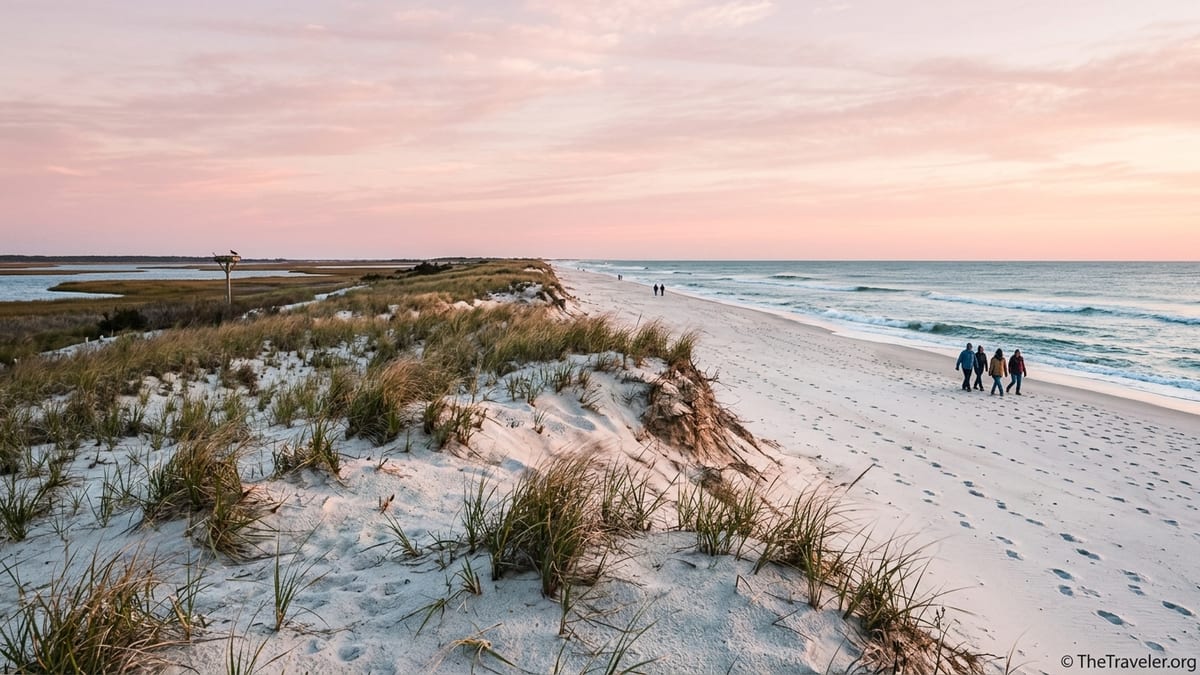
Island Beach State Park protects one of New Jersey’s last largely undeveloped barrier islands, a narrow 10 mile peninsula between the Atlantic Ocean and Barnegat Bay in Ocean County. Once you pass the entrance gate, the landscape quickly shifts from the boardwalk bustle of nearby Seaside Heights to low dune lines, sand roads and wind-stunted pines. For many visitors the first surprise is how natural it feels compared with other shore towns only a few miles away.
The park covers roughly 3,000 acres of dunes, shrub thicket, tidal marshes and pockets of maritime forest. It is well known among birders for having New Jersey’s largest osprey colony and as a stopover for shorebirds and migrating songbirds. Red fox frequently patrol the dunes, and in late summer it is common to see them trotting along the edge of the parking areas at dusk. This mix of habitats and wildlife is one reason many locals choose Island Beach over bigger name beaches like Point Pleasant or Wildwood when they want a quieter, more nature focused day.
From a practical perspective, Island Beach is a straightforward day trip from much of New Jersey and the New York metro area. The park entrance sits at the southern end of Route 35 in Seaside Park. From New York City, the drive is usually around 1 hour 45 minutes in light traffic; from Philadelphia, about 1 hour 30 minutes via the Garden State Parkway and Route 37. In summer weekends, heavy traffic between Toms River and Seaside can easily add 30 to 45 minutes, so arriving early is wise if you want a choice of parking and a calm setup on the sand.
The main park road runs north to south with numbered beach access lots on the ocean side and smaller pullouts or lots on the bay side. Most casual beachgoers aim for the central “Swimming Area 1,” which is where lifeguards, showers and concessions are concentrated. More independent travelers use the smaller lots farther south to access quieter stretches of sand, hiking trails through the dunes or launch points for kayaking and stand up paddleboarding on the bay.
Beaches and Swimming: Where to Spread Your Towel
During summer, the heart of activity is the designated swimming beach, generally referred to as Swimming Area 1. This area, roughly in the middle of the park road, offers a guarded stretch of ocean, restrooms, changing areas and seasonal food concessions. Lifeguards are typically on duty from mid June through Labor Day, with hours that track the busiest part of the day. If you are visiting with children or are not fully confident in ocean conditions, this is the best place to swim because rip currents are monitored and surf conditions posted.
Unlike many Jersey Shore towns, you do not buy individual beach badges here. Instead, you pay a per vehicle entrance fee at the front gate from Memorial Day weekend through Labor Day. Recent fee schedules list weekday rates for New Jersey residents at roughly the cost of a fast casual lunch per car, with weekend and holiday rates a bit higher, and nonresident vehicles about double that. In the off season, a reduced daily fee still applies to vehicles, but it is lower than peak summer pricing. Walk in and bike in visitors often enter for free, which can be an advantage if you are staying nearby and want to avoid mid day lines at the gate.
For a quieter beach experience, keep driving south past the main bathhouse complex. Each numbered access point has its own small lot and a sand path over the dunes to the ocean. These beaches are unguarded, and there are no restrooms on the sand itself, so this option is best for experienced ocean swimmers, surfers or those content with wading and walking the shoreline. On a busy July Saturday when boardwalk towns are shoulder to shoulder, it is still possible here to walk five minutes up or down from an access point and have a large section of beach largely to yourself.
Conditions can vary day to day. Late summer often brings warm water and small surf, ideal for families who plan to stay near the shoreline. Early season visitors in May or early June should expect cooler water and stronger rip currents on windy days. Check the park’s recorded information line or social media updates for any swimming advisories, and always follow lifeguard and posted instructions about where it is safe to enter the water. Alcohol and smoking are prohibited on the beach, and coolers may be subject to inspection at the entrance gate or by roving rangers.
Wildlife Watching: Ospreys, Foxes and Piping Plovers
Island Beach State Park is one of New Jersey’s best accessible places to see coastal wildlife without needing a boat or specialized tour. Along Barnegat Bay, wooden osprey nesting platforms dot the marshes. In spring and summer it is common to watch these large raptors hover over the water and plunge for fish, then carry their catch back to the nest. Birders with binoculars or a long lens can often count multiple active nests from the bay overlooks alone.
On the ocean side, the park is an important nesting area for piping plovers and other shorebirds. To protect these birds, certain sections of beach are seasonally roped off, and in some years parts of the northern natural area close to vehicle traffic when nesting is most active. Visitors walking the shoreline may notice tiny, sand colored birds darting in and out of the surf line hunting for invertebrates. Keeping a respectful distance and avoiding fenced areas is essential if you are traveling with pets or children who may be tempted to explore the roped zones.
Red fox sightings are one of the park’s most memorable wildlife encounters. These animals have become accustomed to people but remain wild. It is common, especially at dawn or dusk, to see foxes weave through the dunes near parking areas or pause at the edge of the road. Rangers regularly remind visitors not to feed them; human food can cause health problems for the animals and makes them more aggressive around people. Instead, enjoy the chance to observe them from your car or from a distance on the beach path, and securely store snacks inside your vehicle.
The park’s tidal marshes and thickets shelter many less obvious species as well, from diamondback terrapins crossing the road near bay inlets to migrating warblers and sparrows flitting through the shrubs in September. For visitors who want structure, the park and partner organizations often run guided bird walks, osprey banding demonstrations or naturalist led “bay exploration” programs in the warm months. These are good options for families who want their kids to learn about the barrier island ecosystem in a hands on, low pressure way.
Hiking the Dunes, Forest and Marsh Trails
While most people come for the beach itself, Island Beach State Park offers a network of short walking trails that let you experience the landscape beyond the surf. There are about eight signed trails, each generally under a mile, connecting the main road with either the ocean or the bay. Trailheads are usually marked at parking areas with small interpretive signs explaining the local plant communities and history.
One of the classic walks begins near the end of the paved road in the southern part of the park. From the last large lot, a sandy path leads through a dense thicket of bayberry, holly and pitch pine, then crosses open dunes before dropping into the bayside marsh. In less than 30 minutes of gentle walking you pass from the ocean’s roar to the quiet slap of water in cordgrass lined creeks. Locals often recommend doing this walk near sunset, when the light softens and herons and egrets stand out against the golden grasses.
Another popular short trail is the interpretive dune trail near the Emily DeCamp Herbarium and nature center area. Here, low boardwalks protect fragile dune vegetation while you weave among beach heather, seaside goldenrod and other hardy plants adapted to wind and salt spray. Signs explain how these dunes form and why they are crucial protection against storms for communities farther inland. This is an excellent option for first time visitors who want to understand what they are seeing beyond “just sand.”
Because the trails are mostly sand, proper footwear matters. Flip flops are fine between the parking lot and your beach blanket but can be frustrating on longer sandy walks. Lightweight sneakers or strap on sandals make it easier to explore. In summer, biting insects can be strong near the marsh at dawn and dusk, so packing a small bottle of insect repellent and wearing light long sleeves is a good idea if you plan a late day hike.
On the Water: Kayaking, SUP and Barnegat Bay Adventures
Barnegat Bay, on the western side of Island Beach State Park, is the quieter counterpoint to the Atlantic surf. Sheltered from ocean swell, its shallow coves and tidal creeks are ideal for kayaking, canoeing and stand up paddleboarding. Paddlers often spot osprey, terns, clapper rails and schools of small fish in the clear shallows, and on still days you can hear nothing but the dip of your paddle and distant surf.
Experienced paddlers with their own gear can launch from bayside access points and the park marina. There are several sandy put ins where you can slide a kayak or SUP into the water a few steps from the car. If you are visiting from out of state or do not own a boat, outfitters in nearby Seaside Park and Lavalette typically offer half day and full day kayak or SUP rentals in season. Pricing often falls in the range many travelers might spend on a modest restaurant meal per person for a few hours on the water, including basic gear and life jackets.
For those who prefer structure, look for guided eco tours that explore the Sedge Island Marine Conservation Zone at the southern end of the park. These trips usually run with small groups and naturalist guides who explain salt marsh ecology, point out bird species and sometimes include a stop on a marsh island to examine shells and crabs. This is a rewarding way for families with older kids or teens to experience the bay without worrying about navigation or reading the tides on their own.
Paddling conditions on Barnegat Bay are generally mild, but wind can turn a leisurely outing into difficult work. Before setting out, check the day’s marine forecast and try to plan your route so that any headwind hits on the outgoing leg when you are fresh, leaving a tailwind to help you back. Tides here are noticeable but not extreme; a falling tide can create shallow spots where you may need to step out and walk your boat a short distance, so water shoes can be useful.
Surf Fishing and Sport Permits
Island Beach State Park is widely regarded as one of New Jersey’s premier surf fishing destinations. Anglers line the beach in spring and fall pursuing striped bass and bluefish, while summer brings fluke, kingfish and other species closer to shore. Fishing is permitted on the ocean side of the park in designated areas, and the culture of serious anglers is part of what has kept the park relatively undeveloped compared with nearby resort towns.
Day visitors can fish from the beach on foot with standard saltwater gear and a current New Jersey saltwater registry or license, depending on the species and regulations in effect. Many local tackle shops in Seaside Heights and along Route 37 post up to date reports on what is biting and can help visitors choose appropriate rigs and bait. A basic surf rod, sand spike and a small cooler with ice are usually enough for a casual outing, though serious anglers may bring multiple rods, carts and specialized lures.
The park also issues mobile sport fishing vehicle permits that allow four wheel drive trucks and SUVs to drive on designated sections of beach outside certain environmentally sensitive areas. These annual or multi day permits cost more than a typical daily park entrance fee but are popular among anglers who like to spread out far from the main parking lots or fish overnight in the cooler months. In recent years, permit sales have sometimes used lotteries or online reservation systems due to high demand, so interested visitors should check permit details well in advance of a planned trip.
Whether you are fishing on foot or from a permitted vehicle, be prepared for changing weather. Fall runs can occur under cool, windy conditions, and surf casting for hours requires warm layers, waterproof outerwear and sturdy boots. Anglers must also follow park rules about keeping vehicles off the dunes, carrying required safety equipment and packing out all trash, including discarded line and bait containers, to protect both wildlife and the experience of other beach users.
Practical Logistics: Fees, Hours, Parking and Seasonal Tips
Planning a smooth day at Island Beach State Park starts with understanding its basic operations. The main entrance gate typically opens at 8 a.m. and closes around 8 p.m., though specific hours can change slightly with the season. In summer, car lines can form by mid morning on sunny weekends, and the park occasionally closes temporarily when it reaches capacity. If you are driving from northern New Jersey or the Philadelphia area, consider aiming to reach the gate by 9 a.m. to secure parking close to your preferred beach access.
Entrance fees are collected per vehicle from Memorial Day weekend through Labor Day, with separate resident and nonresident rates and higher fees on weekends and holidays. Outside this peak period, a lower daily fee structure applies. It is wise to carry both cash and a bank card, since payment systems can occasionally be down or preferences can vary from year to year. New Jersey offers an annual state park pass that covers day use vehicle entry at Island Beach and other parks; if you expect to visit multiple times over a season, the pass can quickly pay for itself.
The park has limited services compared with boardwalk towns but enough to meet basic needs. Near Swimming Area 1 you will find restrooms, showers, changing areas, a small convenience style shop and seasonal food concessions that may sell items such as burgers, sandwiches, cold drinks and snacks. Many visitors still bring their own coolers, shade canopies or umbrellas and folding chairs. Shade is minimal on the open beach, and on windier days simple, low profile beach tents tend to fare better than tall, canopy style shelters.
Island Beach State Park does not offer traditional family camping or cabin rentals. Overnight stays on the beach are tightly controlled and generally limited to permitted anglers with mobile sport fishing vehicle access, subject to current regulations and seasonal nesting closures. Most visitors base themselves in nearby towns such as Seaside Park, Seaside Heights, Toms River or Lavalette, where a mix of motels, vacation rentals and small inns provide lodging options from modest budget rooms to full house rentals for extended families.
The Takeaway
Island Beach State Park is an increasingly rare thing on the Mid Atlantic coast: a barrier island that still looks and feels largely wild. For travelers used to the noise and neon of boardwalk towns, a day here can feel like stepping into another era, where the loudest sounds are crashing surf and the calls of ospreys over the bay. Whether you come to stake out a simple spot at Swimming Area 1, hike through dune thickets to the marsh, or paddle a rented kayak into the Sedge Island conservation zone, the park offers a different pace of shore life.
From a planning standpoint, Island Beach rewards those who arrive early, pack thoughtfully and respect that this is first and foremost a conservation landscape. Accepting that services are limited, that some sections may be closed for nesting birds, and that feeding a curious fox is never a good idea will help ensure your visit is both memorable and low impact. If you time your trip for a weekday in June or September, when crowds are thinner but water is still pleasant, you may find long stretches of sand nearly to yourself, a rarity anywhere on the Jersey Shore.
For beach lovers, birdwatchers and anglers willing to trade boardwalk rides for wild dunes, Island Beach State Park stands out as one of New Jersey’s most rewarding shore destinations. With its combination of guarded swimming, undeveloped coastline, rich wildlife and easy bay access, it can anchor anything from a simple day trip to a long weekend of exploration. Come prepared, stay flexible with the weather and tides, and you will understand why many visitors return to this narrow strip of sand summer after summer.
FAQ
Q1. When is the best time of year to visit Island Beach State Park?
The most popular time is from mid June through late August for warm water and lifeguarded swimming, but many locals prefer June and September, when ocean temperatures are still comfortable and crowds are lighter. Birdwatchers and surf anglers often favor spring and fall, when migrations and striped bass runs are strongest.
Q2. How much does it cost to enter the park?
From Memorial Day weekend through Labor Day, a vehicle entrance fee is charged at the gate, with separate resident and nonresident rates and slightly higher prices on weekends and holidays. Outside peak season, a lower daily fee applies. Prices can change periodically, so it is best to check the New Jersey State Parks information shortly before your trip for current figures.
Q3. Are there lifeguards on the beach?
Yes. Lifeguards are on duty at the designated swimming beach, known as Swimming Area 1, generally from mid June through Labor Day during daytime hours. The smaller access points along the rest of the park are unguarded, so swimming there is at your own risk and recommended only for confident, experienced ocean swimmers.
Q4. Can I camp or stay overnight in the park?
The park does not offer traditional public campgrounds or family tent sites, and overnight stays are tightly regulated. Some overnight access may be available to anglers with valid mobile sport fishing vehicle permits, subject to current rules and seasonal wildlife protections. Most visitors stay in nearby shore towns and visit the park by day.
Q5. Are pets allowed on the beach?
Leashed pets are generally allowed in many parts of Island Beach State Park outside the guarded swimming beach, but restrictions can vary seasonally, especially in areas where sensitive shorebirds nest. Dogs are not permitted in the main lifeguarded swimming area during summer. Always check current rules at the entrance gate and observe posted signs.
Q6. Do I need a permit to fish at Island Beach State Park?
Foot anglers can fish from designated areas of the beach with appropriate New Jersey saltwater registration or licensing, depending on the species and current regulations. A separate mobile sport fishing vehicle permit is required if you plan to drive a four wheel drive vehicle onto designated sections of beach for fishing access.
Q7. Where can I rent kayaks or paddleboards?
There are no kayak or SUP rental concessions directly on the park’s beaches, but outfitters in nearby Seaside Park and surrounding shore towns typically rent kayaks and stand up paddleboards during the warm months. Many provide basic gear, life jackets and roof pads or straps so you can transport the equipment to park launch points on Barnegat Bay.
Q8. Is the park suitable for young children and families?
Yes. The guarded swimming beach, restrooms, changing areas, gentle bay side walks and short dune trails make Island Beach State Park suitable for families with children. Parents should be prepared for limited shade, carry plenty of water and snacks, and keep a close eye on kids near the surf and in parking areas, which can be busy on summer weekends.
Q9. What should I bring for a day at Island Beach State Park?
Most visitors bring beach chairs, umbrellas or a low profile shade tent, plenty of water, sunscreen, hats, snacks or a picnic, and cash or a bank card for entrance fees and any concessions. Light footwear suitable for walking on sand, a small cooler and a bag for packing out trash help make the day more comfortable and low impact.
Q10. Does the park close when it reaches capacity?
On busy summer weekends and holidays, Island Beach State Park sometimes reaches its parking and day use capacity, at which point rangers temporarily close the entrance to additional vehicles. Closures can last several hours. Arriving early in the day, carpooling when possible or visiting on weekdays can greatly reduce the chance of being turned away at the gate.