


Island Beach State Park in Ocean County, New Jersey is famous for its wide, undeveloped Atlantic shoreline. Yet for travelers who only spread a towel on the sand and never look inland or bayside, most of the park’s character slips by unnoticed. Behind the dunes are maritime forests, tidal creeks, osprey colonies, and some of the best low-key outdoor experiences on the Jersey Shore. Here is how to get beyond the beach chair and discover the park’s wilder side.
Get the latest updates straight to your inbox!
Explore the Discovery Trails Through Dunes and Maritime Forest
The easiest way to see that Island Beach State Park is more than a swimming beach is to walk its short Discovery Trails. The state park and local conservancy jointly maintain eight signed paths, most under half a mile, that cut from the main park road through shrub thickets, freshwater wetlands, and over dune ridges to the bay or ocean. Many first-time visitors start with the wheelchair-accessible boardwalk trail near the main swimming area, which crosses the entire island in just a few minutes but passes beach plum, holly, and pitch pine that you would never notice from the parking lot.
These trails are designed as self-guided walks, with interpretive signs pointing out everything from deer tracks to migrating songbirds. The Johnny Allen’s Cove Trail, for example, begins near the park’s center and offers a compact tour of barrier-island habitats on one loop, with sandy sections mixed with firmer boardwalk. Even families with small children can manage most trails in sandals, though close-toed shoes make the soft sand and tree roots easier.
Because the individual trails are so short, hikers often link several together during a half-day visit. A practical plan for a summer morning might be to park at one of the central access lots, walk a bayside trail to a bird blind, cross back on the boardwalk trail to the ocean, then finish with a quick swim at the guarded beach. In cooler months, when the crowds thin and the bugs drop off, the same paths become peaceful nature walks where you are more likely to hear wind through the pines than radios and beach games.
Aside from biting insects in summer, these walks are low-risk and low-effort, which makes them a good option if you are staying in nearby Seaside Park or Seaside Heights and want an hour in nature between boardwalk outings. Bring a light jacket in shoulder seasons, since the breeze over the dunes can be noticeably cooler than conditions inland.
Paddle the Quiet Side: Kayaking and Canoeing on Barnegat Bay
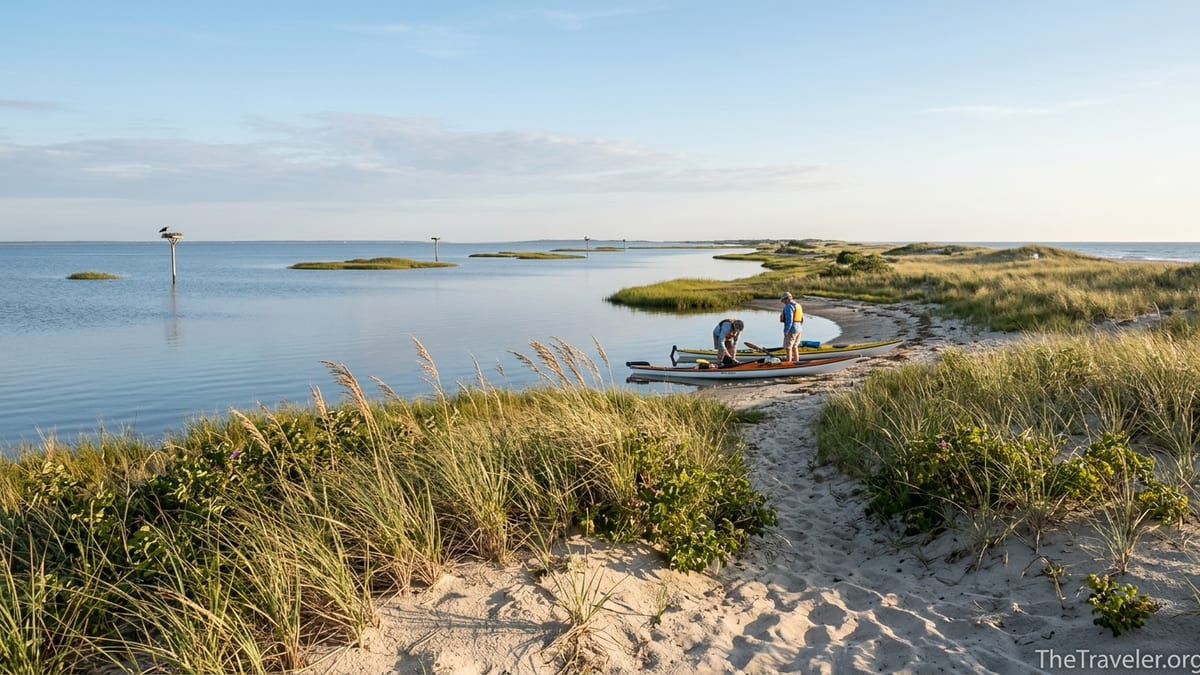
On the bay side of Island Beach State Park, the mood changes completely. Instead of surf and shorebirds racing the waves, you find calm backwaters, cordgrass marshes, and channels weaving toward the Sedge Island Marine Conservation Zone. Experienced paddlers often bring their own kayaks or small canoes and launch from designated bayside areas such as Parking Area 15 and Area 21, which have direct access to the water. The short carry from car to launch, usually less than a hundred yards, makes it feasible even with a heavier plastic kayak.
In summer, the park and partner organizations typically run guided kayak tours that slip into the shallow creeks behind the dunes. These trips often leave in the morning to avoid strong afternoon winds and falling tides. They are aimed at beginners and casual visitors, with stable sit-on-top kayaks and basic instruction before anyone leaves the shore. Expect to pay a moderate program fee per person, which usually covers boat, paddle, and personal flotation device for two or three hours on the water. Because these outings are popular and group sizes are kept small for safety and wildlife protection, advance registration is recommended.
For independent paddlers with their own gear, the bay is a playground of narrow guts and open shallows. Local kayakers commonly plan two- to three-hour loops that pass small sand islands used by nesting terns or route toward the Sedge Island Wildlife Management Area. You will need to pay attention to wind, tide, and your own experience level; the water is generally shallow, but strong afternoon southerlies can make paddling back to the launch more strenuous than the easy glide out.
Practical considerations matter here. A lightweight, quick-drying shoe is helpful for the muddy, sometimes oyster-shell-studded shoreline. Insect repellent is crucial on still summer evenings when greenhead flies can be active near the marsh. Many visitors also bring a small dry bag for phones and car keys, since a capsize in the shallow bay is not dangerous physically but can ruin electronics. Always check with the park office or nature center for any seasonal closures in sensitive wildlife zones before you go.
Go Beyond the Surf: Fishing, Crabbing, and Clamming
Island Beach State Park consistently draws anglers from across New Jersey and neighboring states for its surf fishing. The long, undeveloped shoreline makes it a prime spot for striped bass and bluefish in spring and fall, though summer visitors still find fluke and smaller species. Casual visitors often fish from the sand near public access points with a standard 9- or 10-foot surf rod and a basic pyramid sinker rig bought from bait shops in Seaside Park or Toms River. More committed surf casters pursue evening and predawn tides, when the beach is quieter and fish are more active.
For those who want to drive directly onto the sand with a four-wheel-drive “beach buggy,” the state runs a Mobile Sport Fishing Vehicle permit system. Demand is high and the annual permit lottery can sell out quickly, so this is not something you pick up on a whim during a weekend visit. You also must carry recovery gear such as a shovel and tow strap, and follow strict rules that limit overnight presence on the beach to those actively engaged in fishing. If you are simply curious about casting into the breakers without committing to a permit, park at one of the ocean lots and walk in with your gear; the experience of standing in the surf at sunrise is the same.
The bayside of the park offers a different kind of old-fashioned coastal pastime: crabbing and clamming along the coves of Barnegat Bay. Families often set up near small bridges or bulkheads with hand lines, chicken backs for bait, and a simple crab net, then see what the incoming tide brings. For clamming, locals wade out with a rake and floating basket in shallow flats, following New Jersey’s shellfishing regulations on open areas and size limits. While you should never harvest in closed or posted zones, the act of wading in thigh-deep water on a warm afternoon and feeling the sand under your feet is itself part of the experience.
Both surf fishing and bay crabbing require attention to current state regulations, including fishing licenses where applicable, seasons, and minimum sizes. Many anglers stop at tackle shops on Route 37 or Route 35 on the way to the park, where staff can provide up-to-date advice on what is biting and what rigs work best that week. Even if you do not catch dinner, these activities connect you to the park’s long history as working water, not just a recreation area.
Watch Wildlife: Osprey, Shorebirds, and Seasonal Migrations
Island Beach State Park is one of the best birding locations on the New Jersey coast, particularly between spring and fall. The park holds New Jersey’s largest osprey colony, and it is common to see these large raptors circling above the bay, hovering, then plunging for fish. Several of the Discovery Trails lead to observation blinds or overlooks where you can quietly watch nesting platforms without disturbing the birds. Visitors with binoculars often spend an hour or more here, scanning for ospreys delivering menhaden to chicks or for egrets and herons stalking the shallows.
Seasonal migrations bring additional interest. In late April and May, songbirds use the maritime forest as a rest stop, making a simple morning walk along the inner trails surprisingly productive for warbler watching. In late summer and early fall, shorebirds such as sandpipers and plovers move along the water’s edge, probing for tiny invertebrates in the wet sand. Occasionally, conservation staff rope off sections of beach when threatened species are nesting, and visitors are asked to give these areas a wide berth. Obeying these signs is one of the simplest ways travelers can help protect the park’s biodiversity.
Beyond birds, the dunes and thickets harbor white-tailed deer, foxes, and smaller mammals that are more often noticed by their tracks than by direct sightings. Children often enjoy looking for hoofprints in trail sand or spotting tiny tree frogs in wetland vegetation. In late summer, monarch butterflies pass through on their southbound journey, especially around patches of seaside goldenrod and other nectar plants near the dunes.
For travelers interested in more structured learning, the park’s nature center typically offers seasonal naturalist-led walks, seining demonstrations where staff pull nets through the shallows to show bay creatures, and evening talks on barrier island ecology. Schedules vary by year, so it is worth calling the nature center before your visit or checking program boards at the main pavilion when you arrive.
Cycle, Ride, or Dive: Active Adventures on Land and Underwater
While the park is primarily known for hiking and paddling, there are several other active ways to experience the barrier island. The eight-mile main park road, which runs roughly north to south, is open to cyclists and is a popular training ride in shoulder seasons when traffic is lighter. The shoulders are narrow in some stretches, so this route is best for confident riders who are comfortable sharing the road with vehicles. Many cyclists park near the northern entrance, ride to the southern end and back, and break up the effort with short detours to dune trails or bayside pullouts.
From October through April, equestrians can apply for permission to ride along designated sections of the ocean beach in the southern and central parts of the park. During this low-visitation period, six miles of shoreline are open to horseback riding, and a specific parking area is set aside for horse trailers. Because permits and reservations are required, travelers interested in including a beach ride in a fall or winter trip usually coordinate with local stables that know the permitting process and can provide suitable trail horses.
Less commonly known is that scuba diving is allowed along a stretch of ocean beach north of Barnegat Inlet, where underwater structure and currents can create interesting conditions. Divers must follow park regulations regarding access and cannot enter through guarded swimming areas. Because Atlantic conditions can be challenging, this option is recommended only for experienced divers who are already familiar with local tides, surf, and boat traffic. Many visiting divers instead book spots on charter boats that run from nearby marinas to offshore wrecks, using the park primarily as a base for surface relaxation.
Regardless of activity, preparation is important. Helmets and high-visibility clothing are smart choices for cyclists on the main road, while riders and divers must coordinate carefully with park staff about parking, access points, and any seasonal wildlife closures that could affect routes along the beach.
Plan a Full Day: Facilities, Fees, and Seasonal Tips
To get the most out of Island Beach State Park beyond simply claiming a patch of sand, it helps to understand the basic logistics. The park sits about an hour and a half by car from Philadelphia and less from much of northern New Jersey, which means weekend crowds on summer days can back up at the entrance. Once capacity is reached, the gates close until enough vehicles leave, so arriving early is wise if you plan to hike, paddle, or fish as well as swim. On busy July or August Saturdays, many locals target midweek, early morning, or late-afternoon visits instead.
Entrance fees for vehicles vary by season and by whether you are a New Jersey resident, but they are typically modest compared with commercial beach badge systems in nearby towns. Holders of New Jersey State Park Passes receive admission benefits that can be cost-effective for repeat visits. Once inside, you will find restrooms and showers near the main swimming beach, seasonal concessions, and picnic tables scattered in several day-use areas. There are no hotels or campgrounds in the park itself, so most visitors stay in nearby communities such as Seaside Park, Seaside Heights, or farther north along the barrier island.
Weather and insects strongly shape the feel of a visit. Peak summer brings reliably warm water and long swimming days, but also humidity, strong sun, and biting flies in parts of the marsh. Lightweight clothing that covers arms and legs, a broad-brimmed hat, and plenty of sunscreen make dune walks more comfortable. In early spring and late fall, cool offshore breezes can make the beach feel several degrees colder than inland, yet these shoulder seasons reward visitors with open parking, empty trails, and golden light on the dunes.
Because nightly stays on the beach are tightly restricted to permitted anglers who remain actively engaged in fishing, most travelers treat Island Beach State Park as a day-trip destination. A comfortable approach is to pack a cooler, beach chairs, a change of clothes, and a small daypack with water and snacks for inland trails. That way you can shift between the ocean, bayside, and interior forest without leaving the park to resupply.
The Takeaway
Island Beach State Park is often described simply as one of the last undeveloped stretches of beach on the northern Atlantic coast, but that phrase hides how much there is to do beyond lying on the sand. Short, well-marked trails let you step into maritime forest and dune hollows in minutes, while Barnegat Bay offers calm water for paddling, crabbing, and birdwatching. Surf anglers, cyclists, and even horseback riders find room here to pursue their passions without the constant backdrop of boardwalk noise.
For travelers willing to plan a bit, choose their season, and bring more than a towel, the park turns into a full-day or repeat destination rather than a simple beach stop. The same dunes that shield sunbathers from the wind also protect rare birds, foxes, and wildflowers, and the same bay that glitters from the parking lot reveals its details only from the low seat of a kayak. Whether your ideal day out involves wading for clams, tracing deer tracks on a sandy trail, or watching an osprey dive for fish at sunset, Island Beach State Park offers a way to connect with the shore that feels rooted in nature rather than development.
FAQ
Q1. Do I need a permit to kayak at Island Beach State Park?
For casual paddling with your own kayak or canoe, no special park permit is normally required, but launching is restricted to designated bayside areas and organized tours may require advance registration and a program fee.
Q2. Can I rent kayaks or paddleboards inside the park?
Seasonal ranger-led programs and partner outfitters sometimes provide kayaks for guided tours, but there is no large, permanent rental concession on-site, so many visitors rent from shops in nearby towns and transport the gear themselves.
Q3. Are there hiking trails suitable for young children and strollers?
Yes, the Discovery Trails are short and mostly flat, and at least one boardwalk trail across the island is designed to be wheelchair and stroller accessible, though loose sand at access points can still make pushing a stroller a bit challenging.
Q4. Is swimming allowed everywhere along the oceanfront?
Swimming is strongly recommended only in the main guarded beach area, which is staffed by lifeguards in summer; other stretches of shoreline are unguarded, and surf conditions can be dangerous even when the water looks calm.
Q5. Can I stay overnight on the beach if I am not fishing?
Overnight access on the sand is tightly limited to permitted sport anglers who remain actively involved in fishing, so typical visitors should plan on day use only and book lodging in nearby communities if they want to stay longer.
Q6. What is the best season to avoid crowds but still enjoy the park?
Late spring and early fall usually offer a good balance of milder temperatures, lighter crowds, and active wildlife, with enough warmth for beach walks and paddling even if ocean swimming is cooler.
Q7. Do I need a four-wheel-drive vehicle to enjoy the park?
No, standard vehicles can access all public parking areas, picnic zones, and trailheads; four-wheel drive and a special permit are only required if you want to drive directly onto designated sections of the beach for surf fishing.
Q8. Are there food and drink options inside Island Beach State Park?
In summer a small concession near the main beach typically sells snacks, drinks, and simple meals, but many visitors still bring their own coolers, water, and picnic supplies for flexibility and lower cost.
Q9. Is Island Beach State Park a good spot for birdwatching?
Yes, the park is considered one of New Jersey’s premier birding locations, with an active osprey colony, migratory songbirds in the maritime forest, and seasonal shorebirds along the tideline.
Q10. Are dogs allowed on the beach and trails?
Leashed dogs are generally allowed in many parts of the park outside of designated swimming areas, but restrictions can vary by season and location, so checking current rules before arriving with a pet is important.