


More news on this day
Türkiye is moving to capture a larger share of the fast growing global cruise market as Istanbul’s Galataport consolidates its position as a year round homeport and gateway to the Eastern Mediterranean.
Get the latest news straight to your inbox!
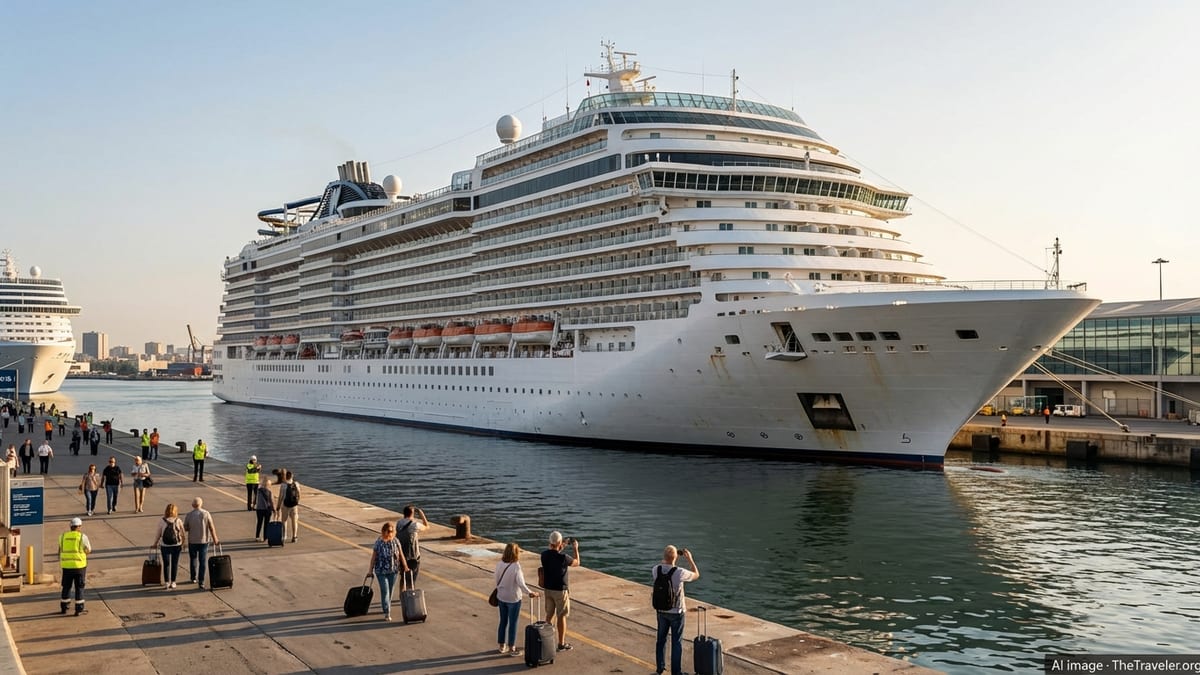
Global Cruise Growth Lifts the Mediterranean
Latest industry assessments show the global cruise sector has not only recovered from the pandemic but surpassed pre 2020 levels, with passenger capacity projected around 15 to 20 percent above the previous peak in 2024. According to sector research and international trade bodies, cruise tourism is on track for continued expansion through the second half of the decade as new ships are delivered and deployment diversifies across regions.
Within this trajectory, the Mediterranean has reinforced its status as the world’s second largest cruise region by market share, trailing only the Caribbean. Regional data compiled by specialist cruise observatories and the Cruise Lines International Association indicate that Mediterranean and nearby European ports handled more than 16 million cruise passengers in 2024, with MedCruise member ports alone accounting for more than 35 million passenger movements when transit and turnaround calls are combined.
After several years in which Western Mediterranean hubs such as Barcelona and Civitavecchia dominated deployment, the Eastern Mediterranean is now regaining ground. Recent analyses point to a clear shift toward itineraries that combine Greece and Türkiye, supported by improved port infrastructure, diversified shore experiences and the reopening of key source markets. This realignment is creating space for emerging homeports along the Eastern Mediterranean arc.
The emphasis on sustainable growth is also reshaping deployment decisions. European policy papers highlight the need to spread cruise traffic more evenly across ports and seasons, an agenda that aligns with Türkiye’s strategy to develop additional homeports and reduce concentrated summer peaks. Istanbul’s push to operate as a year round base sits squarely within this broader Mediterranean policy context.
Galataport Istanbul Scales Up Homeport Operations
Opened in stages from 2021, Galataport Istanbul has been positioned by its developers as a next generation cruise complex with an underground terminal and a mixed use waterfront above. Official project information describes a 29,000 square meter terminal area located below street level, accessed through a hinged hatch system that allows the promenade to remain open to the public when ships are alongside.
Port and tourism statistics compiled from Turkish and international sources indicate that Galataport handled hundreds of thousands of cruise passengers across more than 200 ship calls in 2025. Publicly reported figures show that homeport passengers using Istanbul as their embarkation or disembarkation point increased from roughly 96,000 in 2024 to about 225,000 to 230,000 in 2025, with the operator targeting further growth for 2026. This represents more than a doubling of turnaround traffic in a two year period.
Year round scheduling is a central part of the strategy. Seasonal deployment remains strongest from late spring through autumn, but cruise line itineraries now show Istanbul sailings distributed more evenly into the shoulder months. Industry schedules highlight winter and early spring calls tied to broader Eastern Mediterranean circuits, a marked change from the heavily summer focused pattern of the previous decade.
Infrastructure upgrades support this shift toward continuous operations. Galataport’s design integrates check in, security and baggage functions beneath the quay, enabling multiple large vessels to be processed while preserving a walkable waterfront for residents and visitors. The terminal links directly to Istanbul’s urban transport network, including tram lines, road connections to Istanbul Airport and a high density of hotels across Beyoğlu and the historic peninsula, key attributes for a competitive homeport.
Türkiye Positions Istanbul Within a National Cruise Strategy
Türkiye’s transport and tourism strategies identify cruise tourism as a priority within the country’s wider blue economy and visitor economy. Sector reports compiled by public agencies show that Turkish ports received more than 135,000 cruise passengers in the first four months of 2024 alone, around 10 percent more than the same period a year earlier, with Kusadasi remaining the leading transit port on the Aegean.
In this context, Istanbul’s role is shifting from a predominantly transit stop to a primary embarkation hub. Policy presentations on maritime tourism underline Türkiye’s long Mediterranean and Aegean coastline, modern airports and hotel supply as underpinnings for a stronger homeport offering. Istanbul’s ranking among the world’s top city destinations by international arrivals reinforces the commercial case for cruise lines to begin or end itineraries in the city.
National level initiatives also focus on dispersing cruise benefits beyond a small group of high traffic ports. Publicly available project briefs reference investments in marinas and secondary cruise berths, as well as digitalization and smart port technologies intended to improve passenger handling and environmental performance. Istanbul’s Galataport is frequently cited as a flagship for these efforts, particularly in areas such as underground terminal design and integrated security systems.
As Türkiye pursues this agenda, Istanbul’s continuous cruise activity is expected to support year round employment in port services, hospitality and ground operations, distinguishing its profile from purely seasonal ports. Analysts note that this year round demand helps justify further investment in shore power, terminal enhancements and urban connectivity around the port district.
New Homeport Partnerships Signal Deeper Market Integration
Recent deployment decisions by regional operators underline how Istanbul is being woven into global cruise networks. Public announcements from Cruise Saudi’s AROYA Cruises, for example, show the line designating Galataport Istanbul as the main homeport for its first ship on Eastern Mediterranean itineraries beginning in June 2025. Schedules published for the inaugural season envisage weekly Saturday departures through mid September, with expectations of around 90,000 passengers carried via Istanbul during that period.
Industry coverage also tracks regular Istanbul homeport calls by established global brands on Eastern Mediterranean routes connecting Türkiye with Greek islands and occasionally Cyprus or the Adriatic. These deployments typically combine turnaround operations in Istanbul with transit calls at Kusadasi, Bodrum or Antalya, integrating Turkish ports into multi country cruise programs marketed across Europe, the Gulf and increasingly Asia.
By hosting both international and regional operators on a homeport basis, Istanbul is aligning its cruise profile with other global gateways such as Barcelona, Piraeus and Dubai, albeit on a smaller scale. Sector analysts highlight that multiple overlapping homeport users tend to deepen air connectivity, spur hotel development near terminals and strengthen the resilience of local cruise ecosystems against shifts by any single operator.
The rise in turnaround operations also encourages longer pre and post cruise stays. Travel trade data suggest that passengers embarking in Istanbul are more likely to add nights in the city before or after sailing compared with visitors on pure transit calls, increasing average expenditure and broadening the impact of cruise tourism on museums, restaurants and cultural venues.
Eastern Mediterranean Dynamics Create Space for Istanbul
Wider shifts in deployment across Europe are creating favorable conditions for Istanbul’s year round ambitions. Market reports from cruise associations document that while some Western Mediterranean ports are managing capacity constraints and overtourism concerns, the Eastern Mediterranean is absorbing additional ships and experimenting with new itineraries. Greece, in particular, has reported double digit growth in cruise vessel calls, positioning Piraeus, Mykonos and Santorini as key nodes in a rapidly expanding network.
Analysts observing these patterns point out that Eastern Mediterranean routes built around Greece, Türkiye and occasionally Cyprus allow cruise lines to diversify away from heavily saturated Western hubs while remaining within a high demand region. Istanbul’s location at the entrance to the Bosphorus, combined with its flight connectivity and urban appeal, makes it a natural anchor for such itineraries, especially for passengers from Europe, the Gulf and increasingly Asia Pacific.
Europe wide blue economy monitoring adds another layer to this picture. The European Commission’s coastal tourism data highlight that cruise tourism contributed an estimated 64.1 billion euros in value added and around 445,000 direct and indirect jobs across Europe in 2024, with Mediterranean countries capturing a substantial share. Within this landscape, destinations capable of offering modern infrastructure, multimodal access and diversified tourism products are positioned to gain additional capacity.
For Türkiye, this means Istanbul can function as both a symbolic and practical bridge between established Western Mediterranean circuits and emerging Black Sea and Eastern Mediterranean routes. As cruise lines seek flexible homeports that can support varied seasonal deployments, Istanbul’s evolving year round role appears set to become a core component of the country’s broader strategy to integrate more deeply with global cruise markets.
Galataport Istanbul cruise port overview
Mediterranean and global cruise market data