


More news on this day
Japan’s post‑pandemic tourism surge is converging with a powerful new set of autumn rail passes that promise three days of unlimited JR travel across the country, encouraging visitors to roam far beyond Tokyo and Kyoto just as foliage season peaks.
Get the latest news straight to your inbox!
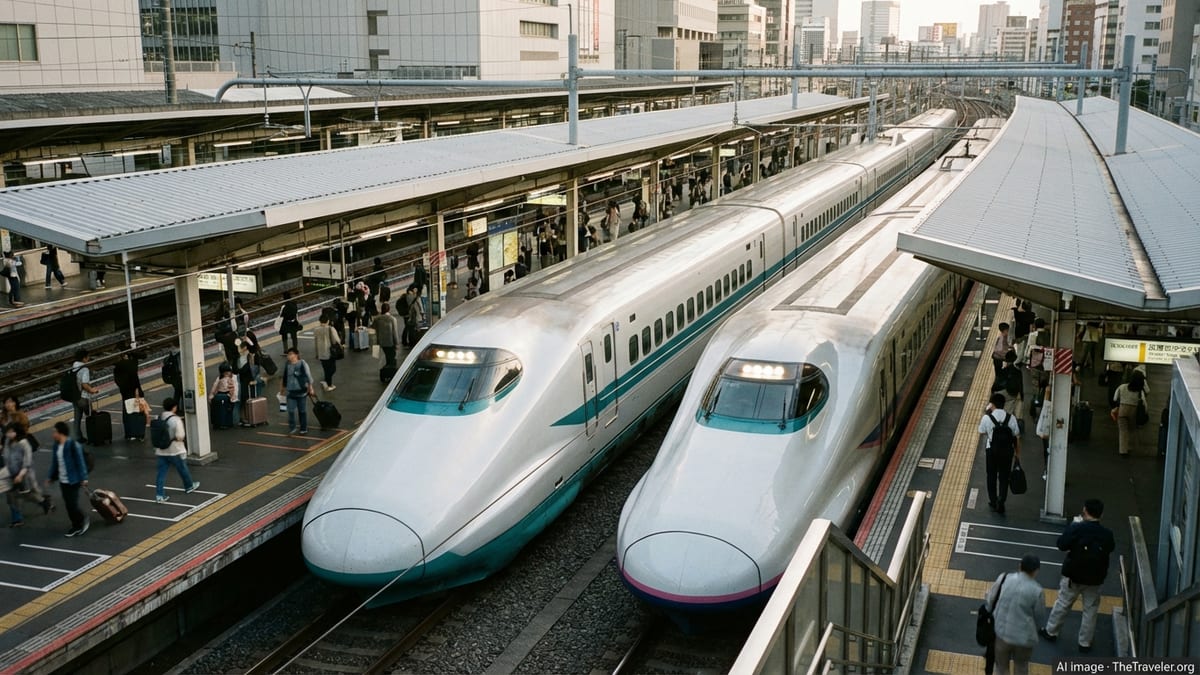
Autumn All‑You‑Can‑Ride Pass Targets Peak Foliage Season
JR Group operators have revived a nationwide “Autumn All‑You‑Can‑Ride Pass” for 2026, offering three consecutive days of unlimited travel on local and rapid JR trains across Japan during a limited October window that coincides with Railway Day and the start of koyo, the country’s famed autumn-leaf viewing season. According to recent coverage of the 2024 rollout, the product has been positioned as an accessible way to encourage slower, regional rail journeys on conventional lines rather than high-speed shinkansen services.
Publicly available information shows that the pass, marketed domestically as the “Aki no Norihodai Pass,” is sold at a flat nationwide price and is valid on ordinary cars of local and rapid JR trains, with a separate optional supplement for the Hokkaido Shinkansen sector between Aomori and Hokkaido. Reports indicate that the 2024 edition was priced at 7,850 yen for three days, framing the offer as a cost-effective alternative to standard JR fares for travelers willing to trade speed for flexibility and scenery.
While the pass is not limited to international visitors, it has quickly attracted attention among budget-minded tourists, rail enthusiasts, and residents planning multi-day leaf-peeping itineraries. English-language travel forums and news sites now routinely highlight the autumn product alongside the long-established Seishun 18 Ticket, underscoring how seasonal unlimited-ride tickets are becoming central to planning multi-region rail trips in Japan.
New Digital Tools and Regional Passes Broaden Access
The autumn product is launching into a market already transformed by a wave of new and renewed regional passes that emphasize unlimited travel. Japan National Tourism Organization materials highlight a growing roster of area-specific passes, including JR East and JR West products, that emphasize hop-on, hop-off flexibility across broad swaths of the country for a fixed price.
JR East has been expanding a portfolio of passes that allow unlimited travel across eastern Japan, including the JR EAST PASS for Tohoku and for the Nagano/Niigata area, which cover shinkansen, limited express and local services over several consecutive days within their zones. Updated pass guides and official pamphlets describe wide “unlimited-ride” areas, from Tokyo’s commuter belt to northern Tohoku and the Sea of Japan coast, combining intercity shinkansen links with local branch lines and even certain JR bus routes.
To help overseas visitors navigate this increasingly complex menu, JR East announced a dedicated Rail PASS Search tool scheduled to launch for international customers, designed to match passes to travel dates and routes using a single English-language interface. The shift toward digital discovery and booking is intended to make it easier for visitors to compare products like the Autumn All‑You‑Can‑Ride Pass with regional rail passes, then purchase them before or soon after arrival.
JR West and Private Railways Push Unlimited-Ride Offers
On the western side of the country, JR West continues to promote an array of JR-WEST RAIL PASS products that offer unlimited rides on conventional and shinkansen services across Kansai, Hokuriku, Chugoku and Kyushu, depending on the ticket type. JR West’s English-language travel information emphasizes that these passes are structured to encourage wide roaming, linking Osaka, Kyoto and Kobe with lesser-known destinations such as Kanazawa, Okayama, Hiroshima and the Sanin coast.
Pricing documents for JR West’s passes show that many products cover several consecutive days, often including segments of the Sanyo or Hokuriku shinkansen, allowing visitors to use high-speed rail for long legs and local trains for shorter hops. These regional products are now commonly promoted alongside the nationwide Japan Rail Pass, which itself provides near-unlimited JR travel over 7, 14 or 21 days but at a higher entry price after recent fare revisions.
Private railways are also leaning into the unlimited-ride trend. The Greater Tokyo Pass, managed by a consortium of Kanto-area private railway and bus operators, was renewed in 2024 as a special ticket for international visitors that offers unlimited rides on participating suburban railways, trams and Toei buses around the capital. In the Kansai region, Kintetsu continues to market multi-day passes that offer unlimited use of its network linking Osaka, Kyoto, Nara, Nagoya and Mie, giving travelers a non-JR option for regional exploration.
Tourism Rebound Drives Demand for Wider, Longer Rail Itineraries
Japan’s tourism recovery is giving these products outsized visibility. National tourism statistics and industry commentary describe inbound visitor numbers rebounding strongly, with long-haul travelers in particular seeking itineraries that combine major cities with secondary destinations. Unlimited rail passes are emerging as a key planning tool for such trips, lowering the perceived risk of detouring to lesser-known areas in Tohoku, Hokuriku or rural Kyushu.
Travel-planning resources increasingly encourage visitors to string together several regions using a mix of nationwide and regional passes, often timing trips for autumn foliage in October and November when multiple seasonal tickets, including the Autumn All‑You‑Can‑Ride Pass, are on sale. Sample itineraries now commonly pair Tokyo and Nikko with Aomori and Yamagata via JR East passes, or Osaka and Kyoto with Kanazawa and Hiroshima via JR West products, all framed around unlimited rides within specified zones.
Publicly available commentary from travel analysts suggests that this network of passes is reshaping where international visitors go. While Tokyo, Osaka and Kyoto remain the primary anchors, convenient unlimited-ride tickets and clear English-language guidance are helping divert a portion of traffic to secondary cities like Sendai, Kanazawa and Nagano, as well as onsen areas and historic towns reachable only via local and rapid JR lines.
How Travelers Can Use the New Autumn Pass Strategically
For travelers looking to take advantage of Japan’s autumn rail boom, the new all-you-can-ride ticket effectively acts as a three-day backbone for regional exploration if used strategically. Because the pass is valid only on local and rapid JR trains in ordinary cars, travel times can be significantly longer than shinkansen journeys, but savvy planners are using it to cover clusters of destinations linked by conventional lines rather than long cross-country hops.
Travel media coverage and community trip reports point to itineraries such as circling the Seto Inland Sea via local trains, combining Kobe, Okayama and small coastal towns, or exploring historic post towns in Nagano and Gifu using branch lines that would be expensive to ride repeatedly on regular tickets. For visitors with more time, the pass fits neatly between days covered by regional or nationwide shinkansen-enabled passes, allowing for slower travel and more frequent stops between major hubs.
With digital tools making it easier to search routes and purchase rail passes in advance, Japan is entering an era where unlimited-ride rail products form the backbone of autumn travel planning. The combination of a resurgent inbound market, renewed nationwide autumn ticketing and an expanding ecosystem of area-specific passes is positioning the country’s rail network as both the practical and symbolic center of its seasonal tourism boom.
JR East 2024 Autumn All-You-Can-Ride Pass announcement (Japanese)
Japan National Tourism Organization overview of JR rail passes