


More news on this day
Rail passengers planning trips across Italy in the coming weeks are being urged to prepare for potential disruption, as a nationwide railway strike targeting both regional and long-distance services appears on the horizon alongside extensive planned engineering works.
Get the latest news straight to your inbox!
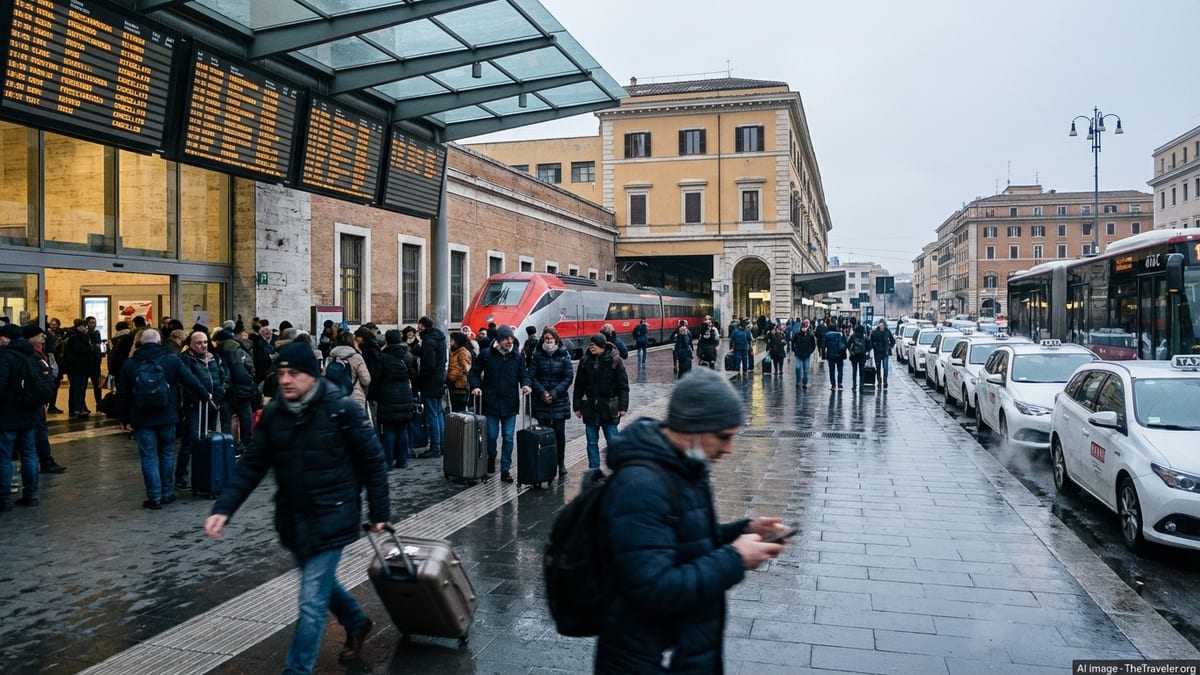
Nationwide rail walkout added to a summer of disruption
According to the Italian Ministry of Transport’s public strike calendar, a national rail strike involving train drivers and onboard staff of the Ferrovie dello Stato Italiane group is scheduled in early September, with a 24-hour stoppage set to run from the evening of 7 September to the evening of 8 September 2026. Publicly available summaries of the notice indicate that the action is classified as nationwide and covers the railway sector, raising the prospect of widespread disruption for Trenitalia-operated services across the country.
Independent strike-tracking platforms that collate official notices and union communications likewise highlight the September rail action among a series of industrial disputes affecting Italian transport in 2026. These resources describe a pattern of recent strikes that have already affected high-speed, InterCity and regional services on selected dates, underscoring the risk that the forthcoming stoppage will further impact late-summer travel.
The nationwide strike comes after a busy period of targeted walkouts earlier in the year, including regional rail actions in Sardinia, Lazio and northern Italy, as well as a 24-hour national rail strike in July that disrupted services over two consecutive days. Together, these events point to an unsettled industrial climate in Italy’s rail sector at a time when demand for leisure and business travel remains high.
Travel forums and user-generated platforms show growing concern among visitors planning September itineraries, particularly those with fixed long-distance connections between major cities such as Milan, Florence, Venice and Rome. Many are now seeking clarification on whether their specific trains fall under the list of guaranteed services that operators must provide during strikes.
Regional and long-distance lines most exposed
Available information suggests that both regional and long-distance trains are likely to be affected if the national strike proceeds as announced. Trenitalia operates an extensive network of regional services that provide essential connections between smaller towns and major hubs, while its Frecciarossa, Frecciargento and InterCity trains form the backbone of long-distance travel between Italy’s main cities and cross-border gateways.
Coverage that tracks disruption patterns in previous strikes notes that regional services often see significant cancellations outside of legally protected time windows in the morning and early evening on weekdays. For long-distance routes, reports indicate that operators typically concentrate a reduced number of high-speed and InterCity trains on the busiest axes, while other departures may be cancelled or rescheduled.
Rete Ferroviaria Italiana’s network documentation and related regulatory texts outline how essential rail services must be guaranteed in the event of strikes, particularly on routes that ensure basic mobility and connectivity for commuters and long-distance travelers. These frameworks envisage a minimum contingent of long-distance and commuter services, but they also confirm that the broader timetable can be heavily thinned out when widespread industrial action takes place.
In practical terms, this means that passengers holding tickets for long-distance trains on strike days may find their specific service cancelled, even though a limited number of other trains on the same corridor still operate. For regional travelers, the impact can be even more pronounced, especially in areas where alternative public transport is limited.
Ongoing works compound service changes on key corridors
The strike threat is unfolding against a backdrop of significant infrastructure works across the Italian rail network. Notices from infrastructure manager and regional operators show that several key corridors are already operating with temporary timetables, replacement buses or partial closures unrelated to industrial action.
In Lombardy, regional operator Trenord has advised passengers of planned works between Carnate and Lecco on multiple weekends in August 2026, with cancellations on several suburban and regional lines and bus replacement services maintaining continuity between affected stations. The measures impact routes linking Lecco with Milan, Sondrio, Tirano and Chiavenna, requiring longer travel times and careful planning for onward connections.
In the northeast, public broadcaster coverage highlights a prolonged interruption of train services between Carnia and Tarvisio until 20 September 2026 due to major renewal works on a short but strategic section of line. Replacement buses are being used to link communities along the alpine corridor while Rete Ferroviaria Italiana carries out upgrades valued at more than 18 million euro, including interventions in tunnels and on track foundations.
Elsewhere on the network, recent announcements from regional authorities in Umbria report that infrastructure and technological upgrades around Perugia’s main stations are nearing completion, allowing train services between Perugia Ponte San Giovanni and Perugia Fontivegge to resume earlier than initially forecast. While this represents an easing of disruption on one important regional axis, the overall picture for late August and early September remains characterized by overlapping work sites and timetable adjustments.
High-speed operators advise close monitoring of timetables
Both Trenitalia and private high-speed operator Italo maintain digital tools to provide real-time information on train circulation, delays and cancellations. Italo’s customer support pages direct travelers to its live "In Viaggio" and "In Real Time" platforms for updates on timetable changes and rail traffic conditions, while Trenitalia offers similar monitoring through its official website, apps and station departure boards.
Quality and punctuality reports published by operators and network managers emphasize that contingency planning is in place for disruption scenarios, including access to rescue locomotives and cooperation between companies in major hubs such as Milan, Bologna, Rome and Naples. However, these same documents acknowledge that heavily used high-speed corridors are sensitive to both infrastructure bottlenecks and labor disputes, which can quickly cascade into widespread delays.
Information from recent and upcoming engineering works on high-speed lines between Milan and Bologna and between Florence and Rome also points to temporary timetable changes for some Frecce and InterCity services in August. This means that passengers may already be traveling on modified schedules in the weeks leading up to the strike period, with fewer options available to rebook if industrial action proceeds.
Given this context, travel-planning resources increasingly recommend that passengers check their train status repeatedly in the days before departure, paying special attention to any replacement or additional trains that might be scheduled on strike days. Where possible, travelers are being advised to build extra time into itineraries that rely on same-day connections between trains, planes and ferries.
What travelers should do now
Specialist strike calendars that aggregate official Italian notices suggest that, although strike dates and modalities can change at relatively short notice, the scheduled national rail stoppage in early September is already prominent enough to warrant concrete contingency planning. The same resources stress that most rail strikes in Italy do not result in a complete shutdown of the network; rather, a reduced number of trains is typically maintained, particularly in peak hours.
For international visitors, published guidance on Italian travel forums and informational sites recommends several precautionary steps. These include checking the Ministry of Transport’s strike portal in the week before travel, reviewing the "guaranteed trains" lists that Trenitalia publishes for each region, and monitoring high-speed operators’ live information pages for any extraordinary announcements.
Travel planners also highlight the importance of flexible booking conditions at this time. Where possible, passengers are encouraged to select fares and accommodation options that allow date or time changes without heavy penalties, in case trains are cancelled or significantly delayed due to industrial action or ongoing infrastructure works.
With late summer marking one of the busiest periods for Italy’s tourism sector, the combination of planned engineering projects and a looming nationwide rail strike is likely to place additional pressure on the network. Travelers who stay informed through official digital channels and third-party strike trackers, and who allow greater margins between connections, are expected to be better positioned to manage any disruption that does arise.
Italian Ministry of Transport – official transport strike search portal
TrovaTreno – Italian train times, delays and strike calendar
Trenord – infrastructure works and service changes in Lombardy
RaiNews – report on Carnia–Tarvisio rail closure and replacement services
Italo – support, contacts and real-time circulation information