


More news on this day
Japan’s reputation for clockwork flight operations is under pressure as ripples from Typhoon Noul’s powerful landfall in southern China spread across Northeast Asia, disrupting routes, forcing aircraft and crew out of position, and unsettling the normally precise rhythms of Japanese air travel.
Get the latest news straight to your inbox!
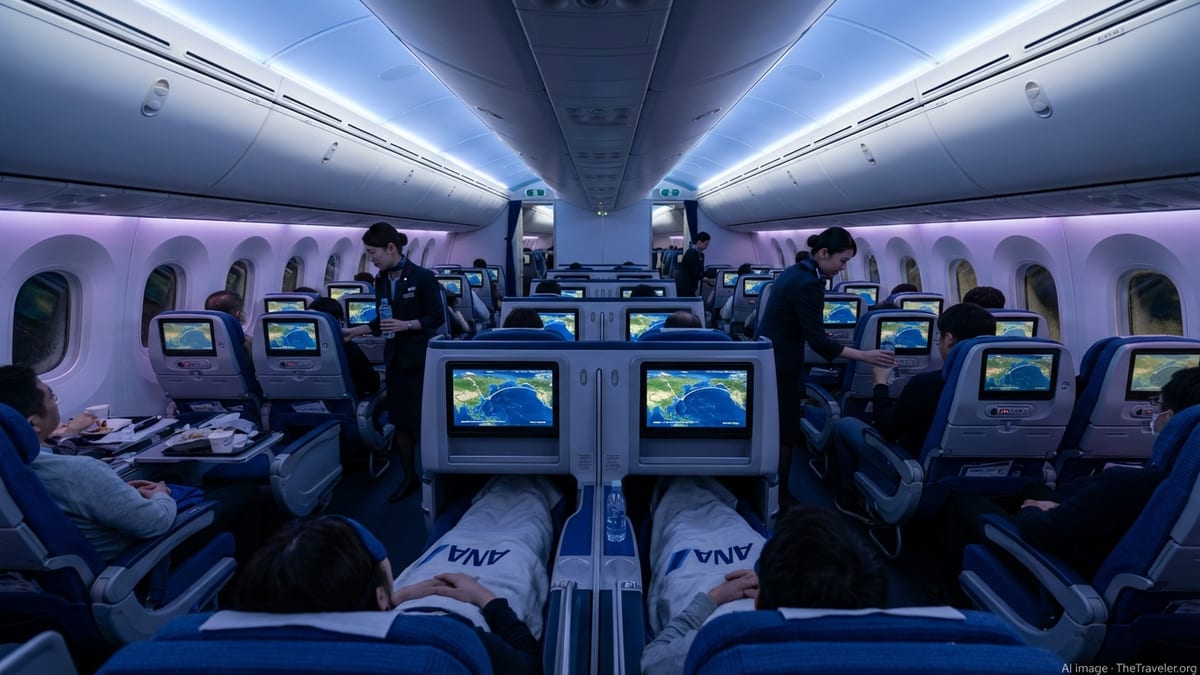
Storm’s Offshore Track Creates a Wide Aviation Shockwave
While Typhoon Noul made its direct landfall along the southern coast of China, aviation specialists note that its broad wind field and rain bands have extended well into regional air corridors used by Japanese carriers. Long-haul services between Japan and Southeast Asia, as well as connections to Hong Kong and coastal Chinese cities, have faced a mix of delays, diversions and rolling schedule changes as airlines adjust to shifting weather windows.
Published coverage from airports along Noul’s path describes several hundred cancellations over the weekend in Hong Kong and southern China, effectively removing aircraft and crews that would normally rotate onto Japan bound and Japan originating routes. For Japan based travelers, the impact is emerging less as outright airport closures and more as a cascade of timetable irregularities, missed connections and overnight misalignments in aircraft positioning.
Analysts point out that regional storms of this scale can disrupt aviation networks far beyond the immediate landfall zone. Even when Japanese airports remain operational, flight plans connecting through hubs affected by Noul are being refiled or cancelled, forcing passengers heading to or from Japan to rebook on later departures or reroute through alternative cities.
Operational data from recent typhoon seasons in the Northwest Pacific suggests that this pattern is familiar. Strong cyclones that primarily affect neighboring territories often still translate into sizeable schedule shocks for Japanese carriers and airports as shared airspace, common transfer hubs and aircraft rotations tie the fates of regional networks together.
Punctuality Leaders Face an Unforgiving Weather Test
Japan’s largest airlines typically rank among the world’s leaders in on time performance, with annual reviews from aviation analytics firms consistently placing Japan Airlines and All Nippon Airways near the top of global punctuality tables. That reputation has been built in spite of regular exposure to typhoons, seasonal snowstorms and dense traffic at the country’s main urban hubs.
Historical records show that powerful storms in recent years have periodically forced hundreds of cancellations at Tokyo’s Haneda and Narita airports, as well as at major regional gateways such as Osaka Kansai and Fukuoka. Those episodes demonstrate that even the most finely tuned operation has limited flexibility once crosswinds exceed safety thresholds or when visibility and rain intensity render approaches unreliable.
With Noul, the principal challenge so far appears to be a gradual distortion of schedules rather than a single day shutdown at a Japanese airport. Late arriving aircraft from China and Hong Kong, crew duty time limits, and congestion on alternative routings are combining to push departure times back and concentrate demand on a narrower set of flights that can operate between storm bands.
For travelers, the distinction is academic. Even modest departure delays can erase carefully planned connections, particularly on multi leg itineraries that link secondary Japanese cities with long haul services via regional hubs. The outcome on the passenger side is an experience of mounting uncertainty that contrasts with the usually predictable cadence of domestic and international flights in Japan.
Domestic Networks Brace for Knock On Effects
Within Japan, publicly available information from major carriers outlines standard contingency frameworks when storms threaten. These include advance travel advisories, the waiving of change fees on affected routes and instructions for passengers to verify flight status online before departing for the airport. Similar measures are being applied selectively as Noul’s residual winds and cloud shield pass near southern Japanese airspace.
Even in the absence of a direct landfall, domestic routes are vulnerable to knock on disruptions. Aircraft that do not arrive from international sectors on time can leave gaps in the rotation for short haul hops, particularly to and from island destinations and regional hubs that are served by smaller fleets. As a result, travelers may see last minute aircraft swaps, tightened cabin capacity and adjusted departure slots as airlines attempt to preserve overall network coverage.
Rail connections that typically provide a fallback option during typhoon conditions are also watching the forecast closely. Experience from past storms shows that high speed services can be curtailed if crosswinds rise or if heavy rain increases the risk of trackside incidents, adding further complexity for domestic travelers trying to stitch together backup itineraries around irregular flight schedules.
Airports in Kyushu and the Ryukyu Islands, which sit closer to Noul’s projected post landfall track, are paying particular attention to potential wind and rain bands on the storm’s periphery. If conditions deteriorate even temporarily, localized suspensions could ripple through national booking systems already stretched by the regional disturbances in and out of China and Hong Kong.
Travelers Confront a Patchwork of Delays and Rebookings
For passengers, the emerging picture is a patchwork of experiences rather than a uniform shutdown. Some long haul flights to and from Japan have taken off only slightly behind schedule, threading routes around Noul’s remaining convective clusters. Others have faced repeated pushbacks in departure time, day of travel cancellations or unscheduled overnight stops as crew reach duty limits or as onward connections disappear from the timetable.
Reports from regional travel agencies and airport monitoring services indicate that popular peak season routes are the most strained, with limited spare capacity available to absorb displaced travelers. In cases where flights connect through hubs that bore the brunt of Noul earlier in the week, rebooking options can be fragmented as airlines prioritize safety assessments and fleet recovery plans.
Industry observers note that the distribution of impacts is highly sensitive to individual itineraries. A direct flight between Japan and a city outside Noul’s influence may operate relatively normally, while a journey involving a transfer through a storm affected hub can unravel quickly. This differentiation underscores the importance for travelers of checking not just origin and destination weather, but also conditions at intermediate connection points.
Travel insurance policies and credit card protections are also beginning to play a role as some travelers seek reimbursement for additional hotel nights, meals and rearranged transport. Past typhoon seasons suggest that claims activity tends to spike in the days immediately following severe weather disruptions, particularly for complex international trips that cross multiple jurisdictions and rely on tight transfer windows.
Long Term Lessons for a Typhoon Exposed Air Hub
Japan’s aviation community has long treated typhoon resilience as a core operational challenge. Training programs for pilots, dispatchers and ground crews, as well as infrastructure investments at major airports, reflect decades of adaptation to powerful tropical systems that routinely sweep across or near the archipelago.
Analysts point out that events such as Typhoon Noul are reinforcing the need to think in network terms rather than focusing solely on local weather at Japanese airports. With so many of Japan’s international routes intertwined with hubs across East and Southeast Asia, major storms anywhere along key corridors can erode punctuality benchmarks that domestic passengers have come to expect.
Forecast improvements and more granular satellite data may help airlines refine decisions on when to cancel, delay or reroute flights as storm tracks evolve. However, recent experience suggests that there will always be a tension between maintaining high on time performance figures and building enough buffer into schedules to absorb sudden shocks caused by extreme weather.
As Noul continues to weaken over the Asian mainland, attention is shifting from immediate safety and operational concerns to the speed of recovery in flight networks serving Japan. How quickly airlines restore normal punctuality, and how effectively they communicate options to affected travelers, will shape perceptions of reliability in a region where typhoon season remains a defining feature of aviation planning.