


Landing at Marrakech Menara Airport (RAK) is many travelers’ first real taste of Morocco. The palm trees outside, the mashrabiya-style latticework and the desert light pouring into the terminal all feel wonderfully exotic, but the arrivals process, taxis, cash, SIM cards and getting to the Medina can also feel overwhelming if it is your first time. This guide walks you step by step through what actually happens after you land and how to move smoothly from plane door to riad door in the old city.
Get the latest updates straight to your inbox!
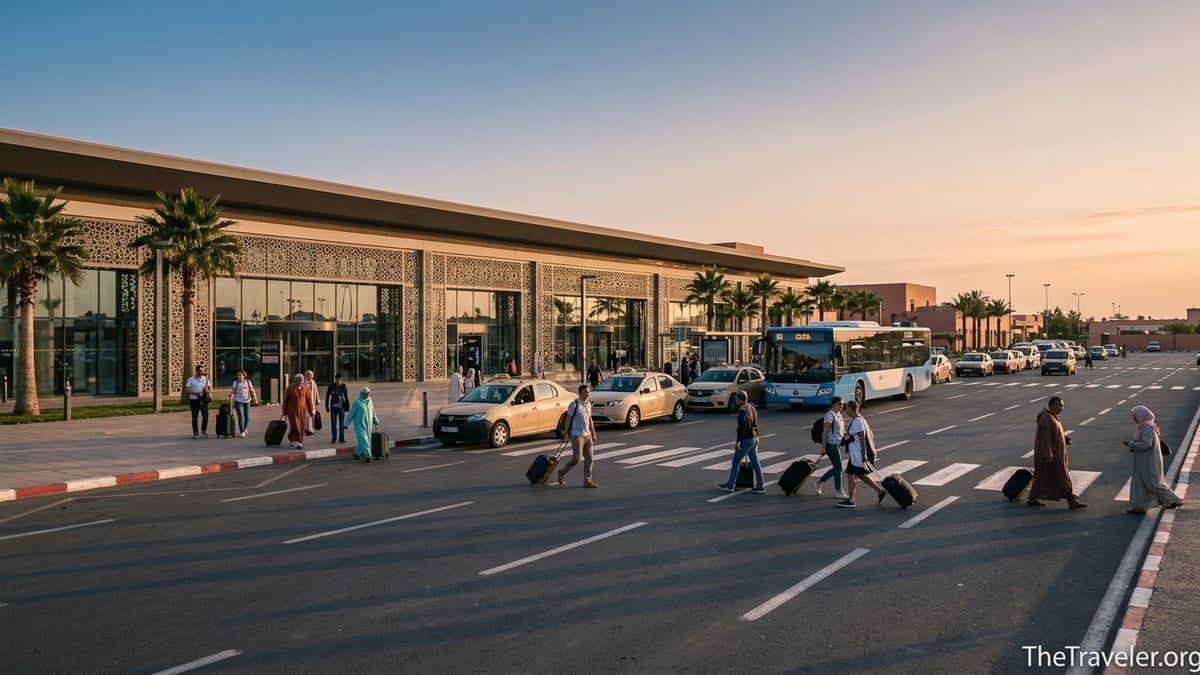
Understanding Marrakech Menara Airport Layout and Arrivals
Marrakech Menara Airport sits roughly 3 kilometers southwest of the historic Medina, making it one of the closest city airports in North Africa. The passenger area is effectively one large terminal complex that combines Terminal 1 and Terminal 2, plus a smaller building sometimes referred to as Terminal 3 for seasonal or low-cost operations. In practice, international travelers experience it as one continuous building: you disembark, walk through passport control, baggage claim, customs, and emerge into the arrivals hall where ground transport and services are located.
After your plane lands, you will typically be bussed or walk to the terminal and join the immigration queue. In peak seasons like October, December and April, the line can be long, so having your hotel address handy and your arrival form filled in saves time. Expect to show your passport, confirm where you are staying in Marrakech, and sometimes your return or onward ticket. Most first-time visitors report immigration taking anywhere from 20 minutes to over an hour depending on congestion.
Once stamped in, you walk through to baggage claim. Carousel information is clearly displayed, but staff announcements may be only in French and Arabic. Free airport luggage trolleys are usually available. Before you leave the secure area, you will see ATMs and often SIM card counters for the three Moroccan operators. After baggage, you pass a quick customs check; most travelers simply walk through the green “nothing to declare” lane before entering the public arrivals hall where drivers, taxi representatives and family greeters wait.
The airport building itself is modern and air-conditioned, with plenty of daylight streaming through patterned facades. There are cafés and small shops both airside and landside, but prices are higher than in the city. If you have a short layover or are arriving late at night, it is comforting to know the airport is compact and easy to navigate, with clear English signage directing you to exits, restrooms, taxis and the city bus stop.
Money, ATMs and SIM Cards on Arrival
Morocco uses the Moroccan dirham (MAD), a closed currency that you normally cannot obtain before arrival. Inside the arrivals area you will find bank ATMs from major Moroccan banks where you can withdraw cash using a debit or credit card. For most travelers, withdrawing a modest amount like 800 to 1,500 MAD on arrival is enough to cover a taxi, first meals and small purchases. Many riads in the Medina still prefer cash for balances and city tax, so it is smart to land with at least some physical dirhams rather than relying only on cards.
Currency exchange desks are also present but often offer less favorable rates than ATMs. A common practical approach is to take out cash from an ATM and keep currency exchange as a backup if your card has issues. ATMs at the airport sometimes charge a small local fee per withdrawal on top of what your home bank may charge, so consider taking out a slightly larger amount once instead of several small withdrawals.
Right after baggage claim or just as you exit into arrivals, you will see kiosks for Morocco’s three main mobile operators: Maroc Telecom, Orange Morocco and Inwi. These official counters sell prepaid tourist SIM cards and can register them using your passport in a few minutes. Recent travelers typically report packages in the region of the equivalent of about 5 to 20 euros for several gigabytes of data valid one to four weeks, for example a 10 GB or 20 GB data pack for a few hundred dirhams. Occasionally, staff hand out the SIM card itself for free and then charge only for the data plan you load on it.
For a first-time visitor heading into the maze of the Medina, buying a local SIM immediately is extremely useful. With data you can use navigation apps to find your riad in the alleys around Jemaa el Fna, message your accommodation via WhatsApp to arrange luggage help, or order a ride-hail car in the newer Gueliz district. If you travel with an eSIM-capable phone, you may prefer to install an international eSIM before you fly, then add a physical Moroccan SIM on arrival if you need more data or better coverage. Whichever you choose, insert your new SIM before you leave the terminal so that you can coordinate with taxis, transfers or hotel staff right away.
Taxi Options, Realistic Prices and Avoiding Hassles
As you exit the terminal, you will see an official taxi rank with beige-colored “petit taxis” and larger “grand taxis” serving the city. The local tourism office and city information sources note indicative regulated prices between the airport and central Marrakech. In practice, many first-time visitors report paying around 70 MAD in daytime or around 100 MAD at night for a standard ride to the city center, including the Medina, when they agree the fare clearly in advance. Always confirm the price in dirhams before getting into the car, and clarify whether it is per taxi or per person; for airport taxis it is typically per vehicle.
Unlike some cities, meters are not always used for airport trips even though petit taxis in town may use them. A typical scenario is a driver quoting a higher price such as 150 or 200 MAD to the Medina, especially to visitors arriving from Europe in high season. It is still inexpensive by many travelers’ standards, but if you prefer to pay closer to local rates, you can politely counteroffer in the 70 to 100 MAD range for up to three people with standard luggage. If a driver refuses to negotiate, it is acceptable to move to the next taxi in line.
When your riad is in the old Medina, remember that many streets are too narrow for cars. The taxi will generally drop you at the nearest gate or square, such as Bab Doukkala, Bab Laksour, or the edge of Jemaa el Fna. From there, walking can take 5 to 15 minutes depending on location. In the evening, local porters with carts often offer to wheel your luggage to your door for a small fee, commonly 20 to 50 MAD depending on distance and bags. Agree the price before they start walking and keep small notes handy so you do not have to negotiate change in a dark alley.
If you arrive with heavy luggage or late at night, consider asking your riad in advance to arrange an airport pick-up. Many Medina hotels offer a package where a vetted driver meets you with a sign in arrivals, charges a pre-agreed rate close to 150 to 250 MAD door to door, and includes a porter for the last few minutes’ walk inside the Medina. This usually costs a bit more than hailing a taxi yourself, but it drastically reduces confusion for a first-time visitor, especially if you land after dark.
Airport Bus 19 and Other Public Transport
For budget-conscious travelers or those who prefer public transport, Bus 19 is the dedicated airport shuttle running between Marrakech Menara Airport and the city. Local transport information indicates that this bus generally operates from early morning, around 6 am, until about 9:30 pm, with departures roughly every 20 to 30 minutes. The route typically connects the airport with key stops in Gueliz, near the main railway station, and close to the Medina and Jemaa el Fna, making it convenient for many hotels and riads.
Tickets are purchased directly from the driver or at a small kiosk by the stop. Recent posted fares mention around 30 MAD for a single ticket. Sometimes there is an option for a slightly more expensive round-trip ticket that remains valid for a period such as two weeks, which can be good value if you know you will also depart from RAK and do not plan to take a taxi back. Keep small bills or coins ready since the driver may not be able to change large notes from the ATM.
The Bus 19 stop is outside the terminal, usually a short walk from the main exit, with a sign for the ALSA-operated shuttle. If you are staying in Gueliz near the train station, hotels like ibis Marrakech Centre Gare and other mid-range properties are within a few minutes’ walk of one of the main stops. If your accommodation is in the Medina, you can ride Bus 19 to its central stop and then either walk through the old city streets or take a short petit taxi ride to the nearest gate to your riad.
Outside the shuttle, Marrakech also has regular city buses, but they are less practical for first-time visitors with luggage because routes and stops are not always intuitive and can be crowded. For most new arrivals, the realistic public options from RAK are Bus 19 or arranging transfers via your riad. Once you are settled and comfortable in the city, you may choose to use ordinary buses for sightseeing within Marrakech at very low fares compared with taxi prices.
Private Transfers, Ride Hailing and Nearby Airport Hotels
Private transfers offer a middle ground between the convenience of a taxi and the predictability of pre-booked services. Many riads and hotels in both the Medina and Gueliz can book a trusted driver who waits in arrivals with a sign showing your name. Prices are commonly in the range of 150 to 300 MAD per car for up to three or four passengers, depending on the time of day, vehicle type and distance. For example, going from the airport to a riad near Bahia Palace may cost closer to the lower end, while a transfer to resorts further out on the road to the Agafay desert or the Palmeraie might be higher.
An advantage of a private transfer is that communication is handled in advance in English or French via email or messaging apps. You know the price before you land, and many companies accept payment in cash on arrival, which gives you flexibility if your bank card has issues at the ATM. Some operators also offer extras like child seats, which are not standard in regular taxis. This can be important for families traveling with infants or toddlers who need approved car seats for safety.
Ride-hailing apps have a growing presence in Moroccan cities, though availability around airports can change with local regulations. In Marrakech, some visitors use local or regional apps to book cars, particularly in Gueliz and the Ville Nouvelle, but these services may be less reliable for initial airport pickups than in cities like Casablanca. If you do use a ride-hail service, connect to airport Wi-Fi, order the car once you are in the arrivals hall, and confirm the driver’s name, plate and fare on the app before getting in.
While Marrakech Menara is so close to the city that most arrivals go straight to town, a few hotels are particularly handy for very early departures or overnight layovers. Options include large resort-style properties a short taxi ride away on the airport road and international chains near the city’s main railway station, which is only a 10 to 15 minute drive from the terminal. Staying in Gueliz near the station or near the Menara Gardens area gives you quick morning access to RAK while still placing you in an urban neighborhood with restaurants and cafés for the evening.
Reaching the Medina and First-Time Arrival Tips
The Medina of Marrakech is a UNESCO-listed historic core of narrow alleys, souks and hidden courtyard houses. From the airport, reaching it usually involves a vehicle drop-off at the perimeter and then a short walk. Typical taxi drop-off points include the main square Jemaa el Fna, Bab Laksour, Bab Doukkala, Bab Taghzout and near landmarks like Koutoubia Mosque. If you share your riad’s location in advance, many drivers know the nearest gate or square to aim for, especially for popular areas like Riad Zitoun, Mouassine or Sidi Ben Slimane.
For a first-time arrival, it is simple and smart to arrange with your riad for a porter or guide to meet you at the drop-off point. Many Medina properties do this routinely: the driver calls the riad a few minutes before arrival, and a staff member appears with a cart to lead you through the alleys. This typically adds 20 to 50 MAD to your costs but removes nearly all stress, especially if you arrive late at night when the Medina feels more mysterious and quiet, or during the day when streets are crowded with scooters and handcarts.
Navigating the Medina on your own after dark can feel disorienting at first. Even with a map app, GPS can be imprecise under the high walls and covered souks. If you do walk alone, try to keep a screenshot of your riad’s location and phone number, and notice landmarks as you pass them, such as specific mosques, fountains or cafés. If someone offers to show you the way and then demands a high “guide fee” at the end, you can calmly hand over a modest amount, for example 20 MAD for a short walk, if you genuinely needed help, and politely decline requests for more.
Another practical tip is to pack hand luggage with first-night essentials in case your suitcase is delayed or your taxi cannot get directly to your door. Include a change of clothes, basic toiletries, any medication and a printed copy of your riad confirmation. That way, even if you arrive at Jemaa el Fna in a burst of noise, music and food stalls, you can focus on following your host through the alleys instead of managing multiple bulky bags.
Security, Customs and Cultural Considerations
Security at Marrakech Menara Airport is similar to many mid-sized international airports. Expect one or more screenings of hand luggage: one before passport control on departure and sometimes a second at the gate. On arrival, customs formalities are usually light for tourists carrying personal items. You should still be aware of general rules: items such as professional camera drones, large quantities of alcohol or tobacco, and commercial goods may attract questions or restrictions. If in doubt, it is cleaner to check with your airline or a Moroccan consulate before you fly.
Morocco is a conservative country with a welcoming approach to tourism. At the airport, clothing around European city standards is quite normal: jeans, T-shirts and light dresses are common. Once in Marrakech, dressing with some modesty, such as covering shoulders and knees in more traditional neighborhoods or religious sites, is appreciated. At security and immigration, be prepared to remove hats or sunglasses and speak clearly to officers, who may ask simple questions about your stay such as your first hotel and how long you plan to remain in Morocco.
Culturally, it helps to know a few words of French or Moroccan Arabic, though airport staff often speak some English. Simple phrases like “salam alaikum” for hello, “shukran” for thank you and “afak” for please or excuse me go a long way. When dealing with taxi drivers or porters, remain polite but firm about prices. Bargaining is part of daily life in Morocco, and starting offers may be high, but smiling and countering with a reasonable figure is entirely normal and not considered offensive.
Within the airport and the city, petty theft can happen as in any tourist destination, though many visitors pass through without incident. Keep your passport, bank cards and cash in a money belt or zipped bag, especially in crowded areas like the airport exit or the bustling souks. If someone “helps” you with bags without you asking and then insists on payment, you can offer a modest tip and walk away if they push for more, or decline help firmly at the outset if you prefer to manage your own luggage.
First-Time Morocco Travel Tips Beyond the Airport
Stepping out of Marrakech Airport is your introduction to Morocco’s rhythm, and a few general habits make the rest of your trip smoother. First, carry some smaller notes and coins as soon as you leave the ATM. Many everyday transactions are small amounts: a mint tea, a short taxi ride, a porter tip, or street food around Jemaa el Fna. Breaking a 200 MAD note for a 10 MAD purchase can be awkward and sometimes leads to “no change” situations. When you withdraw money, visit a café, buy a bottle of water or snack and use that moment to get smaller change.
Second, pay attention to sun, heat and hydration. Marrakech can be intensely hot between late spring and early autumn, and the area around the airport and Medina has limited shade in some sections. Pack a refillable water bottle, a hat and sunscreen in your cabin bag so you can use them the moment you land. Even a short walk from a taxi drop-off at Bab Doukkala to your riad can feel draining in midday heat if you are jet-lagged and carrying luggage.
Third, be realistic about travel times. While the airport is only about 15 minutes from the Medina in light traffic, rush hours, roadworks or special events can slow everything down. If you have an early morning departure, arrange your taxi or transfer the day before and aim to be at the airport around two hours before a domestic flight and roughly three hours before an international one, especially during busy holiday periods. Factor in the walk from your riad to the pick-up point as well; a 10-minute stroll through the alleys in the cool morning is pleasant, but not if you misjudge your timing and have to rush.
Finally, remember that Morocco rewards a flexible mindset. Things may not run on the exact minutes you are used to at home, and not every driver or vendor will quote the same price. View negotiation as a cultural interaction rather than a confrontation. If you feel overwhelmed, step into a café, order a mint tea or freshly squeezed orange juice, and reset. The experience of arriving in Marrakech, weaving through the airport, negotiating a taxi, and entering the Medina is part of what makes a trip to Morocco feel like a genuine journey rather than just another city break.
The Takeaway
For a first-time visitor, Marrakech Menara Airport can seem chaotic at first glance, but it is actually a compact, manageable gateway to Morocco. If you arrive with a plan for three things – getting cash, getting connected with a local SIM, and knowing how you want to reach your hotel – the rest tends to fall into place. ATMs and SIM card kiosks are on hand in arrivals, taxis and Bus 19 wait outside, and most Medina riads are experienced in guiding guests from the nearest gate to their door.
Approach the arrival as a series of straightforward steps: passport control, baggage, cash and SIM, then transport to town. Agree taxi fares in advance or book a transfer, carry small notes for tips, and do not be shy about asking your accommodation to send someone to meet you on the edge of the Medina. With these basics covered, you can shift your attention away from logistics and toward the scent of spices in the souks, the call to prayer over the rooftops, and the warm hospitality that brings travelers back to Marrakech again and again.
FAQ
Q1. How long does it usually take to get through Marrakech Airport after landing?
At quiet times you might be outside in 30 to 40 minutes, but in busy periods immigration alone can take around an hour. Plan on 60 to 90 minutes from landing to exiting the terminal, especially in peak seasons or evenings when several flights arrive close together.
Q2. Should I get cash or a SIM card first when I arrive?
Both are in roughly the same area after baggage claim. Many travelers first withdraw cash from an ATM so they can pay for a taxi and then immediately buy a local SIM using their passport. Doing both before leaving the terminal means you can call your riad or driver and pay for transport without stress.
Q3. How much should a taxi from Marrakech Airport to the Medina cost?
Realistic prices many visitors pay are around 70 MAD in daytime and up to about 100 MAD at night for a standard taxi to the edge of the Medina, though some drivers may initially quote more. Agree the fare clearly before getting in and confirm whether the price is for the whole car, not per person.
Q4. Where does Airport Bus 19 stop in the city?
Bus 19 typically runs between the airport, the modern district of Gueliz near the main railway station, and the area around the Medina and Jemaa el Fna. If you are staying in Gueliz, you can usually walk from a stop to your hotel. For Medina accommodation, you get off near the old city and continue on foot or by short taxi ride.
Q5. Is it better to book a private transfer or just take a taxi on arrival?
For confident travelers on a budget, taking an official taxi and negotiating the fare is usually fine. For first-time visitors arriving late at night, with family, or carrying a lot of luggage, pre-booking a transfer through your riad or hotel gives peace of mind because the price, meeting point and drop-off are arranged in advance.
Q6. Can taxis drop me directly at my riad in the Medina?
In most cases, no. The Medina’s lanes are narrow and pedestrian-only in many sections, so vehicles stop at nearby gates or squares. Expect a short walk of 5 to 15 minutes from the drop-off point, sometimes with a porter pushing a luggage cart if your riad arranges one or you hire one on the spot.
Q7. Is it safe to arrive in Marrakech late at night?
Arriving late is common, and the airport remains active with taxis and transfers meeting flights. The city is generally safe for visitors, though streets in the Medina can be quiet after midnight. If you land late, pre-arranging a transfer and having your riad send a porter or staff member to meet you at the drop-off point is the easiest and safest option.
Q8. Are there vegetarian or vegan food options near the airport or in the city?
Inside the airport, options are limited and fairly standard, so strict vegetarians or vegans may prefer to wait until they reach the city. In Marrakech itself, many cafés and restaurants in both Gueliz and the Medina offer vegetable tagines, lentil dishes, salads and couscous that suit vegetarians, and some places clearly label vegan options on their menus.
Q9. Do I need to speak French or Arabic to manage at Marrakech Airport?
No, you can get by with English, although most signs are in French and Arabic. Immigration and airline staff are accustomed to foreign visitors, and many taxi drivers know basic English. Learning a few simple phrases in French or Moroccan Arabic is helpful for politeness and bargaining but not essential for navigating the airport.
Q10. How early should I arrive at Marrakech Airport before my departing flight?
For international flights, arriving about three hours before departure is a safe guideline, especially in busy holiday periods when check-in and security lines are longer. For domestic flights within Morocco, two hours is usually enough. Factor in travel time from your riad to the airport and any necessary walk from the Medina to your pick-up point.