


More news on this day
Japan’s aviation network has been thrust into fresh turmoil as a cascade of sudden operational and network disruptions rippled across major hubs, triggering extensive delays and flight cancellations at Narita, Naha and Fukuoka airports and stranding thousands of passengers at the height of the summer travel build up.
Get the latest news straight to your inbox!
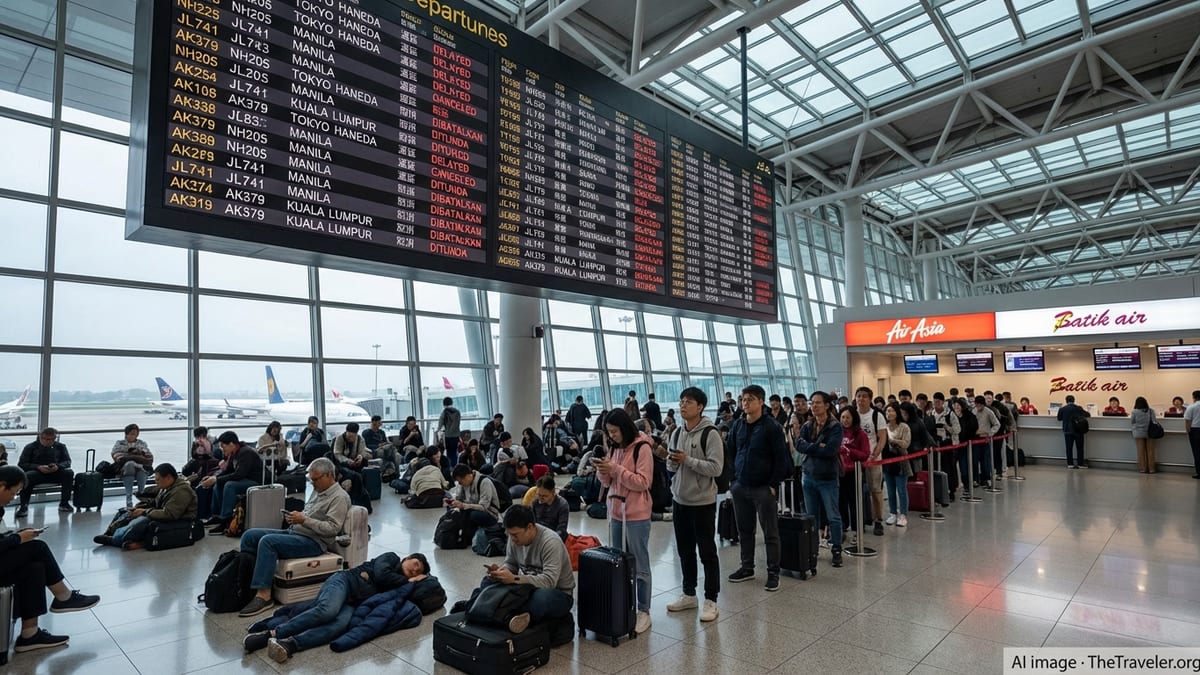
Wave of Disruptions Hits Key Japanese Hubs
Publicly available flight tracking and airline operations data indicate that Japan’s aviation grid experienced an unusual surge of sudden interruptions, with reports referencing as many as 362 network and systems disruptions cascading through the domestic and international schedule. The knock-on effects were particularly visible at Narita, Naha and Fukuoka, three airports that together handle a significant share of the country’s leisure and business traffic.
While detailed technical diagnostics have not yet been fully disclosed, industry monitoring platforms point to a sequence of short, sharp outages affecting air traffic management flows, airline dispatch links and ground handling coordination. The pattern is consistent with a highly interconnected network in which even brief interruptions can propagate through multiple airports within minutes.
The disruptions came at a sensitive time for Japan’s carriers, which were already adjusting operations in response to adverse weather episodes and a busier than usual summer outbound market. The convergence of schedule strain and network unreliability quickly translated into mounting delays, overburdened customer service channels and growing queues at check in and rebooking counters across the affected hubs.
Analysts following the region’s aviation performance note that Japan’s airlines normally rank among the most punctual in the world, which makes a single event involving hundreds of discrete disruptions statistically exceptional. The incident is expected to feature prominently in reliability and on time performance data for the current quarter and may prompt a reassessment of contingency planning for major hubs.
Narita: International Gateway Under Pressure
At Narita International Airport, east of Tokyo, the disruption wave played out most visibly across long haul and regional international services. Flight status boards showed a cluster of extended delays and cancellations concentrated in mid haul routes to and from Southeast Asia, Oceania and North America, alongside domestic connections that feed those services.
Operational summaries from multiple carriers suggest that Narita’s tightly timed morning and afternoon banks were particularly exposed. When early services departed late or were held on the ground, aircraft and crew rotations for the rest of the day were thrown off, forcing airlines to consolidate frequencies or cancel individual rotations outright. This is a typical pattern at hub airports where aircraft are scheduled on near continuous turns.
Passenger reports describe terminal congestion building as the day progressed, with security lanes, baggage claim areas and ticketing counters under sustained pressure. With limited spare capacity on parallel services, many travelers faced rebookings onto flights departing 12 to 24 hours later and, in some cases, involuntary overnight stays in the wider Tokyo area.
Despite these conditions, publicly accessible airport performance dashboards show that runway operations at Narita continued at reduced but steady throughput for much of the disruption window. This suggests the bottleneck lay less with physical infrastructure than with the digital systems and staffing patterns that coordinate aircraft, crews and ground services across airlines.
Naha and the Southwest: Weather, Tourism and Network Stress
Naha Airport in Okinawa, a critical gateway to Japan’s southern resort islands, has been navigating a challenging operational environment throughout the current typhoon season. Recent storms have already forced large scale preventive cancellations and diversions, and the latest network turbulence added another layer of complexity to an already fragile schedule.
According to aviation tracking services and local media coverage, carriers serving Naha found themselves dealing simultaneously with unstable weather bands and intermittent network coordination issues. In practice this meant aircraft waiting longer for departure clearances, arrivals being held or rerouted, and tight domestic connections across the Okinawa mainland and outlying islands falling apart as schedules slipped.
The impact was especially acute for leisure travelers and tour groups whose itineraries were built around fixed resort check in times and excursion bookings. Travel advisories circulating in Japanese and regional outlets urged passengers with upcoming flights to Naha to monitor airline notifications closely and to factor in the possibility of last minute schedule changes even after check in.
Given Naha’s role as both a domestic hub and a growing international entry point for visitors from East and Southeast Asia, the disruption also raised concerns among local tourism operators who rely on predictable flight patterns to coordinate transfers, hotel staffing and seasonal hiring.
Fukuoka’s Dual Role Magnifies the Impact
Fukuoka Airport, the principal gateway to Kyushu and an important spoke in Japan’s domestic network, experienced its own set of cascading problems as the disruption unfolded. Fukuoka’s schedule includes dense shuttles to Tokyo, Osaka and Naha, as well as regional international routes to South Korea and other nearby markets, making it sensitive to disturbances elsewhere in the grid.
When flights into Fukuoka from Tokyo and other hubs were delayed or canceled, aircraft and crews slated to operate onward legs from Kyushu were left out of position. Public timetables show that several rotations connecting Fukuoka with Narita and Naha were either significantly delayed or dropped from the schedule, contributing to a patchwork day of operations that left some city pairs temporarily without service.
Local travel industry reports indicate that business travelers and short stay visitors bore the brunt of the disruption in Fukuoka. Many same day return trips became unworkable, forcing last minute hotel bookings and reconfigured meeting schedules across the region. The airport’s integrated rail and subway links helped absorb some of the spillover as travelers pivoted to domestic ground transport, but capacity constraints limited how many disrupted flyers could realistically switch modes.
For carriers based on or heavily invested in the Kyushu market, the incident will likely inform future risk assessments about the concentration of aircraft and crew resources at specific hubs. A single day of major disruption can take several days to fully unwind in terms of repositioning and restoring normal patterns.
Airlines, Regulators and Travelers Look Ahead
As operations gradually stabilize, attention within Japan’s aviation community is turning to root cause analysis and resilience planning. Technical specialists and researchers have long documented how delays and disruptions propagate through Japan’s tightly integrated domestic air transport network, emphasizing that even short incidents can have outsized effects when schedules are highly optimized.
Industry observers expect airlines and infrastructure operators to review how critical systems are segmented and backed up, with particular focus on the interfaces between air traffic control services, airline dispatch centers, airport management systems and ground handling providers. Strengthening these digital links and establishing clearer failover procedures could reduce the risk that localized outages snowball into country wide disruption.
For travelers, the latest episode underscores the importance of proactive planning when flying through key Japanese hubs during peak seasons or volatile weather windows. Consumer advocates recommend building extra connection time into itineraries that rely on same day domestic links, enabling airline app notifications, and maintaining flexible arrangements for transfers and accommodations where possible.
Japan’s aviation sector has a long record of rapid recovery after shocks ranging from severe weather to major infrastructure events, and early indicators suggest that carriers are already working to rebuild passenger confidence through schedule normalization and targeted waivers. How quickly the system digests the lessons from this latest disruption will be closely watched by both domestic travelers and the international tourism market that increasingly relies on Japan’s air network.