


More news on this day
A rapidly escalating jet fuel crunch tied to the war in Iran is rippling through global aviation, forcing airlines from Hong Kong to Europe and the Americas to trim long-haul schedules and push up surcharges just as peak summer travel demand approaches.
Get the latest news straight to your inbox!
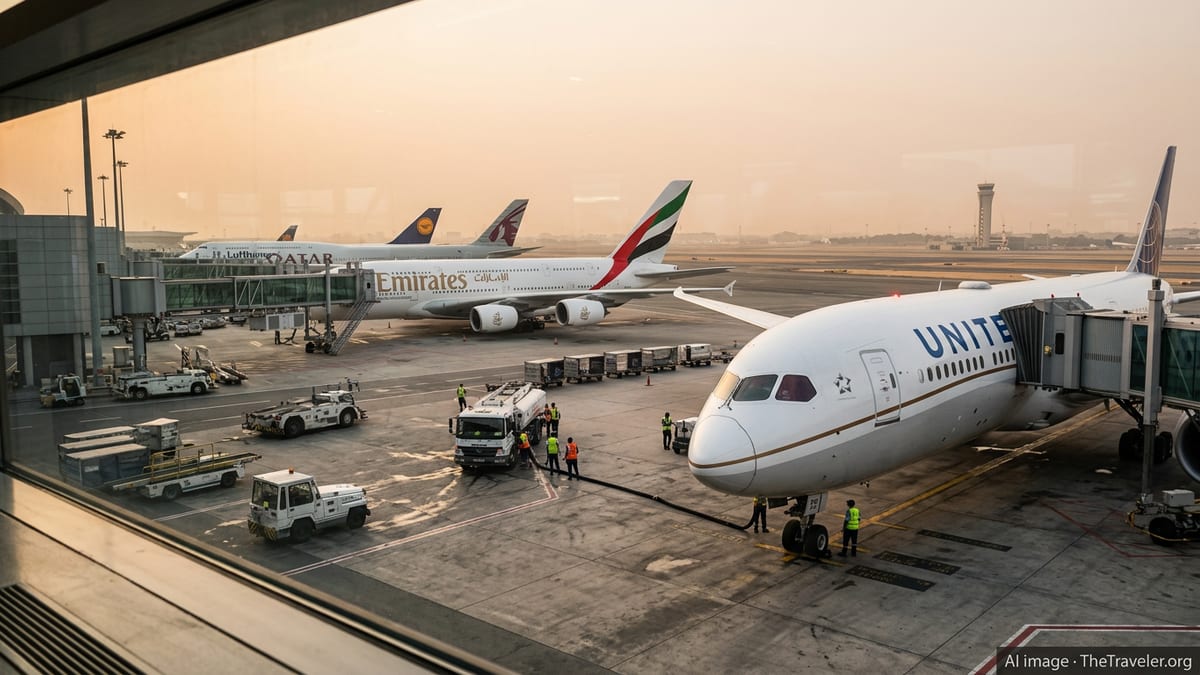
Middle East Conflict Sends Jet Fuel Prices Soaring
Jet fuel prices have surged in recent weeks as the closure of the Strait of Hormuz and attacks on regional energy infrastructure disrupt global oil and refined product flows. Industry data shows benchmark jet fuel costs in Europe and Asia have nearly doubled since February, driving airline fuel bills sharply higher heading into the busy northern summer season.
Analyst reports indicate that carriers across North America, Europe, and Asia are revising 2026 budgets upward to reflect the new cost environment. For major groups such as Lufthansa, Delta Air Lines, and Air France-KLM, fuel was already one of the largest line items on the balance sheet; the latest spike is now testing hedging strategies and cash reserves that were still recovering from the pandemic-era downturn.
Capacity data compiled by air-schedule trackers points to a rapid operational response. With refinery output under pressure and jet fuel inventories in Europe reported at multi-year lows, airlines are beginning to pare back the most fuel-intensive flying, especially ultra-long-haul routes that require heavy fuel loads and offer fewer opportunities for refueling along the way.
Infrastructure assessments circulated among aviation risk specialists suggest the supply crunch is likely to persist for months even if shipping lanes reopen, citing refinery bottlenecks and logistics constraints that limit how quickly jet fuel production can ramp up in other regions.
Cathay Pacific Joins Wave of Surcharges and Capacity Cuts
Hong Kong-based Cathay Pacific has become one of the most visible examples of how the fuel shock is reshaping airline economics. Publicly available information from the airline shows that fuel surcharges on both short-haul and long-haul flights have been lifted by roughly a third since March, with the latest increase taking effect from early April and adding the equivalent of several hundred US dollars to many round-trip long-haul tickets.
Specialist travel trackers note that Cathay Pacific has moved from monthly to more frequent fuel surcharge reviews, mirroring the pattern seen during earlier energy price spikes. The airline has also updated its global surcharge tables to reflect the jump in jet fuel prices, maintaining different currency structures in markets such as Hong Kong, Canada, and New Zealand but applying broadly higher levels worldwide.
Schedule data referenced in recent infrastructure and aviation market reports indicates that Cathay Pacific is trimming around 2 percent of its flights from early May through the end of June, characterizing the adjustments as a last-resort response to fuel constraints. The cuts are concentrated on selected long-haul and regional services, while core trunk routes between Hong Kong, Europe, and North America remain largely intact for now.
Industry observers point out that Cathay Pacific’s experience underscores the particular vulnerability of long-haul hub carriers in Asia, where many flights depend on refueling at airports that are directly exposed to the current jet fuel supply tightness.
Europe’s Legacy Carriers Reshape Networks
In Europe, airlines including Lufthansa and Air France-KLM are reshaping networks to cope with both higher prices and tightening availability of jet fuel. Publicly available capacity figures show Lufthansa Group cutting around 20,000 flights from its summer schedule, equivalent to roughly 5 percent of its short-haul operations, in an effort to conserve fuel and prioritize more profitable long-distance services.
European energy market analysis highlights that jet fuel stocks in major hubs such as Germany and France have fallen to coverage levels last seen at the height of the pandemic, intensifying pressure on airlines to use their allocations carefully. While Lufthansa has emphasized that its flagship long-haul network is being protected where possible, the carrier is consolidating frequencies on marginal routes and steering passengers onto remaining services.
Air France-KLM and British Airways are following similar patterns, reducing or consolidating some multi-daily European and transatlantic flights while keeping higher-demand intercontinental routes in place. Aviation data services tracking seat capacity report that more than two million seats have been removed from May and June timetables worldwide, with a significant portion of the reductions centered on Europe’s major hubs.
The result for travelers is a more constrained schedule map across France, Germany, the Netherlands, and the United Kingdom. Fewer flight options and denser loads increase the risk of knock-on disruption if fuel deliveries are delayed or if further cuts become necessary later in the summer.
Pressure Spreads to the Americas and Brazil
The fuel crunch is also affecting carriers in the Americas, including the United States and Brazil, though in different ways. Analyst commentary suggests that many large US airlines, such as Delta Air Lines, have to date relied more on base fare adjustments than explicit fuel surcharges, but are still facing double-digit percentage increases in projected fuel expenses for 2026.
In Brazil and across South America, LATAM Airlines Group and regional competitors are dealing with both higher costs and localized supply constraints. Industry news coverage notes that some long-haul flights linking Brazil with Europe and North America are under review or subject to seasonal reductions as airlines seek to safeguard fuel for core routes and domestic operations.
Market intelligence bulletins also point to rising capacity pressure on popular north–south leisure corridors between the United States, Brazil, and Chile. While most long-haul links remain in operation, tighter schedules and potential last-minute adjustments are increasing uncertainty for travelers planning complex itineraries through major Latin American hubs.
Energy sector analysts warn that refineries in the Gulf of Mexico and along the US Atlantic coast, which are major suppliers of jet fuel, are operating at high utilization rates, leaving limited buffer should the disruption in Middle Eastern supply chains worsen or extend into 2027.
Travelers Face Higher Fares, Tighter Connections, and More Risk
For passengers, the jet fuel crisis is translating into a combination of higher costs and reduced flexibility across many long-haul markets. Comparative fare guides published in recent weeks show surcharges and base ticket prices rising fastest on Europe–Asia and transpacific routes, where aircraft burn the most fuel and where rerouting around affected airspace adds extra flight time.
Analysts note that while the share of fuel in airline operating costs had moderated in the years of lower oil prices, the latest jump has restored it as a dominant factor in pricing decisions. Airlines in Hong Kong, Europe, and Latin America are now passing through a larger portion of their fuel burden directly to travelers via surcharges, particularly on premium cabins and longer sectors.
Operationally, the combination of trimmed schedules and heavy summer demand is narrowing the margin for error. If fuel deliveries to key airports in France, Germany, Brazil, or Hong Kong are disrupted further, aviation risk reports suggest that carriers may be forced into additional short-notice cancellations, especially on routes where there are few alternative refueling options.
Travel experts advise that passengers planning long-haul trips over the coming months build in extra time for connections, monitor airline communications closely, and be prepared for schedule changes or rebookings as airlines continue to manage through an evolving fuel supply shock.