


More news on this day
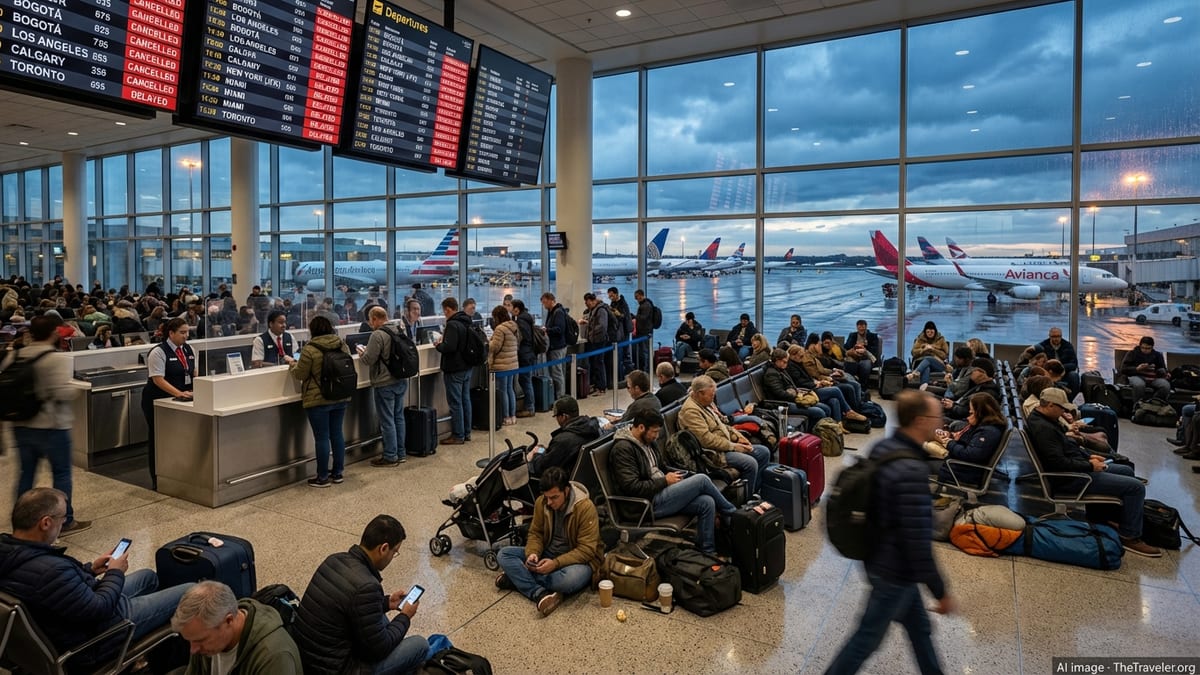
Hundreds of passengers were left stranded at John F. Kennedy International Airport on July 6, 2026, as airlines including JetBlue, Delta, American Airlines and British Airways contended with 235 flight delays and 155 cancellations that rippled across New York, London, Paris, Dubai and major US cities.
Get the latest news straight to your inbox!
Network Disruptions Spread From JFK to Global Hubs
Publicly available flight-tracking data and industry coverage indicate that the disruption centered on John F. Kennedy International Airport but quickly spread across interconnected networks linking North America, Europe and the Middle East. Long-haul routes between New York and key hubs such as London Heathrow, Paris Charles de Gaulle and Dubai International experienced rolling delays, missed connections and scattered cancellations.
Major U.S. carriers JetBlue, Delta Air Lines and American Airlines, along with transatlantic operators such as British Airways and Air France, were among those most visibly affected. Reports show that services to and from London and Paris saw clusters of late departures and arrivals, leaving aircraft out of position for subsequent rotations and compounding the operational strain through the day.
Additional coverage highlights that Gulf carriers including Emirates and Qatar Airways, as well as other European airlines such as KLM and ITA Airways, also reported delays or cancellations on services tied to New York. The result was a web of disruption affecting passengers not only in New York, London, Paris and Dubai but also in secondary U.S. cities where connecting flights could not depart on time or were removed from schedules altogether.
These latest figures follow a pattern of mounting operational pressure at JFK this summer travel season. Similar episodes in recent weeks, involving dozens of cancellations and more than 200 delays on single days, have already tested airline recovery plans and stressed hub-and-spoke networks on both sides of the Atlantic.
Weather, Congested Skies and Crew Limits Drive Operational Strain
Operational summaries and aviation data services point to a combination of heavy summer traffic, adverse weather and strict air traffic management as key drivers of the current disruption. Recent advisories show that thunderstorms over the New York region have triggered traffic management programs for arrivals and departures at JFK, with average departure delays at times extending beyond two hours.
When storm systems linger over the northeastern United States, controllers typically reduce arrival and departure rates, forcing airlines to delay flights at origin airports or hold aircraft on the ground. This creates an immediate bottleneck at a major hub like JFK, where runway capacity and gate space are already under pressure from peak-season demand.
Once flights are significantly delayed, airline scheduling teams face additional constraints from crew duty-time rules. If pilots or flight attendants exceed legal working limits before a rotation is completed, aircraft may be forced to remain on the ground until replacement crews can be assigned. Public analyses of recent disruptions at JFK and other U.S. hubs note that such crew timing issues can quickly turn a weather-related delay into a full cancellation when no backup staff are available.
Industry commentary also underscores the sensitivity of tightly timed transatlantic and long-haul operations. Even a relatively short ground hold in New York can push a departure outside its planned arrival slot at heavily regulated airports like Heathrow or Charles de Gaulle, prompting knock-on delays in Europe and making it harder for carriers to restore normal schedules the following day.
Passenger Impact Felt Across Terminals and Time Zones
For travelers, the headline numbers of 235 delays and 155 cancellations translated into long queues at check-in and security, crowded departure halls and extended waits at baggage carousels. Reports from travel outlets describe passengers at JFK’s terminals searching for scarce rebooking options, with many flights overbooked during the peak summer period.
Because many of the affected services connect through JFK to onward destinations, disruption was not confined to New York. Travelers in London, Paris and Dubai reported missed connections to U.S. cities, while domestic passengers in hubs such as Boston, Atlanta, Chicago, Los Angeles and San Francisco faced late-night arrivals or cancellations of feeder flights scheduled to link with international departures.
Travel industry coverage also notes the growing pressure on airport services surrounding such events. Hotels near JFK and in Manhattan typically see a spike in last-minute bookings when large numbers of passengers are unable to depart, while ground transport operators experience surges in demand as travelers seek alternative routes, including rail or car rentals, to continue their journeys.
Stranded passengers are increasingly turning to social media and airline apps to track real-time schedule changes and to secure limited seats on alternative flights. With multiple carriers simultaneously adjusting operations, competition for rebooking options can be intense, especially for families and large groups aiming to travel together on the same itinerary.
Airlines Adjust Schedules as Summer Peak Intensifies
According to publicly available timetables and recent operational updates, airlines serving JFK have already been trimming schedules and consolidating frequencies in an effort to improve reliability during the busiest travel months. Some carriers have reduced marginal routes or shifted departures to off-peak hours to avoid the worst congestion and give operations more recovery time after weather events.
Analysts observing the latest disruptions note that large network airlines such as American and Delta, along with hybrid and low-cost players like JetBlue, face a difficult balance between offering sufficient capacity to meet strong summer demand and maintaining enough slack in their systems to cope with storms, air traffic control restrictions and technical issues.
International airlines are also recalibrating their approach to New York operations. Coverage of recent schedule changes indicates that European and Middle Eastern carriers are adjusting aircraft types and tailoring frequencies on certain JFK routes, in part to manage high load factors while maintaining punctuality metrics that are closely watched by corporate clients and leisure travelers alike.
Despite these efforts, travel specialists caution that additional days of disruption remain possible as long as volatile summer weather and dense traffic conditions persist. With JFK ranking among the busiest international gateways for traffic between North America, Europe and the Middle East, even modest operational challenges can have far-reaching consequences across global airline networks.
What Travelers Can Do During Ongoing Disruptions
Consumer advocates and travel commentators emphasize that preparation is essential for anyone flying through New York during this period of elevated disruption risk. Passengers are widely encouraged to monitor flight status closely through official airline channels and flight-tracking tools, particularly in the 24 hours before departure, when schedule changes are most likely.
Travel guidance published in recent months suggests that travelers connecting through JFK or other busy hubs build additional time into their itineraries, especially when linking international and domestic segments. Longer layovers can provide a buffer against missed connections if the first leg of a journey experiences delays.
For those already affected by cancellations or extended delays, publicly available information on airline policies and U.S. Department of Transportation guidance sets out options for refunds, rebooking and, in some cases, meal or hotel assistance when disruptions are within a carrier’s control. Passengers are advised to retain boarding passes and receipts and to document any additional expenses, which may be useful when seeking compensation or claiming through travel insurance.
With weather patterns and traffic volumes unlikely to ease in the immediate future, observers expect airlines and airports to remain under pressure to improve communication, streamline rebooking processes and ensure that passengers caught up in large-scale disruptions receive timely information about their options as conditions evolve.