


I applied for the Turkish Airlines Miles&Smiles Premier Visa thinking it would be a niche card, useful only for the occasional flight to Istanbul. After a few months of living with it, crunching the numbers and comparing it with better-known competitors, I realized I had underestimated what this card can actually do. The surprises were not just in the benefits printed in the marketing copy, but in how those perks translate into real-world flights, lounge visits, and status shortcuts that matter to frequent travelers.
Get the latest updates straight to your inbox!
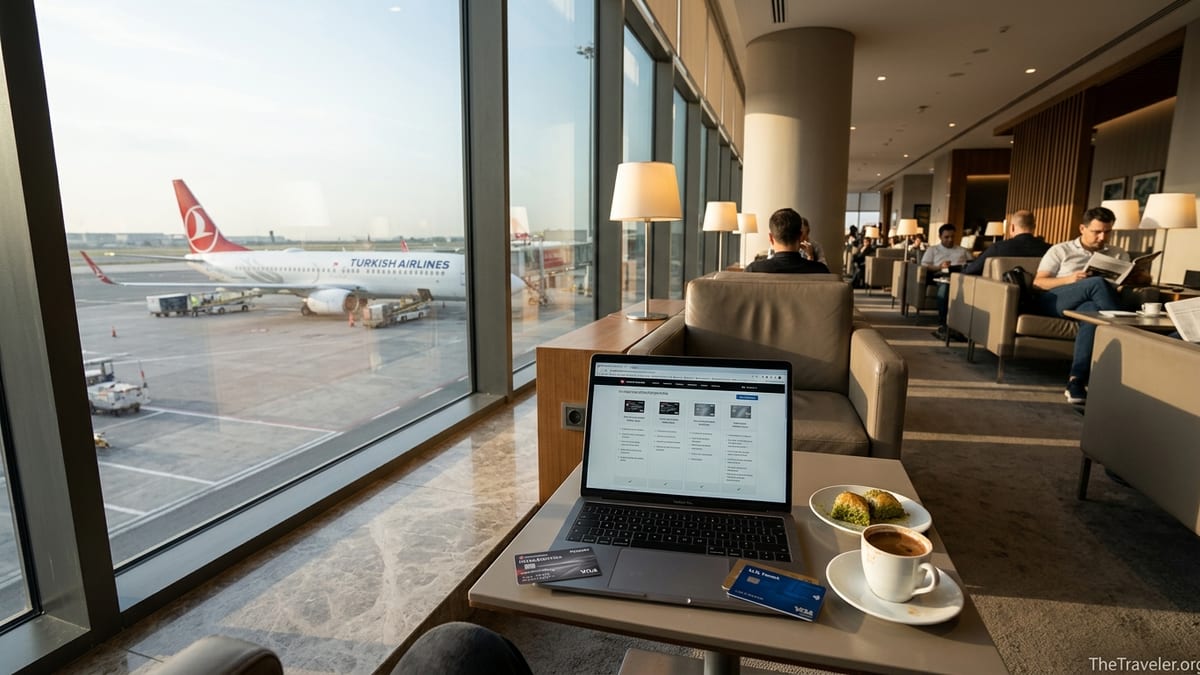
The Basics: What the Miles&Smiles Premier Visa Actually Offers
The Turkish Airlines Miles&Smiles Premier Visa Signature Credit Card, issued in the United States, tends to fly under the radar compared with cards from bigger domestic players. On paper, it looks straightforward: a moderate annual fee of about 99 dollars, no foreign transaction fees, a welcome bonus that can reach around 40,000 Miles&Smiles miles when you meet minimum spend, and category bonuses geared toward travel and everyday spending. Those headline numbers are similar to what you see on many mid-tier airline cards.
Where it starts to separate itself is in what those miles are actually worth once you plug them into the Miles&Smiles award chart. Unlike many U.S. airline programs that have drifted toward fully dynamic pricing, Turkish still uses a published, region-based chart for its own flights and Star Alliance partners. That means you can predict, at least within a reasonable band, how far your welcome bonus and ongoing spending will take you in economy or business class.
In practical terms, this means that if you pick up the card before a big trip cycle, that initial windfall of Turkish miles can be pointed very strategically. For example, a single bonus can often cover a one way business class seat from the United States to Europe on a Star Alliance carrier, something that usually requires significantly more miles with United or Air Canada. Add in the no foreign transaction fees, and the card becomes a comfortable companion not only during booking but also while you are actually on the road.
For travelers who are used to viewing co-branded airline cards as glorified coupon books for free checked bags, the Turkish card is structured a bit differently. Its value is less about nickel-and-dime discounts and more about opening doors into premium cabins and status levels that would otherwise demand far more cash or flying.
The Big Surprise: How Far One Welcome Bonus Can Fly You
The first real surprise for me came when I plugged the welcome bonus into the Miles&Smiles award chart. A standard Star Alliance partner award between North America and Europe in business class typically prices at around 45,000 Turkish miles one way on many routings. That is roughly half of what you might see with United MileagePlus, which often charges 70,000 or more miles for similar flights on partners like Lufthansa or Swiss.
In practical terms, that means a new cardholder who earns around 40,000 bonus miles plus a few thousand miles from meeting the minimum spend is suddenly in striking distance of a flat bed to Europe. For instance, imagine you are based in Chicago and want to fly to Zurich. With Turkish miles, you might piece together a United or Swiss business class segment for roughly 45,000 miles one way. The same routing booked with United miles could easily require 70,000 miles or more for the exact same seat.
Another striking example is within North America. Turkish prices many United domestic flights at about 10,000 miles one way in economy and around 22,500 miles in business for longer routes, even cross-country. That means your bonus can realistically cover a round trip in business class from Newark to San Francisco on United, or several shorter hops such as Denver to Houston or Chicago to Miami. For anyone who regularly pays cash for domestic flights in the 300 to 500 dollar range, routing those trips through Turkish awards can stretch the value of each mile well above one cent.
There is a catch: Turkish’s online booking engine can be temperamental, and sometimes you need to call or visit a ticket office to stitch together more complicated itineraries. However, for travelers willing to invest a bit of planning, the raw mileage pricing remains one of the strongest selling points of the card. The Miles&Smiles Premier Visa effectively becomes a lever to tap into this award chart without needing to rely solely on transferable bank points.
Premier Visa Versus the Usual Suspects
When I first evaluated the Miles&Smiles Premier Visa, I mentally ranked it against well-known competitors: the United Explorer Card, American Airlines mid-tier cards, and flexible-point products like the Chase Sapphire Preferred. On a pure earn rate basis, the Turkish card does not dramatically outpace these rivals. Where it wins is in what each mile can unlock compared with the same effort elsewhere.
Take the Chase Sapphire Preferred as an example. You might earn 2 points per dollar on travel and dining, then transfer those points to United or Air Canada. Once there, a one way business class award from the East Coast to Western Europe might cost 60,000 to 75,000 miles or more. If instead you earn Turkish miles directly on the Premier Visa, you are targeting a business class award that still sits around 45,000 miles in many cases. Even if your earn rate per dollar is similar, the practical cost in spending required to reach a premium cabin is lower with Turkish.
Comparing it to a typical U.S. co-branded airline card brings a similar conclusion. The United Explorer Card comes with free checked bags, priority boarding, and some United Club passes, perks that are great if you fly United constantly and mostly within their network. The Turkish card’s strengths are more global and more flexible. Because Turkish is a Star Alliance member, your miles can sit in one place while you book flights on carriers as diverse as Lufthansa, Swiss, Austrian, TAP Air Portugal, Air Canada, and United, depending on where you need to go.
For example, a family in Boston planning a summer trip to Athens might find that United or Lufthansa nonstops are sold out or overpriced. With Miles&Smiles, they could build an itinerary like Boston to Istanbul to Athens on Turkish metal, or Boston to Munich on Lufthansa and onward on Aegean, all priced under the Turkish award chart instead of two separate programs with dynamic pricing. The Premier Visa, in this context, is less about loyalty to a single airline and more like a key to a multi-airline network priced under a single, predictable system.
Status, Lounges, and the Hidden Upside of Star Alliance Gold
Another area where I misjudged the card at first was status. Miles&Smiles has several elite tiers, and climbing the ladder typically requires a combination of flown miles and, for some members, qualifying activities such as spending on co-branded cards. Elite status with Turkish does not just get you perks on Turkish flights; it also brings Star Alliance Gold privileges, including lounge access and priority services across the alliance.
In real life, that means if you eventually parlay your Turkish miles and flying into Elite status, you gain access to Star Alliance lounges even when you are flying economy on partners. Imagine a work trip from New York to São Paulo on United in coach. With Turkish Elite status on your boarding pass, you can walk into the Star Alliance lounge at Newark with a guest, enjoy a hot meal and a shower, then board your economy seat having had a premium ground experience.
The Turkish card can quietly support that journey because it channels your everyday spend into a single frequent flyer account, rather than spreading points across multiple airline programs. If you are someone who regularly books flights through Turkish or Star Alliance partners, hitting the thresholds for status becomes more realistic when your grocery, gas, and restaurant expenses are also feeding that same tally of redeemable miles and, in some cases, status miles or qualifying activity markers.
Even without elite status, cardholders sometimes benefit from Turkish’s own lounge arrangements, particularly on itineraries touching Istanbul. The airline operates expansive lounges at Istanbul Airport that are considered among the better options in Europe and the Middle East, with full meals, quiet areas, and showers. While access rules are primarily based on cabin class and status, the fact that your card is tied to this ecosystem makes it easier to build trips that route through Istanbul and take advantage of those facilities, rather than being locked into domestic hubs like Newark or Chicago where lounge access might require a separate club membership.
Real-World Trip Scenarios That Show the Card’s Value
To understand how the Miles&Smiles Premier Visa behaves beyond the brochure, it helps to walk through some actual use cases. Consider a couple in Los Angeles planning a spring trip to Rome. Cash fares in business class on major European carriers might run 3,500 to 4,500 dollars per person. They sign up for the Premier Visa, earn roughly 40,000 miles from the welcome offer and another 5,000 to 10,000 miles from meeting minimum spend and a few months of organic use.
They then combine those miles with transferable points from an existing bank program, moving a chunk into Turkish Miles&Smiles. With roughly 90,000 Turkish miles each, they can aim for a one way or even round trip business class itinerary, perhaps Los Angeles to Istanbul to Rome on Turkish or Los Angeles to Frankfurt on Lufthansa and onward to Rome, all booked through Turkish’s award engine. Instead of paying thousands in cash, they cover the flights with points, paying only taxes and moderate surcharges.
Another case involves domestic United flights. Imagine a freelancer based in Denver who regularly travels to New York and San Francisco for client meetings. Cash round trips often cost 350 to 500 dollars in economy, and short-notice tickets can be far higher. By routing these trips through Turkish awards at around 10,000 miles each way in economy, that freelancer can turn one welcome bonus plus a year of card spending into several domestic trips on United, significantly reducing out-of-pocket travel costs.
For long-haul adventurers, the North America to Africa pricing can be especially appealing. A traveler from Houston planning a safari in Nairobi could use Turkish miles to book a routing like Houston to Istanbul to Nairobi in business class for fewer miles than many competing programs charge. The result is a comfortable lie-flat journey on a reputable airline with solid onboard catering, all made more accessible by earning miles through everyday purchases on the Turkish card rather than relying solely on expensive paid business fares.
Where the Card Falls Short and What to Watch For
Despite its strong sweet spots, the Miles&Smiles Premier Visa is not perfect. The most persistent frustration is the booking experience. Turkish’s online engine is improving, but it can still be quirky with partner awards. You may search for a Chicago to Vienna flight on Austrian and see nothing, only to find the same seat available if you call the Miles&Smiles service center or search segment by segment. Travelers who value a slick, app-based, one-click redemption path might find this friction annoying.
There is also the issue of surcharges. Turkish often passes along carrier-imposed fees on Star Alliance award tickets. On some itineraries, especially on European partners like Lufthansa or Swiss, these can run into the hundreds of dollars on a round trip in premium cabins. Compared with all-cash fares of several thousand dollars, this can still represent solid value, but it is important not to assume that “award ticket” automatically equals “only a few dollars in taxes.” In some cases, you may want to target partners or routings with lighter surcharges, such as United-operated flights departing from the United States.
Another limitation is the card’s relative lack of domestic-style perks that U.S. travelers have grown accustomed to. You do not get the same package of free checked bags, priority security lanes, or flexible airline fee credits that some domestic cards advertise. The value of the Turkish card is more concentrated in its mileage engine and the award chart, which means it is better suited to travelers who care about premium cabins and international routing rather than those looking for small conveniences on short domestic hops.
Finally, this is not an ideal catch-all card for non-travelers. If you rarely leave the country, seldom fly Star Alliance carriers, or prefer simple cash back, you may find that the annual fee and learning curve around Miles&Smiles are not worth it. In that case, a straightforward cash-back or general travel card will likely serve you better.
The Takeaway
The surprise with the Turkish Airlines Miles&Smiles Premier Visa is not in the marketing bullet points, but in how its award chart, alliance reach, and status ecosystem work together. I went in expecting a niche card that would only make sense for die-hard Turkish loyalists or frequent Istanbul travelers. What I found instead is a quietly powerful tool for unlocking business class seats to Europe, efficient domestic trips on United, and a realistic path into Star Alliance Gold level benefits.
For travelers willing to spend a bit of time learning the Miles&Smiles program and dealing with the occasional booking quirk, the Premier Visa offers outsized value relative to its fee and its profile in the U.S. market. A single welcome bonus can easily become a flat bed flight across the Atlantic, and ongoing spend can feed into an account that prices international itineraries more generously than many better-known programs.
This is not the right card for everyone. If your flying is almost entirely domestic and you prize immediate convenience over long-haul comfort, a mainstream U.S. airline or bank card will probably fit better. But if your eyes light up at the thought of flying Lufthansa or Swiss business class for fewer miles, or piecing together an Istanbul stopover on the way to Africa or Asia, then this underappreciated card deserves serious consideration in your wallet.
FAQ
Q1. What is the annual fee for the Turkish Airlines Miles&Smiles Premier Visa?
The annual fee is around 99 dollars, positioning it in the mid-tier range compared with other airline credit cards.
Q2. How many miles can I earn with the welcome bonus?
The welcome offer typically tops out around 40,000 Miles&Smiles miles after meeting a minimum spend requirement, though exact terms can vary over time.
Q3. Is the card worth it if I mostly fly within the United States?
It can be, especially if you frequently fly United, because Turkish often prices domestic United economy awards around 10,000 miles each way and business around 22,500 miles.
Q4. Can I use Turkish miles to book flights on other airlines?
Yes. Turkish is part of Star Alliance, so you can redeem Miles&Smiles miles for flights on partners like United, Lufthansa, Swiss, Austrian, TAP Air Portugal, and many others.
Q5. Are there fuel surcharges on award tickets?
Often there are. Turkish commonly passes on carrier-imposed surcharges, especially on some European partners, so expect to pay more than just basic taxes on many premium-cabin awards.
Q6. How does the card compare with a United or American Airlines co-branded card?
Those cards emphasize perks like free checked bags and priority boarding, while the Turkish card’s main strength is cheaper award pricing for international and domestic flights within the Star Alliance network.
Q7. Does the Miles&Smiles Premier Visa help me earn elite status?
It can support your progress by concentrating your earn into one program, and in some cases qualifying activity from card usage may complement flown miles toward Miles&Smiles elite tiers.
Q8. Is the Turkish award booking process difficult?
The website can be quirky, and some partner awards require calling or booking segment by segment, so it may feel more involved than booking with some U.S. airlines, but many travelers find the savings worth the extra effort.
Q9. Does the card charge foreign transaction fees?
No. The Miles&Smiles Premier Visa typically comes with no foreign transaction fees, making it suitable for use on international trips and purchases abroad.
Q10. Who is the Turkish Miles&Smiles Premier Visa best suited for?
It is best for travelers who value premium cabin redemptions, fly or plan to fly Star Alliance carriers regularly, and are willing to learn the Miles&Smiles program to extract outsized value from the miles they earn.