


More news on this day
Jinhua Rail Transit in eastern China is rapidly emerging as a key suburban rail network, tightening links between Jinhua, Yiwu and neighboring cities while supporting an ambitious regional logistics and development strategy.
Get the latest news straight to your inbox!
A young network built for a regional city cluster
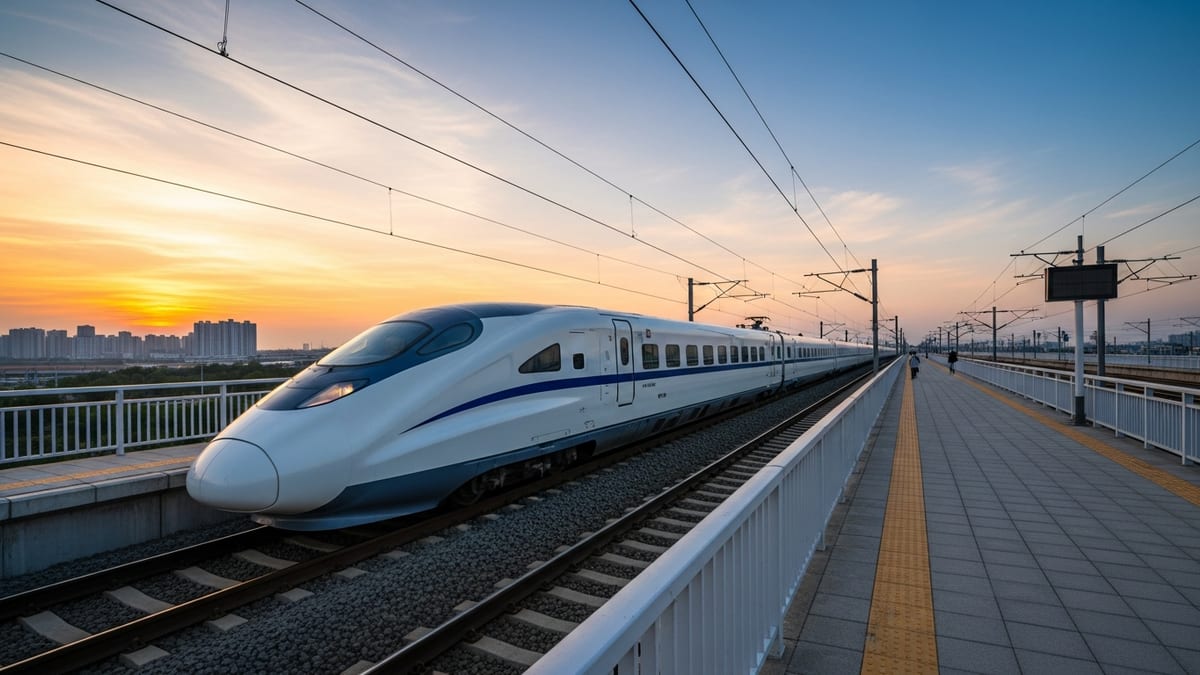
Jinhua Rail Transit is a relatively new suburban rapid transit system serving the prefecture level city of Jinhua in central Zhejiang province. Publicly available information describes it as a hybrid of metro style infrastructure and intercity rail, designed from the outset to connect multiple county level cities rather than focus solely on a traditional urban core.
The backbone of the system is the Jinhua Yiwu Dongyang corridor, often referred to as the Jinyi line or Jinyi Dong urban rail transit. Construction on this first route began in 2017, marking Jinhua’s entry into the fast expanding field of Chinese regional rail transit. The line has since progressed from construction into service, moving the project from planning documents into day to day transport reality for local residents.
Jinhua Rail Transit uses B type metro cars, the same general rolling stock category as many Chinese metro systems, but operates over considerably longer distances. Commentators in Chinese language transit forums often characterize it as a city county intercity line that functions like a metro, reflecting its unusual position between classic urban subway and longer haul regional railway.
The system operates alongside Jinhua’s role as a conventional rail hub. Mainline high speed and freight routes intersect at Jinhua Railway Station and other nodes, while the new urban rail lines provide higher frequency, all stops services that connect into this broader network and feed passengers into key high speed rail and logistics terminals.
Jinhua–Yiwu–Dongyang line sets an intercity benchmark
The flagship project of the network is the Jinhua Yiwu Dongyang rail transit line. Government information and regional media coverage describe it as the first rail transit project for Jinhua and one of the longest single municipal urban rail lines in China, with a total length slightly above 100 kilometers.
The line links Jinhua with the major trading city of Yiwu and the smaller city of Dongyang, creating a continuous east west corridor across central Zhejiang. Reports indicate that it includes more than 30 stations and was built with substantial capital investment, reflecting its dual role as both a daily commuting line and a development corridor intended to support industry, trade and new residential districts.
The long interurban character of the route distinguishes it from many other Chinese metro projects of similar age, which tend to focus on dense urban coverage. In Jinhua’s case, the priority has been to shorten travel times between historically separate urban areas and to integrate the emerging Jinyi metropolitan area into a single labor and services market.
Service patterns emphasize through running across the full length of the line, with intermediate stops at city railway stations, industrial zones and new development areas. For passengers, this creates a simple, one seat ride between Jinhua, Yiwu and Dongyang that competes directly with highway travel and helps to relieve pressure on parallel road corridors.
Network planning looks toward a 320 kilometer rail grid
Planning documents for Jinhua’s broader transport system outline an ambitious long term rail transit program. Regional development material highlights a proposed urban and suburban rail grid totaling roughly 320 kilometers in length, intended to underpin what officials describe as a Jinyi urban circle.
Within this framework, the current Jinhua Rail Transit alignment is expected to serve as an initial spine rather than a complete network. Additional urban rail corridors and potential loop lines are discussed in published planning maps and local analysis, including possible routes that would form a ring around core districts and radial extensions that would reach out to new industrial platforms and logistics facilities.
These rail plans sit alongside targets for an 800 kilometer expressway network and a 200 kilometer intercity fast road grid, illustrating Jinhua’s strategy of layering different transport tiers. Urban rail transit is positioned as the high capacity, high frequency option for daily commuting and short intercity trips within the metropolitan area, complementing expressways and conventional rail for longer distance flows.
The planning materials also connect rail transit expansion to broader urban form goals, including transit oriented development around key interchange stations and the creation of compact, mixed use clusters anchored on rail access. For travelers, this is likely to translate over time into a larger set of destinations reachable by direct rail from Jinhua’s existing city centers.
Integration with high speed rail, freight and sea rail logistics
Jinhua’s rail transit ambitions are closely tied to its growing role as a logistics and distribution hub. Recent policy frameworks for the city emphasize the Jinhua International Land Port, the China Europe freight train assembly center and a set of new rail corridors designed to strengthen connections to coastal ports and inland provinces.
One widely reported milestone was the launch of a direct rail freight route between Jinhua and Chuanshan Port at Ningbo Zhoushan. Previously, freight trains had to detour through Hangzhou, adding significant time to journeys between central Zhejiang and the coast. The new direct routing shortens transit times and is described in regional coverage as a catalyst for deeper logistics cooperation between Jinhua and Ningbo.
Parallel to these freight initiatives, construction has advanced on the Jinhua Jiande high speed railway, which links parts of the Jinhua region with Jiande, under the administration of Hangzhou. Once operational, this route is expected to cut travel times between Lanxi in Jinhua and Jiande to around a quarter of an hour, tightening the functional ties between central Zhejiang’s interior cities and the provincial capital’s orbit.
In this context, Jinhua Rail Transit functions as the fine grained local layer that feeds passengers and, indirectly, freight related employment into the mainline and high speed rail system. Stations on the urban rail network are positioned to connect with conventional railway hubs, strengthening Jinhua’s profile as a multimodal node where suburban rail, high speed trains and freight corridors intersect.
Implications for travelers and central Zhejiang tourism
For domestic and international travelers, the gradual build out of Jinhua Rail Transit changes how central Zhejiang can be explored. Jinhua itself, Yiwu’s massive wholesale markets and the cultural attractions of Dongyang and Lanxi are increasingly reachable without reliance on private cars or long distance buses.
Visitors arriving via high speed rail at Jinhua Railway Station or Jinhua South Station find an expanding set of local rail options for onward travel into surrounding districts. The interurban nature of the Jinhua Yiwu Dongyang line in particular means that markets, industrial parks and smaller city centers along the corridor can be visited as straightforward stops on a single through journey.
Tourism authorities across Zhejiang have been encouraging multi city itineraries that link historical towns, trade hubs and scenic areas. As more of Jinhua’s rail transit and high speed rail projects reach completion, itineraries that combine Jinhua, Yiwu, Lanxi and Jiande by rail are likely to become more practical, offering a car free way to experience inland Zhejiang’s economic and cultural landscape.
For now, Jinhua Rail Transit remains a compact network anchored by a single long line, but planning documents and ongoing construction activity suggest a period of steady expansion. Travelers considering visits to central Zhejiang over the next few years can expect rail to play an ever larger role in how they move between its fast growing cities.