


Few waterfronts in Europe feel as instantly glamorous as Boulevard de la Croisette in Cannes. Stretching along the Bay of Cannes with palm trees, creamy sand and a line of legendary hotels and beach clubs, it is where festival red-carpet energy meets easy Riviera holiday living. This guide shows you how to enjoy the Croisette on your own terms, whether you want a free seaside stroll, a mid-range beach day or an all-out luxury splurge.
Get the latest updates straight to your inbox!
Getting Oriented: What and Where Is Boulevard de la Croisette
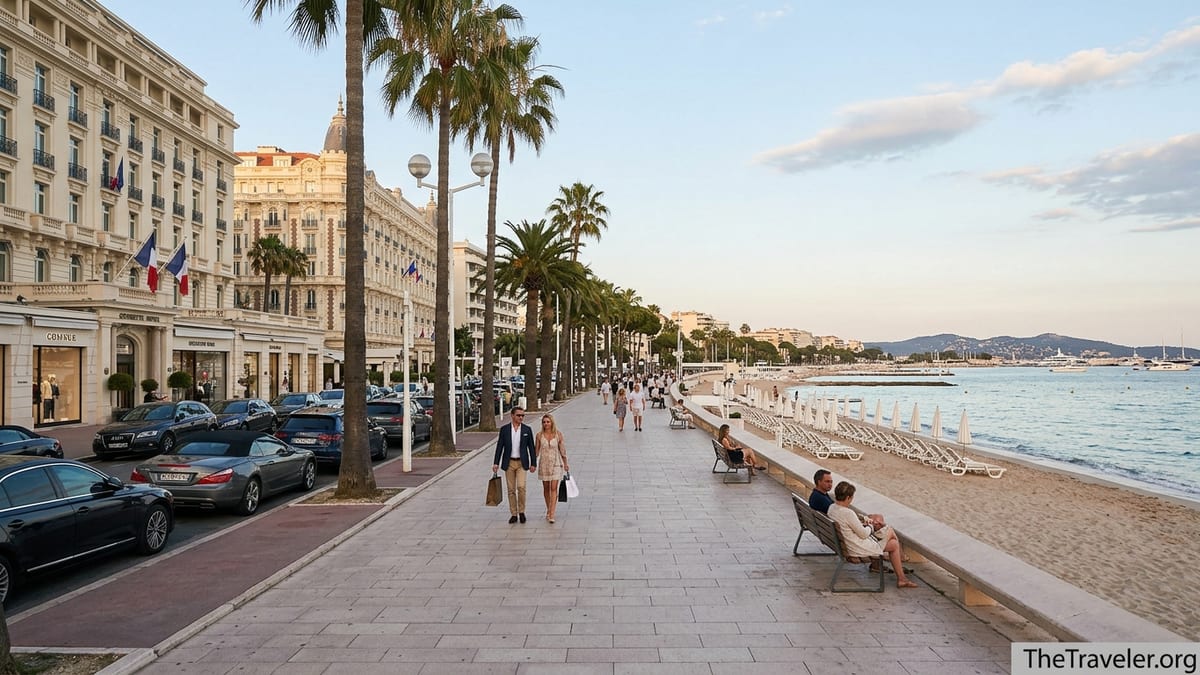
Boulevard de la Croisette, often simply called “La Croisette,” is the seafront avenue that runs for roughly 2 kilometers along the Bay of Cannes from the Palais des Festivals et des Congrès and the Old Port area in the west to the Palm Beach headland in the east. On the sea side you have a sequence of sandy beaches, pontoons and beach clubs. On the city side you find luxury hotels such as the Carlton Cannes and Hotel Barrière Le Majestic, grand apartment buildings, designer boutiques and cafés.
The western end near the Palais des Festivals is the busiest and most urban, with traffic, bus stops and access to the shopping streets behind. As you walk east, the atmosphere becomes more resort-like, with lower buildings, more gardens and, closer to Palm Beach, quieter stretches such as Bijou Plage backed by a park. This gradual change in mood means you can tailor your walk and beach time depending on whether you want festival buzz or a softer Riviera feel.
The promenade itself is flat and easy to walk, with wide pavements, benches and separate spaces for pedestrians and joggers in most sections. From central Cannes train station it is about a 10 minute walk down Rue des Serbes or Rue d’Antibes to reach the Croisette, so you do not need a car to enjoy it. Municipal car parks, including one under the Palais des Festivals with an entrance on the Croisette, are useful if you are visiting for the day and prefer to drive, but spaces fill quickly in July, August and during major events.
Ongoing redevelopment works are gradually upgrading the Croisette’s pavements, lighting and landscaping, but the promenade remains fully accessible and open, with sections of work screened off. In practice, this means you may encounter occasional construction fences or narrowed passages, yet the essential experience of walking between palm trees, sea and Belle Époque facades is intact.
The Classic Croisette Walk: From Palais des Festivals to Carlton
For a first visit, the essential walk starts by the red-carpeted Palais des Festivals at the western end and follows the seafront as far as the Carlton Cannes hotel. This stretch concentrates some of the most famous views and addresses in just under a kilometer, so it is easy to cover in 20 to 30 minutes at a relaxed pace, longer if you stop for photos or a coffee.
Begin by facing the bay with the Palais behind you. To your right you will see the curve of sandy beaches dotted with piers, and ahead, the line of grand hotels. Almost immediately you pass the Majestic hotel on your left, an Art Deco landmark, and a cluster of designer boutiques on the ground floors nearby, including brands such as Gucci and Dior. On the right, private beach clubs with neatly arranged white sunbeds stretch down to the water, often with central wooden piers lined by parasols that feature heavily in Cannes’ postcard images.
As you continue toward the Carlton, the promenade widens and you get uninterrupted views across the Golfe de la Napoule to the red Esterel hills. In the morning the light is soft and the air cooler, which is why locals and festival staff often use this time for a run or a quick dip before work. Benches under palm trees make easy rest spots; you might see cruise ship tenders shuttling passengers ashore or superyachts anchored offshore.
Reaching the Carlton, with its recognizable twin domes and creamy facade, feels like arriving at the symbolic heart of the Croisette. In recent years the hotel has completed a thorough renovation, and its frontage and beach club now define one of the most photogenic sections of the bay. Even if you are not staying there, it is worth pausing outside to take in the classic combination of ornate hotel, palm-lined boulevard and intensely blue sea beyond.
Best Beach Experiences: Free Sand, Municipal Options and Private Clubs
One of the most common misconceptions about La Croisette is that every grain of sand is reserved for paying guests. In reality, the waterfront is a mix of free public beaches, one or two municipal operations with regulated prices, and a large number of private beach clubs attached either to hotels or independent restaurateurs. The experience and cost vary widely, which allows you to choose the level of comfort that matches your budget.
Public sections of sand are interspersed between private concessions along the Croisette. These unsigned patches are free to access and are especially popular with locals and day trippers. On summer afternoons they can be crowded and compact, with towels laid close together and minimal facilities. You will often see families arriving with their own parasols and picnic coolers, taking advantage of the central location without paying for a lounger.
For a low-cost but slightly more structured option, look for the municipal beach areas such as Plage Macé, roughly opposite Rue Latour-Maubourg. Run by the city, they rent basic sun loungers and umbrellas at prices that are typically significantly lower than the luxury clubs, and they provide lifeguards, showers and changing cabins. The trade-off is a simpler setup: no cocktails delivered to your mattress, no background DJ sets, and rules on bringing your own food limited to snacks and soft drinks from nearby kiosks.
Private beach clubs are the quintessential Croisette experience. A typical day involves reserving a sunbed, often with a choice of front-row beds close to the water or cheaper rows further back, and then spending the day between the mattress, the sea and the restaurant terrace. In high season, sunbed prices on La Croisette frequently range from about 60 to over 100 euros per person for front-row spots at the most sought-after clubs, especially during peak events. That usually includes towel service, parasol, showers and attentive staff, along with access to a full restaurant and bar menu charged separately.
Iconic Luxury Spots: Carlton, Majestic, Martinez and Designer Boutiques
The Croisette’s reputation for old-school glamour rests heavily on its grand hotels. Facing the bay like a line of theatrical backdrops, the Majestic, the Carlton and the Martinez are the best known. Each brings a slightly different personality, and even if you are not staying overnight, you can experience their atmosphere by visiting their bars, restaurants or beachfronts.
Hotel Barrière Le Majestic sits opposite the Palais des Festivals and is favored by many film industry guests because they can walk to screenings in a few minutes. Inside you will find a mix of Art Deco details and contemporary luxury. A typical splurge might be an afternoon drink on the terrace with views of the bay, where a glass of Champagne or a signature cocktail can cost roughly what a casual meal would cost elsewhere in town, but you are also buying front-row festival people-watching.
A short walk east sits the Carlton Cannes, widely considered the architectural emblem of the Croisette. After its multi-year renovation, its interiors and beachfront feel fresh while preserving historical details. The Carlton Beach Club across the road, with its broad wooden pier and orderly rows of beige or white loungers, is a textbook Riviera private beach. Many visitors choose to book one indulgent day here during a trip, accepting a high per-person cost in exchange for a near-effortless beach experience with polished service and an excellent Mediterranean menu.
Further along, the Hôtel Martinez brings another layer of Art Deco history and a slightly younger atmosphere around its bars and restaurants. Its beach club is known for comfortable loungers and a bright, contemporary look. Behind the hotel row, the city side of the Croisette is lined with luxury boutiques representing major fashion and jewelry houses. Even if you are just window-shopping, stepping through this corridor of brands between sea and store is part of what gives La Croisette its “open-air luxury mall” feel.
Relaxed Corners: Eastern Croisette, Bijou Plage and Palm Beach
While the central section of the Croisette can feel intense in high season, continuing eastward reveals a more relaxed side. As you walk beyond the main cluster of palace hotels, you begin to pass stretches where gardens and a park separate the boulevard from the sea. Families, local strollers and joggers tend to favor this area, especially outside peak midday sun.
Near the eastern end, Bijou Plage offers a combination of public and private sandy areas, backed by a green park with shade from trees and a few snack stands. The atmosphere here is more low-key than in front of the five-star hotels, with a mix of local residents and visitors spreading towels, children playing in shallower water, and those who still want a lounger opting for the smaller private sections. Even simple pleasures such as a takeaway coffee or ice cream enjoyed on a bench facing the water feel special when framed by the curved bay and moored yachts.
Beyond Bijou Plage, the Palm Beach headland marks the end of the Croisette. This area historically had a casino and has seen ongoing redevelopment, with the peninsula still offering wide sea views and relative calm compared with the festival zone. Walking all the way from the Palais des Festivals to Palm Beach and back makes a scenic half-day exercise, especially in spring and autumn when temperatures are gentler.
If you are staying several days in Cannes, alternating between a busy day near the central hotels and a quieter day near Bijou Plage or Palm Beach helps keep the Croisette enjoyable rather than overwhelming. It also lets you experience the variety of its character: one day watching luxury cars pull up to hotel entrances, another day listening mainly to waves and distant boat engines.
Choosing a Beach Club on La Croisette
With dozens of beach clubs lining the Croisette, from traditional family-run establishments to recently refreshed hotel-branded clubs, choosing one can feel daunting. The first step is to clarify what you value most. Some clubs emphasize a calm, refined environment with discreet service and a focus on food. Others tilt toward lively music, afternoon parties and a younger crowd.
In the premium bracket, clubs linked to the big hotels such as the Carlton, Majestic and Martinez typically deliver consistently high service standards and a classic look: pale wood decking, uniform parasols and menus built around Mediterranean seafood, salads and well-executed classics. A day here might include a late-morning arrival, a swim, a lunch of grilled fish or a niçoise-style salad, then a long afternoon of alternating between loungers and sea. Expect to reserve ahead in July, August and during major festivals.
Independent clubs on the Croisette offer more variety in mood and pricing. Some, like long-established Plage du Festival, are known for combining a serious restaurant with comfortable beach facilities, attracting a mix of well-heeled locals, business visitors and holidaymakers who return year after year. Others lean into a “bohemian chic” style, with natural wood furniture and textiles, or carve out a reputation for sunset DJ sets and cocktails that appeal to a party-oriented audience.
If your budget is limited or you simply prefer to spend more on dinner than on a sunbed, a balanced strategy is to use the free or municipal sections of beach on some days and book one special day at a private club during your stay. This provides a taste of the full Croisette beach-club experience without turning every day into a triple-digit expense. Checking in advance how long you can keep a bed, what is included in the rental and whether there are minimum spend requirements at the restaurant will help avoid surprises on the bill.
Practicalities: Getting There, When to Go and What It Costs
Reaching Boulevard de la Croisette is straightforward whether you are staying in Cannes or visiting from elsewhere on the Côte d’Azur. From Nice Côte d’Azur Airport, the journey by taxi or private transfer to central Cannes typically takes 30 to 45 minutes outside peak traffic. Airport express buses and regional trains to Cannes station offer cheaper alternatives, from where you can walk downhill to the Croisette in around 10 minutes. Within Cannes, local buses, including night services in high season, run along or near the boulevard, and most visitors find the city compact enough to explore largely on foot.
Timing your visit makes a big difference to the feel and cost of the Croisette. Late May brings the Cannes Film Festival and then Cannes Lions, when hotel prices and restaurant reservations move into a different category and many beach clubs are partially or fully booked for private events. If your goal is simply to experience the Croisette as a traveler, June (outside major conferences), early July and September often provide a better balance of warm weather and manageable crowds. Winter and early spring can be surprisingly pleasant for quiet seaside walks, though some beach clubs reduce operations outside the main season.
In terms of costs, think in three layers: everyday expenses like coffee and snacks, mid-range meals, and luxury extras. A simple espresso or soft drink on a terrace off the main strip will cost noticeably less than at a seafront hotel bar, where you pay for the view and brand. Mid-range restaurants one or two streets back from the Croisette often serve set menus or daily specials that feel reasonable for the Riviera. On the other hand, reserving a front-row lounger at a marquee beach club in high season or ordering multiple rounds of cocktails with premium spirits can quickly lift a casual day toward special-occasion spending.
Small practical details can improve your experience. Bringing a light cover-up and footwear that you can easily slip on and off makes it easier to move between the promenade, the sand and nearby shops. Beach clubs appreciate guests who respect dress codes in the restaurant area, which usually means no wet swimsuits at lunch and at least a T-shirt or sundress. Sunscreen, a hat and a refillable water bottle are near-essential in midsummer, as shade on the public portions of the beach is limited.
The Takeaway
Boulevard de la Croisette is more than a glamorous backdrop for film premieres. It is a lived-in waterfront where festival executives jog before meetings, local families claim their regular spots on the sand, and visitors from around the world wander between beach, boutiques and café terraces. The same strip of coast can host a simple picnic at sunset, a carefully budgeted day on a municipal beach, or a lavish afternoon on a hotel pier with attentive service and chilled rosé.
The key to enjoying the Croisette is to decide what matters most to you. If it is views and atmosphere, a slow walk from the Palais des Festivals to Palm Beach at golden hour costs nothing and delivers some of the Riviera’s most iconic scenery. If it is comfort and a sense of being looked after, choosing a well-reviewed beach club for one indulgent day will anchor your memory of Cannes. By mixing free experiences with selective splurges, you can make this famous boulevard feel welcoming rather than intimidating, and leave with your own version of the Cannes story.
FAQ
Q1. Is there a best time of day to walk along Boulevard de la Croisette?
The most pleasant times are early morning and late afternoon, when temperatures are lower and the light is softer. Around sunrise you will share the promenade mainly with joggers, dog walkers and café staff setting up terraces, while late afternoon and the hour before sunset bring golden light on the bay and a livelier, yet still relaxed, atmosphere.
Q2. Can I enjoy the beaches on La Croisette without paying for a private club?
Yes. Free public sections of sand are scattered between the private beach concessions along the Croisette, and there is at least one municipal beach that rents loungers and umbrellas at controlled prices. Facilities on these areas are simpler and they get crowded in summer, but they offer a good way to experience the bay without the cost of a luxury club.
Q3. How far is Boulevard de la Croisette from Cannes train station?
It is roughly a 10 minute walk on mostly flat streets from Cannes train station to the Croisette. You can follow Rue des Serbes or Rue d’Antibes downhill to reach the seafront. Taxis are available outside the station, but for most visitors with light luggage or just day bags, walking is the fastest and most straightforward option.
Q4. Do I need to reserve a sunbed at a beach club in advance?
In high season, on weekends and during major events like the Cannes Film Festival and Cannes Lions, it is strongly recommended to reserve in advance, especially if you want a front-row bed close to the water or plan to arrive late in the morning. Outside peak times, some clubs accept walk-ins, but even then calling ahead on the day can save you a wasted trip if the beach is unusually busy or partly booked for a private event.
Q5. Are the Croisette beaches suitable for children?
The gently shelving sandy shoreline along the Croisette is generally well suited to children, and many families use the public stretches or choose beach clubs that provide lifeguards and calm swimming areas. The most crowded parts can feel hectic in peak summer, so parents often prefer slightly quieter stretches toward the eastern end near Bijou Plage, where there is more space to play and a park just behind the beach.
Q6. What should I budget for a day at a private beach club?
Prices vary by club, row and season, but for a well-known Croisette beach club in summer a front-row sunbed can cost from around 60 euros per person upward, with more exclusive options higher. Food and drinks are charged separately, so a full day including lounger rental, lunch and a couple of drinks can easily reach a special-occasion level of spending. Choosing a second or third row lounger and sharing dishes at lunch can help keep costs under control.
Q7. Is there dress code on Boulevard de la Croisette and in beach clubs?
There is no formal dress code for walking along the boulevard itself, and people wear everything from casual shorts and T-shirts to smart resort wear. Beach clubs, however, typically ask for appropriate cover-ups in restaurant and bar areas and discourage entering in just wet swimwear. In the evening, hotel bars and fine-dining restaurants on the Croisette often expect smart-casual dress, with closed shoes and long trousers for men recommended in the most formal venues.
Q8. How crowded does the Croisette get during the Cannes Film Festival?
During the Cannes Film Festival in May, the Croisette becomes extremely busy around the Palais des Festivals and the main hotel zone, with barriers, security checks and media platforms in place. Many beach clubs host private events, and some areas may be closed to the general public at certain times. You can still walk sections of the promenade and enjoy the atmosphere, but it is less suitable for a calm beach day during those dates.
Q9. Is it easy to find shade along the promenade and on the beach?
Along the promenade, palm trees and occasional pergolas create patches of shade, and benches under trees offer relief from the sun. On the beach, natural shade is limited, so most people rely on parasols. Private beach clubs include umbrellas with their sunbeds, while on public sections you may need to bring your own shade or rent one where that service is available, especially in the middle of the day in July and August.
Q10. Can I combine a Croisette visit with other nearby sights in Cannes?
Yes. The Croisette runs close to many of Cannes’ main attractions, so you can easily combine a seaside walk or beach session with exploring the Old Town of Le Suquet, shopping on Rue d’Antibes, or visiting contemporary art spaces such as La Malmaison on the Croisette itself. With everything within walking distance, it is simple to move between beach, culture and dining without needing a car.