


More news on this day
Travelers across several regions encountered suspended services and reduced timetables on June 25, as rail, metro and air operators implemented emergency measures following technical failures, earlier derailments and ongoing operational constraints.
Get the latest news straight to your inbox!
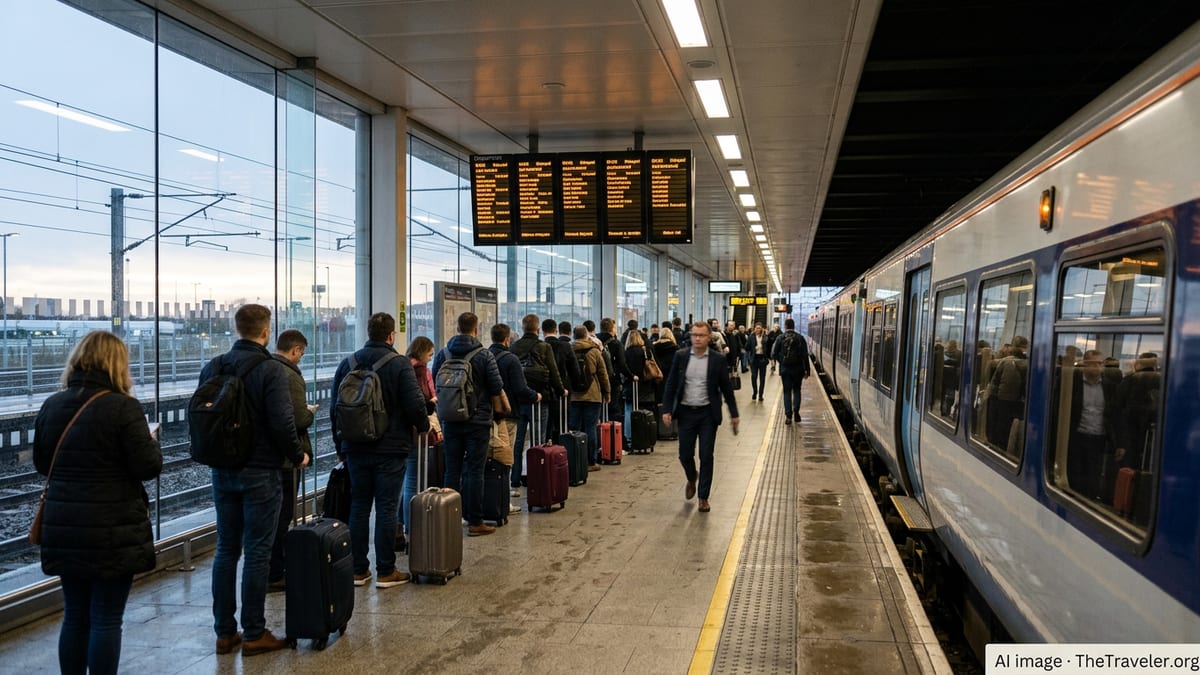
Commuter Rail Halted After Freight Derailment in U.S. Midwest
In the U.S. Midwest, commuters on the South Shore Line faced a full morning rush hour suspension on June 25 following a freight train derailment and power loss near East Chicago and Gary. Public advisories indicated that the derailment, which occurred on June 24, damaged infrastructure and disrupted electrical supply, leaving the operator unable to move passenger trains safely through the affected corridor.
The South Shore Line serves as a major link between northwest Indiana communities and Chicago, carrying large numbers of weekday commuters. With service suspended, riders were advised through regional media bulletins to seek alternative routes or remote work arrangements where possible. Reports indicated that the disruption was concentrated in the early hours of June 25, coinciding with peak inbound traffic.
While emergency crews continued work at the derailment site, the focus remained on restoring power and clearing damaged equipment from the right of way. Available information suggested that the operator was preparing to phase services back in once track conditions and signaling equipment could be fully inspected and certified for use.
The incident highlighted the vulnerability of single-corridor commuter systems when freight and passenger operations share infrastructure. Travel planners noted that, for many riders, short-notice suspensions at the start of the workday can have knock-on effects throughout the regional road network as displaced rail passengers turn to private cars and ride-hailing services.
Germany Still Recovering From Communications Failure
Across the Atlantic, travelers in Germany were still feeling the effects of a nationwide disruption that saw large portions of the rail network come to a standstill earlier in the week. Published coverage described a failure in the railway radio communication system that triggered widespread safety protocols, suspending train movements in North Rhine-Westphalia and severely disrupting services in other regions.
The interruption, which peaked on June 23, led to halted regional and suburban trains and reduced long-distance operations. By late on June 24, national media reported that many services had resumed, but operators warned that residual delays and occasional cancellations would persist into June 25 as rolling stock and crew rotations were gradually realigned.
North Rhine-Westphalia, Germany’s most populous state, was particularly affected, with commuter lines and regional connections temporarily suspended while technicians worked to stabilize communications. For travelers, the lingering impact on June 25 meant fuller trains, altered departure times and the need to monitor real-time updates more closely than usual.
Industry observers noted that the event underscored the central role of digital control and radio systems in modern rail operations. Even after services restarted, the pattern of disruption served as a reminder that network-wide outages can create service gaps and crowding long after the immediate technical fault has been corrected.
Service Suspensions on UK Airport and Coastal Routes
In the United Kingdom, a series of planned and unplanned interruptions affected travelers heading to and from key gateways. Gatwick Express, the dedicated airport rail service linking London Victoria with Gatwick Airport and onward to Brighton, suspended operations from early afternoon on June 25 through the end of service. Operator updates indicated that the suspension would also continue into June 26 as part of a wider timetable adjustment and resource reallocation.
Passengers were directed to use alternative Southern and Thameslink services, which continued to call at Gatwick but generally required longer journey times and additional transfers. For air travelers, the loss of the non-stop service added complexity to tight connections, particularly during busy afternoon and evening departure banks.
Elsewhere on the UK network, regional advisories showed suspensions on certain local shuttle routes, including the Barnham to Bognor Regis line, as operators dealt with rolling stock faults and operational pressures. While many of these changes were relatively short in duration, their timing on June 25 coincided with early summer leisure travel, affecting day-trippers and holidaymakers headed for the coast.
Travel planners recommended that passengers bound for airports and seaside destinations build in extra time and verify their specific train before setting out, as substitution patterns and stopping arrangements were subject to late adjustments.
Urban Transit: Path, Metro and Bay Area Rail Impacts
Urban transit riders also encountered suspensions and partial shutdowns around June 25. In the New York and New Jersey region, real-time status boards for the PATH system showed that Journal Square to 33rd Street services were suspended for portions of the day. The interruption prompted New Jersey Transit rail to cross-honor tickets at key hubs including Hoboken, Newark and New York Penn Station, giving affected riders alternative paths into Manhattan.
In the San Francisco Bay Area, riders continued to monitor recovery from a separate equipment issue reported on June 24 that led Bay Area Rapid Transit to suspend trains between South Hayward, Bay Fair and Castro Valley on part of its network. While the most acute phase of the closure occurred the day before, advisories on June 25 still emphasized the possibility of residual delays and platform crowding as trains were repositioned and headways adjusted.
These episodes followed other regional metro closures and station-specific suspensions seen in the past two years, including long-running shutdowns for maintenance on selected light rail corridors. As cities step up investment in track rehabilitation and system upgrades, observers note that short, intense suspensions are becoming more common, particularly on older lines.
For visitors unfamiliar with local transit patterns, the combination of temporary shutdowns, cross-honoring schemes and replacement buses can be difficult to navigate. Travel information services increasingly encourage checking multiple sources, including operator bulletins and third-party mapping tools, before choosing a route on days with known disruptions.
Airline and Destination Services Adjusted or Delayed
Disruptions were not limited to rail and metro networks. In commercial aviation, several carriers continued to operate under adjusted schedules and delayed resumptions of key routes. In Canada, industry publications reported that one major leisure airline has postponed the restart of its Cuba program until June 20, with a series of earlier suspensions pushing back the return of regular service to popular resort destinations.
Separately, regulatory updates from Nigeria in recent weeks described a temporary suspension of a financial compliance directive for domestic airlines. While the measure did not halt flights directly, it followed an earlier period of uncertainty in which enforcement of a strict payment policy had raised concerns about potential service interruptions or groundings for indebted carriers.
These developments illustrate how “service suspended” notices can arise from a range of causes, from infrastructure failures to regulatory decisions and commercial strategy. For travelers planning trips that intersect with sensitive markets or seasonal routes, changes announced in the months leading up to June 25 were still reshaping available options and connection patterns.
Analysts note that as airlines continue to adjust networks in response to fuel prices, demand shifts and capacity constraints, route suspensions and deferments are likely to remain a feature of the landscape, particularly on thinner leisure and long-haul segments.