


More news on this day
Passengers on a Southwest Airlines flight from Atlanta to Orlando experienced an unexpected detour on August 6 when their Boeing 737-7H4 diverted to Jacksonville, extending travel times and prompting a routine review of the incident.
Get the latest news straight to your inbox!
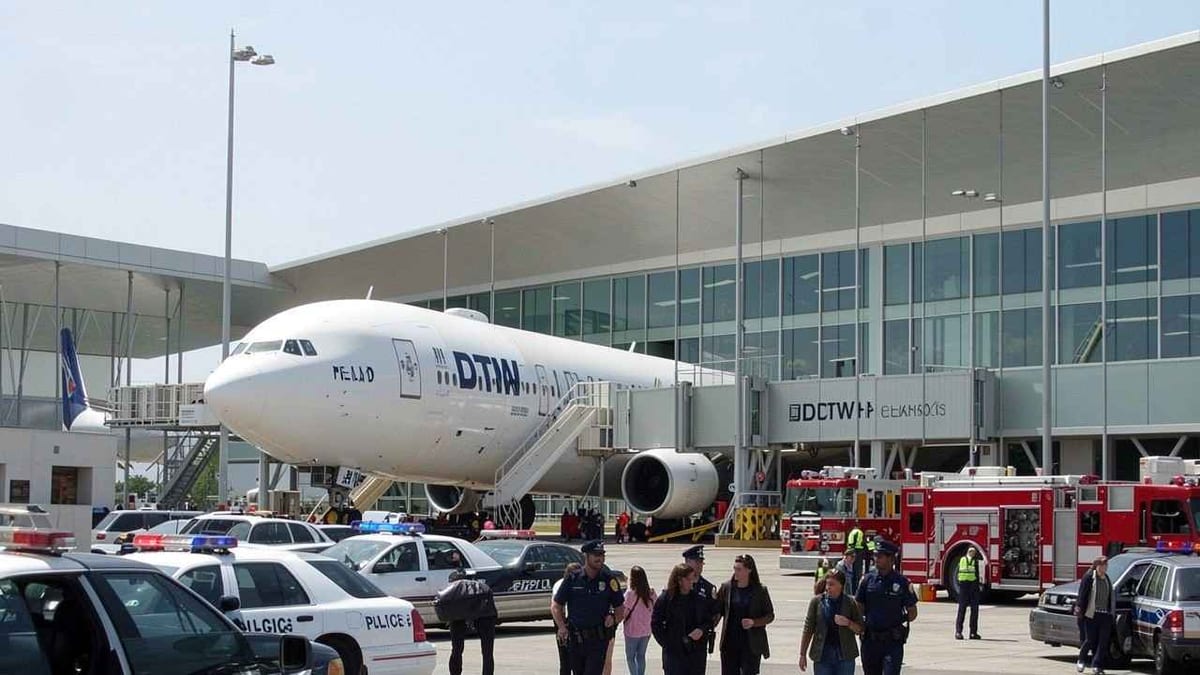
Unscheduled Stop Breaks Up Short-Haul Route
Southwest flight SWA1527 was operating a familiar route between Hartsfield-Jackson Atlanta International Airport and Orlando International Airport on August 6 when the flight plan changed mid-journey. Publicly available flight-tracking information indicates that the Boeing 737-7H4, a variant of the 737-700 configured for Southwest, diverted to Jacksonville instead of continuing to Orlando as scheduled.
The diversion turned what is typically a short hop between two of the carrier’s busiest Southeast markets into a longer and more complicated trip for passengers. While diversions on this corridor are relatively uncommon, the high volume of traffic to Florida during the summer months can amplify the impact when they do occur.
Early indications suggest that the aircraft landed normally in Jacksonville and taxied to the terminal, where passengers waited for further instructions and rebooking options. There were no immediate reports of injuries or emergency evacuations, and the event appears to have been managed as a precautionary operational diversion rather than a full-scale emergency.
Operational data for the airline show that, although diversions attract significant attention from travelers, they represent a small fraction of overall flight activity and are generally handled under established contingency procedures.
Potential Factors Behind the Diversion
As of this writing, Southwest had not publicly released a detailed technical explanation for the decision to divert SWA1527 to Jacksonville. Diversions of this kind can stem from a range of issues that include weather along the route, air traffic control flow restrictions, runway or taxiway congestion at the destination, or onboard maintenance concerns that require additional inspection on the ground.
Summer flying in the Southeast frequently coincides with fast-developing thunderstorms and turbulence along major air corridors. Published coverage and prior advisories for Florida routes show that airlines operating into Orlando and neighboring airports often adjust routings, delay departures, or divert flights when storms or low visibility reduce airport capacity or complicate approach paths.
A Boeing 737-7H4 such as the aircraft used on SWA1527 is designed to continue flying safely after many types of technical alerts, but standard airline practice is to prioritize a conservative response. When a crew or operations center identifies a condition that may worsen if the flight continues, diverting to the nearest suitable airport becomes the preferred option so any inspection or maintenance can take place on the ground.
Aviation safety records also show that carriers periodically alter destinations or request new routings when airspace sectors grow congested. In Florida, the Jacksonville area air traffic region plays a central role in managing flows to Orlando and other popular airports, which can make Jacksonville a logical diversion point when traffic or weather intensifies.
Impact on Passengers and Onward Travel
For travelers on SWA1527, the diversion likely meant extended time on board, a wait in Jacksonville, and subsequent rebooking or a continuation flight to Orlando. Reports from similar recent diversions on U.S. carriers describe a familiar pattern for affected passengers: waiting for updated departure estimates, receiving new boarding passes for substitute flights, or arranging ground transport when the final airport differs from the original destination.
Airline customer guidance typically explains that when diversions are caused by weather or air traffic constraints, rebooking and compensation policies may differ from those that apply to controllable operational disruptions. In many cases, carriers prioritize getting customers to their original destination on the next available flight, even if that means arriving late at night or the following day.
For families and leisure travelers heading to Orlando’s tourist attractions, schedule changes can have a ripple effect on hotel check-ins, theme-park reservations, and ground transportation. Travel advisers often recommend building extra time into itineraries during peak storm seasons in the Southeast to accommodate such unforeseen delays.
Despite the inconvenience, passenger accounts from similar events indicate that diversions handled without emergency procedures, injuries, or onboard incidents are generally viewed as an acceptable trade-off for caution in complex operating conditions.
Southwest’s Safety and Operational Context
Southwest operates one of the largest all-Boeing 737 fleets in the world, with an extensive network linking Atlanta, Orlando, Jacksonville, and other Florida destinations. Historical data and safety analyses for U.S. airlines show that diversions involving modern twin-engine jets are most often precautionary and resolve with uneventful landings and standard deplaning.
Previous cases involving Southwest 737-7H4 aircraft on other routes have demonstrated the carrier’s practice of diverting promptly when faced with technical anomalies or challenging conditions, followed by maintenance inspections and coordination with federal safety regulators when appropriate. Aviation investigators and industry observers often highlight such diversions as signs that conservative safety margins remain in place.
Boeing’s 737-700 series, including the 7H4 customer variant used by Southwest, is certified for a wide range of weather and runway conditions, but airline operators still adhere to internal policies that can exceed minimum regulatory requirements. That can result in route changes or unscheduled stops that, while disruptive for passengers, are intended to keep risk levels as low as reasonably possible.
Analysts of air travel patterns in the Southeast note that operational resilience is particularly important along the busy Atlanta to central Florida corridor, where high demand, dense traffic, and summertime weather create a complex environment for both airlines and air traffic managers.
What Travelers Can Expect After Similar Events
When flights such as SWA1527 divert short of their original destinations, passengers usually receive a series of updates through gate announcements, mobile applications, and email or text notifications. Travel experts advise checking both airline and airport information regularly during irregular operations, since projected departure times and gate assignments can change quickly as crews, aircraft, and available slots are reassigned.
Standard recommendations for travelers caught in a diversion include preserving boarding passes and receipts, documenting any additional expenses, and maintaining flexibility around hotel and ground transportation bookings. Published guidance from consumer advocates suggests that passengers review airline contracts of carriage in advance to understand how rebooking, vouchers, or refunds are typically handled when an itinerary is disrupted for reasons outside the carrier’s direct control.
For those planning upcoming trips through Atlanta, Orlando, or Jacksonville, the episode involving Southwest flight SWA1527 serves as a reminder that even short flights between major hubs can be affected by the region’s volatile summer conditions. Building in extra connection time, avoiding the tightest possible schedules, and monitoring forecasts can help travelers better absorb the impact of similar operational surprises.
While the diversion of SWA1527 added unexpected complexity to a routine route, the outcome underscored an aviation industry norm: schedule reliability is important, but safety and conservative decision-making remain the overriding priorities when conditions change in flight.