

More news on this day
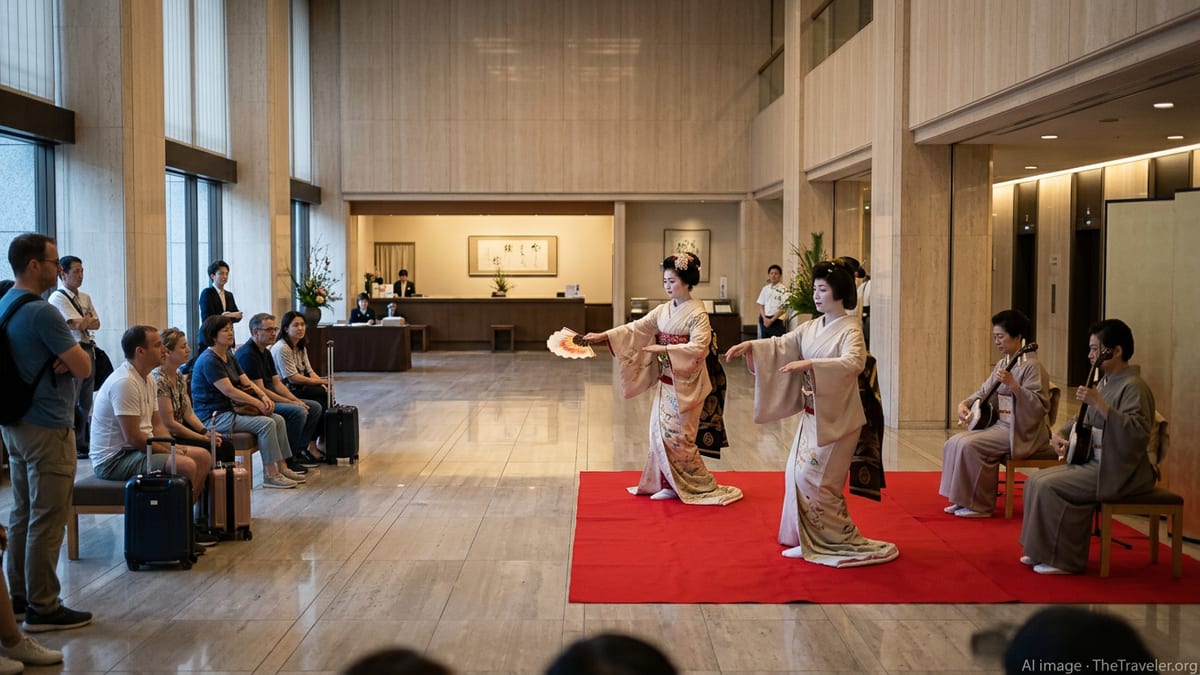
Keio Plaza Hotel Tokyo is transforming its busy Shinjuku lobby into a cultural stage in early 2026, hosting live performances by Kagurazaka geisha that bring Japan’s traditional arts within arm’s reach of international travelers.
Get the latest news straight to your inbox!
Kagurazaka Geisha Take Center Stage in Shinjuku
A special series titled “Experience the Spirit of the Season through the Art of Kagurazaka Geisha” is scheduled at Keio Plaza Hotel Tokyo’s third-floor main lobby, turning a transit space into a refined performance venue. Publicly available information shows that the event features geisha from the Tokyo Kagurazaka Association, known as custodians of Kagurazaka Odori, an intangible cultural property recognized by Shinjuku City.
The lobby performances are designed as short, repeated sets on Thursdays from late February through late March 2026, with two shows per day in the late afternoon. Reports indicate that visitors can watch complimentary performances on February 26, March 5, March 19 and March 26, with specific times in the 3 p.m. to 4:30 p.m. window, providing options that fit easily into sightseeing or business schedules.
Set against the backdrop of a high-rise hotel in Nishi-Shinjuku, the appearance of traditionally dressed geisha accompanied by live shamisen gives travelers a glimpse of a world that is usually hidden inside invitation-only ryotei restaurants. The program positions Keio Plaza as an accessible bridge between Tokyo’s contemporary skyline and the refined arts that evolved in nearby historic districts.
According to published coverage and the hotel’s event information, the performances highlight dances linked to Japan’s four seasons, echoing the themes that define the Kagurazaka Odori repertory. For visitors, that seasonal focus offers both a visual and cultural connection to the time of year they are in Tokyo.
A Rare Window into the Kagurazaka Hanamachi
Kagurazaka, a short distance from Shinjuku, is one of Tokyo’s best-known hanamachi, or geisha districts, yet its inner world typically remains closed to casual visitors. Traditional entertainment is usually arranged through long-established connections at exclusive restaurants, and many travelers never have the chance to see a performance in person.
By partnering with the Tokyo Kagurazaka Association, Keio Plaza Hotel Tokyo is effectively importing a slice of that hanamachi culture into a large international hotel setting. Association details published in event materials describe a community of four ryotei restaurants and 18 working geisha as of late 2025, reflecting a small but active scene that continues to train and perform in central Tokyo.
The lobby series offers an interpretive rather than staged-tourist version of geisha culture. The focus is on formal dance and music, presented in a setting where visitors can observe the nuance of movement, kimono styling and musical accompaniment at close range. It responds to growing traveler interest in authentic cultural encounters that do not disturb working neighborhoods or rely on intrusive “geisha spotting” in the streets.
For the Kagurazaka side, the collaboration provides a high-visibility platform to introduce their art to an international audience. For the hotel, it reinforces a long-running strategy of using public spaces as gallery and performance areas that showcase Japanese aesthetics to both overnight guests and walk-in visitors.
Traditional Arts Program Expands Across the Hotel
The Kagurazaka geisha performances form part of a wider calendar of traditional arts at Keio Plaza Hotel Tokyo that intensifies in 2026. Event listings and press materials point to a cluster of cultural experiences, including a large-scale Hinamatsuri doll and byobu screen exhibition held across multiple floors, and workshop programs that explore crafts and seasonal motifs.
For New Year 2026, the hotel is promoting koto demonstrations and hands-on experiences that allow guests to try playing the classic string instrument, with English guidance available. Separate cultural experience workshops under the “Journey into Japan” banner are scheduled from January to April 2026, offering activities such as art-making inspired by seasonal festivals and traditional design.
These initiatives follow earlier announcements in 2025 of regular art and dyeing workshops, indicating a shift toward positioning the hotel not only as an accommodation hub but also as a venue for structured cultural discovery. The geisha performances, staged openly in the lobby rather than in a closed banquet room, mark one of the most visible expressions of that strategy.
Together, the programs create a layered cultural environment where visitors might move from a geisha dance in the lobby to a corridor lined with folding screens, and then to a workshop space where contemporary artists reinterpret classic motifs. The effect is to weave traditional arts into the everyday circulation routes of the hotel.
What Travelers Can Expect From the Lobby Performances
Visitors arriving on performance days are likely to find part of the third-floor lobby subtly transformed, with a small stage area set up against the architectural lines of the hotel’s interior. Seating is typically informal and open, allowing hotel guests, meeting attendees and outside visitors to stop and watch a full set or just a portion as they pass through.
The geisha appear in formal kimono suitable for stage dance, often with seasonal colors and patterns that reflect the program’s focus on the passage of the year. Live shamisen accompanies the choreography, providing a soundscape distinct from the usual murmur of a large city hotel. The performances themselves are relatively brief, encouraging audiences to experience traditional arts in a way that feels approachable rather than demanding specialist knowledge.
Because admission is complimentary and the lobby is a public space, the event lowers the threshold for travelers who may be curious about geisha culture but hesitant to book an expensive private banquet or worry about etiquette in historic neighborhoods. Published descriptions emphasize that the performances are intended to be watched respectfully from a short distance, in keeping with the hotel’s quiet, polished atmosphere.
The schedule, concentrated in late winter and early spring, also taps into a busy travel period in Tokyo when visitors are planning day trips for plum and early cherry blossoms. For many, a stop at the Keio Plaza lobby between excursions adds an indoor cultural highlight that is not weather dependent.
Positioning Shinjuku as a Gateway to Living Heritage
Shinjuku is often framed in travel coverage as a district of neon, nightlife and major transport links. Keio Plaza Hotel Tokyo’s event programming suggests another narrative: that of Shinjuku as a contemporary gateway to some of Japan’s most carefully maintained traditions, presented in a format that is accessible to short-stay visitors.
Beyond the Kagurazaka geisha series, the hotel’s roster of exhibitions, workshops and seasonal displays aligns with a broader trend in urban Japan, where large hotels and public venues increasingly act as interpreters of cultural heritage. These institutions provide curated environments where visitors can engage with traditional arts while remaining within familiar hospitality settings.
For travelers planning a stay in Tokyo in early 2026, the Kagurazaka geisha performances at Keio Plaza offer a convenient way to witness a living art form without leaving central Shinjuku. Combined with hands-on art workshops and visual installations throughout the property, they underscore how one hotel lobby can function as a compact introduction to Japan’s wider cultural landscape.
The result is a travel experience in which check-in desks and conference foyers double as cultural touchpoints, and in which a passing moment in a hotel lobby can become a memorable encounter with the spirit of Kagurazaka.