


Getting from Kahului Airport on Maui to Lahaina and the rest of West Maui is no longer as simple as following one scenic highway and forgetting the details. After the 2023 wildfires and a series of winter storms, road access, visitor protocols, and even transportation availability have shifted. Travelers in 2026 need to pay closer attention to timing, route options, and the fine print before they book. This guide walks you through what to check and the practical ways to get from the airport to Lahaina right now, with a focus on real-world conditions rather than pre-fire assumptions or outdated guidebooks.
Get the latest updates straight to your inbox!
Understanding Current West Maui Access From Kahului
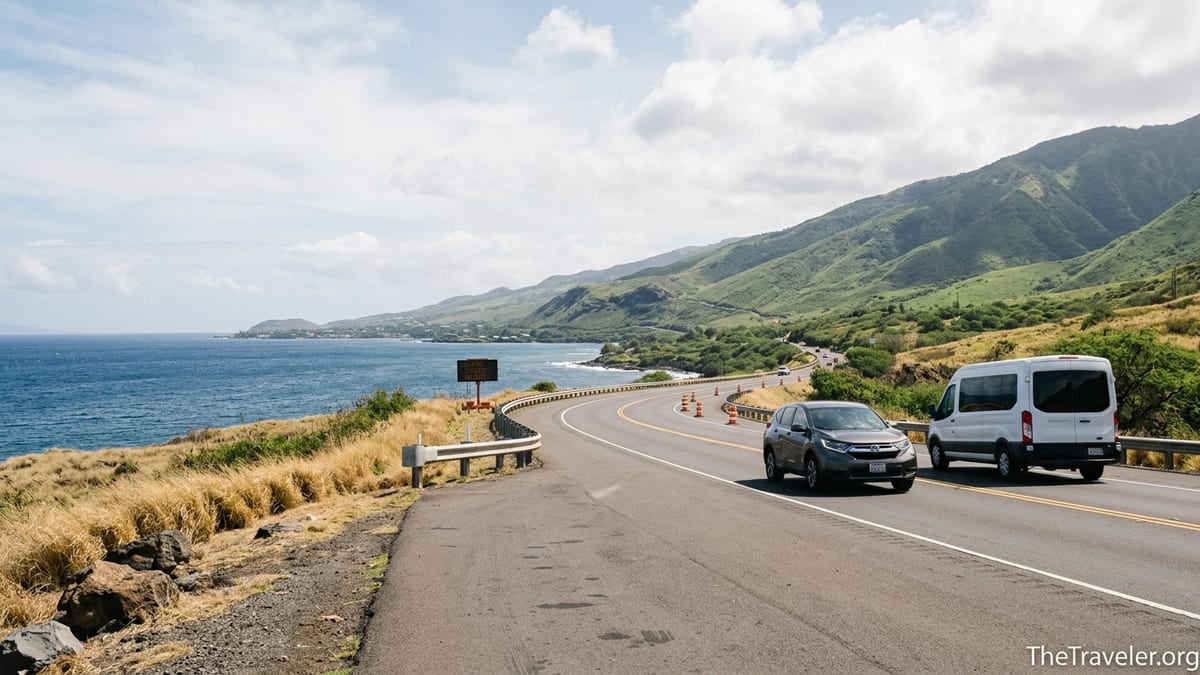
The main route from Kahului Airport to Lahaina remains Honoapiilani Highway, signed as Highway 30 for most of the way. Under normal conditions, the 23 to 28 mile trip from the airport area to Lahaina takes about 45 minutes to 1 hour by car, depending on traffic and exactly where in Lahaina or Kaanapali you are headed. In 2026, that “under normal conditions” disclaimer matters more than ever, because heavy rain, debris cleanup, and ongoing reconstruction can still trigger short notice lane closures or delays.
Highway 30 has reopened to general traffic after earlier post-fire restrictions, but access can tighten again temporarily when winter or spring storms hit. In March 2026, for example, visitors reported partial closures and long backups after rockslides and localized flooding along the coastal stretches south of Lahaina. At one point, traffic toward the airport was allowed while the Lahaina-bound lanes remained closed, turning a normally easy airport run into a multi-hour wait. This kind of short-term disruption is rare, but travelers should no longer assume the road will always be wide open.
The practical implication is that you should build more buffer time into any airport transfers involving West Maui. For a midafternoon departure out of Kahului, many hotel concierges in Kaanapali and Napili are now recommending leaving 3 to 4 hours before flight time instead of the pre-2023 habit of leaving 2 hours ahead. That extra cushion accounts for possible single lane traffic, slow moving construction zones, and the increasingly common afternoon downpours that can briefly flood low sections of the highway.
Visitors should also recognize that Lahaina town itself is still in a long term recovery phase. Many pre-fire landmarks, shops, and accommodations along the historic Front Street corridor remain closed or under reconstruction, even as services in areas like Lahaina Gateway, Lahaina Cannery, Kaanapali and Napili operate more normally. When you plan ground transportation, confirm whether your lodging is in the burn zone perimeter, in nearby but unaffected shopping areas, or farther north in the resort corridors, as this can slightly affect routing and where drivers are comfortable dropping off.
Private Shuttles, Taxis and Rideshares: What to Expect in 2026
For many visitors, the most straightforward way from Kahului Airport to Lahaina is still a direct vehicle transfer. At OGG, this usually means a pre-booked shuttle, a standard taxi, or a rideshare such as Uber or Lyft. All three are operating in 2026, but prices, wait times, and availability by time of day can differ more than many first timers expect.
Traditional airport taxis remain a reliable standby. The official taxi stand sits just outside the baggage claim area, with cabs managed under a centralized concession. The airport lists a typical flat or metered guideline fare in the high 70 dollar range for a standard taxi ride from OGG to Lahaina for up to four passengers, with actual totals varying based on exact destination and surcharges. That means a couple can expect to pay somewhere around 80 dollars plus tip, while a small family with luggage might pay a little more if they require a larger vehicle.
Rideshares such as Uber and Lyft currently serve Kahului Airport and West Maui, including Lahaina, Kaanapali and Napili. In practice, recent visitors report that calling a rideshare mid-morning or mid-afternoon is usually straightforward, with wait times of 5 to 15 minutes common on normal days. However, coverage in West Maui can thin out late in the evening, especially after 8 or 9 p.m., and heavy rain or flight delays sometimes cause surge pricing. A typical UberX or Lyft ride from OGG to a Kaanapali resort might range somewhere in the 70 to 100 dollar band before tip, depending on demand; larger ride options cost more but can bring the per person price down for groups of four or five.
Private shuttle companies continue to operate fixed price airport transfers to major West Maui resort zones. Some brands run large shared shuttles with preset departure times and a per person fee, while smaller operators focus on private vans or SUVs that meet your specific flight. In mid 2026, shared shuttle rates commonly sit around 40 to 60 dollars per person to Kaanapali, with discounts for round trips, while a private SUV for up to five passengers often falls in the 150 to 220 dollar each way range. For a group of four staying in the same condo, a pre-booked private shuttle can be cost competitive with taxis or rideshare while giving you the confidence of a driver waiting with your name on a sign when you exit the terminal.
Rental Cars From Kahului: Freedom With Some Caveats
Renting a car at Kahului Airport has long been the default for Maui vacations, and in 2026 it is still the most flexible way to travel between OGG and Lahaina. All of the major mainland brands operate at the consolidated rental car facility across from the terminal, connected by a short tram ride. Cars are in high demand during school holidays, winter peak and long weekends, so visitors should avoid assuming that they can simply walk up to a counter and find an affordable car waiting.
Daily base rates in 2026 fluctuate widely, but a midsize car often falls somewhere in the 60 to 120 dollar range before taxes and fees in shoulder seasons, with SUVs and convertibles costing more. Add Maui’s state taxes, airport concession recovery fees and optional insurance, and a weeklong rental can easily approach 700 to 1,200 dollars or more. However, once you factor in the typical 80 dollar each way taxi or rideshare fare between OGG and Lahaina and the reality that you will likely need additional rides during your stay if you do not have your own car, a rental can still provide better value for couples or families who plan to explore beyond the beach.
Driving from the airport to Lahaina is straightforward. From the rental facility, you follow the signs toward the Honoapiilani Highway, head south toward Maalaea, then continue west and north along the coast past Olowalu and toward Lahaina. Most of the route is a standard two lane coastal highway with several passing zones and a mix of local and visitor traffic. What has changed is that post-fire and post-storm work may create periodic lane closures or lower speed limits, so you should not plan to drive like a local on autopilot while watching the scenery.
Before booking, consider whether you actually need a car for your whole stay. If you plan to base yourself in a Kaanapali or Napili resort, spend most days on the beach, and only take one or two excursions, the combination of airport rideshare plus a couple of guided tours might cost less than a full week rental with hotel parking fees. Several large West Maui hotels now charge nightly parking fees that can run 30 to 40 dollars per night, which effectively adds the cost of another short rideshare ride to your daily budget. On the other hand, if you intend to explore Upcountry Maui, Haleakala sunrise, or multiple snorkel sites, the flexibility of a rental often outweighs the hassle and cost.
Public Bus and Budget Options: Cheapest, But With Limitations
Maui County operates the Maui Bus system, which connects Kahului and Wailuku with major residential and resort areas including West Maui. There is a West Maui Express route linking central Maui with Lahaina, Kaanapali and Napili, and local routes that circulate within West Maui itself. Fares are kept intentionally low, with a single ride on fixed routes typically just a few dollars, making this by far the cheapest way to get between Kahului and Lahaina.
The catch for arriving visitors is that Maui Bus is not designed as a dedicated airport shuttle. Buses do not routinely pull directly into the arrivals curb in the same way that taxis and hotel vans do. Instead, you may need to walk or use a short taxi hop to reach a transit stop such as the main Kahului transit center, then transfer to the West Maui Express. Total travel time from airport to Lahaina can stretch to two hours or more, especially if you have to wait for the next scheduled departure or make a transfer from a local Kahului loop route.
For budget travelers staying in hostels or modest condos, the bus can still make sense. For example, someone arriving mid-afternoon with only a backpack could walk or take a brief cab ride to the transit center, catch the West Maui Express to Lahaina Cannery or Lahaina Gateway, and then walk to nearby lodging. The total out of pocket cost would likely fall well under 10 dollars compared with 80 dollars or more for a taxi. However, this becomes far less practical for families with young children, people with heavy luggage or surfboards, and anyone on a tight schedule.
Service frequency and evening coverage are also important constraints. While recent schedule updates have extended some routes later into the evening, West Maui buses do not run around the clock, and a delay in your flight could leave you waiting a long time or needing a backup plan. If you are tempted by the savings of Maui Bus, you should download the latest schedule from Maui County just before your trip and double check both the airport side connection and the return service for your departure day. Build in significant extra time, and be ready to pivot to a taxi or rideshare if conditions change.
Weather, Road Conditions and How They Impact Your Transfer
In pre-fire days, most travelers thought of the Kahului to Lahaina drive as a scenic coastal cruise and little more. The last few years have highlighted just how vulnerable that corridor is to both wildfire risk and heavy rain. The same geography that makes the route beautiful, with mountains on one side and the Pacific on the other, means that rockfalls, runoff and strong winds can quickly turn sections of the highway into work zones or temporary chokepoints.
Winter and early spring storms in 2025 and 2026 triggered intermittent closures on portions of Highway 30, particularly around Olowalu and the slopes east of Lahaina. Visitors driving from Royal Lahaina or other Kaanapali resorts back to the airport reported encountering standing water in low points and traffic officers controlling one lane at a time. In most cases, these disruptions lasted hours, not days, but they were enough to make travelers miss dinner plans or arrive at the airport in a mild panic after sitting in slow moving traffic for far longer than anticipated.
The key takeaway is that you should actively check for road condition updates before you travel between Kahului and West Maui, especially on travel days. Maui County, local news outlets and even community social media groups often share quick photos or notices when rockslides or flooding occur. Hotel front desks in Kaanapali, Napili and Kapalua have become adept at monitoring these updates and advising guests on realistic departure times for airport runs. If you are self driving in a rental car, ask the front desk or host what local drivers are doing that day rather than relying solely on a navigation app’s optimistic time estimate.
Weather also matters for those who are prone to motion sickness or who are uneasy with coastal driving. Strong crosswinds along parts of Highway 30, spray from high surf days, and the darkness of early morning or late night transfers can make the ride feel more intense than a midday cruise under blue skies. If you or your travel companions are sensitive, choosing a larger shuttle or van instead of a compact rideshare can feel more stable, and daytime flights can reduce anxiety about driving in unfamiliar conditions after dark.
What Travelers Should Check Before Booking
Because conditions and services are still evolving in West Maui, travelers in 2026 should treat transportation planning as something to confirm, not assume. Before you book flights and lodging, verify whether there are any current access advisories for the dates you plan to travel. Even if Highway 30 is generally open, scheduled work, community events or recovery milestones in Lahaina can alter traffic patterns. When in doubt, email your hotel or host and ask what their guests are currently doing for airport transfers and how long the drive is actually taking.
Next, consider the true door to door cost and stress level of each transport option instead of only looking at headline prices. For example, a 75 dollar Uber ride from OGG to Kaanapali may look cheaper than a 200 dollar private shuttle, but if your flight lands late at night and rideshare cars are scarce, you might face a 30 minute wait on the curb or a sudden surge in pricing. A couple spending 150 dollars on a guaranteed private pickup that leaves as soon as they clear baggage may decide the predictability and reduced jet lag stress are worth the extra money, while a solo traveler arriving midday might happily trade some uncertainty for savings.
Travelers should also ask about cancellation and delay policies. If a winter storm closes parts of Highway 30 for several hours, will your shuttle company automatically reschedule you at no charge, or will you need to call and renegotiate on the fly. Are you allowed to adjust your pickup time on the day of travel if your airline changes your schedule. Read the small print on any prepaid transfer and favor providers that allow reasonable flexibility without steep fees, particularly in the current era of weather related disruptions.
Finally, think about the community context. Lahaina’s recovery is ongoing, and many residents commute through the same corridor you will use. Choosing shared shuttles, traveling outside peak rush hours when possible, and planning ahead so you are not adding to last minute congestion can all reduce your impact. Some visitors now deliberately schedule their arrival flights mid-morning and departures early afternoon to avoid both commuter peaks and the highest chance of evening rain along the coast, then coordinate pickups with their hotels to minimize idle time on the highway.
The Takeaway
In 2026, getting from Kahului Airport to Lahaina is still absolutely doable, and for most visitors it remains a highlight, with sweeping ocean views and that first glimpse of West Maui’s resorts on the horizon. What has changed is that this trip now requires a bit more forethought. You can no longer rely on old guidebooks that assume unbroken sunshine, unlimited capacity, and a simple price-per-mile taxi world.
Instead, you need to decide early whether you want the simplicity of a pre-booked shuttle, the flexibility of a rental car, the on-demand convenience of rideshares, or the ultra-budget approach of Maui Bus with its tradeoffs in comfort and time. You should keep an eye on weather forecasts and road condition updates, especially in the winter and early spring months. And above all, you should build generous buffers into your transfer plans so that road work, temporary lane closures or high demand for drivers do not derail your flights.
Travelers who do this homework tend to arrive in Lahaina more relaxed, more respectful of the community’s ongoing recovery, and better able to appreciate the coast they are driving along rather than anxiously watching the clock. Kahului to Lahaina is no longer just a line on a map; it is a living, changing corridor where safety, resilience and thoughtful travel planning now go hand in hand.
FAQ
Q1. How long does it usually take to drive from Kahului Airport to Lahaina in 2026?
The drive typically takes about 45 minutes to 1 hour in light traffic, but you should plan for up to 90 minutes or more during busy periods or in bad weather.
Q2. Is Highway 30 between Kahului and Lahaina fully open to visitors now?
Highway 30 is generally open to visitor traffic, but short term closures or lane restrictions can still happen during storms, rockfalls or construction, so always check for current updates.
Q3. Are Uber and Lyft available at Kahului Airport for trips to Lahaina?
Yes, both Uber and Lyft operate at Kahului Airport and serve Lahaina and nearby resort areas, though wait times and prices can increase during busy hours or late at night.
Q4. How much should I expect to pay for a taxi or rideshare from OGG to Lahaina?
A standard taxi or rideshare from Kahului Airport to Lahaina usually falls somewhere in the 70 to 100 dollar range one way, depending on demand, exact drop off point and surcharges.
Q5. Is renting a car at Kahului still a good idea if I am staying in Lahaina?
Renting can be a very good option if you plan to explore beyond West Maui, but you should factor in rental rates, fuel, and hotel parking fees when comparing costs with shuttles or rideshares.
Q6. Can I use the Maui Bus to get from the airport to Lahaina?
Yes, you can connect via Maui Bus routes, but it is not a dedicated airport shuttle, usually requires at least one transfer, and can take two hours or more door to door.
Q7. What is the cheapest way to travel between Kahului Airport and Lahaina?
The Maui Bus is by far the cheapest option, with low single ride fares, but it is also the slowest and least convenient, especially if you have luggage or arrive late in the day.
Q8. How early should I leave Lahaina for a flight out of Kahului?
Most travelers now leave 3 to 4 hours before flight time to allow for the drive, traffic, possible lane closures and normal airport check in and security.
Q9. Are there still any restrictions on visiting Lahaina after the wildfires?
Visitor access has broadened, but certain areas remain under reconstruction or are limited out of respect for the community. Check with your accommodation for the latest guidance before planning visits to specific parts of town.
Q10. Should I book an airport shuttle in advance or wait until I arrive?
Booking in advance is strongly recommended, especially for evening arrivals, larger groups or busy seasons, as it guarantees a seat and reduces stress if weather or traffic conditions change.