


Landing at Kahului Airport on Maui is often the moment your island vacation finally feels real. OGG is compact and relatively easy to navigate, but if you are arriving for the first time it helps to know what to expect: where to go for baggage claim, how to reach your resort in Wailea or Kaanapali, what the Maui Bus actually serves, and how early you really need to show up for departure. This guide walks step by step through Kahului Airport, from touchdown to beach chair, with concrete, real-world examples tailored to first-time Maui travelers.
Get the latest updates straight to your inbox!
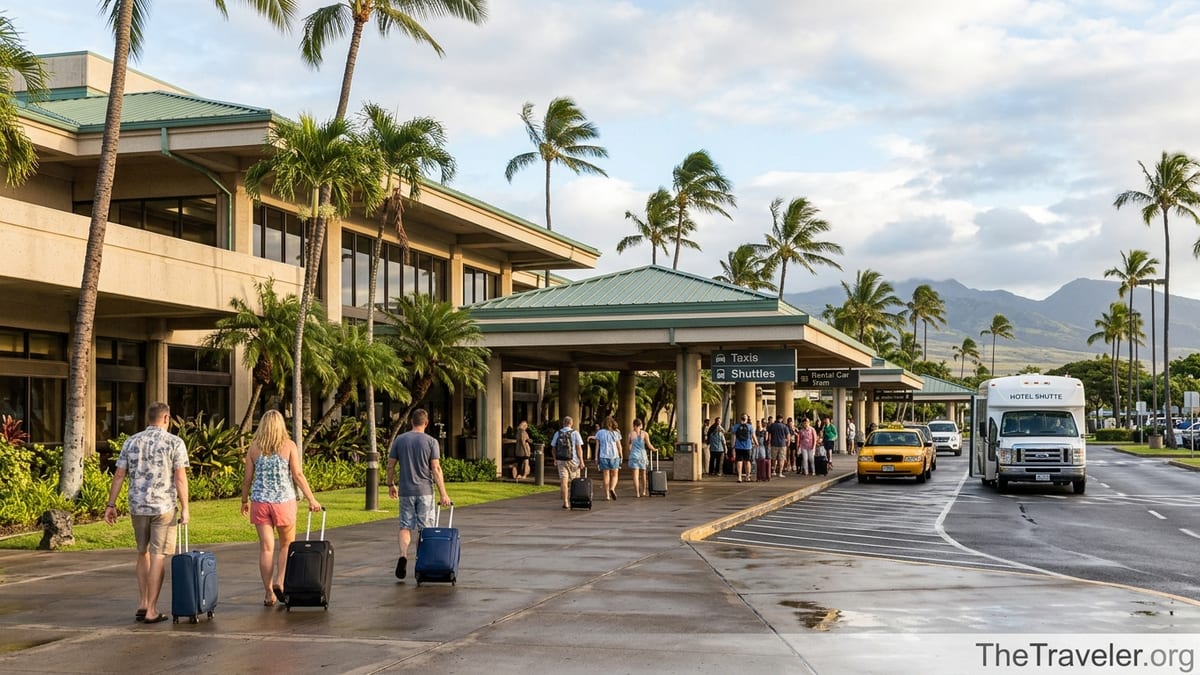
Understanding Kahului Airport (OGG) and Its Layout
Kahului Airport, known by its code OGG, is Maui’s main air gateway and handles the vast majority of visitors to the island. The airport sits on the north shore of central Maui, roughly a 5 to 10 minute drive from Kahului town and about 25 to 45 minutes from most major resort areas like Wailea, Kihei, and Kaanapali, depending on traffic. The terminal is single-level and relatively compact, which makes it less overwhelming than many mainland hubs but can still feel busy at peak arrival and departure times, especially mid-morning and late evening.
The main terminal building houses ticketing and check-in counters at the front, with three TSA checkpoints leading into the secure concourse area for departures. Inside security you will find a simple linear concourse with gates branching off, plus a handful of cafes, grab-and-go spots, and shops. On the ground level toward the airfield side you will find baggage claim carousels, with doors leading straight out to curbside pick-up zones, taxi stands, and the short tram ride to the consolidated car rental facility. Signage is clear and bilingual in English and Hawaiian, and you will notice open-air walkways that make the airport feel more like a regional terminal than a large international hub.
For first-time travelers, the key point is that almost everything you need on arrival is on one level: you walk from the aircraft into the main corridor, stop at the USDA agriculture checkpoint if requested, continue to baggage claim, and then step outside for transport. There are no train systems or long underground walks. Even if you land on a hardstand and take a ramp or stairs to the terminal, the walk is short and well marked.
It is also useful to understand that OGG can feel crowded during peak travel periods such as winter holidays and summer school breaks. Lines at security and check-in may back up toward the front doors, and rental car queues can stretch out of their counters. Planning your timing with a cushion and knowing roughly where you are headed in the terminal will make the experience much smoother.
Arrivals: From Touchdown to Baggage Claim
When your flight lands at Kahului, you will either pull up to a jet bridge or, on some interisland or smaller flights, deplane via stairs or a ramp to the tarmac before walking into the terminal. Either way, you enter directly into the arrivals corridor. Follow the overhead “Baggage Claim” and “Ground Transportation” signs. Before reaching the baggage area, mainland passengers typically pass a USDA agricultural inspection point where certain items such as fresh fruit or plants may be screened. The agents are used to vacation travelers and the process is usually quick, but it can back up slightly when several flights arrive at once.
Once you reach baggage claim, you will find several numbered carousels in a single open area. Electronic displays show which carousel is assigned to your flight; for example, a mid-morning flight from Los Angeles on a major U.S. carrier might use Carousel 3, while an interisland flight from Honolulu could use Carousel 1. Baggage delivery times vary, but many travelers report waiting around 15 to 30 minutes after arrival on busy days. While you wait, you will see hotel and activity brochures, ATM machines, and restrooms nearby, but there is limited seating, so families with kids often spread out along the perimeter or send one adult outside to locate the rental car tram or shuttle pickup point.
As you exit the baggage area, several sets of doors lead directly to the curb. Outside, you will see clearly marked zones: one for family and friends picking up passengers, one for hotel and off-site shuttles, one for taxis and rides, and signage pointing toward the rental car tram. If you have arranged a resort shuttle, for instance to a Wailea or Kaanapali property, your confirmation email will typically tell you which zone to use and whether to check in with a dispatcher. It is worth having that information easily accessible on your phone so you are not scrolling through emails in the Maui sun with luggage in tow.
First-time visitors often underestimate how quickly the tropical weather hits when they walk outside. On a typical afternoon in July, the temperature in Kahului may be in the low to mid-80s Fahrenheit, with strong trade winds and bright sun. Sunscreen, sunglasses, and a refillable water bottle in your carry-on are more useful here than at most mainland airports, especially if you are traveling with children or older family members who may be waiting curbside while you sort out transport.
Ground Transportation: Taxis, Shuttles, Rides, and Resort Transfers
Kahului Airport offers several ground transport options, and the right choice for you will depend on where you are staying, how many people are in your party, and whether you plan to drive yourself on the island. Official airport taxis line up directly in front of the baggage claim doors. The state posts approximate fares to common destinations to help visitors budget: for example, a taxi ride from OGG to Lahaina is estimated around 78 dollars, to Kaanapali around 87 dollars, to Kihei roughly 33 to 55 dollars depending on where in town you are, and to Wailea about 57 dollars. These are guideline figures; final prices depend on traffic and the metered rate, which is listed at 3 dollars per mile.
Using those numbers, a family of four staying at a mid-range resort in South Kihei might expect to pay somewhere in the 40 to 50 dollar range for the one-way taxi ride, while a couple heading to a high-end property in Wailea could see a fare around 60 dollars. If you are traveling with surfboards or large golf bags, it is wise to mention this to the dispatcher so they can assign a larger vehicle. For many visitors, taxis are most attractive if they are staying in one place for the entire trip and do not plan to explore extensively by car.
Many major resorts and some independent shuttle companies offer pre-booked shared or private transfers. A shared shuttle from OGG to a Wailea area hotel, as one example, might cost in the ballpark of 30 to 45 dollars per person one way, with discounts for round-trip bookings and children. Private SUVs or vans for a family or group can be more, but often compare favorably with taxi prices for longer distances, especially to West Maui. These shuttles typically operate from a specific curb zone just outside baggage claim; when you book, you receive instructions to check in with a representative who will confirm your reservation and direct you to your vehicle.
Traditional rideshare services have had a changing presence on Maui over the years, and service levels can vary by time of day. In practical terms, first-time visitors should not rely entirely on being able to summon a rideshare car late at night or very early in the morning from the airport, particularly during busy holiday periods when drivers may be stretched thin. If you plan to use rideshares instead of renting a car or pre-booking a shuttle, consider arriving with a backup plan, such as knowing where the taxi stand is and budgeting for that fare if rideshare availability is low when you land.
Car Rentals at OGG: On-Site Facility and Alternatives
Many visitors prefer to have a rental car on Maui, both for convenience and because resort areas are spread out. Kahului Airport has a consolidated rental car facility that houses major national brands such as Alamo, Avis, Budget, Dollar, Enterprise, Hertz, National, Payless, Sixt, and Thrifty. These companies operate from a multi-level structure a short distance from the main terminal, connected by an electric tram. After collecting your luggage, follow the clearly marked “Car Rental” signs outside. You will board a tram that runs back and forth between the terminal and the car rental center, typically taking only a few minutes each way.
Inside the facility, each rental brand has its own counter where you check in, show your driver’s license and credit card, and receive your contract and keys. On busy days, especially Saturdays and Sundays when many vacation rentals turn over, lines at these counters can stretch to 30 minutes or more. Travelers who have joined loyalty programs like National Emerald Club or Hertz Gold frequently report faster, more streamlined pickup at OGG, as these programs sometimes allow you to bypass the main counter and proceed directly to your assigned vehicle row.
Pricing at airport rental counters can vary widely depending on season, demand, and how far in advance you booked. For example, during shoulder season months such as late April or early May, a compact car from a major brand booked a few months ahead might run in the vicinity of 40 to 70 dollars per day, while the same car in late December holiday weeks could easily cost two or three times that amount. Some travelers look to off-airport agencies in Kahului or Kihei, which may offer older vehicles at lower daily rates and may provide a shuttle from OGG or arrange pickup in the airport parking lot. These local companies can be cost-effective, particularly for long stays, but pickup procedures, insurance coverage, and service levels vary, so reading recent traveler reviews before booking is important.
If you are considering not renting a car at all, remember that resort areas like Wailea and Kaanapali are 30 to 45 minutes from the airport, and taxis plus tours can add up quickly. A family staying for 10 days might be better off with a reasonably priced compact or midsize rental, even accounting for fuel costs, especially if they plan to drive to Haleakala National Park, the Road to Hana, or upcountry towns. On the other hand, couples staying in a walkable part of Lahaina or central Kihei who plan to spend most of their time on the beach and take just one or two organized excursions may find taxis and shuttles adequate.
The Maui Bus and Budget-Friendly Options
The Maui Bus public transit system provides a very budget-friendly way to travel to and from Kahului Airport, but it is best suited to travelers who are not in a hurry and are comfortable managing luggage on regular city buses. Two routes, the Haiku Islander (Route 35) and the Upcountry Islander (Route 40), serve the airport. These routes connect OGG with central areas such as Kahului, Wailuku, Paia, Haiku, and Upcountry communities, though service frequency is relatively low compared with big-city systems. Official schedules show that these routes typically run roughly every 60 to 90 minutes during daytime hours, and schedules can change, so checking the latest timetable before your trip is important.
As a concrete example, a solo traveler staying at a budget hotel in Wailuku might take Route 35 or 40 from the airport to Queen Kaahumanu Center in Kahului, then transfer to another route heading into Wailuku. The cash fare for Maui Bus is modest, often just a few dollars per ride, and day passes may be available, making this an appealing option for backpackers or long-stay visitors watching costs closely. However, the trade-off is time: with waiting and transfers, that same Wailuku trip might take 45 minutes to over an hour door to door, versus a 15 to 20 minute taxi ride.
For visitors headed to resort areas in South or West Maui, the Maui Bus is not a simple one-seat ride from the airport. You typically need to take Route 35 or 40 into central Kahului, then connect to other routes that continue toward Kihei, Lahaina, or Kaanapali. Managing large suitcases and beach gear through those transfers, often in warm and sometimes windy conditions, can be a challenge, particularly after a long flight. Because of that, the bus tends to be used more by residents and long-term visitors than by first-time tourists.
If you are considering Maui Bus as a way to stretch your budget, a practical compromise is to use it for shorter hops near where you are staying rather than as your primary airport transfer. For instance, once you are settled in Kihei with a rental car or after an initial taxi ride, you might take Maui Bus to reach nearby shopping centers or beaches without worrying about parking. That approach lets you experience local transit while avoiding the stress of hauling luggage from the airport on multiple bus routes.
Departures: Check-In, Security, and Timing at OGG
Departing Kahului can be more time-sensitive than arriving, especially during busy travel seasons. Airlines serving OGG generally recommend arriving at least two hours before scheduled departure for interisland flights and at least two and a half to three hours before mainland flights. On particularly busy days such as Saturdays in July or the weekends around Christmas and New Year, many travelers choose to add an extra 30 minutes to those guidelines to allow for potential lines at the airline counter, the USDA agricultural screening that precedes check-in for departing flights with checked baggage, and security.
At the front of the terminal you will find curbside drop-off zones and entrance doors that lead directly to airline check-in counters. After dropping off any checked bags and obtaining boarding passes, passengers must clear the USDA agriculture inspection area if they have checked luggage, then proceed to one of the TSA checkpoints. Kahului has made some checkpoint adjustments in recent years, including changes to where TSA PreCheck lanes are located, so signage at the time of your travel will direct you to the correct entrance. In general, once you pass security you are in the single main concourse, where your time is primarily dictated by the number of flights departing in your window.
Food and shopping options past security include a mix of grab-and-go snack counters, coffee bars, and souvenir outlets selling local treats like macadamia nuts, Maui-grown coffee, and island-made chocolates. Prices are higher than on the mainland or in grocery stores, so if you want a full meal before your flight, a common strategy is to eat in Kahului town or at your resort and then pick up only a drink or snack at the airport. That said, if you are traveling with children, having a familiar chain coffee drink or sandwich inside the terminal can be a welcome comfort if you arrive early and have time to fill.
At the gate level, seating can be limited when multiple large jets are departing close together. Families often spread out along the concourse railing, and some travelers sit on the floor or near charging outlets. If you appreciate a quiet space to regroup before a long flight, consider arriving slightly earlier and finding a seat in a less crowded section of the concourse before the rush for your specific gate begins. Boarding announcements are clear, but with open-air sections you may occasionally contend with wind noise, so staying within sight of your gate is wise.
First-Time Maui Tips: From Jet Lag to Island Etiquette
Beyond the mechanics of getting through Kahului Airport, a few first-time Maui tips can help your trip start smoothly. The time difference from the U.S. West Coast to Hawaii is usually two or three hours, and from the East Coast it is five or six, depending on the time of year, because Hawaii does not observe daylight saving time. Many flights from the mainland arrive midday, so you may feel a mix of jet lag and sun exposure by the time you pick up your rental car. Planning a low-key first afternoon, such as a gentle beach walk near your hotel or a casual early dinner in Kihei or Lahaina, is often more enjoyable than scheduling a long drive to Hana or a late-night event on arrival day.
It is also worth being mindful of local driving conditions as soon as you leave the airport. Main roads like the Honoapiilani Highway to West Maui and the Piilani Highway to South Maui can experience congestion at rush hours and in the late afternoon when visitors return from day trips. Speeds may be lower than you are used to, and occasional sudden slowdowns occur near popular beaches or surf breaks. If you are heading, for example, from OGG to Kaanapali at 4 p.m., allow at least 45 minutes to an hour, especially if there have been recent weather events or road work.
Culturally, Maui residents appreciate visitors who show respect for local customs and the natural environment. At the airport, this can be as simple as being patient in lines, listening carefully to staff at security and rental counters, and avoiding blocking walkways when you gather with your group. Once on the island, practical actions include using reef-safe sunscreen, staying off dunes and lava rocks posted as sensitive areas, and observing “no trespassing” and “kapu” signs, which indicate restricted sites. Treat entry into small town areas like Paia or Wailuku with the same respect you would give a residential neighborhood back home, particularly regarding parking and noise late at night.
Finally, keep a flexible mindset. Weather on Maui can change quickly, with passing showers near the airport while your resort area remains sunny. Flights can be delayed by storms elsewhere in the Pacific or on the mainland. If you build some slack into your schedule, such as not booking an inflexible, expensive tour for the exact afternoon you arrive, you will be better positioned to adapt. The islands reward those who slow down a bit, and your first moments navigating Kahului Airport can set that tone if you allow yourself enough time and adopt a relaxed approach.
FAQ
Q1. How long does it take to get from Kahului Airport to popular resort areas like Wailea or Kaanapali?
In normal daytime traffic, expect roughly 25 to 35 minutes from OGG to Wailea, 20 to 30 minutes to central Kihei, and about 40 to 50 minutes to Kaanapali or Lahaina. During peak afternoon or holiday traffic, add at least 10 to 20 minutes to those estimates, especially for West Maui.
Q2. How early should I arrive at OGG before my departing flight?
For interisland flights within Hawaii, plan to arrive at least 2 hours before departure. For mainland flights to cities like Los Angeles, Seattle, or Denver, 2.5 to 3 hours is recommended, and on peak travel days many travelers are more comfortable with a full 3 hours to allow for check-in, USDA inspection, and security lines.
Q3. Is it worth renting a car on Maui, or can I rely on taxis and shuttles from the airport?
If you plan to explore beyond your resort, drive to places like Haleakala, Hana, or Upcountry, or you are staying for a week or more, a rental car from the airport is often the most practical and cost-effective choice. If you are staying mostly in one walkable area and taking only a couple of organized tours, taxis, shuttles, and occasional rideshares from OGG may be sufficient.
Q4. Where do I pick up my rental car at Kahului Airport?
All major rental brands operate from a consolidated rental car facility near the airport. After collecting luggage, follow the “Car Rental” signs outside to board the short tram that connects the main terminal to this facility. Once there, you will find counters for companies such as Alamo, Avis, Budget, Enterprise, Hertz, National, Sixt, and others.
Q5. Does the Maui Bus stop directly at Kahului Airport?
Yes. Two Maui Bus routes, the Haiku Islander (Route 35) and the Upcountry Islander (Route 40), serve the airport and connect to areas like Kahului, Wailuku, Paia, and Upcountry communities. Service is infrequent compared with big-city systems and is better suited to budget-conscious travelers who are comfortable managing luggage on regular buses.
Q6. How much does a taxi from Kahului Airport to major resort areas cost?
Official guidance lists approximate taxi fares such as around 78 dollars to Lahaina, 87 dollars to Kaanapali, 57 dollars to Wailea, and between 33 and 55 dollars to Kihei, with a metered rate around 3 dollars per mile. Actual fares can vary with traffic and route, so confirm with your driver.
Q7. Are there food and shopping options at OGG if I arrive early for my flight?
Yes. Inside security, the main concourse has cafes, coffee counters, and shops selling snacks, drinks, travel essentials, and Maui-branded gifts such as macadamia nuts and local coffee. Options are more limited and generally more expensive than in Kahului town, so many travelers eat a full meal before arriving at the airport and then buy only light snacks or drinks inside.
Q8. What should I expect at security and USDA inspections at Kahului Airport?
For departing flights with checked bags, you will pass a USDA agricultural inspection station before check-in, where luggage is screened for prohibited items like certain fresh fruits or plants. After check-in, you go through TSA security much like any mainland airport, with standard rules on liquids and electronics. Lines vary by time of day, so arriving early gives you a buffer.
Q9. Is Kahului Airport easy to navigate for first-time visitors?
Yes. OGG is a single-terminal, single-level airport with straightforward signage. After deplaning, you walk directly to baggage claim, then outside to taxis, shuttles, or the rental car tram. Departures follow the reverse path: curbside drop-off, airline check-in, USDA inspection for checked bags, then security and the main concourse.
Q10. What are some smart first-day strategies after landing at OGG for the first time?
Plan a relaxed first day: pick up your rental car or shuttle, check into your accommodation, and keep activities simple, such as a nearby beach walk or casual dinner in Kihei, Lahaina, or Kahului. Avoid scheduling long drives like the Road to Hana immediately after arrival, and use the first afternoon to adjust to the time difference and climate so you start your Maui trip refreshed.