


For many travelers landing at Keflavik International Airport, soaking in the milky-blue waters of the Blue Lagoon is the dream first or last stop in Iceland. The spa lies on the Reykjanes Peninsula between Keflavik and Reykjavík, roughly 15 to 20 minutes from the airport by road and about 40 to 50 minutes from downtown Reykjavík. That makes it a natural stop on the way into or out of the country, but it also raises practical questions about transfers, luggage, and timing. This guide walks you through the real-world options and trade-offs so you can plan a smooth, stress-free visit.
Get the latest updates straight to your inbox!
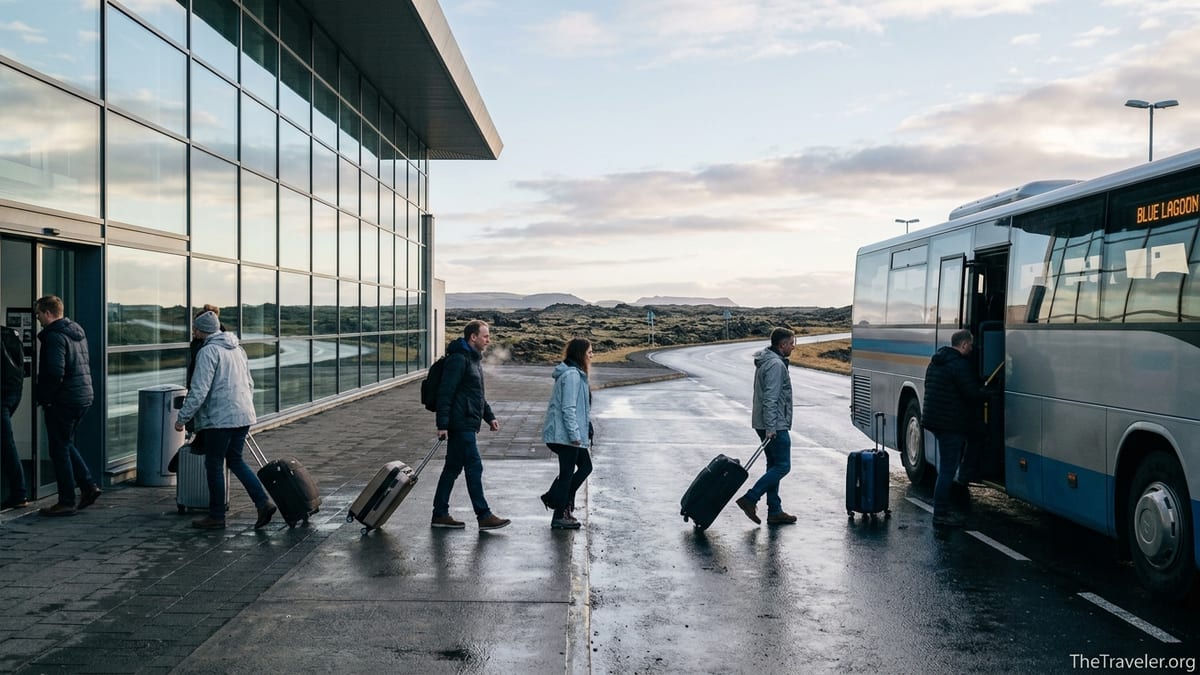
Understanding the Keflavik to Blue Lagoon Route Today
The Blue Lagoon sits in a lava field near the Svartsengi geothermal power station on the Reykjanes Peninsula, close to the town of Grindavík. By road, it is usually around a 15 to 20 minute drive from Keflavik International Airport and 40 to 50 minutes from central Reykjavík, depending on traffic and weather. In practical terms, this means most visitors can comfortably visit on arrival day before heading into the city, or on departure day on the way back to the airport.
Recent volcanic activity on the Reykjanes Peninsula has periodically affected operations at the Blue Lagoon, with temporary closures and evacuations reported by Icelandic authorities and international media. Travelers planning a visit in 2026 should always double-check current opening status and any safety advisories close to their travel dates. Schedules and transport options can adjust at short notice when seismic alerts are raised, even though operators work hard to maintain services.
When the resort is open, the basic logistics remain straightforward. The spa has a dedicated access road from the main highway between Keflavik and Reykjavík, and road signage clearly marks the turnoff. Official shuttle services, tour buses, taxis, and rental cars all use this same route, and journey times are broadly similar: about 20 minutes from Keflavik, 45 minutes from Reykjavík. The bigger variables are your arrival time, luggage situation, and how much buffer you build around flights.
Because the Blue Lagoon is a premium attraction that often sells out, especially in summer and on weekends, it is important to think about your transfer plan at the same time you book your entry ticket. Whether you choose a bus, private transfer, or rental car, securing timed entry to the lagoon and compatible transport slots is more important than shaving a few minutes off the drive.
Official Shuttle Buses and Shared Transfers
For most visitors arriving without a car, the simplest route from Keflavik Airport to the Blue Lagoon is by dedicated shuttle bus. Destination Blue Lagoon is the official transfer partner of the lagoon and operates coaches connecting Keflavik Airport, the spa, and Reykjavík. Services typically align with flight arrivals and run regularly through the day, with multiple departures in the morning when transatlantic flights land. Other well-known operators such as Flybus and Reykjavík Excursions also sell combinations that route via the Blue Lagoon, often under joint or partner branding.
A common real-world pattern is to land at Keflavik around 7:00 in the morning from North America, clear immigration and baggage in 30 to 60 minutes, and then board a pre-booked transfer to the lagoon departing around 8:30 or 9:30. Travelers report that early slots can feel tight if your flight is delayed, so booking a bus 90 minutes after scheduled landing usually leaves a safer margin. For example, if your flight is scheduled to land at 6:40, many visitors will target a 8:30 or 9:30 transfer instead of trying to rush for the first bus.
Prices for these shared transfers are typically in the moderate range compared with taxis: more expensive than local public buses, but cheaper than a private car. Exact fares vary by season and operator, but you can expect the Keflavik to Blue Lagoon leg to cost roughly the same order of magnitude as the standard Keflavik to Reykjavík airport bus. The advantage is convenience: your luggage goes in the underfloor hold, you are dropped at the Blue Lagoon entrance, and on the onward leg you can connect to downtown Reykjavík or straight back to the airport.
On the return side, buses usually run from the Blue Lagoon to Reykjavík on roughly an hourly pattern, and to Keflavik Airport to align with outbound flights. Travelers often note that drivers and staff are used to handling large suitcases, ski-style bags, and backpacks, and the process is quick and routine. Just remember that in Iceland’s changeable weather, you may be loading and unloading bags in rain or wind, so keep essentials and electronics inside a smaller carry-on you can easily protect.
Private Transfers, Taxis, and Rental Cars
For travelers who value flexibility, privacy, or are arriving on tight schedules, private transfers or taxis can make sense despite the higher cost. Licensed companies based in Reykjavík and on the Reykjanes Peninsula operate fixed-price transfers from Keflavik Airport to the Blue Lagoon and onward to hotels. Services marketed as “Blue Lagoon transfer” or similar typically include meet-and-greet at the arrivals hall, direct transport to the lagoon, and an agreed pickup time for your onward journey.
The real-world advantage is control. If your flight lands 45 minutes late, your driver is usually tracking it and adjusts pickup. You can stop briefly at an ATM in the terminal, grab supplies at a supermarket near the airport, or adjust departure slightly if the lagoon visit runs long. Costs vary widely by company and vehicle size, but for a couple or small family, the total can be comparable to four individual bus tickets, especially if you are also paying for hotel drop-off in Reykjavík.
Another popular option is renting a car directly at Keflavik and driving yourself. The route is straightforward: you collect the car at the airport, follow road signs toward Reykjavík, then take the marked turnoff for Blue Lagoon after a short drive. Many visitors use a compact rental from familiar brands with desks at the terminal, then park in the large free parking area near the lagoon. This works well if you plan to continue to Reykjavík afterward or explore the Reykjanes Peninsula.
However, renting a car just to go to the Blue Lagoon during a layover rarely makes financial sense unless you are a group sharing the cost or plan to add other stops such as the Bridge Between Continents or Gunnuhver hot springs. Factor in extra time for collecting and returning the vehicle, checking for damage in winter conditions, and driving in potentially icy or windy weather. For long-haul travelers arriving tired and jet-lagged in the early morning, a shuttle bus or private driver is often the safer and more relaxing choice.
Luggage Storage and How to Handle Bags
One of the biggest concerns travelers have when heading from Keflavik straight to the Blue Lagoon is what to do with luggage. Fortunately, there are several workable solutions. The Blue Lagoon itself offers changing room lockers for smaller items and valuables, along with a dedicated luggage storage facility near the parking area for larger bags. According to the lagoon’s own information, the larger storage typically charges a modest per-bag fee, often quoted in the range of about 1,000 Icelandic krónur per suitcase, with the exact amount subject to change. This facility is designed for visitors who arrive with full travel luggage on the way to or from the airport.
In practice, many arrival-day visitors check in at the Blue Lagoon with roller suitcases, backpacks, and even ski bags. Staff direct them either to the standard cloakroom area or to the external storage by the car park, where bags are tagged and stored in a secure, heated space. You then enter the lagoon with only your swimsuit, toiletries, and a small bag for personal items. Locker sizes in the changing rooms are similar to those in many European spas and are big enough for a day pack or medium tote, but not for full-size checked suitcases.
If you prefer to travel lighter, one tactic is to pack a smaller “Blue Lagoon kit” in your hand luggage. For example, travelers on a short city break often place swimsuits, flip-flops, and essential toiletries in a packing cube inside their carry-on, while main suitcases go into the lagoon’s luggage storage. This avoids repacking in the arrivals hall at Keflavik and makes the transition faster. Those with longer layovers sometimes leave a non-essential bag at the lagoon for a few days to free up space in campervans or smaller rental cars, taking advantage of the fact that the storage facility is designed to cope with various trip patterns.
On onward transfers, all major shuttle operators from Keflavik to the Blue Lagoon and Reykjavík are accustomed to handling baggage comparable to international flights. Travelers report that standard bus tickets include luggage in the hold at no extra charge, with only oversized items occasionally incurring a supplement. If you are combining a lagoon visit with a cruise departure or domestic flight, it is wise to confirm baggage limits and dimensions with your chosen operator in advance, especially for sports equipment or unusually large cases.
Timing Your Visit: Arrival, Departure, or Mid-Trip
Because the Blue Lagoon lies between Keflavik Airport and Reykjavík, the key timing question is whether to visit on arrival day, departure day, or as a side trip during your stay in the capital. Each approach has advantages and trade-offs. Arrival-day visits are attractive because they turn an early-morning landing into a relaxing soak, help reset your body clock, and avoid waiting for a hotel check-in that might not be until mid-afternoon.
A typical arrival-day scenario might look like this: landing at 7:00, clearing airport formalities by 8:00, taking a bus to the lagoon and arriving around 8:30, soaking until 11:00, then continuing by shuttle to Reykjavík and reaching your hotel around noon. This works well for travelers who want to start sightseeing in the city in the afternoon, as most hotels will at least store luggage until rooms are ready. The main risk is flight delay; if your long-haul arrives significantly late, you may need to contact the lagoon and your transfer provider to adjust your booked time slot.
Departure-day visits suit those with afternoon or evening flights. An example itinerary would be checking out of a Reykjavík hotel at 10:00, taking a mid-morning shuttle to the lagoon, enjoying two to three hours in the water, and then transferring to the airport with enough buffer for check-in and security. Many travelers are comfortable pairing the Blue Lagoon with flights departing after about 15:00, as long as they leave the spa at least three and a half to four hours before departure to allow for the 20 minute transfer to Keflavik, check-in, and potential queues.
Visiting mid-trip from Reykjavík can be the least stressful option if your schedule allows. You take a simple there-and-back shuttle, enjoy the lagoon without worrying about flight times, and keep your luggage at your hotel. This can be psychologically easier, especially given recent periods of temporary closure due to volcanic activity. If your lagoon visit is scheduled for the middle of a one-week stay and something disrupts that specific day, you have a bit more flexibility to rebook compared with an arrival-day or departure-day plan anchored to international flights.
Blue Lagoon Before Reykjavík or After: Which Is Better?
Many visitors debate whether it is smarter to visit the Blue Lagoon before heading to Reykjavík or to wait until after exploring the capital. There is no single right answer, but certain traveler profiles tend to benefit from one sequence over the other. Going to the lagoon first on arrival turns your journey into a relaxing start, especially after an overnight transatlantic flight. You move from a crowded aircraft to warm geothermal water, then arrive in Reykjavík feeling refreshed.
This “arrival soak” strategy works best if your flight lands in the morning, you have no urgent commitments in the city, and you are comfortable building in some buffer for delays. It is also ideal for travelers whose hotels are strict about check-in times; instead of waiting in a lobby with luggage until 15:00, you are happily floating in the lagoon. Families with children often appreciate this sequence because it lets kids burn off travel fatigue in a fun environment before facing city streets.
Visiting the Blue Lagoon after some time in Reykjavík has different advantages. By the end of your stay, you will have a better sense of Icelandic weather, local prices, and your own energy levels. Some travelers intentionally save the lagoon for the last day as a reward or decompression before a long flight home. If your departure is in the late afternoon or evening, you can check out from your hotel, store luggage on the transfer bus and at the lagoon, and then head directly to the airport.
From a risk-management perspective, placing the lagoon earlier in your itinerary can provide more room to adapt if a day is cancelled due to seismic alerts or weather. You may be able to shift the booking by a day or two. Placing it on your final day concentrates both the lagoon and your flight into a single time window, which can be efficient but leaves less flexibility. For this reason, travelers on very short breaks of two or three nights sometimes choose a mid-trip lagoon visit from Reykjavík, so a disruption on any single day does not jeopardize both the spa visit and their flights.
Realistic Time Buffers and Weather Considerations
Iceland’s weather and natural conditions can change quickly, so it is wise to build generous buffers into your Keflavik to Blue Lagoon planning, especially in winter. High winds, heavy rain, or snow can slow traffic on the Reykjanes Peninsula and occasionally cause temporary disruptions. While the road between the airport, Blue Lagoon, and Reykjavík is generally well maintained, visibility and driving comfort can deteriorate in storms, and shuttle operators may adjust departure times to keep to safety standards.
As a rule of thumb, many experienced travelers aim to arrive at Keflavik Airport at least three hours before an international flight, and they add the 20 minute Blue Lagoon transfer on top of that. In winter or during periods of high seismic activity, stretching that to three and a half or four hours feels more comfortable. So if your flight leaves at 17:00, planning to leave the lagoon no later than 13:00 is a sensible guideline. On arrival, allow at least 60 to 90 minutes from scheduled landing to boarding a bus, more if you are checking sports equipment or traveling in peak season.
Volcanic activity on the Reykjanes Peninsula has shown that closures and evacuations can sometimes be ordered at relatively short notice. The Blue Lagoon has, in recent years, announced temporary shutdowns of several days or weeks at a time around eruptions, as reported by Icelandic authorities and international news outlets. When booking for 2026, treat all timings as provisional until closer to your departure, monitor official announcements, and choose tickets and transfers that offer reasonable change conditions. Travel insurance that covers natural hazard disruptions can be worth considering.
In day-to-day conditions when the lagoon is operating normally, the main timing challenge is often crowding rather than safety. Prime entry times in the late morning and early evening can be busy, especially in high summer when opening hours extend into the late night. Early morning slots just after opening and mid-afternoon visits between major coach waves tend to feel quieter. If your flight schedule gives you a choice, pairing a mid-morning arrival with an early slot at the lagoon can offer a calmer experience and an easier time finding space in changing rooms.
Frequently Asked Questions
Q1. How long does it take to get from Keflavik Airport to the Blue Lagoon?
In normal conditions, the drive from Keflavik Airport to the Blue Lagoon takes around 15 to 20 minutes by shuttle bus, taxi, or rental car, depending on traffic and weather.
Q2. Is it better to visit the Blue Lagoon on arrival or before departure?
Both work, but arrival-day visits suit early-morning landings and help fill time before hotel check-in, while departure-day visits work best for flights after mid-afternoon with generous time buffers.
Q3. Can I store my suitcase at the Blue Lagoon?
Yes. The Blue Lagoon provides a luggage storage facility near the car park for larger bags, usually for a modest per-bag fee, plus lockers in the changing rooms for smaller items.
Q4. Do shuttle buses between Keflavik, Blue Lagoon, and Reykjavík take luggage?
Yes. Major operators routinely carry standard checked suitcases and hand luggage in the bus hold at no extra cost, with only very large or unusual items sometimes incurring a supplement.
Q5. How much time should I allow at the Blue Lagoon?
Most travelers spend about two to three hours at the lagoon, which leaves time to check in, shower, enjoy the water, and shower again before continuing to Reykjavík or the airport.
Q6. Is renting a car from Keflavik just for the Blue Lagoon worth it?
Usually only if you are a group sharing costs or plan to explore more of the Reykjanes Peninsula. For a simple airport-to-lagoon visit, shuttles or private transfers are often more cost-effective and easier.
Q7. How close to my flight can I safely leave the Blue Lagoon?
A cautious guideline is to leave the lagoon at least three and a half to four hours before an international departure, which includes the 20 minute transfer to Keflavik and standard airport check-in time.
Q8. What happens if volcanic activity closes the Blue Lagoon on my travel day?
If the lagoon closes due to seismic or volcanic alerts, operators generally allow rebooking or refunds according to their policies, but you should check current terms and consider travel insurance that covers natural events.
Q9. Can I visit the Blue Lagoon during a long layover at Keflavik?
Yes, many travelers with layovers of six hours or more visit the lagoon. You must clear immigration, collect luggage if necessary, take a shuttle, and return in time for security and boarding.
Q10. Should I book my Blue Lagoon ticket and transfer in advance?
Yes. The Blue Lagoon often sells out, and transfer seats can be limited in peak times, so booking both your entry slot and transport ahead of time is strongly recommended.