


More news on this day
The United States has updated its global travel advisories, placing 23 countries in the highest risk category and urging citizens to avoid travel due to escalating security threats, political instability, and conflict.
Get the latest news straight to your inbox!
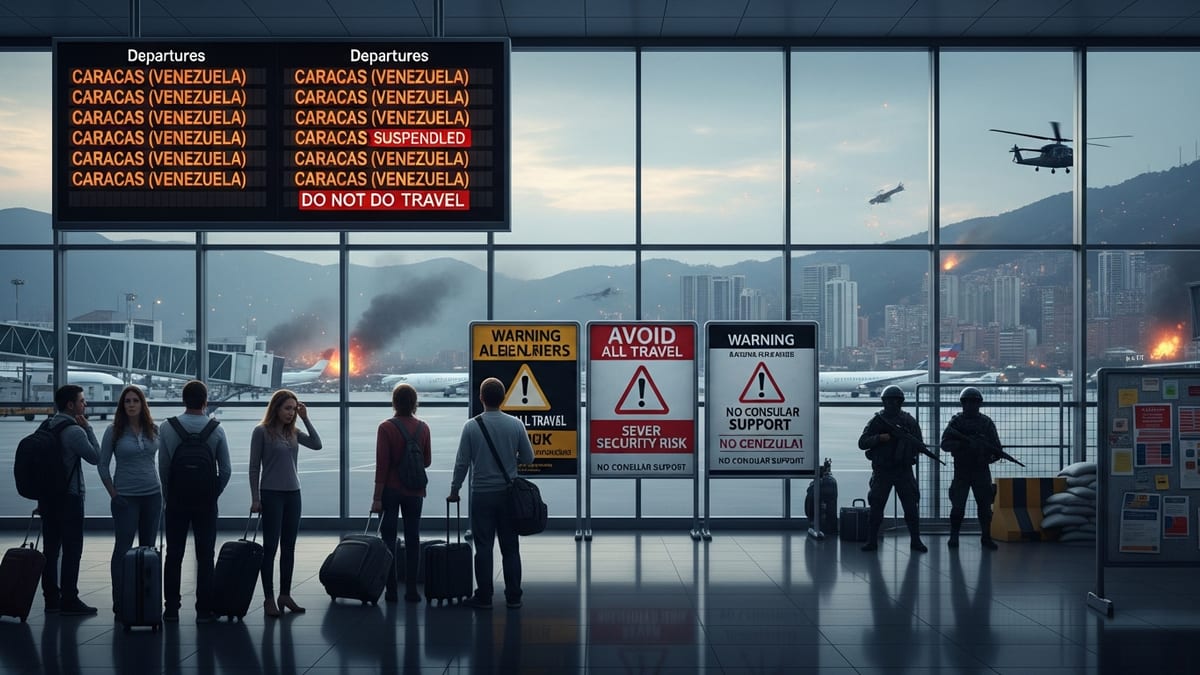
New Wave of High-Risk Destinations Identified
According to recent updates on the U.S. Department of State’s travel advisory platform and summarized in multiple media reports, 23 countries are now classified at the most severe advisory level, commonly known as “Do Not Travel.” This category signals that conditions on the ground are considered highly dangerous or unpredictable, with limited capacity for consular assistance if travelers encounter trouble.
The expanded list reflects a combination of longstanding crisis zones and newer areas where security conditions have deteriorated sharply over the past year. Many of the countries singled out are experiencing armed conflict, widespread crime, or the breakdown of public order, while others are facing heightened risks from terrorism, kidnapping, or frequent, violent political unrest.
While exact formulations may vary across coverage, the 23 countries broadly reflect regions where foreign visitors face a significant likelihood of encountering violence, movement restrictions, or sudden border closures. The advisories emphasize that in several of these destinations, local authorities may struggle to provide basic safety, and foreign embassies can face severe limits on their ability to intervene or evacuate citizens in an emergency.
Travel advisories are structured to help U.S. travelers compare risks across destinations, but the “Do Not Travel” level is intended to signal that discretionary trips, including tourism, should be postponed or rerouted whenever possible.
Security Risks Driving the ‘Do Not Travel’ Designations
Reports on the latest changes indicate that a mix of overlapping security concerns is driving the decision to flag these 23 countries as highest risk. In several cases, years of armed conflict have devastated infrastructure, damaged key transport hubs, and left large areas under the control of non-state armed groups. This can result in unpredictable checkpoints, roadside attacks, and frequent clashes that make overland travel especially hazardous.
In other destinations, chronic violent crime and kidnapping for ransom are highlighted as core reasons for caution. Urban centers and major highways in some of the affected countries have seen spikes in armed robbery, carjacking, and extortion targeting both locals and foreigners. Travelers may find that local security services lack resources to respond, and perpetrators often operate with relative impunity.
Terrorism and targeted attacks on public places, hotels, and transportation networks remain a central concern in multiple countries on the list. The advisories note patterns in which insurgent or extremist groups have previously sought to strike locations frequented by foreigners or government-linked sites, leading to an elevated baseline of risk that can change with little or no warning.
Political instability also features prominently. In some of the 23 countries, recent coups, disputed elections, or large-scale protests have led to curfews, sudden internet shutdowns, and clashes between security forces and demonstrators. These disruptions can strand visitors, close airports and borders on short notice, and complicate access to medical care, accommodation, or safe routes out of the country.
What the Highest-Level Advisory Means for Travelers
The “Do Not Travel” category is the most serious signal used in the U.S. advisory system and is meant to discourage all but the most essential travel. While it does not constitute a legal ban on visiting a particular country, the classification is a clear indication that personal safety risks are considered significantly higher than in most other destinations.
Travelers who nonetheless decide to proceed to countries in this category are encouraged, in public guidance, to prepare for a highly challenging environment. This can include limited commercial flight options, closed land borders, or rapidly changing local regulations. Medical facilities in some of the affected destinations may be overstretched or difficult to access, and evacuation for medical or security reasons can be extremely costly or logistically impossible.
Publicly available information also underscores that in some of the 23 countries, the presence of U.S. diplomatic staff is restricted or periodically reduced due to security conditions. That can mean smaller consular teams, limited appointment availability, or the suspension of certain in-person services. In extreme cases, embassies or consulates may temporarily close or relocate, leaving citizens with very few on-the-ground resources.
Insurance implications are another practical concern. Many travel insurance policies contain exclusions for destinations under the highest advisory levels or for incidents related to war, civil unrest, or terrorism. Travelers booking trips to these countries may find fewer insurers willing to provide comprehensive coverage, and those who proceed without such protection risk bearing high costs in the event of an emergency.
How the List Is Compiled and Updated
The U.S. system of travel advisories is designed to be dynamic, with updates issued when conditions in a country change materially. According to publicly available descriptions of the process, assessments draw on a range of open information about security, crime trends, public health, and infrastructure, as well as the operating conditions for diplomatic missions and international organizations.
Each country receives an overall advisory level, ranging from routine precautions to “Do Not Travel.” Many entries also include regional distinctions, where certain provinces or border areas carry higher risk than the national average. For some of the 23 countries in the highest category, particular regions are highlighted as especially dangerous, while others may have more limited areas where movement is relatively less restricted but still considered unsafe.
Media reports note that the latest update fits into a broader pattern of heightened global caution, with governments worldwide recalibrating risk assessments in light of prolonged conflicts, shifting alliances, and new non-state armed actors. The U.S. advisories are one of several tools that travelers increasingly rely on, alongside guidance from other national foreign ministries, multilateral organizations, and specialized security consultancies.
Advisory levels do not typically change on a fixed schedule. Instead, they are adjusted when major incidents occur, when trends indicate a sustained deterioration or improvement, or when government operational posture in a country shifts. This flexibility is reflected in the new list of 23 countries at the highest level, which brings together long-term hotspots and states where recent events have pushed risk indicators sharply upward.
Planning Travel in Light of the New Warnings
For U.S. travelers planning international trips in the coming months, the expanded roster of “Do Not Travel” destinations serves as a strong signal to scrutinize itineraries and reconsider routes that pass through or near the affected countries. Even brief transits through high-risk airports or overland corridors can expose travelers to some of the same disruptions and security concerns outlined in the advisories.
Travel experts frequently recommend that prospective visitors closely review official advisory language, monitor reputable news outlets for developments in specific regions, and consider alternative destinations with lower risk profiles. For those whose work or family obligations require travel to one of the 23 countries, careful contingency planning is advised, including back-up travel arrangements, secure communication options, and clear plans for contacting relatives or employers if conditions worsen suddenly.
Practical steps such as registering travel details with appropriate notification services, keeping copies of key documents, and maintaining a reserve of funds for unexpected expenses are also emphasized in public guidance. In environments where banks, telecommunications, or transportation can be disrupted with little notice, this type of preparation can be critical.
As the global security landscape remains volatile, the newly publicized list of 23 high-risk countries highlights the continuing importance of checking the latest advisories as part of any international travel planning. While many destinations remain open and accessible, the updated warnings underscore that risk levels can differ sharply from one country to the next, and thoughtful preparation is increasingly essential for safe travel.