


More news on this day
Intense congestion at Kansas City International Airport has triggered cascading delays and cancellations across the United States, as Southwest Airlines and United Airlines struggle to stabilize operations and re-route stranded passengers.
Get the latest news straight to your inbox!
Local Bottleneck Becomes National Flashpoint
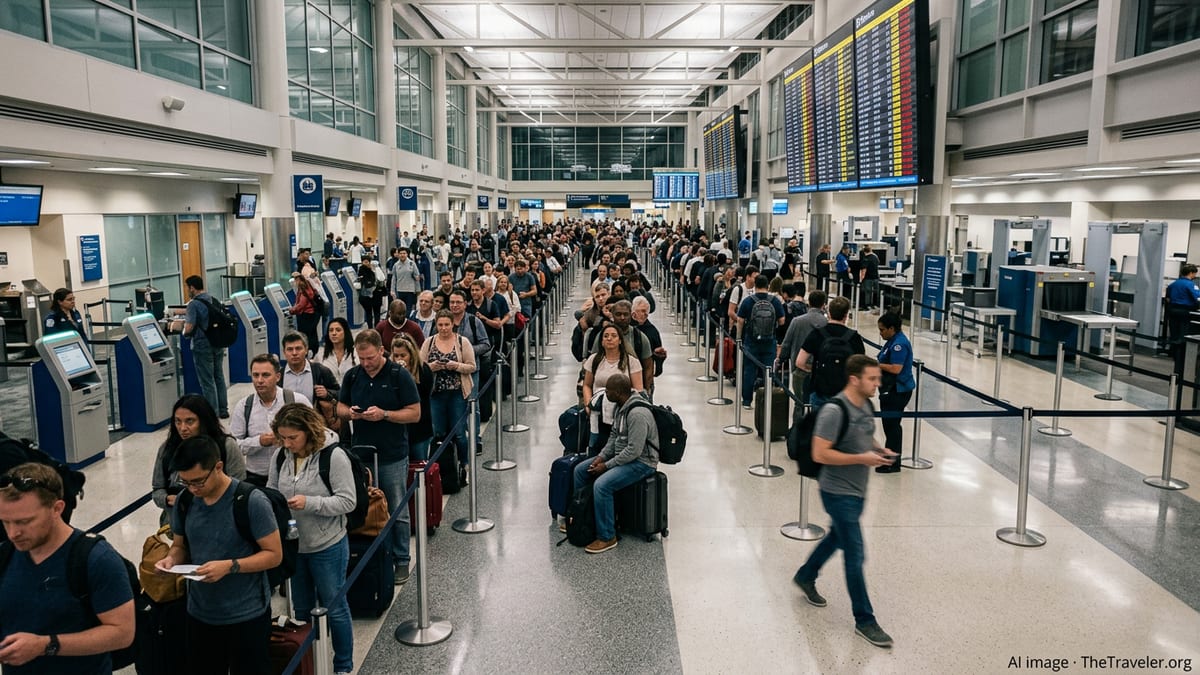
Reports from Kansas City International Airport describe long lines, crowded gates, and departure boards filled with delays as the airport confronts an abrupt surge in passenger volume combined with constrained aircraft and crew availability. While Kansas City is not among the nation’s largest hubs, its role as a connecting point for Southwest and United means that disruptions there can quickly spread across airline networks.
Publicly available flight tracking data indicates that a cluster of delayed departures and ground holds at Kansas City forced multiple aircraft to miss scheduled rotation times, reducing the number of planes and flight crews available for later trips. Once departures fell behind schedule, the airport’s tightly timed operations began to stack up, with taxiways and gates increasingly occupied by aircraft waiting for clearance.
As aircraft remained out of position, both Southwest and United began canceling select flights, prioritizing routes with higher passenger loads and essential connections. That strategy helped free up planes and crews for critical segments but left some travelers at Kansas City and downline airports stranded for hours or forced to rebook for next day departures.
Local media coverage and social media posts from travelers described crowded concourses, limited seating, and long waits for customer service assistance, as airline staff attempted to manage rebookings, hotel vouchers, and meal arrangements inside an already strained terminal.
Southwest Hit Hardest as Largest Carrier at KCI
Southwest Airlines faces the brunt of passenger frustration at Kansas City, reflecting its status as the airport’s largest carrier. With a dense schedule of point to point routes, Southwest relies on quick aircraft turns and a finely balanced timetable, making the airline particularly vulnerable when a single airport experiences gridlock.
Published analyses of previous Southwest disruptions, including the 2022 scheduling crisis, highlight how rapid, widespread cancellations can occur once aircraft and crews fall out of alignment with scheduled rotations. The situation in Kansas City shows similar dynamics on a smaller scale, as a localized slowdown cascades into missed connections and idle aircraft elsewhere in the system.
Travel data and passenger accounts indicate that Southwest has been canceling some shorter, lower frequency routes to concentrate resources on major markets and heavily booked flights. While that approach can reduce overall disruption, it leaves affected passengers with fewer immediate alternatives, especially from smaller origin and destination airports that depend on Kansas City as a key connecting node.
Customer reports describe instances where passengers reached Kansas City only to discover onward Southwest flights canceled after departure from their origin city, compounding frustration and contributing to heavy crowds in the rebooking lines and call centers.
United Cancellations Compound Network Strain
United Airlines, which uses Kansas City primarily as a spoke feeding its larger hubs, is experiencing its own wave of cancellations and misaligned connections. When flights from Kansas City to United hubs such as Denver, Chicago, and Houston are delayed or canceled, the impact is felt not only by originating passengers but also by travelers booked on onward long haul routes.
According to published coverage of recent nationwide disruption events, even a modest number of cancellations at a mid sized airport can ripple through an airline’s network when those flights are part of tightly banked schedules. Missed inbound connections reduce load factors on subsequent departures, while delayed aircraft and crews arriving late to hub airports compress turnaround times and increase the odds of additional delays.
Travelers connecting through United hubs have reported receiving last minute notifications of cancellations or significant schedule changes, with some itineraries requiring unexpected overnight stays or rerouting through entirely different airports. These adjustments, in turn, contribute to crowding and overbooking on alternative flights as United attempts to absorb displaced passengers from the Kansas City disruption.
Industry observers note that United’s experience at Kansas City underscores how dependent airlines remain on each spoke operating reliably. Even cities that are not designated hubs can become pressure points when weather, staffing, or operational issues converge.
Systemic Weaknesses Exposed by a Single Choke Point
The gridlock at Kansas City highlights broader structural vulnerabilities in the U.S. air travel system. Airlines have built highly optimized schedules that maximize aircraft utilization and minimize idle time, which improves efficiency but leaves little margin for unexpected congestion at mid tier airports.
Recent analyses of nationwide flight disruptions have shown how quickly localized problems such as computer outages, severe weather, or staffing bottlenecks can escalate into multi state or nationwide disruptions. The Kansas City situation follows a similar pattern, where a limited number of delayed departures triggered gate shortages, aircraft repositioning challenges, and ultimately cancellations on routes that never touch Missouri.
Travel industry commentators point to chronic staffing pressures in key roles such as ground handling, security screening, and air traffic control as underlying contributors. When airports operate close to capacity with thin staffing buffers, even modest spikes in workload can slow processing at checkpoints, baggage systems, and gate operations, amplifying the effect of any schedule disruption.
The cumulative result is a system in which passengers at distant airports suddenly see their Southwest or United flights canceled or severely delayed because a critical aircraft or crew remains stuck in Kansas City gridlock, with replacement resources unavailable on short notice.
What Travelers Can Do in an Unstable Environment
For travelers caught in the fallout from Kansas City’s gridlock, the experience reinforces several practical lessons about flying in a tightly coupled, disruption prone system. Aviation analysts and consumer travel advocates consistently recommend booking earlier departures when possible, as morning flights tend to experience fewer knock on delays from prior segments.
Passengers are also advised to monitor their flight status and aircraft origin city throughout the day using airline apps or flight tracking tools. When the inbound aircraft for a flight is significantly delayed or originating from a known trouble spot, travelers may be able to proactively request alternative routings before rebooking options become scarce.
Flexible itineraries, including willingness to connect through secondary airports or accept different airlines on key legs, can also help minimize stranding risk. Recent reporting on how some carriers have shifted capacity to less congested airports suggests that travelers who consider nearby alternatives may have better odds of avoiding the worst gridlock.
As Kansas City International works through the current backlog and airlines adjust schedules to realign planes and crews, it remains clear that even a single choke point can reverberate through the national network. For Southwest and United passengers, the episode is another reminder that modern air travel remains highly efficient in normal conditions yet acutely sensitive to disruption when any link in the chain seizes up.