


More news on this day
Passengers at Austin–Bergstrom International Airport faced a difficult travel day as publicly available tracking data showed 162 delayed flights and six cancellations, with knock-on disruption from major national hubs rippling across domestic and international routes.
Get the latest news straight to your inbox!
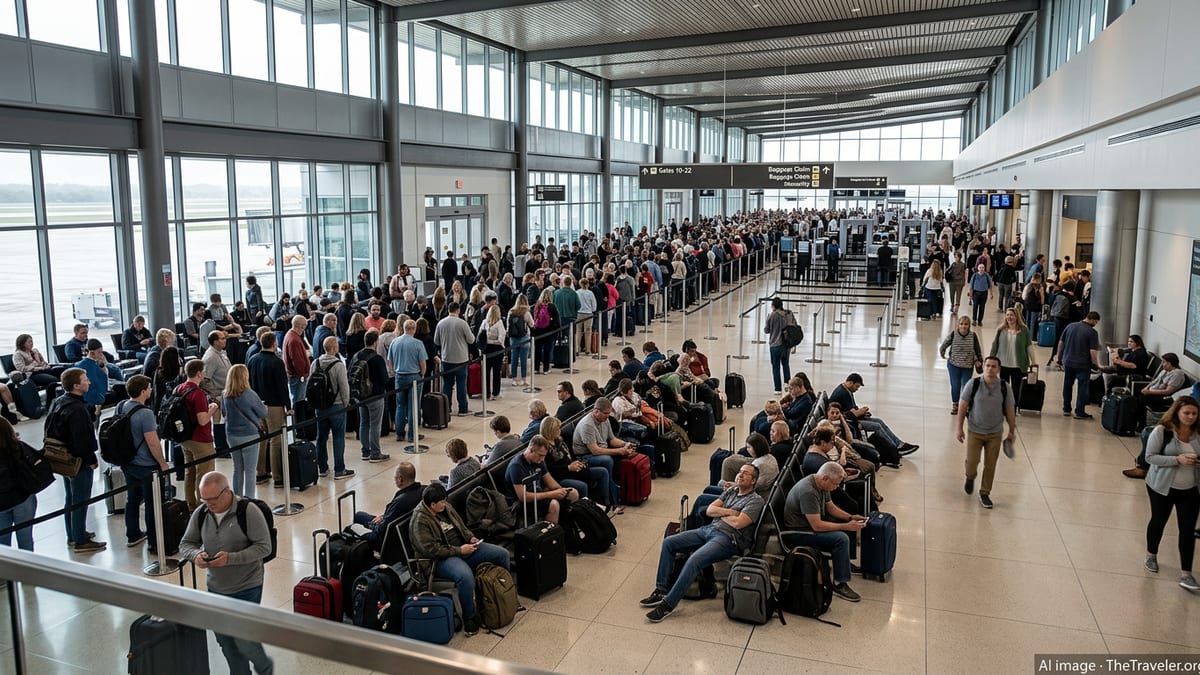
Operational Strain at Austin–Bergstrom
The disruption figures at Austin–Bergstrom highlight how quickly conditions can deteriorate when wider problems hit the national network. With well over a hundred services pushed behind schedule, many travelers faced missed connections, rebookings and extended time on the ground despite generally fair operating conditions in Central Texas.
Tracking dashboards showed a mix of late departures and arrivals, suggesting both inbound and outbound traffic were affected. When aircraft and crews arrive late from other cities, even short delays can cascade into longer waits at the gate, missed runway slots and tighter turnaround windows for subsequent flights.
The pattern at Austin–Bergstrom fits a familiar profile for a growing mid sized hub that is heavily tied into larger airports for onward connectivity. Many of the delayed flights were linked to banks of departures to or from major connection points, meaning that snags at one end of the route quickly translated into knock on effects in Austin.
Travelers reported crowding at gate areas and busier than usual customer service lines as airlines worked through rebookings. While the overall number of cancellations was limited compared with peak disruption events seen in previous seasons, the broad spread of moderate delays was enough to significantly alter many passengers’ itineraries.
Pressure at Major National Hubs
Conditions at key US hubs contributed significantly to the difficulties in Austin. Flight status tools and airport boards for Dallas Fort Worth, Atlanta, New York John F. Kennedy and Denver showed elevated levels of late departures and arrivals, along with pockets of cancellations that disrupted aircraft rotations and crew schedules.
Dallas Fort Worth, a major connecting point for Texas travelers, experienced clusters of departure delays that often exceeded an hour when flights did run late, according to live performance summaries. Even when the majority of services remained on time, the minority of heavily delayed flights created issues for passengers relying on tight connections and for aircraft needed back in Texas later in the day.
At Atlanta and Denver, widely used as cross country and international gateways, periods of congestion and weather related slowdowns have recently been associated with ground delay programs and spacing requirements. When those measures are in place, departures are metered more cautiously, reducing throughput and creating backlogs that can stretch across much of the operating day.
New York JFK, where runway and gate capacity are tightly managed, has also seen days where weather and traffic volume trigger departure queues and arrival holds. When that happens, long haul services and transcontinental flights that connect through Austin can run significantly behind schedule, leaving aircraft and crews out of position for their next segments.
Weather, Congestion and Systemwide Knock-on Effects
The latest disruption underscores how interconnected the US air travel system has become. Austin’s delays were not driven solely by local weather or on the ground issues, but by a combination of storms, traffic management initiatives and congestion hundreds or even thousands of miles away.
Meteorological outlooks around the affected period pointed to unsettled conditions in parts of the South and East, including scattered thunderstorms and rain bands along key flight corridors. When convective weather builds near major hub airports, air traffic controllers often need to reduce arrival and departure rates for safety, a step that quickly leads to queues both in the air and on taxiways.
Once schedules begin slipping, the tightly choreographed nature of airline operations leaves little margin for recovery. Aircraft may arrive late into hubs like Dallas, Atlanta, JFK or Denver, miss their ideal departure windows onward, and then depart even later for secondary airports like Austin. That chain of events compounds throughout the day, particularly in the busy afternoon and evening banks when many connections are scheduled.
Industry data from recent disruption reports shows that delays at the largest US airports frequently involve a combination of late arriving aircraft, air traffic control programs and weather constraints. Austin’s role as a secondary connection point linked to multiple hubs makes it especially exposed to this sort of systemwide ripple.
Impact on Domestic and International Travelers
The knock on impact for passengers at Austin–Bergstrom extended beyond short regional hops. Many of the delayed departures and arrivals were tied to broader domestic and international itineraries, with travelers relying on connections through Dallas, Atlanta, JFK and Denver to reach the East Coast, West Coast and overseas destinations.
When a departure from Austin leaves late for a hub, even modest schedule slips can erase the connection cushion for onward flights to Europe, Latin America or transcontinental cities. In practice, this often forces travelers to accept rebookings for the next available departure, which may not operate until many hours later or even the following day on heavily trafficked routes.
Families and business travelers caught in the latest disruption wave faced a familiar suite of challenges: pressing for alternative routings, monitoring airline apps and airport displays for gate changes, and navigating crowded rebooking desks. Some domestic travelers were able to salvage trips by shifting to later flights on the same day, while those on long haul itineraries had fewer immediate options.
Hotels near major hubs reported an uptick in distressed passenger stays during recent severe disruption days, reflecting the wider consequences when relatively small numbers of cancellations are paired with high demand and full flights. For travelers originating in Austin, that can mean unexpected overnight stops many states away from their final destination.
What Travelers Can Do on Disruption Days
The episode at Austin–Bergstrom illustrates why experts consistently encourage passengers to build more resilience into their plans when traveling through major US hubs. Publicly available guidance from travel and consumer organizations stresses the benefits of early morning departures, longer connection windows and flexible routing options on routes that depend on congestion prone airports.
Real time flight tracking tools and airport delay dashboards can provide early warning that conditions at hub airports are deteriorating. When travelers see that departure or arrival rates at Dallas, Atlanta, JFK or Denver are being reduced, or that a high percentage of flights are showing as delayed, it can be a signal to contact airlines about alternative options before queues build at the airport.
Seasonal disruption reports for the US market also show that a relatively small share of airports account for a disproportionate amount of delays and cancellations each year, and that days with widespread storms or air traffic control programs can significantly raise the risk of missed connections. For cities like Austin that rely on those hubs for reach, being proactive can make a significant difference in how disruption is experienced.
While the latest numbers at Austin–Bergstrom fall short of the most severe nationwide meltdowns seen in recent years, they reinforce the reality that even a limited number of cancellations and a few hundred delayed flights at interconnected hubs are enough to reshape travel plans across the country in a single day.