


More news on this day
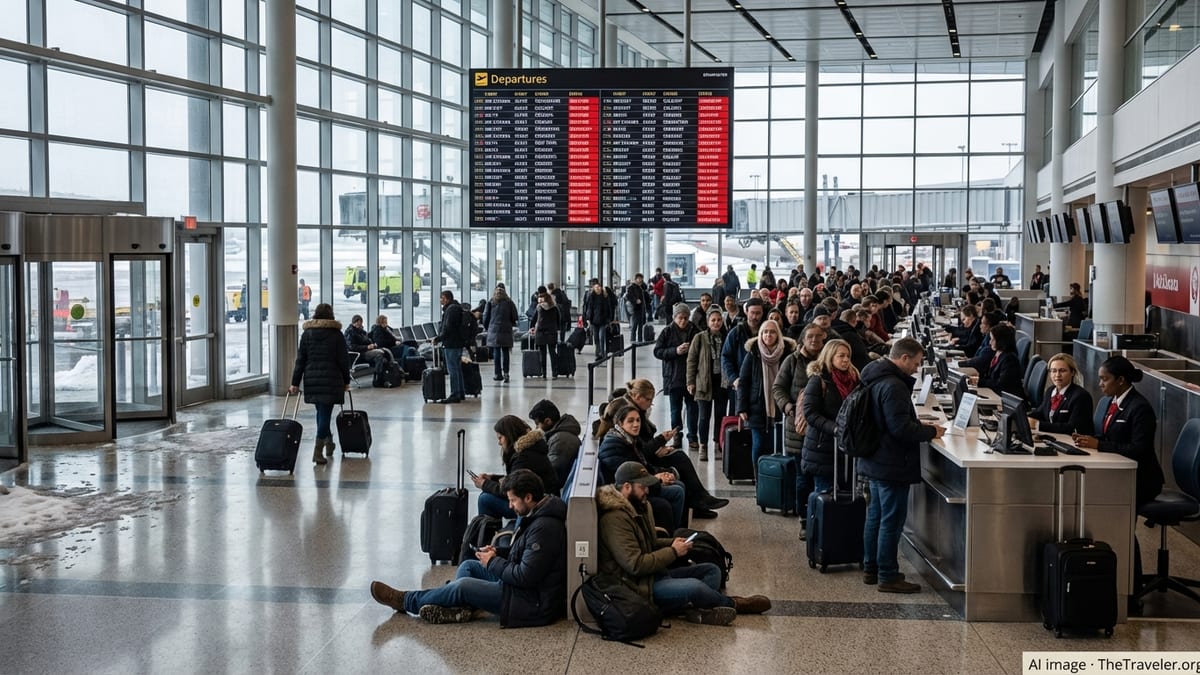
Air travel across Canada is facing renewed turmoil as Air Canada and WestJet implement large-scale flight cancellations and schedule cuts, disrupting trips for thousands of passengers amid fuel price shocks, volatile weather and mounting operational strains.
Get the latest news straight to your inbox!
Fuel Crisis and Route Cuts Deepen Capacity Crunch
A growing jet fuel crisis is emerging as one of the key drivers behind the latest wave of Canadian flight disruptions. Recent industry coverage indicates that both Air Canada and WestJet have begun trimming capacity on domestic and transborder routes, arguing that some services are no longer economically viable under current fuel prices. In several cases, seasonal links between Canadian cities and U.S. destinations are being suspended earlier than planned or dropped altogether for the 2026 summer period.
Reports on Air Canada’s network decisions describe a pattern of early suspensions on multiple Canada United States routes as the carrier attempts to redeploy limited capacity to higher yielding markets. Separate coverage notes that the airline has also shelved at least one long haul seasonal service to North Africa for the 2026 season, further constraining options for travelers who had relied on the route as a key transatlantic link.
WestJet has followed with its own series of capacity reductions, including cuts on certain cross border routes and a measurable pullback in available seats over the spring and early summer months. Industry reports describe reductions of several percentage points in monthly capacity as the airline reacts to elevated operating costs and softer demand on some U.S. corridors. For passengers, the combined effect is a thinner nationwide schedule that leaves fewer alternatives when weather or technical issues disrupt remaining flights.
The fuel related cuts are landing on a network already stretched by years of post pandemic adjustments, staffing challenges and shifting demand. Travel experts note that while route suspensions are not technically the same as last minute cancellations, for many passengers the practical outcome is similar: trips suddenly become longer, more expensive, or in some cases impossible without complex re-routing.
Weather Systems and System Outages Turn Local Trouble into Nationwide Gridlock
Alongside structural capacity cuts, Canada’s aviation system has been repeatedly hit in 2026 by severe weather events and technical glitches that turn local trouble into cross-country chaos. Publicly available analyses of recent storms detail how winter and spring weather sweeping across the Prairies and central Canada forced airlines to cancel or delay hundreds of flights over short periods, particularly at hub airports in Calgary, Toronto and Montreal.
Because Air Canada and WestJet both rely on tightly banked schedules at their main hubs, a burst of cancellations at a single airport can quickly cascade across the network. When aircraft and crews are stranded out of position by a storm related shutdown, later rotations in distant cities are often canceled or heavily delayed, leaving passengers facing missed connections and unplanned overnight stays even far from the original weather system.
Technical issues have added another layer of instability. Recent traveler accounts and aviation forums describe outages affecting flight plan systems and airport processing technology, including instances where carriers or air navigation providers temporarily reverted to manual procedures. At Canada’s largest airports, reports of check in slowdowns coinciding with border agency system problems have compounded delays, with some passengers missing flights despite arriving well ahead of departure.
In this environment, the distinction between cancellations within an airline’s control and those triggered by external factors has become a flashpoint. Passenger rights advocates note that each disruption forces travelers to navigate complex rules that determine whether they receive rebooking options only, or additional compensation and care such as meal vouchers and hotel accommodation.
Air Canada, WestJet Under Scrutiny Over Passenger Rights
The mounting disruptions have put a fresh spotlight on how Canada’s two largest carriers interpret their obligations under the Air Passenger Protection Regulations. Official guidance from regulators states that airlines must provide rebooking or refunds when flights are canceled, with added compensation in some cases when the cause is considered within the carrier’s control. However, consumer advocates argue that in practice the system often leaves travelers confused and out of pocket.
Recent media coverage has highlighted disputes over canceled or heavily delayed WestJet flights where travelers were informed that safety or weather concerns made the disruption unavoidable. Subsequent regulatory findings and expert commentary in some of these cases have suggested that operational or staffing issues may have played a role, prompting questions about how reasons for cancellations are communicated and categorized.
Air Canada has also faced criticism as cancellations accelerate. Guidance on the airline’s customer service plan emphasizes that some disruptions fall outside its control, such as severe weather or air traffic restrictions, but confirms that the carrier will process eligible refunds and arrange alternative transport when flights are canceled. As large scale storms, fuel related route cuts and other operational pressures overlap, passengers report mounting difficulty in determining which category applies to their own disrupted trip.
Legal and consumer specialists say the recent turbulence underscores gaps in enforcement and transparency. Complaints to the Canadian Transportation Agency have grown in recent years, and the latest cancellation wave is expected to add to that backlog as passengers challenge airline decisions on compensation and seek clarity on their rights following missed holidays, business meetings and family events.
Labour Tensions and Operational Strain Behind the Scenes
Behind the immediate headlines about fuel prices and storms, labour relations at Canada’s major carriers are adding to the sense of fragility. At WestJet, flight attendant representatives recently formalized a notice of dispute after months of negotiations on a new collective agreement, citing what they described in public statements as insufficient progress. While flights have continued to operate, union communications portray a workforce under growing pressure as schedules tighten and disruption management becomes a daily reality.
Air Canada, by contrast, has announced a series of tentative or newly ratified agreements with different employee groups in 2026, including customer service staff and certain scheduling units. Public reports indicate that these deals are intended to stabilize operations and reduce the risk of industrial action after a period of strained labour relations and high flight crew workloads. Even so, the carrier continues to navigate the operational aftermath of past disputes and ongoing staffing constraints in some departments.
Aviation analysts point out that modern hub and spoke networks leave little margin for error when it comes to crew availability and maintenance coverage. If just a few flights are canceled because crews reach duty time limits following earlier delays, the immediate impact may be localized but the ripple effects can extend across the country. In a system already operating with slimmer schedules due to fuel related cuts, each cancellation removes another potential safety valve.
The result is a feedback loop in which labour pressures, tight capacity and rolling disruptions reinforce one another. Even when airlines avoid full scale strikes or lockouts, any setback in staffing or scheduling can quickly translate into more canceled flights, longer recovery times and yet more strain on frontline employees tasked with managing frustrated passengers.
Travelers Face Fewer Options and Growing Uncertainty
For travelers, the combined effect of fuel costs, route cuts, weather turmoil, system glitches and labour tensions is a landscape marked by uncertainty. Trip planning that once relied on multiple daily departures and plentiful backup options is now complicated by thinner schedules, especially outside Canada’s largest city pairs. In some regions, passengers report that a single canceled flight can wipe out same day travel possibilities altogether.
Travel advisors and consumer advocates are increasingly recommending that passengers build in longer connection times, avoid tight same day international links where possible, and monitor their bookings frequently in the days leading up to departure. Some guidance also suggests considering travel at less congested times of day, when disruptions may be easier for airlines to absorb without cascading across the network.
Despite the turbulence, demand for air travel in and out of Canada remains strong, particularly into the core summer holiday period. Industry observers note that as long as fuel markets remain volatile and operational buffers limited, passengers should expect periodic flare ups of nationwide disruption when major storms, technical issues or sudden schedule adjustments collide with peak demand.
How Air Canada and WestJet navigate the coming months will be closely watched by regulators, consumer groups and rival carriers. For now, the Canadian aviation system continues to function, but with far less slack than many travelers remember, leaving every cancellation or delay feeling like a potential tipping point into broader chaos.