


Wedged between the Golden Horn and the steep lanes of Galata, Karaköy has become one of Istanbul’s most compelling bases. Former port warehouses now host third-wave coffee bars, baklava counters bustle from morning to midnight, and the Galata Bridge and Galataport cruise terminal place the rest of the city within easy reach. This guide walks you along the waterfront and up the hill to Galata, with concrete suggestions on where to eat, drink, wander and stay.
Get the latest updates straight to your inbox!
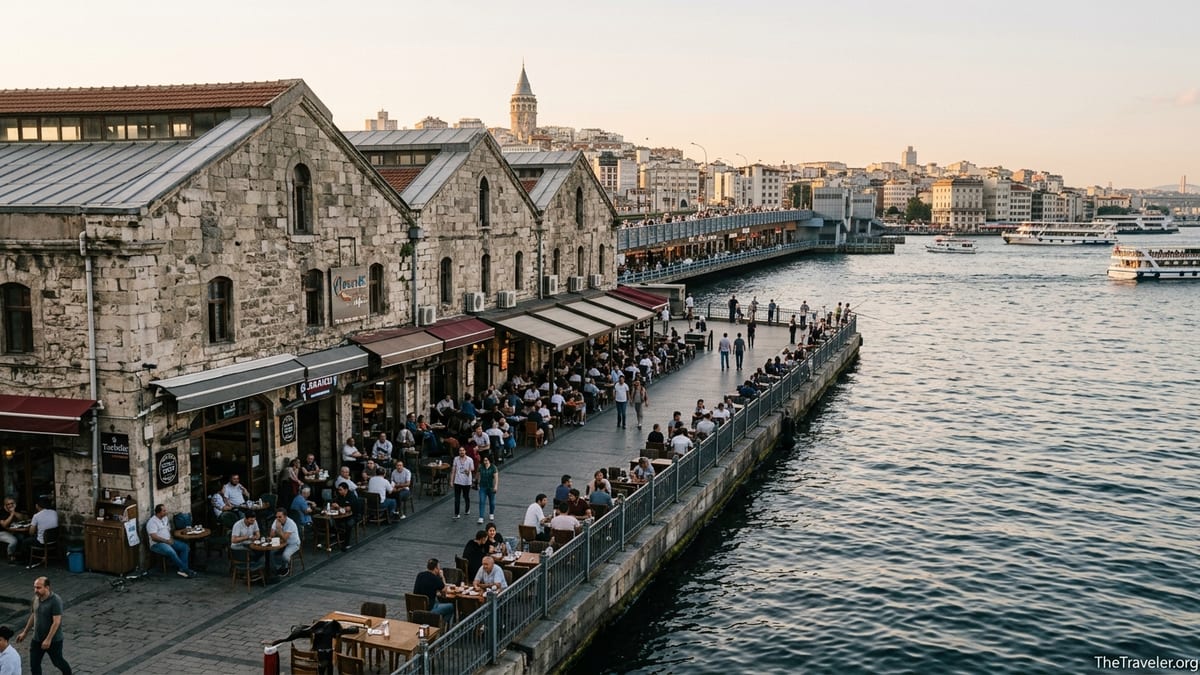
Getting Oriented in Karaköy
Karaköy sits on the northern side of the Golden Horn, at the foot of the Galata Bridge and directly below the Galata Tower in the Beyoğlu district. You can picture it as a triangle: the waterfront with ferry piers on one side, the base of the bridge on another, and the steep streets climbing toward Galata on the third. From here you can walk to the historic peninsula across the bridge in about 20 to 25 minutes, or reach the Galata Tower on foot in roughly 10 to 15 minutes, depending on how often you stop for coffee or photos.
Transit access is one of Karaköy’s biggest advantages. The T1 tram line runs through the main square and links you directly with Sultanahmet and the Grand Bazaar in one direction and Tophane and Kabataş in the other. Just up the hill, the historic Tünel funicular whisks you to the top of İstiklal Caddesi in under two minutes, which means you can be in the heart of Beyoğlu’s nightlife without ever needing a taxi. For many visitors, this combination of tram, funicular and ferries makes Karaköy one of the most practical places to stay in Istanbul.
Karaköy itself is compact. You will quickly learn a few key streets: Kemeraltı Caddesi runs roughly parallel to the waterfront, lined with cafes, street art and small shops; Bankalar Caddesi climbs toward the old Ottoman banking quarter around SALT Galata; and the narrow lanes between them hide everything from locksmiths and lighting suppliers to cocktail bars and boutique guesthouses. You can comfortably explore the core of the neighborhood in half a day, but many travelers end up spending far longer than planned in its cafes and along the water.
Waterfront Cafes, Galata Bridge and Everyday Street Life
The waterfront is where many first meet Karaköy. Step off the tram or cross the Galata Bridge and you are greeted by a line of tea stalls, fish sandwich grills and simple cafes facing the Golden Horn. Prices stay relatively approachable for such a central location: a glass of Turkish tea at a no-frills waterside stall can cost the rough equivalent of one US dollar, while a fresh grilled fish sandwich from a vendor near the bridge is usually just a few dollars more. These are informal, plastic-chair places with million-lira views of the Suleymaniye Mosque skyline.
Walk slightly west under the bridge and you find the classic “under the bridge” fish restaurants. These tend to be more expensive than the street-level grills but still popular with both locals and tourists for the experience of sitting almost at water level while trams rattle overhead. Expect printed menus, table service and a more conventional restaurant feel. Aim to come just before sunset for the best light across the Golden Horn and to watch the fishing lines of local anglers arc down from the upper deck.
The upper deck of the Galata Bridge is an attraction in its own right. Dozens of fishermen line the railings from early morning, and the views are some of the most recognizable in Istanbul: ferries sliding under the bridge, domes and minarets on the Eminönü side, the Galata Tower looming behind you. Many visitors walk across simply for the photos and then return to Karaköy for dinner. If you are traveling with limited mobility, you can still enjoy the scene by staying on the Karaköy side at one of the waterfront cafes and watching the flow of ferries and traffic from there.
A bit further along the waterfront, especially between the ferry piers and the start of the Galataport development, you will see clusters of younger Istanbulites sitting on the concrete edge with paper cups of tea or takeaway coffee. It is perfectly normal to do the same. Pick up a simit ring-shaped bread from a street cart near the tram stop, find a spot along the water and watch the ferries come and go. This casual, public waterfront life is a large part of Karaköy’s appeal.
Ferry Connections and Practical Transport Tips
Karaköy’s ferries are one of its most useful features. Traditional city ferries operated by Şehir Hatları connect the neighborhood to Kadıköy and Üsküdar on the Asian side, typically with services throughout the day and extra sailings during commuter hours. Schedules change seasonally, but in practice you rarely wait more than 20 to 30 minutes for a boat in either direction during daytime. Fares are paid with the Istanbulkart, the city’s contactless transit card, and prices remain significantly cheaper than comparable taxi rides across the Bosphorus.
Using the ferries is straightforward even if you do not speak Turkish. At the Karaköy docks, look for signs indicating Kadıköy or Üsküdar and check the departure times posted at the entrance gates. On board, you can buy tea, Turkish coffee or simple snacks from the ferry kiosk for only a little more than land prices, and you are free to sit inside or outside. A common routine for visitors staying in Karaköy is to take the ferry to Kadıköy for an evening meal in its market streets and then ride back under the lights of the Bosphorus bridges.
Besides the ferries, the T1 tram stop marked Karaköy is your main rail link. From here, you are three stops from Sultanahmet in one direction and a couple of minutes from the Tophane and Fındıklı waterfronts in the other. The tram is often faster than taxis during peak traffic times and is generally the most predictable way to reach the historic peninsula. If you need to get up the hill to İstiklal Caddesi and do not feel like walking, the Tünel funicular at the northern edge of Karaköy runs frequently during the day and takes less than two minutes to climb the hill.
Do be aware that Karaköy remains a working area as well as a leisure district. Delivery vans, construction works and cruise operations around Galataport can create short detours or noisy corners. For early morning departures, build a little extra time into your schedule in case of tram delays or ferry timetable changes, and remember that taxi apps may show longer wait times during rush hour when the narrow streets back up with traffic.
Baklava, Street Food and Standout Restaurants
Many Istanbul residents will send you to Karaköy for one reason above all others: baklava. The most famous name in the neighborhood is Karaköy Güllüoğlu, a landmark pastry shop that has been drawing queues since the mid 20th century. Here you can order trays or single portions of pistachio baklava, walnut baklava and variations layered with clotted kaymak cream. Prices fluctuate with the cost of nuts and butter, but a couple of pieces and a small tea remain an affordable treat and an almost obligatory stop when you are in the area.
Beyond baklava, Karaköy’s food scene ranges from street snacks to serious dining rooms. Around the tram stop and under the bridge you will find fish sandwich stalls grilling mackerel fillets to order and serving them with lemon and onions inside crusty bread rolls. A short walk inland, casual meyhane taverns serve shared meze plates and grilled fish, while modern bistros such as Unter and similar venues reinterpret regional Turkish dishes with contemporary presentation. Booking is advisable at popular spots on Friday and Saturday evenings, when tables fill with both locals and visitors staying nearby.
Coffee culture is another reason travelers linger in Karaköy. Third-wave roasters and minimalist cafes cluster along streets like Kemeraltı and the smaller alleys leading uphill. You will see names recommended in recent Istanbul coffee guides, often with light Nordic-style roasts, pour-over options and espresso-based drinks. Prices are only slightly below what you might pay in major European cities, but the quality tends to be high, and many spots open early enough to serve as a practical breakfast base if your hotel does not include morning meals.
If you prefer something more traditional, look for older-style Turkish lokantas and bakeries on the backstreets closer to the hardware shops. Here you can find trays of börek pastries, daily stews and rice dishes at lunchtime. These places are designed for workers rather than tourists, so expect simple interiors and limited English, but generous portions and prices that are significantly lower than on the waterfront. Pointing at what you want behind the glass and using basic numbers usually works well.
Galataport: Cruise Terminal, Promenade and Modern Waterfront
On the eastern side of Karaköy, the massive Galataport development has reshaped the neighborhood’s relationship with the sea. Built on the site of the historic docks, Galataport combines an underground cruise terminal with a long, publicly accessible waterfront promenade. Large sections of the shoreline, which for decades were fenced off for port operations, are now open for strolling, with benches, landscaping and views across to Kadıköy and the Princes’ Islands on clear days.
Galataport also functions as a high-end shopping and dining complex. Within its modern blocks and restored historic buildings you will find international fashion brands, Turkish designer boutiques, patisseries and restaurants ranging from casual burger bars to upscale Anatolian and seafood kitchens. Prices here are higher than in Karaköy’s traditional streets, closer to what you might expect in a premium mall, but the combination of sea views, broad walkways and contemporary architecture makes it an easy place to spend a few relaxed hours, especially if you have already explored the older parts of the neighborhood.
Culturally, Galataport is home to major institutions such as Istanbul Modern, the city’s flagship contemporary art museum, which reopened in a new waterfront building as part of the project. There are also regular events, from outdoor art installations to seasonal markets and performances, many of which are advertised on banners along the promenade. If you are traveling with family or a group with different interests, Galataport can be a convenient compromise, allowing some to shop, others to visit exhibitions and everyone to reconnect for sunset drinks overlooking the Bosphorus.
For cruise passengers, Galataport is the entry point to Istanbul. The terminal uses an underground system that keeps customs and baggage operations below street level while leaving the surface promenade open. If your ship docks here, you can literally step out of the terminal and be in Karaköy within minutes, with tram stops, taxis and walking routes up to Galata Tower all close at hand. Just keep in mind that on days with multiple large ships in port, the area can feel significantly busier than usual.
Street Art, Backstreets and the Walk up to Galata
Away from the water, Karaköy’s personality shifts as you head uphill into narrower lanes. Streets like Kemeraltı Caddesi have become open-air galleries, with colorful murals, stenciled graphics and layers of posters covering the walls, doors and even electrical boxes. Many of these works change over time as new artists paint over old pieces, so you are effectively walking through a living canvas. Early in the morning, when cafes are just setting up, is a particularly good time to photograph these streets without crowds.
Alongside the street art you will find small design shops, ceramic studios and concept stores selling everything from handmade leather goods to locally produced homeware. Prices vary widely, but you can expect to pay similar amounts to independent boutiques in European capitals for well-crafted items. Browsing these backstreets is a pleasant contrast to the brand-name retail of Galataport and offers the chance to pick up souvenirs that feel more connected to the neighborhood’s creative identity.
As you continue uphill, the lanes begin to blend into the historical Galata quarter. Bankalar Caddesi, once the heart of the Ottoman banking system, is now lined with imposing 19th century facades, some converted into cultural centers and stylish offices. From here, smaller streets like Serdar-ı Ekrem snake toward the Galata Tower, passing wine bars, intimate restaurants and yet more boutiques. The climb is steep in places, but most reasonably fit visitors can manage it in 10 to 20 minutes at an easy pace, and there are frequent excuses to pause at viewpoints and shop windows.
Reaching the Galata Tower feels like a natural culmination of a Karaköy walk. The tower itself offers panoramic views over the Golden Horn, the Bosphorus and the old city, and surrounding streets provide plenty of options for a coffee or dessert break afterward. A common route for first-time visitors is to start at the Karaköy ferry piers, wander through the cafe-lined backstreets, climb via Bankalar Caddesi and Serdar-ı Ekrem to the tower, and then either continue along İstiklal Caddesi or ride the Tünel funicular back down.
Boutique Hotels and Staying in Karaköy
Accommodation is one of the areas where Karaköy truly stands out. Rather than large resort-style properties, the neighborhood is dominated by small and mid-sized boutique hotels, often housed in restored 19th century buildings. Some occupy former bank headquarters or old commercial warehouses, retaining high ceilings, stone staircases and decorative facades while adding contemporary interiors and amenities. This gives many stays a sense of place that can be harder to find in more generic hotel districts.
Mid-range boutique hotels in Karaköy typically offer modern rooms with strong Wi-Fi, air conditioning and soundproofing to keep out tram noise, plus compact lobbies and sometimes rooftop terraces. Many include breakfast in the nightly rate, usually a Turkish spread of cheeses, olives, eggs, breads and jams. Prices fluctuate with season and demand, but in recent years travelers have reported paying rates that compare favorably to equivalent options around Sultanahmet or Taksim, especially outside peak summer and major holiday periods.
There are also more upscale options edging into Galata, including design-led hotels with rooftop bars overlooking the Golden Horn and suites that frame the Galata Tower through their windows. These properties tend to charge a premium, but some visitors consider the views and central location worth the extra cost, particularly for shorter stays. If you are visiting for a special occasion, looking for a hotel with a rooftop terrace facing the Golden Horn or Bosphorus can make sunrise and sunset in the city feel especially memorable.
When choosing where to stay, consider your tolerance for noise and hills. Streets right on the tram line and near the main square can be lively late into the evening, especially near popular bars and cafes. Meanwhile, some of the lanes between Karaköy and Galata are quite steep, which may be challenging for guests with mobility issues. If you prefer calmer nights, look for hotels tucked slightly back from the busiest streets, but still within a short walk of the tram and ferries.
Planning Your Time: Itineraries and Safety
Most travelers can experience the essentials of Karaköy and Galata in a single full day, but many end up stretching their time once they realize how central the area is. A straightforward plan is to start with breakfast at a cafe near the tram stop, walk the Galata Bridge for morning views back toward the neighborhood, return for baklava or Turkish coffee, then continue through the backstreets to the Galata Tower. After lunch in Galata or back down in Karaköy, spend your afternoon along the Galataport promenade and finish with sunset drinks overlooking the water.
If you are staying in Karaköy, it also works well as a base for multi-day explorations. One day you might cross the ferry to Kadıköy for its food markets, another day focus on Sultanahmet’s historic sights via the tram, and another spend your time entirely on the Beyoğlu side, ranging from Galata to İstiklal Caddesi and beyond. Because you are never far from the water or a transport hub, it is easy to adjust your plans if weather changes or you simply feel like lingering in a particular cafe longer than expected.
In terms of safety, Karaköy is generally considered secure and busy, particularly around main streets and waterfront areas. Normal big-city precautions apply: keep valuables out of sight, be cautious with bags in crowded trams or ferries, and avoid displaying large amounts of cash. Late at night, some of the uphill backstreets between Karaköy and Galata can become quiet, so many travelers opt for better-lit routes along larger streets or use taxis or ride-hailing apps if returning very late.
Language and payment are rarely major obstacles in Karaköy. Many cafe staff and hotel receptionists speak at least basic English, menus are often bilingual, and card payment is widely accepted, though keeping some Turkish lira in small notes is useful for ferries, street snacks and the occasional cash-only spot. Dress codes are casual in most cafes and restaurants, with slightly smarter attire expected only at the more upscale dining rooms and hotel bars.
FAQ
Q1: Is Karaköy a good area to stay in for first-time visitors to Istanbul?
Yes, Karaköy works very well for first-timers because it combines easy tram and ferry access with walkable streets, plenty of cafes and quick links to both the historic peninsula and Beyoğlu’s main sights.
Q2: How long does it take to walk from Karaköy to Galata Tower?
The walk from the Karaköy tram stop up to Galata Tower typically takes around 10 to 20 minutes, depending on your pace and how often you stop on the steep streets.
Q3: Can I walk from Karaköy across the Galata Bridge to the old city?
Yes, many people walk across the Galata Bridge from Karaköy to Eminönü. The crossing usually takes about 15 to 20 minutes and offers excellent views of both sides of the Golden Horn.
Q4: Are the ferries from Karaköy easy to use for non-Turkish speakers?
Yes, the ferries are straightforward. Destination names are clearly posted, staff are used to visitors, and you can pay with an Istanbulkart. Signs on board and at the piers help guide you.
Q5: Where can I find the famous baklava in Karaköy?
Karaköy is known for its landmark baklava house close to the main square and tram stop, where locals and visitors queue for trays and individual pieces of pistachio and walnut baklava.
Q6: Is Galataport worth visiting if I am not on a cruise?
Yes, Galataport offers a long waterfront promenade, sea views, shopping, dining and access to major cultural venues, so it can be a pleasant stop even if you are not cruising.
Q7: Are Karaköy’s streets very steep?
The streets right by the waterfront are mostly flat, but the lanes leading up toward Galata and İstiklal Caddesi are steep. If you wish to avoid hills, use the Tünel funicular or taxis for uphill stretches.
Q8: Is Karaköy safe to walk around at night?
The main streets, waterfront and areas around popular cafes and restaurants are usually busy and feel safe. Some quieter backstreets uphill can feel isolated late at night, so many visitors stick to better-lit routes.
Q9: Do I need reservations for restaurants in Karaköy?
For popular modern bistros and meyhane taverns, reservations are recommended on weekend evenings. Simpler lokantas, bakeries and street food stalls usually do not require booking.
Q10: How many days should I plan for Karaköy and Galata?
You can see the highlights in one full day, but many travelers prefer at least two days so they can explore the waterfront, Galataport, Galata Tower and surrounding streets at a relaxed pace.