


Beyoğlu is where Istanbul goes out to eat. From early-morning Turkish breakfasts in Cihangir to late-night meyhane feasts around Asmalimescit, this hilly district above the Golden Horn concentrates some of the city’s most atmospheric food streets in a compact, walkable area. This guide focuses on the neighborhoods visitors explore most often Beyoğlu proper, İstiklal Street, Galata and Karaköy and highlights specific places, typical prices and smart ways to avoid tourist traps while still enjoying the classic experiences: Turkish breakfast, meyhanes, baklava, street food, Karaköy cafes and rooftop terraces.
Get the latest updates straight to your inbox!
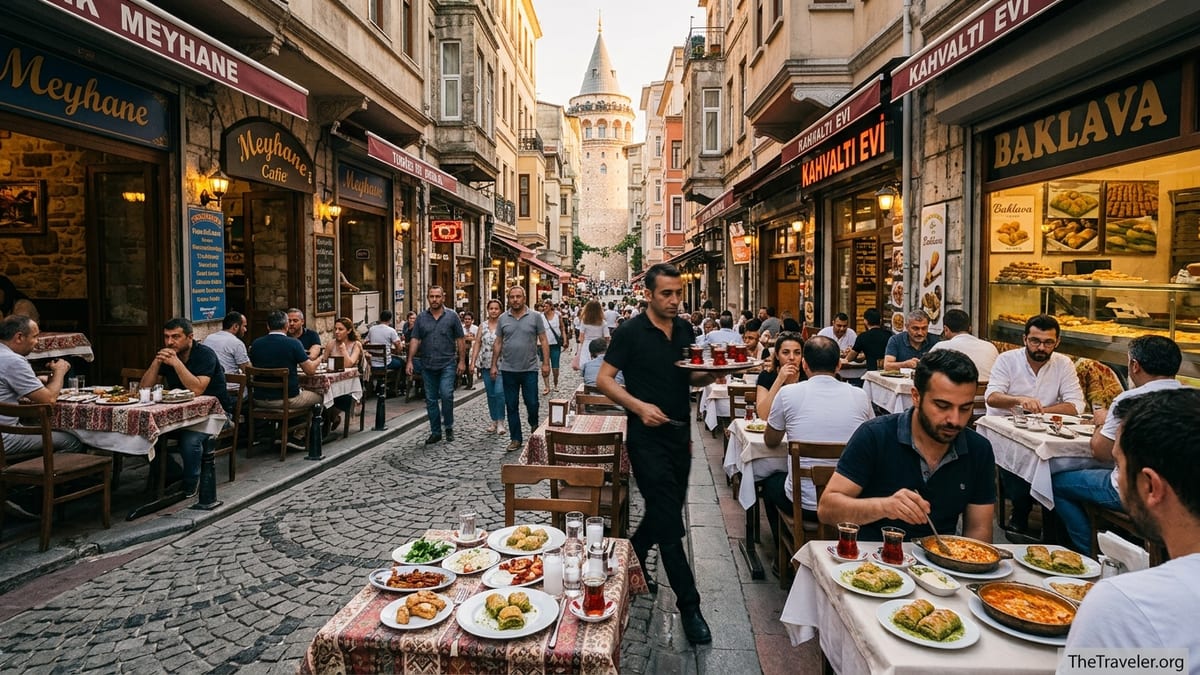
How Beyoğlu Eats: Orientation & What Things Cost
Beyoğlu stretches uphill from the Karaköy waterfront to Taksim Square, with İstiklal Caddesi running as the spine between them. Most visitors will spend time around Galata Tower, İstiklal, Asmalimescit, Cihangir and Karaköy, where you can easily walk between meals and sights. The area has everything from 70–90 TL dürüm shops to multi-course meyhanes where a table with meze and a bottle of rakı for two can run 1,500–2,500 TL depending on what you order and current prices. Credit cards are widely accepted, but very small lokantas and simit sellers are still sometimes cash only.
As a rule of thumb, a simple sit-down Turkish breakfast in a side street café may cost around 250–350 TL per person, while the big “serpme kahvaltı” spreads that cover a table with cheeses, olives, eggs, pastries and jams commonly price per person and can reach 450–600 TL in trendier spots with a view. A portion of baklava in a famous shop like Karaköy Güllüoğlu is usually in the 80–130 TL range, depending on the variety and current pistachio prices. A glass of house rakı in a midrange meyhane close to İstiklal will often be 220–300 TL. Prices move with inflation, but these rough bands help you sense when you are paying a fair local rate versus a tourist premium.
The biggest concentration of tourist-oriented restaurants is right on İstiklal and around Galata Tower, where many menus are in multiple languages, touts approach you and prices quietly climb. You do not need to avoid these streets completely, but it is usually wiser to step one or two blocks away onto lanes like Asmalimescit, Tomtom, Cihangir’s backstreets or down into Karaköy proper, where you will see more Turkish language menus, fewer laminated photos and a better balance of locals to visitors.
Turkish Breakfast in Beyoğlu: From Cihangir to Karaköy
Turkish breakfast, or kahvaltı, is a social ritual in Istanbul rather than a quick refueling stop. Expect the table to fill with small plates of white cheese, aged kaşar cheese, olives, tomatoes, cucumbers, honey, clotted cream, jams, butter, eggs cooked to order and baskets of simit and fresh bread. In Beyoğlu, two good areas for relaxed, convivial breakfast are Cihangir, just southwest of Taksim Square, and Karaköy along the waterfront below Galata.
In Cihangir, cafés on Akarsu Yokuşu and the surrounding streets have become weekend breakfast institutions. You will find places offering serpme kahvaltı priced per person and served for the whole table, often including unlimited tea. These spots attract a mix of local residents, students and visitors. If you want something more modest or are traveling solo, ask whether they also serve a “single plate” breakfast that includes a curated selection of the same components at a lower price. Cihangir’s atmosphere is slower than İstiklal and it is one of the best neighborhoods to linger over a long, late breakfast and people-watch.
Down in Karaköy, cafés like Ops Cafe and similar spaces around Mumhane Caddesi have made the old commercial wharves a weekend brunch destination. These spots typically combine good coffee with modern versions of Turkish breakfast classics, such as menemen with village eggs or sucuklu yumurta served in traditional copper pans. Expect prices slightly above inner residential neighborhoods because of the location and design, but they remain reasonable compared to hotel breakfasts along the Bosphorus. If you are staying near Galata, you can walk down the hill in about ten minutes, eat by the water and then continue sightseeing on foot or by tram.
If you need something very quick near İstiklal, simit sellers with wheeled carts and small börek shops on side streets offer a budget-friendly alternative. A simit with cheese and a glass of çay will still be one of the cheapest ways to start the day in Beyoğlu, and the quality at these no-name places that serve office workers and shop staff is usually reliable.
Meyhanes & Nightlife: Where to Sip Rakı Without Regrets
Meyhanes are traditional taverns that serve meze, seafood and grilled meats alongside rakı. Beyoğlu’s historic meyhane territory stretches from Çiçek Pasajı and Nevizade behind İstiklal through the lanes of Asmalimescit. This is also where some of the most notorious tourist traps sit, especially on Nevizade Sokak itself, which fills with tables, live music and touts in the evenings. The atmosphere can be entertaining, but prices often climb and bills may include add-ons that locals do not see elsewhere.
For a more controlled experience, look for meyhanes one or two streets away from the loudest lanes. Around Asmalimescit and Sofyalı, you will find long-running taverns where Istanbulites book tables for birthdays or after-work gatherings. A typical pattern is to sit down, order a bottle of rakı for the table and then choose several cold meze from a tray brought to your table: haydari, şakşuka, fava, stuffed mussels, white cheese and seasonal salads. Hot dishes like grilled sea bass, köfte or octopus follow. For two people sharing meze, one hot dish each and a bottle of midrange rakı, expect a bill that is significantly lower than in the liveliest, most touristy Nevizade addresses.
Near Galata and Tünel, some newer generation meyhane-style wine bars have appeared, serving a shorter meze list alongside natural wines or craft cocktails instead of rakı. These can be a good choice if one person in your group does not drink strong spirits. You may pay slightly more per glass, but the atmosphere tends to be calmer, with no live music and fewer street hawkers. Reservations are recommended on Thursday through Saturday anywhere in this part of Beyoğlu, especially if you want to sit outside.
Baklava & Sweets: Why Karaköy Is a Pilgrimage
Beyoğlu is one of the best districts in Istanbul for tasting baklava, and Karaköy in particular has become almost synonymous with the dessert. The best known name here is Karaköy Güllüoğlu, an institution with roots in a Gaziantep baklava-making family and a shop in Karaköy that dates back to the mid 20th century. The Karaköy branch operates as its own company and has a reputation among Istanbul residents and frequent visitors as a reliable, high quality place to sample classic baklava, pistachio börek, şöbiyet and other syrup pastries. The shop is usually busy from mid-morning until late at night, with a mixed crowd of locals buying boxes to take home and tourists queuing for a tray on the spot.
Inside, you order by the piece or by weight at the counter, then either take your plate to a table or have your selection boxed. A couple sharing a small plate of mixed pieces and two teas can expect to spend roughly what you might pay for two coffees and pastries at an international chain, which makes it an accessible treat despite the fame. If you plan to bring baklava home, ask about vacuum packaging and choose less syrupy varieties that travel better, such as pistachio baklava rather than cream-filled options.
Karaköy also has alternative baklava houses such as Köşkeroğlu and smaller independent shops that attract more local office workers than tour groups. Some travelers deliberately skip the most famous name to try these slightly quieter addresses, where you can sit for longer and compare differences in sweetness, nut content and pastry texture. Inland toward Şişhane and around the less touristed backstreets of Beyoğlu you will also find neighborhood pastanes baking baklava, tulumba and ekler for regulars who live nearby. These are excellent places to buy a few pieces to eat on a bench or carry back to your hotel.
For other sweets, look for lokum (Turkish delight) and helva in old-style confectionery shops rather than stalls directly in front of major sights. In Beyoğlu, long-running pastry and dessert shops on or just off İstiklal focus more on local trade and less on aggressive sales tactics. Prices are clearly labeled by weight, and staff are usually happy to explain different flavors or give a tiny sample before you decide. This is rarely the case at aggressive stands in the busiest tourist sections, where prices can be several times higher.
Street Food, Lokantas & Budget Eats Around İstiklal
Beyoğlu has a long tradition of lokantas, casual canteen-style restaurants that serve home-style dishes from steam tables at lunchtime. Around İstiklal and Galatasaray you will see small entrances leading to upstairs dining rooms where customers line up with trays and point to what they want: stews, beans, vegetables in olive oil, rice and soups. These places are among the best options for eating well on a budget while experiencing the kind of food many locals eat on workdays. A plate with beans, rice and a serving of vegetable stew will usually cost less than a sit-down kebab restaurant on the main street, and water is often included or very cheap.
On the street food side, Beyoğlu is known for midye dolma stuffed mussels sold from metal trays in the evenings, especially on the side streets near İstiklal and down toward Karaköy. You pay per piece and squeeze lemon over each mussel as the vendor hands it to you. Many visitors happily eat midye dolma without issues, but hygiene standards vary. If you are sensitive, look for vendors with a fast turnover and avoid mussels that have been sitting in direct sun.
Dürüm shops and small kebab grills are everywhere around Taksim and Tarlabaşı, serving chicken or lamb wrapped in thin bread with onions, parsley and spices. Prices remain among the lowest hot meals in Beyoğlu. These places are set up for a quick stand-up or counter meal, not a lingering dinner, but they are perfect between museum visits or late at night on the way back to your hotel. For something more substantial but still affordable, look for esnaf lokantası style restaurants on streets that run parallel to İstiklal, where menu boards list daily dishes with prices.
Vegetarians and vegans will find several modern cafés and small restaurants tucked into the side streets off İstiklal and around Cihangir. Many of these combine Turkish meze such as lentil köfte and stuffed vegetables with international salads and grain bowls. Prices are generally a bit higher than basic lokantas but lower than full-service restaurants aimed squarely at tourists.
Karaköy Cafes & Rooftop Dining With a View
Karaköy’s transformation from a workaday port to one of Istanbul’s most fashionable café districts is most visible on and around streets like Mumhane Caddesi and the lanes leading toward the Galataport cruise terminal. Former warehouses now house third-wave coffee shops, brunch cafés and bistros drawing both locals and visitors. Places such as Karabatak and similar cafés in the same cluster are known for specialty coffee, relaxed seating and an international crowd tapping on laptops or chatting over flat whites. Prices for coffee mirror other major European cities, while simple pastries or sandwiches stay within a moderate budget.
Many Karaköy cafés and restaurants serve all-day menus that bridge breakfast and dinner, which suits travelers who keep irregular hours. You can have menemen and simit at 11:30, then come back in the evening for meze plates and wine. Compared to the frantic pace on İstiklal, Karaköy feels more open and maritime, with the tram line and ferry piers a short walk away. It is easy to combine a stop here with a Bosphorus ferry ride or a visit to Istanbul Modern.
For rooftop dining, Beyoğlu offers a wide range of terraces with views over the Golden Horn, Galata Tower and the domes of the old city. Many hotels along İstiklal and near Şişhane have rooftop restaurants and bars that welcome non-guests. The classic pattern is to book a table around sunset, start with meze or a cheese plate and a drink while the call to prayer echoes across the city, then stay for a main course as night falls. These venues almost always charge a premium for the setting, and some include minimum spends on weekend nights. Before committing, it is worth glancing at the menu at ground level to ensure the food matches the prices.
If you are more interested in views than a full meal, consider going to a rooftop bar for one drink and then heading to a simpler restaurant at street level for dinner. That way you enjoy the skyline without tying your entire dining budget to a single location. Around Galata Tower, there are also smaller terraces on the upper floors of apartment buildings converted into cafés, where you can drink Turkish tea or coffee with a partial view at a fraction of the cost of major hotel rooftops.
Avoiding Tourist Traps & Eating Smart Near İstiklal and Galata
İstiklal Caddesi and the square around Galata Tower are two of the most touristy parts of Beyoğlu. Many restaurants here survive on one-time customers rather than repeat business, which can lead to inflated prices and aggressive upselling. Common warning signs include touts who follow you down the street, menus with no prices, and unsolicited extras like fruit plates or tea that appear on your table and later on your bill. Service can still be friendly and the food acceptable, but you are less likely to experience value for money.
To avoid problems, choose places where prices are clearly printed and visible at the entrance, and where the staff allow you to read the menu in peace. Look at who is eating there. If the crowd is entirely tourists with no Turkish spoken at neighboring tables, that is not automatically bad, but it suggests you are in a place curated for visitors. Stepping one or two parallel streets away almost always reveals options with more locals, simpler décor and better food-to-price ratios. Around Galata, this might mean climbing a side street away from the immediate tower square into residential blocks where smaller bistros and lokantas serve people who actually live and work there.
When it comes to baklava and sweets, avoid unnamed stalls selling bulk lokum and nuts in the very busiest sections of İstiklal with no price labels. These often target short-stay visitors and can be significantly more expensive than established pastry shops a few hundred meters away. Likewise, if a meyhane or restaurant tout insists “no menu, just meze, we will take care of you,” you should be prepared for a higher bill. It is fair to ask for approximate prices for meze plates, mains and drinks before committing to sit down.
Taxis around Beyoğlu can also be tricky late at night, especially on weekends. If you are dining in Karaköy or near Taksim and heading back to a hotel in another district, try to use licensed taxis from official stands, and insist on the meter. Many Beyoğlu hotels and popular restaurants can call a cab for you, which reduces the chance of overcharging compared with flagging a passing car outside the liveliest nightlife streets.
The Takeaway
Beyoğlu is one of the easiest districts in Istanbul for visitors to eat well, whether your budget stretches to rooftop dinners over the Golden Horn or focuses on simit, lokanta plates and a single blowout baklava stop. The key is to understand the geography: breakfasts in Cihangir and Karaköy, meyhane nights a couple of streets off the loudest lanes, baklava in and around Karaköy, and budget-friendly lokantas and street food just off İstiklal. Add a rooftop drink somewhere along the line and you will have checked off most of the essential Beyoğlu food experiences.
Prices change quickly with inflation, but watching how locals eat and following them into side streets remains the best route to fair value and memorable meals. Use the famous names like Karaköy’s landmark baklava houses and a handful of well-known meyhanes as anchors, then fill in the rest of your days with small discoveries. Beyoğlu rewards curiosity, and the most satisfying meal is often the one you find two turns away from the main drag.
FAQ
Q1. Where should I go for a classic Turkish breakfast in Beyoğlu?
Cihangir and Karaköy are the best bets. Look for cafés on Cihangir’s side streets or along Mumhane Caddesi in Karaköy offering serpme kahvaltı with tea included.
Q2. Is Karaköy Güllüoğlu really worth the hype for baklava?
It is busy and well known, but many locals still consider it a solid, reliable choice. Go outside peak hours, order a small mixed plate and judge for yourself.
Q3. How much should I expect to pay at a meyhane near İstiklal?
For two people sharing several meze, one hot dish each and a bottle of midrange rakı, expect a bill somewhere around midrange restaurant prices for Istanbul, higher in the loudest tourist streets.
Q4. Are the restaurants right on İstiklal Street all tourist traps?
Not all, but many are designed for one-time visitors. You will generally eat better and pay more reasonable prices on nearby parallel streets and in neighborhoods like Asmalimescit or Cihangir.
Q5. Where can I find good budget food near Galata Tower?
Walk a few minutes away from the tower into the backstreets toward Şişhane or down toward Karaköy. You will find dürüm stands, lokantas and small cafés used by locals.
Q6. Is street food in Beyoğlu safe to eat?
Most visitors eat simit, döner and stuffed mussels without issues, but standards vary. Choose busy vendors, avoid food that has clearly sat out too long and follow your instincts.
Q7. Do I need to book rooftop restaurants in advance?
For popular rooftops with Golden Horn or Bosphorus views, especially on Thursday to Saturday and around sunset, advance reservations are strongly recommended.
Q8. Can vegetarians eat well in Beyoğlu?
Yes. Many meze are naturally vegetarian, and Cihangir, Karaköy and side streets off İstiklal have modern cafés and restaurants with clearly marked vegetarian and vegan options.
Q9. What time do Beyoğlu restaurants usually serve dinner?
Most kitchens open for dinner around 18:00 or 19:00 and stay busy until late, especially Fridays and Saturdays. Meyhanes often peak between 20:30 and 23:30.
Q10. How can I avoid being overcharged at touristy places?
Always choose restaurants with visible, printed prices, confirm approximate costs for meze and drinks before sitting, and politely decline unsolicited extras that appear on your table.